Creatures 36
-
1
Angel of Indemnity
Angel of Indemnity
Creature — Angel Warrior
5/5
Flying, lifelink
When this creature enters, return target permanent card with mana value 4 or less from your graveyard to the battlefield.
Encore ( , Exile this card from your graveyard: For each opponent, create a token copy that attacks that opponent this turn if able. They gain haste. Sacrifice them at the beginning of the next end step. Activate only as a sorcery.)
- Opponents who have left the game aren't counted when determining how many tokens to create.
- If one of the tokens can't attack for any reason (such as being tapped), then it doesn't attack. If there's a cost associated with having it attack, you aren't forced to pay that cost, so it doesn't have to attack in that case either.
- If one of the tokens somehow is under another player's control as the delayed triggered ability resolves, you can't sacrifice that token. It remains on the battlefield indefinitely, even if you regain control of it later.
- The tokens copy only what's on the original card. Effects that modified that creature when it was previously on the battlefield won't be copied.
- Exiling the card with encore is a cost to activate the ability. Once you announce that you're activating it, no player may take actions until you've finished. They can't try to remove the card from your graveyard to stop you from paying the cost.
- If an effect stops a token from attacking a specific player, that token can attack any player, planeswalker, or battle, or not attack at all. If the effect stops the token from attacking a specific player unless a cost is paid, you don't have to pay that cost unless you want to attack that player.
- If you return an Aura this way, you choose what the Aura will enchant just before it enters the battlefield. An Aura returning to the battlefield this way doesn't target the player or permanent it will enchant, so permanents or players with hexproof may be chosen; however, the chosen recipient must be able to legally be enchanted by the Aura, so a player or permanent with protection from one of the Aura's qualities can't be chosen this way. If there's nothing legal for the Aura to enchant, it stays in the graveyard.
- A permanent card is an artifact, battle, creature, enchantment, land, or planeswalker card.
- If the mana cost of a card in your graveyard includes , X is 0 for the purpose of determining its mana value.
- Each token must attack the appropriate player if able.
-
1
Anger
Anger
Creature — Incarnation
2/2
Haste
As long as this card is in your graveyard and you control a Mountain, creatures you control have haste.
- The timestamp for the "in your graveyard" ability is set at the time that this card goes to your graveyard, regardless of whether you control a Mountain at that time.
-
1
Ao, the Dawn Sky
Ao, the Dawn Sky
Legendary Creature — Dragon Spirit
5/4
Flying, vigilance
When Ao dies, choose one —
- Look at the top seven cards of your library. Put any number of nonland permanent cards with total mana value 4 or less from among them onto the battlefield. Put the rest on the bottom of your library in a random order.
- Put two +1/+1 counters on each permanent you control that's a creature or Vehicle.
-
1
Atsushi, the Blazing Sky
Atsushi, the Blazing Sky
Legendary Creature — Dragon Spirit
4/4
Flying, trample
When Atsushi dies, choose one —
- Exile the top two cards of your library. Until the end of your next turn, you may play those cards.
- Create three Treasure tokens.
-
1
Augusta, Order Returned
Augusta, Order Returned
Legendary Creature — Spirit Advisor
1/3
Flying, vigilance
Whenever Augusta attacks, each player exiles a card from their graveyard. When one or more nonland cards are exiled this way, put that many +1/+1 counters on target attacking creature.
- You don't choose a target for Augusta's last ability at the time it triggers. Instead, a second "reflexive" ability triggers whenever one or more nonland cards are exiled this way. You choose a target for that ability as it goes on the stack. Each player may respond to this triggered ability as normal.
- As Augusta's last ability resolves, the player whose turn it is chooses a card to exile from their graveyard, then each other player in turn order does the same, then all of the chosen cards are exiled at the same time. Each player will know the choices made by the players who chose before them.
-
1
Balefire Liege
Balefire Liege
Creature — Spirit Horror
2/4
Other red creatures you control get +1/+1.
Other white creatures you control get +1/+1.
Whenever you cast a red spell, this creature deals 3 damage to target player or planeswalker.
Whenever you cast a white spell, you gain 3 life.
- The abilities are separate and cumulative. If another creature you control is both of the listed colors, it will get a total of +2/+2.
-
1
Claim Jumper
Claim Jumper
Creature — Rabbit Mercenary
3/3
Vigilance
When this creature enters, if an opponent controls more lands than you, you may search your library for a Plains card and put it onto the battlefield tapped. Then if an opponent controls more lands than you, repeat this process once. If you search your library this way, shuffle.
- For example, say you control three lands, one opponent controls four lands, and another opponent controls five lands. As Claim Jumper's ability resolves, at least one opponent controls more lands than you, so you search for a Plains card and put it onto the battlefield tapped. Now you control four lands, but there's still an opponent who controls more lands than you, so you repeat the process once, searching for another Plains. You end up controlling five lands (two tapped Plains plus your original three, which you probably tapped to cast Claim Jumper in the first place).
- When Claim Jumper enters the battlefield, its triggered ability will check to see if at least one opponent controls more lands than you. If none do, the ability won't trigger at all. If the ability does trigger, it will check again as it tries to resolve. If there's no longer an opponent that controls more lands than you, the ability won't do anything.
-
1
Conspiracy Theorist
Conspiracy Theorist
Creature — Human Shaman
2/2
Whenever this creature attacks, you may pay and discard a card. If you do, draw a card.
Whenever you discard one or more nonland cards, you may exile one of them from your graveyard. If you do, you may cast it this turn.
- While resolving Conspiracy Theorist's ability, you can't pay and discard a card multiple times to draw more cards.
- The card exiled by the second ability is exiled face up. Casting it follows the normal rules for casting that card. You must pay its costs, and you must follow all applicable timing rules. For example, if it's a creature card, you can cast it only during your main phase while the stack is empty. In most cases, if you exile a non-instant card during an opponent's turn, you won't be able to cast it that turn.
-
1
Containment Construct
Containment Construct
Artifact Creature — Construct
2/1
Whenever you discard a card, you may exile that card from your graveyard. If you do, you may play that card this turn.
-
1
Drumbellower
Drumbellower
Creature — Spirit
2/1
Flying
Untap all creatures you control during each other player's untap step.
- All your creatures untap during each other player's untap step. You have no choice about what untaps.
- Other effects can prevent a creature from untapping during an untap step. You do need to look carefully, however, as many effects say that the creature doesn't untap during its controller's untap step, and this card's ability applies during other players' untap steps. If a card does say this, then Drumbellower can untap it.
-
1
Excava, the Risen Past
Excava, the Risen Past
Legendary Creature — Spirit Horse
3/3
Flying, haste
Whenever Excava attacks, return up to one target artifact, creature, or non-Aura enchantment card with mana value 3 or less from your graveyard to the battlefield with a finality counter on it. It's a 1/1 Spirit creature with flying in addition to its other types. (If a creature with a finality counter on it would die, exile it instead.)
- If a card in a graveyard has in its mana cost, X is 0 for the purpose of determining its mana value.
- An artifact creature card or enchantment creature card returned this way will have base power and toughness 1/1.
- If another effect causes one of the returned permanents to become a creature and sets its base power and toughness as it does so, that creature will have that power and toughness; it won't be 1/1. However, a Vehicle returned this way will remain a 1/1 if you crew it, and a Spacecraft returned this way will remain a 1/1 even if enough charge counters are placed on it for it to become a creature.
- An Equipment that's also a creature can't be attached to anything. You can activate its equip ability, but it won't become attached.
-
1
Guardian of Faith
Guardian of Faith
Creature — Spirit Knight
3/2
Flash
Vigilance
When this creature enters, any number of other target creatures you control phase out. (Treat them and anything attached to them as though they don't exist until their controller's next turn.)
- An attacking or blocking creature that phases out is removed from combat.
- Any continuous effects with a "for as long as" duration, such as that of Mind Flayer, ignore phased-out objects. If ignoring those objects causes the effect's conditions to no longer be met, the duration will expire.
- If an opponent gains control of one of your creatures, that creature phases out, and the duration of the control-change effect expires before it phases back in, that creature phases in under your control as that opponent's next untap step begins. If they leave the game before their next untap step, it phases in as the next untap step begins after their turn would have begun.
- Choices made for permanents as they entered the battlefield are remembered when they phase in.
- Phased out permanents are treated as though they don't exist. They can't be the target of spells or abilities, their static abilities have no effect on the game, their triggered abilities can't trigger, they can't attack or block, and so on.
- As a creature is phased out, Auras and Equipment attached to it also phase out at the same time. Those Auras and Equipment will phase in at the same time that creature does, and they'll phase in still attached to that creature.
- Permanents phase back in during their controller's untap step, immediately before that player untaps their permanents. Creatures that phase in this way are able to attack and pay a cost of during that turn. If a permanent had counters on it when it phased out, it will have those counters when it phases back in.
- Phasing out doesn't cause any "leaves the battlefield" abilities to trigger. Similarly, phasing in won't cause any "enters the battlefield" abilities to trigger.
-
1
Guardian Scalelord
Guardian Scalelord
Creature — Dragon
3/4
Backup 1 (When this creature enters, put a +1/+1 counter on target creature. If that's another creature, it gains the following abilities until end of turn.)
Flying
Whenever this creature attacks, return target nonland permanent card with mana value X or less from your graveyard to the battlefield, where X is this creature's power.
- If a permanent enters the battlefield as a copy of a card with a backup ability or a token is created that is a copy of that card, the order of the printed abilities is maintained.
- If a backup ability causes another creature to gain abilities, the creature with backup will still have those abilities.
- If a backup ability targets the creature with backup, that creature will get +1/+1 counters, but it won't gain additional abilities.
- The abilities that backup grants to the target creature are determined only once, at the time the ability triggers. They won't change if the permanent with backup loses any abilities before the backup ability resolves.
- Backup confers only abilities that are actually printed below it. Any abilities that are gained by the permanent are ignored, including abilities gained due to a resolving spell or ability or copy effects.
-
1
Hofri Ghostforge
Hofri Ghostforge
Legendary Creature — Dwarf Cleric
4/5
Spirits you control get +1/+1 and have trample and haste.
Whenever another nontoken creature you control dies, exile it. If you do, create a token that's a copy of that creature, except it's a Spirit in addition to its other types and it has "When this token leaves the battlefield, return the exiled card to its owner's graveyard."
- If you can't exile the card, perhaps because another effect moved the card before the triggered ability started resolving, you won't create a token.
- Hofri Ghostforge's last ability is linked to the ability it grants the Spirit token. If a replacement effect causes you to create more than one Spirit token with this effect, they will all have that ability, and the exiled card will be returned to the graveyard if any of them leaves the battlefield.
- The token copies exactly what was printed on the original creature and nothing else (unless the creature was copying something else; see below). It doesn't copy whether that creature was tapped or untapped, whether it had any counters on it or Auras or Equipment attached to it, or any non-copy effects that changed its power, toughness, types, color, or so on.
- Any enters-the-battlefield abilities of the copied creature will trigger when the token enters the battlefield. Any "As [this creature] enters the battlefield" or "[This creature] enters the battlefield with" abilities of the creature will also work.
- Each Spirit token you create refers only to the card you exile during the resolution of the ability that created that token. When it leaves the battlefield, you return only that card to your graveyard, not any other card exiled by Hofri.
- If another creature enters the battlefield as a copy of the Spirit token or another effect creates a copy of the Spirit token, it will have the triggered ability granted by Hofri, but will not be linked to Hofri's ability and will not return the card to the graveyard when it leaves the battlefield.
- If the copied creature was copying something else, then the token enters the battlefield as whatever that creature copied.
- The copy uses the copiable values of the creature as it last existed on the battlefield before it died, not as it existed in the graveyard before it was exiled.
-
1
Kami of Ancient Law
Kami of Ancient Law
Creature — Spirit
2/2
Sacrifice this creature: Destroy target enchantment.
-
1
Karmic Guide
Karmic Guide
Creature — Angel Spirit
2/2
Flying, protection from black
Echo (At the beginning of your upkeep, if this came under your control since the beginning of your last upkeep, sacrifice it unless you pay its echo cost.)
When this creature enters, return target creature card from your graveyard to the battlefield.
- Your permanent's echo ability will trigger at the beginning of your upkeep if it entered the battlefield since the beginning of your last upkeep, or if you gained control of it since the beginning of your last upkeep.
- Paying for echo is always optional. When the echo triggered ability resolves, if you can't pay the echo cost or choose not to, you sacrifice that permanent.
-
1
Kirol, History Buff // Pack a Punch
//
Kirol, History Buff
Legendary Creature — Vampire Cleric
2/3
- If multiple cards leave your graveyard at the same time, Kirol's first ability will trigger only once.
- A creature with a prepare spell can't become prepared more than once at the same time. For example, Emeritus of Ideation is on the battlefield and is prepared. When it attacks, its last ability triggers. When that ability resolves, its controller may still exile eight cards from their graveyard, but doing so won't cause Emeritus of Ideation to become prepared a second time or create a second copy of Ancestral Recall in exile.
- If a prepared creature loses all abilities, it won't stop being prepared, and nothing will happen to its alternative characteristics or to the copy of its prepare spell in exile.
- Only the current controller of a prepared creature can cast the copy of its prepare spell in exile. It doesn't matter who owns that creature or who controlled it when it became prepared.
- While copies of spells in zones other than the stack cease to exist when state-based actions are checked, this does not apply to copies of prepare spells in exile that were created as a creature became prepared.
- Creating a copy of a creature's prepare spell in exile ignores copy exceptions applied to that creature that would affect the copiable values of that spell. For example, say a player casts Croaking Counterpart (a sorcery that says "Create a token that's a copy of target non-Frog creature, except it's a 1/1 green Frog.") targeting Goblin Glasswright. The token copy of Goblin Glasswright will enter prepared as a 1/1 green Frog creature, but the copy of Craft with Pride in exile will still be a red sorcery. The copy of Craft with Pride won't be green, a creature, or a Frog, and it won't have power or toughness.
- Preparation cards can only be cast with their base characteristics.
- If an effect causes a creature to become unprepared, a prepared creature stops being prepared and the associated copy of its prepare spell in exile ceases to exist. If it wasn't prepared at that time, nothing happens.
- As an effect causes a creature with a prepare spell to become prepared (including effects that state that a creature "enters prepared"), that creature's controller creates a copy of that creature's prepare spell in exile. That copy remains in exile for as long as that permanent is on the battlefield and is prepared. That creature's controller may cast that copy as long as it remains in exile. As they cast it, that creature stops being prepared.
- Casting a copy of a prepare spell from exile isn't casting it for an alternative cost. Effects that allow you to cast a spell for an alternative cost or without paying its mana cost may allow you to apply those to a copy of a prepare spell cast from exile.
- If a prepared creature stops being a creature, it will still be prepared, and the copy of its prepare spell will remain in exile. That permanent's controller will still be able to cast it. The same is true if a prepared creature becomes a copy of something else, even if it's then a permanent without a prepare spell.
- Being prepared isn't a copiable value. If a permanent becomes a copy of a prepared creature, it won't be prepared. That permanent will have the alternative characteristics, though, and some other effect could cause it to become prepared later.
- If a prepare spell with one or more targets has no legal targets when it tries to resolve, it won't resolve and none of its effects will happen. Since the spell was cast, the associated permanent will still not be prepared.
- A creature without a prepare spell can't become prepared.
- A preparation card is a creature card in every zone. For example, while it's in your graveyard, Emeritus of Ideation is a blue creature whose mana value is 5. It can't be the target of Zealous Lorecaster's triggered ability ("When this creature enters, return target instant or sorcery card from your graveyard to your hand.").
- If an effect instructs you to choose a card name, you may choose the alternative prepare spell's name. Consider only the alternative characteristics to determine whether that is an appropriate name to choose.
-
1
Laelia, the Blade Reforged
Laelia, the Blade Reforged
Legendary Creature — Spirit Warrior
2/2
Haste
Whenever Laelia attacks, exile the top card of your library. You may play that card this turn.
Whenever one or more cards are put into exile from your library and/or your graveyard, put a +1/+1 counter on Laelia.
- You must follow the normal timing permissions and restrictions while playing the exiled card. If it's a land, you can't play it unless you have land plays available.
- Cards exiled by Laelia, the Blade Reforged are exiled face up.
- You'll still pay all costs for a spell cast this way, including additional costs. You may also pay alternative costs if any are available.
- If a player is instructed to exile cards from their library "until" a certain event occurs (for example, because of the triggered ability of a spell with cascade or discover), that player exiles those cards one at a time. Laelia's last ability will trigger that many times.
- If you play a card this way, it leaves exile and becomes a new object. If it returns to exile later in the turn, you can't play it again.
- The last ability triggers only once for each time cards are put into exile from your library and/or graveyard, no matter how many cards were exiled at the same time.
- Laelia's last triggered ability doesn't care which player is exiling cards from the library or graveyard. Cards put into exile from your library or graveyard for any reason, such as the delve ability, cause the ability to trigger.
-
1
Lorehold Archivist // Restore Relic
//
Lorehold Archivist
Creature — Dwarf Artificer
3/2
- While copies of spells in zones other than the stack cease to exist when state-based actions are checked, this does not apply to copies of prepare spells in exile that were created as a creature became prepared.
- A creature without a prepare spell can't become prepared.
- Only the current controller of a prepared creature can cast the copy of its prepare spell in exile. It doesn't matter who owns that creature or who controlled it when it became prepared.
- If a prepared creature loses all abilities, it won't stop being prepared, and nothing will happen to its alternative characteristics or to the copy of its prepare spell in exile.
- If a prepare spell with one or more targets has no legal targets when it tries to resolve, it won't resolve and none of its effects will happen. Since the spell was cast, the associated permanent will still not be prepared.
- If the copied card has in its mana cost, X is 0.
- Preparation cards can only be cast with their base characteristics.
- A creature with a prepare spell can't become prepared more than once at the same time. For example, Emeritus of Ideation is on the battlefield and is prepared. When it attacks, its last ability triggers. When that ability resolves, its controller may still exile eight cards from their graveyard, but doing so won't cause Emeritus of Ideation to become prepared a second time or create a second copy of Ancestral Recall in exile.
- Lorehold Archivist's last ability checks at the moment it would trigger to see if there are three or more artifact and/or creature cards in your graveyard. If there aren't, the ability won't trigger at all. If it does trigger, the ability will check again as it tries to resolve. If you don't have three or more artifact and/or creature cards in your graveyard at that time, the ability won't resolve and none of its effects will happen.
- The token created by Restore Relic copies exactly what was printed on the original card and nothing else. It doesn't copy any information about the object the card was before it was put into your graveyard.
- Being prepared isn't a copiable value. If a permanent becomes a copy of a prepared creature, it won't be prepared. That permanent will have the alternative characteristics, though, and some other effect could cause it to become prepared later.
- Casting a copy of a prepare spell from exile isn't casting it for an alternative cost. Effects that allow you to cast a spell for an alternative cost or without paying its mana cost may allow you to apply those to a copy of a prepare spell cast from exile.
- A preparation card is a creature card in every zone. For example, while it's in your graveyard, Emeritus of Ideation is a blue creature whose mana value is 5. It can't be the target of Zealous Lorecaster's triggered ability ("When this creature enters, return target instant or sorcery card from your graveyard to your hand.").
- As an effect causes a creature with a prepare spell to become prepared (including effects that state that a creature "enters prepared"), that creature's controller creates a copy of that creature's prepare spell in exile. That copy remains in exile for as long as that permanent is on the battlefield and is prepared. That creature's controller may cast that copy as long as it remains in exile. As they cast it, that creature stops being prepared.
- If an effect causes a creature to become unprepared, a prepared creature stops being prepared and the associated copy of its prepare spell in exile ceases to exist. If it wasn't prepared at that time, nothing happens.
- If a card copied by the token had any "when [this permanent] enters" abilities, the token also has those abilities, and they'll trigger when it's created. Similarly, any "as [this permanent] enters" or "[this permanent] enters with" abilities that the token has copied will also work.
- If a prepared creature stops being a creature, it will still be prepared, and the copy of its prepare spell will remain in exile. That permanent's controller will still be able to cast it. The same is true if a prepared creature becomes a copy of something else, even if it's then a permanent without a prepare spell.
- Creating a copy of a creature's prepare spell in exile ignores copy exceptions applied to that creature that would affect the copiable values of that spell. For example, say a player casts Croaking Counterpart (a sorcery that says "Create a token that's a copy of target non-Frog creature, except it's a 1/1 green Frog.") targeting Goblin Glasswright. The token copy of Goblin Glasswright will enter prepared as a 1/1 green Frog creature, but the copy of Craft with Pride in exile will still be a red sorcery. The copy of Craft with Pride won't be green, a creature, or a Frog, and it won't have power or toughness.
- If an effect instructs you to choose a card name, you may choose the alternative prepare spell's name. Consider only the alternative characteristics to determine whether that is an appropriate name to choose.
-
1
Millikin
Millikin
Artifact Creature — Construct
0/1
, Mill a card: Add . (To mill a card, put the top card of your library into your graveyard.)
- If an effect allows you to look at the top card of your library any time or to play with the top card of your library revealed, and you activate Millikin's mana ability while casting a spell, you can't look at the new top card of your library until you are done casting the spell. The same is true if you activate Millikin's ability while activating another ability.
-
1
Moonshaker Cavalry
Moonshaker Cavalry
Creature — Spirit Knight
6/6
Flying
When this creature enters, creatures you control gain flying and get +X/+X until end of turn, where X is the number of creatures you control.
- The value of X is determined only as Moonshaker Cavalry's triggered ability resolves, potentially including Moonshaker Cavalry itself. It won't change later in the turn if the number of creatures you control changes.
- Moonshaker Cavalry's triggered ability affects only creatures you control at the time it resolves. Creatures you begin to control later in the turn won't be affected.
-
1
Naktamun Lorespinner // Wheel of Fortune
//
Naktamun Lorespinner
Creature — Jackal Wizard
3/3
- Only the current controller of a prepared creature can cast the copy of its prepare spell in exile. It doesn't matter who owns that creature or who controlled it when it became prepared.
- Creating a copy of a creature's prepare spell in exile ignores copy exceptions applied to that creature that would affect the copiable values of that spell. For example, say a player casts Croaking Counterpart (a sorcery that says "Create a token that's a copy of target non-Frog creature, except it's a 1/1 green Frog.") targeting Goblin Glasswright. The token copy of Goblin Glasswright will enter prepared as a 1/1 green Frog creature, but the copy of Craft with Pride in exile will still be a red sorcery. The copy of Craft with Pride won't be green, a creature, or a Frog, and it won't have power or toughness.
- Being prepared isn't a copiable value. If a permanent becomes a copy of a prepared creature, it won't be prepared. That permanent will have the alternative characteristics, though, and some other effect could cause it to become prepared later.
- While copies of spells in zones other than the stack cease to exist when state-based actions are checked, this does not apply to copies of prepare spells in exile that were created as a creature became prepared.
- If a prepare spell with one or more targets has no legal targets when it tries to resolve, it won't resolve and none of its effects will happen. Since the spell was cast, the associated permanent will still not be prepared.
- If a prepared creature loses all abilities, it won't stop being prepared, and nothing will happen to its alternative characteristics or to the copy of its prepare spell in exile.
- Naktamun Lorespinner's ability checks at the moment it would trigger to see if there are any players with one or fewer cards in hand. If there aren't, the ability won't trigger at all. If it does trigger, the ability will check again as it tries to resolve. If there are no players with one or fewer cards in hand at that time, the ability won't resolve and none of its effects will happen.
- A creature with a prepare spell can't become prepared more than once at the same time. For example, Emeritus of Ideation is on the battlefield and is prepared. When it attacks, its last ability triggers. When that ability resolves, its controller may still exile eight cards from their graveyard, but doing so won't cause Emeritus of Ideation to become prepared a second time or create a second copy of Ancestral Recall in exile.
- If a prepared creature stops being a creature, it will still be prepared, and the copy of its prepare spell will remain in exile. That permanent's controller will still be able to cast it. The same is true if a prepared creature becomes a copy of something else, even if it's then a permanent without a prepare spell.
- As an effect causes a creature with a prepare spell to become prepared (including effects that state that a creature "enters prepared"), that creature's controller creates a copy of that creature's prepare spell in exile. That copy remains in exile for as long as that permanent is on the battlefield and is prepared. That creature's controller may cast that copy as long as it remains in exile. As they cast it, that creature stops being prepared.
- Casting a copy of a prepare spell from exile isn't casting it for an alternative cost. Effects that allow you to cast a spell for an alternative cost or without paying its mana cost may allow you to apply those to a copy of a prepare spell cast from exile.
- A preparation card is a creature card in every zone. For example, while it's in your graveyard, Emeritus of Ideation is a blue creature whose mana value is 5. It can't be the target of Zealous Lorecaster's triggered ability ("When this creature enters, return target instant or sorcery card from your graveyard to your hand.").
- If an effect instructs you to choose a card name, you may choose the alternative prepare spell's name. Consider only the alternative characteristics to determine whether that is an appropriate name to choose.
- A creature without a prepare spell can't become prepared.
- Preparation cards can only be cast with their base characteristics.
- If an effect causes a creature to become unprepared, a prepared creature stops being prepared and the associated copy of its prepare spell in exile ceases to exist. If it wasn't prepared at that time, nothing happens.
-
1
Quintorius, Field Historian
Quintorius, Field Historian
Legendary Creature — Elephant Cleric
2/4
Spirits you control get +1/+0.
Whenever one or more cards leave your graveyard, create a 3/2 red and white Spirit creature token.
- If two or more cards leave your graveyard as a single event, Quintorius's last ability will trigger once. If they leave your graveyard as separate events, it will trigger once for each event.
-
1
Quintorius, Loremaster
Quintorius, Loremaster
Legendary Creature — Elephant Cleric
3/5
Vigilance
At the beginning of your end step, exile target noncreature, nonland card from your graveyard. Create a 3/2 red and white Spirit creature token.
, , Sacrifice a Spirit: Choose target card exiled with Quintorius. You may cast that card this turn without paying its mana cost. If that spell would be put into a graveyard, put it on the bottom of its owner's library instead.
- You must follow all applicable timing rules for casting the exiled card. For example, if the card is a sorcery card, you can cast it only during your main phase while the stack is empty.
- Quintorius's last two abilities are linked. The last ability can target only cards exiled by the triggered ability. If a Spirit you sacrifice to activate the last ability ends up being exiled because of a replacement effect, that card can't be targeted by the last ability.
- If the target of Quintorius's triggered ability is an illegal target at the time the ability tries to resolve, the ability won't resolve and none of its effects will happen. You won't create a Spirit token.
- If you cast a card "without paying its mana cost," you can't choose to cast it for any alternative costs. You can, however, pay additional costs. If the card has any mandatory additional costs, you must pay those to cast the card.
- If the card has in its mana cost, you must choose 0 as the value of X when casting it without paying its mana cost.
-
1
Relic Retriever
Relic Retriever
Creature — Spirit Monkey
2/1
First strike
At the beginning of each end step, if a card left your graveyard this turn, create a Treasure token. (It's an artifact with " , Sacrifice this token: Add one mana of any color.")
- Relic Retriever's last ability will check as your end step starts to see if any cards have left your graveyard this turn. If none did, the ability won't trigger at all. It's not possible to remove cards from your graveyard during your end step in time to have the ability trigger.
-
1
Remorseful Cleric
Remorseful Cleric
Creature — Spirit Cleric
2/1
Flying
Sacrifice this creature: Exile target player's graveyard.
-
1
Selfless Spirit
Selfless Spirit
Creature — Spirit Cleric
2/1
Flying
Sacrifice this creature: Creatures you control gain indestructible until end of turn.
- The set of creatures affected by Selfless Spirit's last ability is determined as the ability resolves. Creatures you begin to control later in the turn won't gain indestructible.
-
1
Serra Paragon
Serra Paragon
Creature — Angel
3/4
Flying
Once during each of your turns, you may play a land from your graveyard or cast a permanent spell with mana value 3 or less from your graveyard. If you do, it gains "When this permanent is put into a graveyard from the battlefield, exile it and you gain 2 life."
-
1
Skyclave Apparition
Skyclave Apparition
Creature — Kor Spirit
2/2
When this creature enters, exile up to one target nonland, nontoken permanent you don't control with mana value 4 or less.
When this creature leaves the battlefield, the exiled card's owner creates an X/X blue Illusion creature token, where X is the mana value of the exiled card.
- If there's no exiled card when Skyclave Apparition leaves the battlefield (most likely because its first ability hasn't resolved yet), no player creates a token.
- If a creature on the battlefield has in its mana cost, X is considered to be 0.
- If Skyclave Apparition leaves the battlefield before its first ability resolves, the ability still exiles the target permanent.
- If Skyclave Apparition's first ability exiled more than one card owned by a single player, that player creates a token with power and toughness equal to the sum of those cards' mana values. If the first ability exiled cards owned by more than one player, each of those players creates a token with power and toughness equal to the sum of the mana values of all cards exiled by the first ability.
-
1
Spirit of Resilience
Spirit of Resilience
Creature — Spirit Warrior
2/2
Whenever one or more cards leave your graveyard, put a +1/+1 counter on this creature, then you may have this creature become a copy of an artifact or creature card from among those cards until end of turn.
- When Spirit of Resilience becomes a copy of the chosen card, it's neither entering nor leaving the battlefield. Any enters abilities or leaves-the-battlefield abilities won't trigger.
- If multiple cards leave your graveyard at the same time, Spirit of Resilience's ability will trigger only once.
- If the copied card has in its mana cost, X is 0.
- Spirit of Resilience copies exactly what was printed on the original card and nothing else. It doesn't copy any information about the object the card was before it was put into your graveyard.
-
1
Squee, Goblin Nabob
Squee, Goblin Nabob
Legendary Creature — Goblin
1/1
At the beginning of your upkeep, you may return this card from your graveyard to your hand.
- If Squee isn't in your graveyard as your upkeep begins, its ability won't trigger. You can't take any actions during your turn before your upkeep begins.
-
1
Sun Titan
Sun Titan
Creature — Giant
6/6
Vigilance
Whenever this creature enters or attacks, you may return target permanent card with mana value 3 or less from your graveyard to the battlefield.
- A permanent card is an artifact, creature, enchantment, land, or planeswalker card.
- If a card in your graveyard has no mana symbols in its upper right corner (because it's a land card, for example), its mana value is 0.
- The mana value of a card in your graveyard is determined solely by the mana symbols printed in its upper right corner. The mana value is the total amount of mana in that cost, regardless of color. For example, a card with mana cost has mana value 5.
- If the mana cost of a card in your graveyard includes , X is considered to be 0.
-
1
Teshar, Ancestor's Apostle
Teshar, Ancestor's Apostle
Legendary Creature — Bird Cleric
2/2
Flying
Whenever you cast a historic spell, return target creature card with mana value 3 or less from your graveyard to the battlefield. (Artifacts, legendaries, and Sagas are historic.)
- If the mana cost of a card in your graveyard includes , X is considered to be 0.
- A card, spell, or permanent is historic if it has the legendary supertype, the artifact card type, or the Saga subtype. Having two of those qualities doesn't make an object more historic than another or provide an additional bonus—an object either is historic or it isn't.
- Some abilities trigger "whenever you cast a historic spell." Such an ability resolves before the spell that caused it to trigger. It resolves even if that spell is countered.
- Lands are never cast, so abilities that trigger "whenever you cast a historic spell" won't trigger if you play a legendary land. They also won't trigger if a card on the battlefield transforms into a legendary land, as the Ixalan and Rivals of Ixalan double-faced cards do.
- An ability that triggers "whenever you cast a historic spell" doesn't trigger if a historic card is put onto the battlefield without being cast.
-
1
Vanguard of the Restless
Vanguard of the Restless
Creature — Spirit Knight
2/2
Flying
Spirits you control get +1/+1 for each time you've cast your commander from the command zone this game.
Whenever a Spirit you control enters, you may pay . If you do, return this card from your graveyard to the battlefield.
- Vanguard of the Restless's second ability counts each time you've cast your commander from the command zone, even the times it was countered or when your commander spell is still on the stack.
- If you have more than one commander (probably because of a partner ability), Vanguard of the Restless's second ability counts the total number of times you've cast each of your commanders from the command zone.
-
1
Venerable Warsinger
Venerable Warsinger
Creature — Spirit Cleric
3/3
Vigilance, trample
Whenever this creature deals combat damage to a player, you may return target creature card with mana value X or less from your graveyard to the battlefield, where X is the amount of damage this creature dealt to that player.
-
1
White Orchid Phantom
White Orchid Phantom
Creature — Spirit Knight
2/2
Flying, first strike
When this creature enters, destroy up to one target nonbasic land. Its controller may search their library for a basic land card, put it onto the battlefield tapped, then shuffle.
- If the target land isn't destroyed by White Orchid Phantom's last ability (perhaps because the land has indestructible), its controller still gets to search for a basic land card.
- If the target land is an illegal target when White Orchid Phantom's last ability tries to resolve, it won't resolve and none of its effects will happen. That land's controller won't get to search for a basic land card.
Instants 3
-
1
Lorehold Charm
Lorehold Charm
Instant
Choose one —
- Each opponent sacrifices a nontoken artifact of their choice.
- Return target artifact or creature card with mana value 2 or less from your graveyard to the battlefield.
- Creatures you control get +1/+1 and gain trample until end of turn.
- If a card in a graveyard has in its mana cost, X is 0 for the purpose of determining its mana value.
-
1
Path to Exile
Path to Exile
Instant
Exile target creature. Its controller may search their library for a basic land card, put that card onto the battlefield tapped, then shuffle.
- The controller of the exiled creature isn't required to search their library for a basic land. If that player doesn't, the player won't shuffle their library.
- If the target creature is an illegal target by the time Path to Exile tries to resolve, it won't resolve and none of its effects will happen. The creature's controller won't search for a basic land card.
-
1
Swords to Plowshares
Swords to Plowshares
Instant
Exile target creature. Its controller gains life equal to its power.
- Use the power of the creature from when it was last on the battlefield to determine how much life is gained.
Sorceries 9
-
1
Ceaseless Conflict
Ceaseless Conflict
Sorcery
Destroy all creatures. Then create a 3/2 red and white Spirit creature token for each nontoken creature you controlled that was destroyed this way.
-
1
Faithless Looting
Faithless Looting
Sorcery
Draw two cards, then discard two cards.
Flashback (You may cast this card from your graveyard for its flashback cost. Then exile it.)
- To determine the total cost of a spell, start with the mana cost or alternative cost (such as a flashback cost) you're paying, add any cost increases, then apply any cost reductions. The mana value of the spell is determined only by its mana cost, no matter what the total cost to cast the spell was.
- A spell cast using flashback will always be exiled afterward, whether it resolves, is countered, or leaves the stack in some other way.
- "Flashback [cost]" means "You may cast this card from your graveyard if the resulting spell is an instant or sorcery spell by paying [cost] rather than paying its mana cost" and "If the flashback cost was paid, exile this card instead of putting it anywhere else any time it would leave the stack."
- If a card with flashback is put into your graveyard during your turn, you can cast it if it's legal to do so before any other player can take any actions.
- You can cast a spell using flashback even if it was somehow put into your graveyard without having been cast.
- You must still follow any timing restrictions and permissions, including those based on the card's type. For instance, you can cast a sorcery using flashback only when you could normally cast a sorcery.
- You draw two cards and discard two cards all while Faithless Looting is resolving. Nothing can happen between the two, and no player may choose to take actions.
-
1
Fateful Tempest
Fateful Tempest
Sorcery
Council's dilemma — Starting with you, each player votes for past or present. You mill a card for each past vote, then Fateful Tempest deals damage to each opponent equal to the total mana value of cards milled this way. Exile the top card of your library for each present vote. Until the end of your next turn, you may play the exiled cards.
- If a milled card has in its mana cost, X is 0 for the purpose of determining its mana value.
- Each player must vote for one of the available options. They can't abstain.
- Votes are cast in turn order, and each player will know the votes of players who voted beforehand.
- You pay all costs and follow all timing rules for cards played this way. For example, if one of the exiled cards is a land card, you may play it only during your main phase while the stack is empty and only if you have an available land play remaining.
- No player votes until the spell or ability resolves. Any responses to that spell or ability must be made without knowing the outcome of the vote.
- Abilities that trigger "whenever players finish voting" trigger once all players have voted or once all secret votes are revealed, but they won't go on the stack until the current spell or ability finishes resolving.
-
1
Rip Apart
Rip Apart
Sorcery
Choose one —
- Rip Apart deals 3 damage to target creature or planeswalker.
- Destroy target artifact or enchantment.
-
1
Secret Rendezvous
Secret Rendezvous
Sorcery
You and target opponent each draw three cards.
- If the opponent is an illegal target as Secret Rendezvous tries to resolve, neither player will draw cards.
-
1
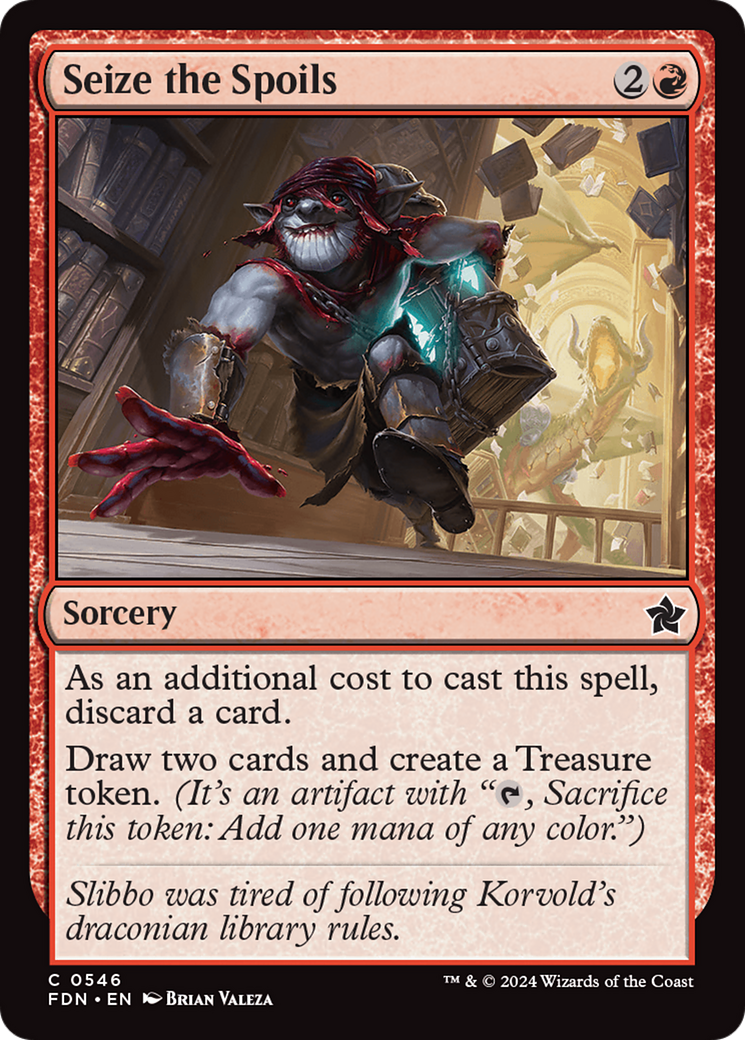
Seize the Spoils
Seize the Spoils
Sorcery
As an additional cost to cast this spell, discard a card.
Draw two cards and create a Treasure token. (It's an artifact with " , Sacrifice this token: Add one mana of any color.")
- You must discard exactly one card to cast Seize the Spoils; you can't cast it without discarding a card, and you can't discard additional cards.
-
1
Sevinne's Reclamation
Sevinne's Reclamation
Sorcery
Return target permanent card with mana value 3 or less from your graveyard to the battlefield. If this spell was cast from a graveyard, you may copy this spell and may choose a new target for the copy.
Flashback (You may cast this card from your graveyard for its flashback cost. Then exile it.)
- A spell cast using flashback will always be exiled afterward, whether it resolves, is countered, or leaves the stack in some other way.
- You can cast a spell using flashback even if it was somehow put into your graveyard without having been cast.
- To determine the total cost of a spell, start with the mana cost or alternative cost (such as a flashback cost) you're paying, add any cost increases, then apply any cost reductions. The mana value of the spell is determined only by its mana cost, no matter what the total cost to cast the spell was.
- You must still follow any timing restrictions and permissions, including those based on the card's type. For instance, you can cast a sorcery using flashback only when you could normally cast a sorcery.
- "Flashback [cost]" means "You may cast this card from your graveyard if the resulting spell is an instant or sorcery spell by paying [cost] rather than paying its mana cost" and "If the flashback cost was paid, exile this card instead of putting it anywhere else any time it would leave the stack."
- If a card with flashback is put into your graveyard during your turn, you can cast it if it's legal to do so before any other player can take any actions.
- A permanent card is an artifact, battle, creature, enchantment, land, or planeswalker card.
- The copy that Sevinne's Reclamation creates is created on the stack, so it's not "cast." Abilities that trigger when a player casts a spell won't trigger. The copy wasn't cast from a graveyard, so it won't make another copy of itself.
- If you cast Sevinne's Reclamation from your graveyard, any abilities that trigger as the permanent card returns to the battlefield will resolve before the copy of Sevinne's Reclamation resolves but after new targets for the copy have been chosen.
- If a card in a graveyard has in its mana cost, X is considered to be 0.
- If the target card is an illegal target by the time Sevinne's Reclamation tries to resolve, the spell doesn't resolve. You won't copy it if you cast it from a graveyard.
-
1
Tragic Arrogance
Tragic Arrogance
Sorcery
For each player, you choose from among the permanents that player controls an artifact, a creature, an enchantment, and a planeswalker. Then each player sacrifices all other nonland permanents they control.
- None of the chosen permanents are targets of Tragic Arrogance.
- If a permanent has more than one of the affected types, it can count for any of them. For example, you could choose an artifact creature as the artifact you're sparing, another creature as the creature, and an enchantment creature as the enchantment. Similarly, you could choose an enchantment creature as both the creature and the enchantment that you're sparing, even if the player controls another creature and/or another enchantment.
-
1
Wave of Reckoning
Wave of Reckoning
Sorcery
Each creature deals damage to itself equal to its power.
Artifacts 10
-
1
Arcane Signet
Arcane Signet
Artifact
: Add one mana of any color in your commander's color identity.
- If your commander is a card that has no colors in its color identity, Arcane Signet's ability produces no mana. It doesn't produce .
- If you have two commanders, the ability adds one mana of any color in their combined color identities.
- If you don't have a commander, Arcane Signet's ability produces no mana.
-
1
Archaeomancer's Map
Archaeomancer's Map
Artifact
When this artifact enters, search your library for up to two basic Plains cards, reveal them, put them into your hand, then shuffle.
Whenever a land an opponent controls enters, if that player controls more lands than you, you may put a land card from your hand onto the battlefield.
- The last ability triggers only if that opponent controls more lands than you after the land enters the battlefield. The ability will check again as it tries to resolve. If that opponent doesn't still control more lands than you at that time, the ability won't resolve.
-
1
Bitterthorn, Nissa's Animus
Bitterthorn, Nissa's Animus
Legendary Artifact — Equipment
Living weapon (When this Equipment enters, create a 0/0 black Phyrexian Germ creature token, then attach this to it.)
Equipped creature gets +1/+1.
Whenever equipped creature attacks, you may search your library for a basic land card, put it onto the battlefield tapped, then shuffle.
Equip
-
1
Currency Converter
Currency Converter
Artifact
Whenever you discard a card, you may exile that card from your graveyard.
, : Draw a card, then discard a card.
: Put a card exiled with this artifact into its owner's graveyard. If it's a land card, create a Treasure token. If it's a nonland card, create a 2/2 black Rogue creature token.
-
1
Fellwar Stone
Fellwar Stone
Artifact
: Add one mana of any color that a land an opponent controls could produce.
- When determining what colors of mana your opponents' lands could produce, take into account any applicable replacement effects that would apply to those lands' mana abilities (such as Contamination's effect, for example). If there is more than one, consider them in any possible order.
- Fellwar Stone doesn't care about any restrictions or riders your opponents' lands (such as Ancient Ziggurat or Hall of the Bandit Lord) put on the mana they produce. It just cares about colors of mana.
- The colors of mana are white, blue, black, red, and green. Fellwar Stone can't be tapped for colorless mana, even if a land an opponent controls could produce colorless mana.
- Fellwar Stone checks the effects of all mana-producing abilities of lands your opponents control, but it doesn't check their costs. For example, Vivid Crag has the ability " , Remove a charge counter from Vivid Crag: Add one mana of any color." If an opponent controls Vivid Crag and you control Fellwar Stone, you can tap Fellwar Stone for any color of mana. It doesn't matter whether Vivid Crag has a charge counter on it, and it doesn't matter whether it's untapped.
- This works even if the opponent's lands are tapped. It only checks what kinds of mana can be produced, not if the abilities that produce them are usable right now.
- It only produces one mana even if the land can produce more than one.
- The ability can be activated if the opponent has no lands that produce mana, but the effect will not be able to generate any mana.
-
1
Mind Stone
Mind Stone
Artifact
: Add .
, , Sacrifice this artifact: Draw a card.
-
1
Patchwork Banner
Patchwork Banner
Artifact
As this artifact enters, choose a creature type.
Creatures you control of the chosen type get +1/+1.
: Add one mana of any color.
- You must choose an existing creature type, such as Bird or Wizard. Card types such as artifact can't be chosen.
-
1
Perpetual Timepiece
Perpetual Timepiece
Artifact
: Mill two cards. (Put the top two cards of your library into your graveyard.)
, Exile this artifact: Shuffle any number of target cards from your graveyard into your library.
- You can activate Perpetual Timepiece's second ability with no targets just to shuffle your library. If you choose any targets and they all become illegal targets, the ability won't resolve and you won't shuffle your library.
-
1
Sol Ring
Sol Ring
Artifact
: Add .
-
1
Staff of the Storyteller
Staff of the Storyteller
Artifact
When this artifact enters, create a 1/1 white Spirit creature token with flying.
Whenever you create one or more creature tokens, put a story counter on this artifact.
, , Remove a story counter from this artifact: Draw a card.
Enchantments 4
-
1
Advanced Reconstruction
Advanced Reconstruction
Enchantment — Class
(Gain the next level as a sorcery to add its ability.)
At the beginning of your first main phase, mill a card, then exile a card from your graveyard at random. You may play the exiled card this turn.
: Level 2
Whenever one or more cards leave your graveyard, this Class deals 2 damage to each opponent.
: Level 3
Spells you cast from anywhere other than your hand cost less to cast.
- You pay all costs and follow all timing rules for cards played this way. For example, if the exiled card is a land card, you may play it only during your main phase while the stack is empty and only if you have an available land play remaining.
- If multiple cards leave your graveyard at the same time, Advanced Reconstruction's level 2 ability will trigger only once.
- To determine the total cost of a spell, start with the mana cost or alternative cost you're paying, add any cost increases, then apply any cost reductions (such as that of Advanced Reconstruction's level 3 ability). The mana value of the spell is determined by only its mana cost, no matter what the total cost to cast that spell was.
-
1
Monologue Tax
Monologue Tax
Enchantment
Whenever an opponent casts their second spell each turn, you create a Treasure token.
- Nothing special happens on the third spell, fourth spell, and so on.
- It doesn't matter if Monologue Tax was on the battlefield for the first spell. It also doesn't matter if that first spell resolved or not.
- The ability can trigger once each turn for each opponent.
-
1
Primary Research
Primary Research
Enchantment
When this enchantment enters, return target nonland permanent card with mana value 3 or less from your graveyard to the battlefield.
At the beginning of your end step, if a card left your graveyard this turn, draw a card.
- If a card in a graveyard has in its mana cost, X is 0 for the purpose of determining its mana value.
- Primary Research's last ability will check as your end step starts to see if any cards have left your graveyard this turn. If none did, the ability won't trigger at all. It's not possible to remove cards from your graveyard during your end step in time to have the ability trigger.
-
1
Tocasia's Welcome
Tocasia's Welcome
Enchantment
Whenever one or more creatures you control with mana value 3 or less enter, draw a card. This ability triggers only once each turn.
Lands 37
-
1
Battlefield Forge
Battlefield Forge
Land
: Add .
: Add or . This land deals 1 damage to you.
- Like most lands, each land in this cycle is colorless. The damage dealt to you is dealt by a colorless source.
- The damage dealt to you is part of the second mana ability. It doesn't use the stack and can't be responded to.
-
1
Clifftop Retreat
Clifftop Retreat
Land
This land enters tapped unless you control a Mountain or a Plains.
: Add or .
-
1
Command Tower
Command Tower
Land
: Add one mana of any color in your commander's color identity.
- If you don't have a commander, Command Tower's ability produces no mana.
- If your commander is a card that has no colors in its color identity, Command Tower's ability produces no mana. It doesn't produce .
- If you have two commanders, the ability adds one mana of any color in their combined color identities.
-
1
Emeria, the Sky Ruin
Emeria, the Sky Ruin
Land
This land enters tapped.
At the beginning of your upkeep, if you control seven or more Plains, you may return target creature card from your graveyard to the battlefield.
: Add .
- Emeria, the Sky Ruin's triggered ability has an "intervening 'if' clause." That means (1) the ability won't trigger at all unless you control seven or more Plains as your upkeep starts, and (2) the ability will do nothing if you control fewer than seven Plains by the time it resolves.
-
1
Exotic Orchard
Exotic Orchard
Land
: Add one mana of any color that a land an opponent controls could produce.
- Lands that produce mana based only on what other lands "could produce" won't help each other unless some other land allows one of them to actually produce some type of mana. For example, if you control an Exotic Orchard and your opponent controls an Exotic Orchard and a Reflecting Pool, none of those lands would produce mana if their mana abilities were activated. On the other hand, if you control a Forest and an Exotic Orchard, and your opponent controls an Exotic Orchard and a Reflecting Pool, then each of those lands can be tapped to produce . Your opponent's Exotic Orchard can produce because you control a Forest. Your Exotic Orchard and your opponent's Reflecting Pool can each produce because your opponent's Exotic Orchard can produce .
- When determining what colors of mana your opponents' lands could produce, Exotic Orchard takes into account any applicable replacement effects that would apply to those lands' mana abilities (such as Contamination's effect, for example). If there are more than one, consider them in any possible order.
- The colors of mana are white, blue, black, red, and green. Exotic Orchard can't be tapped for colorless mana, even if a land an opponent controls could produce colorless mana.
- Exotic Orchard doesn't care about any restrictions or riders your opponents' lands (such as Ancient Ziggurat or Hall of the Bandit Lord) put on the mana they produce. It just cares about colors of mana.
- Exotic Orchard checks the effects of all mana-producing abilities of lands your opponents control, but it doesn't check their costs. For example, Vivid Crag has the ability " , Remove a charge counter from Vivid Crag: Add one mana of any color." If an opponent controls Vivid Crag and you control Exotic Orchard, you can tap Exotic Orchard for any color of mana. It doesn't matter whether Vivid Crag has a charge counter on it, and it doesn't matter whether it's untapped.
-
1
Fabled Passage
Fabled Passage
Land
, Sacrifice this land: Search your library for a basic land card, put it onto the battlefield tapped, then shuffle. Then if you control four or more lands, untap that land.
- If you control four or more lands, the basic land doesn't enter untapped; it enters tapped and then you untap it.
- The land that you put onto the battlefield will be counted when determining whether you control four or more lands, but Fabled Passage will not.
-
1
Fields of Strife
Fields of Strife
Land
This land enters tapped.
: Add or .
, : Surveil 1. (Look at the top card of your library. You may put it into your graveyard.)
-
1
Furycalm Snarl
Furycalm Snarl
Land
As this land enters, you may reveal a Mountain or Plains card from your hand. If you don't, this land enters tapped.
: Add or .
- The "Snarl" itself doesn't have any land subtypes. You can't reveal one to satisfy the ability of another.
- If a land card with an appropriate subtype is entering the battlefield from your hand at the same time as one of these lands, you may reveal the other land to have the "Snarl" enter untapped.
- If an effect instructs you to put one of these lands onto the battlefield tapped, it will still enter the battlefield tapped even if you reveal a land card from your hand.
- You may reveal any land card with either or both of the appropriate subtypes. It doesn't have to be a basic land card.
-
1
Glittering Massif
Glittering Massif
Land — Mountain Plains
( : Add or .)
This land enters tapped.
Cycling ( , Discard this card: Draw a card.)
-
1
Lorehold Campus
Lorehold Campus
Land
This land enters tapped.
: Add or .
, : Scry 1. (Look at the top card of your library. You may put that card on the bottom.)
-
1
Lotus Field
Lotus Field
Land
Hexproof
This land enters tapped.
When this land enters, sacrifice two lands.
: Add three mana of any one color.
- If Lotus Field enters the battlefield while you control fewer than two other lands, you must sacrifice each land you control, including Lotus Field.
-
1
Mistveil Plains
Mistveil Plains
Land — Plains
( : Add .)
This land enters tapped.
, : Put target card from your graveyard on the bottom of your library. Activate only if you control two or more white permanents.
- A land card that produces white mana, even a Plains, normally has no color.
- Once you activate Mistveil Plains's last ability, it doesn't matter if you lose control of some of your white permanents.
-
6
Mountain
Mountain
Basic Land — Mountain
( : Add .)
-
11
Plains
Plains
Basic Land — Plains
( : Add .)
-
1
Radiant Summit
Radiant Summit
Land — Mountain Plains
( : Add or .)
This land enters tapped unless you control two or more basic lands.
- Unlike some other dual lands, Radiant Summit has two basic land types. It’s not basic, so effects that search for basic lands (such as the ability of a Lander token) can’t find it, but it does have the appropriate land types for effects such as that of Sunbillow Verge (from the Aetherdrift release).
-
1
Rugged Prairie
Rugged Prairie
Land
: Add .
, : Add , , or .
-
1
Sacred Peaks
Sacred Peaks
Land — Mountain Plains
( : Add or .)
This land enters tapped.
-
1
Study Hall
Study Hall
Land
: Add .
, : Add one mana of any color. When you spend this mana to cast your commander, scry X, where X is the number of times it's been cast from the command zone this game.
-
1
Sunscorched Divide
Sunscorched Divide
Land
, : Add .
-
1
Temple of Triumph
Temple of Triumph
Land
This land enters tapped.
When this land enters, scry 1. (Look at the top card of your library. You may put that card on the bottom.)
: Add or .
- When you scry, you may put all the cards you look at back on top of your library, you may put all of those cards on the bottom of your library, or you may put some of those cards on top and the rest of them on the bottom.
- You choose how to order cards returned to your library after scrying no matter where you put them.
- You perform the actions stated on a card in sequence. For some spells and abilities, that means you'll scry last. For others, that means you'll scry and then perform other actions.
- Scry appears on some spells and abilities with one or more targets. If all of the spell or ability's targets are illegal when it tries to resolve, it won't resolve and none of its effects will happen. You won't scry.
-
1
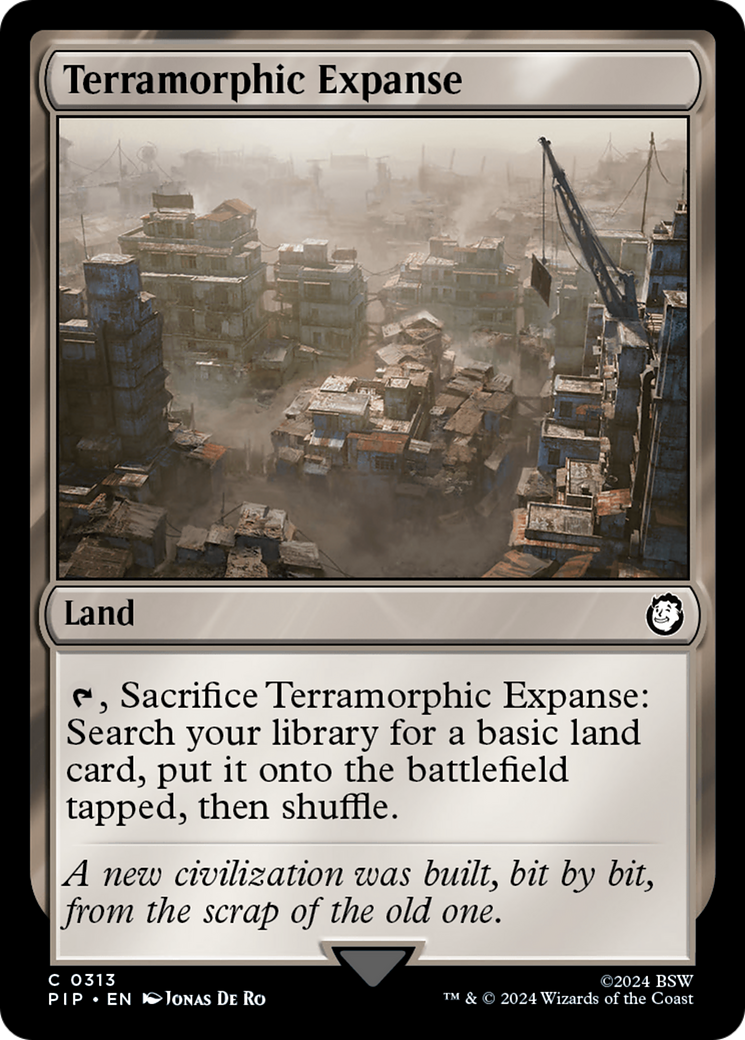
Terramorphic Expanse
Terramorphic Expanse
Land
, Sacrifice this land: Search your library for a basic land card, put it onto the battlefield tapped, then shuffle.
-
1
Turbulent Steppe
Turbulent Steppe
Land — Mountain Plains
( : Add or .)
This land enters tapped unless your opponents control eight or more lands.
- Unlike some other dual lands, Turbulent Steppe has two basic land types. It's not basic, so effects that search for basic lands can't find it, but it does have the appropriate land types for effects such as that of Furycalm Snarl (included in the Secrets of Strixhaven Commander decks).
- If this land enters the battlefield at the same time as any number of lands your opponents control, those other lands are not counted when determining if this land enters the battlefield tapped or untapped.
White 30
-
1
Angel of Indemnity
Angel of Indemnity
Creature — Angel Warrior
5/5
Flying, lifelink
When this creature enters, return target permanent card with mana value 4 or less from your graveyard to the battlefield.
Encore ( , Exile this card from your graveyard: For each opponent, create a token copy that attacks that opponent this turn if able. They gain haste. Sacrifice them at the beginning of the next end step. Activate only as a sorcery.)
- Opponents who have left the game aren't counted when determining how many tokens to create.
- If one of the tokens can't attack for any reason (such as being tapped), then it doesn't attack. If there's a cost associated with having it attack, you aren't forced to pay that cost, so it doesn't have to attack in that case either.
- If one of the tokens somehow is under another player's control as the delayed triggered ability resolves, you can't sacrifice that token. It remains on the battlefield indefinitely, even if you regain control of it later.
- The tokens copy only what's on the original card. Effects that modified that creature when it was previously on the battlefield won't be copied.
- Exiling the card with encore is a cost to activate the ability. Once you announce that you're activating it, no player may take actions until you've finished. They can't try to remove the card from your graveyard to stop you from paying the cost.
- If an effect stops a token from attacking a specific player, that token can attack any player, planeswalker, or battle, or not attack at all. If the effect stops the token from attacking a specific player unless a cost is paid, you don't have to pay that cost unless you want to attack that player.
- If you return an Aura this way, you choose what the Aura will enchant just before it enters the battlefield. An Aura returning to the battlefield this way doesn't target the player or permanent it will enchant, so permanents or players with hexproof may be chosen; however, the chosen recipient must be able to legally be enchanted by the Aura, so a player or permanent with protection from one of the Aura's qualities can't be chosen this way. If there's nothing legal for the Aura to enchant, it stays in the graveyard.
- A permanent card is an artifact, battle, creature, enchantment, land, or planeswalker card.
- If the mana cost of a card in your graveyard includes , X is 0 for the purpose of determining its mana value.
- Each token must attack the appropriate player if able.
-
1
Ao, the Dawn Sky
Ao, the Dawn Sky
Legendary Creature — Dragon Spirit
5/4
Flying, vigilance
When Ao dies, choose one —
- Look at the top seven cards of your library. Put any number of nonland permanent cards with total mana value 4 or less from among them onto the battlefield. Put the rest on the bottom of your library in a random order.
- Put two +1/+1 counters on each permanent you control that's a creature or Vehicle.
-
1
Archaeomancer's Map
Archaeomancer's Map
Artifact
When this artifact enters, search your library for up to two basic Plains cards, reveal them, put them into your hand, then shuffle.
Whenever a land an opponent controls enters, if that player controls more lands than you, you may put a land card from your hand onto the battlefield.
- The last ability triggers only if that opponent controls more lands than you after the land enters the battlefield. The ability will check again as it tries to resolve. If that opponent doesn't still control more lands than you at that time, the ability won't resolve.
-
1
Augusta, Order Returned
Augusta, Order Returned
Legendary Creature — Spirit Advisor
1/3
Flying, vigilance
Whenever Augusta attacks, each player exiles a card from their graveyard. When one or more nonland cards are exiled this way, put that many +1/+1 counters on target attacking creature.
- You don't choose a target for Augusta's last ability at the time it triggers. Instead, a second "reflexive" ability triggers whenever one or more nonland cards are exiled this way. You choose a target for that ability as it goes on the stack. Each player may respond to this triggered ability as normal.
- As Augusta's last ability resolves, the player whose turn it is chooses a card to exile from their graveyard, then each other player in turn order does the same, then all of the chosen cards are exiled at the same time. Each player will know the choices made by the players who chose before them.
-
1
Ceaseless Conflict
Ceaseless Conflict
Sorcery
Destroy all creatures. Then create a 3/2 red and white Spirit creature token for each nontoken creature you controlled that was destroyed this way.
-
1
Claim Jumper
Claim Jumper
Creature — Rabbit Mercenary
3/3
Vigilance
When this creature enters, if an opponent controls more lands than you, you may search your library for a Plains card and put it onto the battlefield tapped. Then if an opponent controls more lands than you, repeat this process once. If you search your library this way, shuffle.
- For example, say you control three lands, one opponent controls four lands, and another opponent controls five lands. As Claim Jumper's ability resolves, at least one opponent controls more lands than you, so you search for a Plains card and put it onto the battlefield tapped. Now you control four lands, but there's still an opponent who controls more lands than you, so you repeat the process once, searching for another Plains. You end up controlling five lands (two tapped Plains plus your original three, which you probably tapped to cast Claim Jumper in the first place).
- When Claim Jumper enters the battlefield, its triggered ability will check to see if at least one opponent controls more lands than you. If none do, the ability won't trigger at all. If the ability does trigger, it will check again as it tries to resolve. If there's no longer an opponent that controls more lands than you, the ability won't do anything.
-
1
Drumbellower
Drumbellower
Creature — Spirit
2/1
Flying
Untap all creatures you control during each other player's untap step.
- All your creatures untap during each other player's untap step. You have no choice about what untaps.
- Other effects can prevent a creature from untapping during an untap step. You do need to look carefully, however, as many effects say that the creature doesn't untap during its controller's untap step, and this card's ability applies during other players' untap steps. If a card does say this, then Drumbellower can untap it.
-
1
Guardian of Faith
Guardian of Faith
Creature — Spirit Knight
3/2
Flash
Vigilance
When this creature enters, any number of other target creatures you control phase out. (Treat them and anything attached to them as though they don't exist until their controller's next turn.)
- An attacking or blocking creature that phases out is removed from combat.
- Any continuous effects with a "for as long as" duration, such as that of Mind Flayer, ignore phased-out objects. If ignoring those objects causes the effect's conditions to no longer be met, the duration will expire.
- If an opponent gains control of one of your creatures, that creature phases out, and the duration of the control-change effect expires before it phases back in, that creature phases in under your control as that opponent's next untap step begins. If they leave the game before their next untap step, it phases in as the next untap step begins after their turn would have begun.
- Choices made for permanents as they entered the battlefield are remembered when they phase in.
- Phased out permanents are treated as though they don't exist. They can't be the target of spells or abilities, their static abilities have no effect on the game, their triggered abilities can't trigger, they can't attack or block, and so on.
- As a creature is phased out, Auras and Equipment attached to it also phase out at the same time. Those Auras and Equipment will phase in at the same time that creature does, and they'll phase in still attached to that creature.
- Permanents phase back in during their controller's untap step, immediately before that player untaps their permanents. Creatures that phase in this way are able to attack and pay a cost of during that turn. If a permanent had counters on it when it phased out, it will have those counters when it phases back in.
- Phasing out doesn't cause any "leaves the battlefield" abilities to trigger. Similarly, phasing in won't cause any "enters the battlefield" abilities to trigger.
-
1
Guardian Scalelord
Guardian Scalelord
Creature — Dragon
3/4
Backup 1 (When this creature enters, put a +1/+1 counter on target creature. If that's another creature, it gains the following abilities until end of turn.)
Flying
Whenever this creature attacks, return target nonland permanent card with mana value X or less from your graveyard to the battlefield, where X is this creature's power.
- If a permanent enters the battlefield as a copy of a card with a backup ability or a token is created that is a copy of that card, the order of the printed abilities is maintained.
- If a backup ability causes another creature to gain abilities, the creature with backup will still have those abilities.
- If a backup ability targets the creature with backup, that creature will get +1/+1 counters, but it won't gain additional abilities.
- The abilities that backup grants to the target creature are determined only once, at the time the ability triggers. They won't change if the permanent with backup loses any abilities before the backup ability resolves.
- Backup confers only abilities that are actually printed below it. Any abilities that are gained by the permanent are ignored, including abilities gained due to a resolving spell or ability or copy effects.
-
1
Kami of Ancient Law
Kami of Ancient Law
Creature — Spirit
2/2
Sacrifice this creature: Destroy target enchantment.
-
1
Karmic Guide
Karmic Guide
Creature — Angel Spirit
2/2
Flying, protection from black
Echo (At the beginning of your upkeep, if this came under your control since the beginning of your last upkeep, sacrifice it unless you pay its echo cost.)
When this creature enters, return target creature card from your graveyard to the battlefield.
- Your permanent's echo ability will trigger at the beginning of your upkeep if it entered the battlefield since the beginning of your last upkeep, or if you gained control of it since the beginning of your last upkeep.
- Paying for echo is always optional. When the echo triggered ability resolves, if you can't pay the echo cost or choose not to, you sacrifice that permanent.
-
1
Monologue Tax
Monologue Tax
Enchantment
Whenever an opponent casts their second spell each turn, you create a Treasure token.
- Nothing special happens on the third spell, fourth spell, and so on.
- It doesn't matter if Monologue Tax was on the battlefield for the first spell. It also doesn't matter if that first spell resolved or not.
- The ability can trigger once each turn for each opponent.
-
1
Moonshaker Cavalry
Moonshaker Cavalry
Creature — Spirit Knight
6/6
Flying
When this creature enters, creatures you control gain flying and get +X/+X until end of turn, where X is the number of creatures you control.
- The value of X is determined only as Moonshaker Cavalry's triggered ability resolves, potentially including Moonshaker Cavalry itself. It won't change later in the turn if the number of creatures you control changes.
- Moonshaker Cavalry's triggered ability affects only creatures you control at the time it resolves. Creatures you begin to control later in the turn won't be affected.
-
1
Path to Exile
Path to Exile
Instant
Exile target creature. Its controller may search their library for a basic land card, put that card onto the battlefield tapped, then shuffle.
- The controller of the exiled creature isn't required to search their library for a basic land. If that player doesn't, the player won't shuffle their library.
- If the target creature is an illegal target by the time Path to Exile tries to resolve, it won't resolve and none of its effects will happen. The creature's controller won't search for a basic land card.
-
1
Primary Research
Primary Research
Enchantment
When this enchantment enters, return target nonland permanent card with mana value 3 or less from your graveyard to the battlefield.
At the beginning of your end step, if a card left your graveyard this turn, draw a card.
- If a card in a graveyard has in its mana cost, X is 0 for the purpose of determining its mana value.
- Primary Research's last ability will check as your end step starts to see if any cards have left your graveyard this turn. If none did, the ability won't trigger at all. It's not possible to remove cards from your graveyard during your end step in time to have the ability trigger.
-
1
Remorseful Cleric
Remorseful Cleric
Creature — Spirit Cleric
2/1
Flying
Sacrifice this creature: Exile target player's graveyard.
-
1
Secret Rendezvous
Secret Rendezvous
Sorcery
You and target opponent each draw three cards.
- If the opponent is an illegal target as Secret Rendezvous tries to resolve, neither player will draw cards.
-
1
Selfless Spirit
Selfless Spirit
Creature — Spirit Cleric
2/1
Flying
Sacrifice this creature: Creatures you control gain indestructible until end of turn.
- The set of creatures affected by Selfless Spirit's last ability is determined as the ability resolves. Creatures you begin to control later in the turn won't gain indestructible.
-
1
Serra Paragon
Serra Paragon
Creature — Angel
3/4
Flying
Once during each of your turns, you may play a land from your graveyard or cast a permanent spell with mana value 3 or less from your graveyard. If you do, it gains "When this permanent is put into a graveyard from the battlefield, exile it and you gain 2 life."
-
1
Sevinne's Reclamation
Sevinne's Reclamation
Sorcery
Return target permanent card with mana value 3 or less from your graveyard to the battlefield. If this spell was cast from a graveyard, you may copy this spell and may choose a new target for the copy.
Flashback (You may cast this card from your graveyard for its flashback cost. Then exile it.)
- A spell cast using flashback will always be exiled afterward, whether it resolves, is countered, or leaves the stack in some other way.
- You can cast a spell using flashback even if it was somehow put into your graveyard without having been cast.
- To determine the total cost of a spell, start with the mana cost or alternative cost (such as a flashback cost) you're paying, add any cost increases, then apply any cost reductions. The mana value of the spell is determined only by its mana cost, no matter what the total cost to cast the spell was.
- You must still follow any timing restrictions and permissions, including those based on the card's type. For instance, you can cast a sorcery using flashback only when you could normally cast a sorcery.
- "Flashback [cost]" means "You may cast this card from your graveyard if the resulting spell is an instant or sorcery spell by paying [cost] rather than paying its mana cost" and "If the flashback cost was paid, exile this card instead of putting it anywhere else any time it would leave the stack."
- If a card with flashback is put into your graveyard during your turn, you can cast it if it's legal to do so before any other player can take any actions.
- A permanent card is an artifact, battle, creature, enchantment, land, or planeswalker card.
- The copy that Sevinne's Reclamation creates is created on the stack, so it's not "cast." Abilities that trigger when a player casts a spell won't trigger. The copy wasn't cast from a graveyard, so it won't make another copy of itself.
- If you cast Sevinne's Reclamation from your graveyard, any abilities that trigger as the permanent card returns to the battlefield will resolve before the copy of Sevinne's Reclamation resolves but after new targets for the copy have been chosen.
- If a card in a graveyard has in its mana cost, X is considered to be 0.
- If the target card is an illegal target by the time Sevinne's Reclamation tries to resolve, the spell doesn't resolve. You won't copy it if you cast it from a graveyard.
-
1
Skyclave Apparition
Skyclave Apparition
Creature — Kor Spirit
2/2
When this creature enters, exile up to one target nonland, nontoken permanent you don't control with mana value 4 or less.
When this creature leaves the battlefield, the exiled card's owner creates an X/X blue Illusion creature token, where X is the mana value of the exiled card.
- If there's no exiled card when Skyclave Apparition leaves the battlefield (most likely because its first ability hasn't resolved yet), no player creates a token.
- If a creature on the battlefield has in its mana cost, X is considered to be 0.
- If Skyclave Apparition leaves the battlefield before its first ability resolves, the ability still exiles the target permanent.
- If Skyclave Apparition's first ability exiled more than one card owned by a single player, that player creates a token with power and toughness equal to the sum of those cards' mana values. If the first ability exiled cards owned by more than one player, each of those players creates a token with power and toughness equal to the sum of the mana values of all cards exiled by the first ability.
-
1
Staff of the Storyteller
Staff of the Storyteller
Artifact
When this artifact enters, create a 1/1 white Spirit creature token with flying.
Whenever you create one or more creature tokens, put a story counter on this artifact.
, , Remove a story counter from this artifact: Draw a card.
-
1
Sun Titan
Sun Titan
Creature — Giant
6/6
Vigilance
Whenever this creature enters or attacks, you may return target permanent card with mana value 3 or less from your graveyard to the battlefield.
- A permanent card is an artifact, creature, enchantment, land, or planeswalker card.
- If a card in your graveyard has no mana symbols in its upper right corner (because it's a land card, for example), its mana value is 0.
- The mana value of a card in your graveyard is determined solely by the mana symbols printed in its upper right corner. The mana value is the total amount of mana in that cost, regardless of color. For example, a card with mana cost has mana value 5.
- If the mana cost of a card in your graveyard includes , X is considered to be 0.
-
1
Swords to Plowshares
Swords to Plowshares
Instant
Exile target creature. Its controller gains life equal to its power.
- Use the power of the creature from when it was last on the battlefield to determine how much life is gained.
-
1
Teshar, Ancestor's Apostle
Teshar, Ancestor's Apostle
Legendary Creature — Bird Cleric
2/2
Flying
Whenever you cast a historic spell, return target creature card with mana value 3 or less from your graveyard to the battlefield. (Artifacts, legendaries, and Sagas are historic.)
- If the mana cost of a card in your graveyard includes , X is considered to be 0.
- A card, spell, or permanent is historic if it has the legendary supertype, the artifact card type, or the Saga subtype. Having two of those qualities doesn't make an object more historic than another or provide an additional bonus—an object either is historic or it isn't.
- Some abilities trigger "whenever you cast a historic spell." Such an ability resolves before the spell that caused it to trigger. It resolves even if that spell is countered.
- Lands are never cast, so abilities that trigger "whenever you cast a historic spell" won't trigger if you play a legendary land. They also won't trigger if a card on the battlefield transforms into a legendary land, as the Ixalan and Rivals of Ixalan double-faced cards do.
- An ability that triggers "whenever you cast a historic spell" doesn't trigger if a historic card is put onto the battlefield without being cast.
-
1
Tocasia's Welcome
Tocasia's Welcome
Enchantment
Whenever one or more creatures you control with mana value 3 or less enter, draw a card. This ability triggers only once each turn.
-
1
Tragic Arrogance
Tragic Arrogance
Sorcery
For each player, you choose from among the permanents that player controls an artifact, a creature, an enchantment, and a planeswalker. Then each player sacrifices all other nonland permanents they control.
- None of the chosen permanents are targets of Tragic Arrogance.
- If a permanent has more than one of the affected types, it can count for any of them. For example, you could choose an artifact creature as the artifact you're sparing, another creature as the creature, and an enchantment creature as the enchantment. Similarly, you could choose an enchantment creature as both the creature and the enchantment that you're sparing, even if the player controls another creature and/or another enchantment.
-
1
Vanguard of the Restless
Vanguard of the Restless
Creature — Spirit Knight
2/2
Flying
Spirits you control get +1/+1 for each time you've cast your commander from the command zone this game.
Whenever a Spirit you control enters, you may pay . If you do, return this card from your graveyard to the battlefield.
- Vanguard of the Restless's second ability counts each time you've cast your commander from the command zone, even the times it was countered or when your commander spell is still on the stack.
- If you have more than one commander (probably because of a partner ability), Vanguard of the Restless's second ability counts the total number of times you've cast each of your commanders from the command zone.
-
1
Wave of Reckoning
Wave of Reckoning
Sorcery
Each creature deals damage to itself equal to its power.
-
1
White Orchid Phantom
White Orchid Phantom
Creature — Spirit Knight
2/2
Flying, first strike
When this creature enters, destroy up to one target nonbasic land. Its controller may search their library for a basic land card, put it onto the battlefield tapped, then shuffle.
- If the target land isn't destroyed by White Orchid Phantom's last ability (perhaps because the land has indestructible), its controller still gets to search for a basic land card.
- If the target land is an illegal target when White Orchid Phantom's last ability tries to resolve, it won't resolve and none of its effects will happen. That land's controller won't get to search for a basic land card.
Red 12
-
1
Advanced Reconstruction
Advanced Reconstruction
Enchantment — Class
(Gain the next level as a sorcery to add its ability.)
At the beginning of your first main phase, mill a card, then exile a card from your graveyard at random. You may play the exiled card this turn.
: Level 2
Whenever one or more cards leave your graveyard, this Class deals 2 damage to each opponent.
: Level 3
Spells you cast from anywhere other than your hand cost less to cast.
- You pay all costs and follow all timing rules for cards played this way. For example, if the exiled card is a land card, you may play it only during your main phase while the stack is empty and only if you have an available land play remaining.
- If multiple cards leave your graveyard at the same time, Advanced Reconstruction's level 2 ability will trigger only once.
- To determine the total cost of a spell, start with the mana cost or alternative cost you're paying, add any cost increases, then apply any cost reductions (such as that of Advanced Reconstruction's level 3 ability). The mana value of the spell is determined by only its mana cost, no matter what the total cost to cast that spell was.
-
1
Anger
Anger
Creature — Incarnation
2/2
Haste
As long as this card is in your graveyard and you control a Mountain, creatures you control have haste.
- The timestamp for the "in your graveyard" ability is set at the time that this card goes to your graveyard, regardless of whether you control a Mountain at that time.
-
1
Atsushi, the Blazing Sky
Atsushi, the Blazing Sky
Legendary Creature — Dragon Spirit
4/4
Flying, trample
When Atsushi dies, choose one —
- Exile the top two cards of your library. Until the end of your next turn, you may play those cards.
- Create three Treasure tokens.
-
1
Conspiracy Theorist
Conspiracy Theorist
Creature — Human Shaman
2/2
Whenever this creature attacks, you may pay and discard a card. If you do, draw a card.
Whenever you discard one or more nonland cards, you may exile one of them from your graveyard. If you do, you may cast it this turn.
- While resolving Conspiracy Theorist's ability, you can't pay and discard a card multiple times to draw more cards.
- The card exiled by the second ability is exiled face up. Casting it follows the normal rules for casting that card. You must pay its costs, and you must follow all applicable timing rules. For example, if it's a creature card, you can cast it only during your main phase while the stack is empty. In most cases, if you exile a non-instant card during an opponent's turn, you won't be able to cast it that turn.
-
1
Faithless Looting
Faithless Looting
Sorcery
Draw two cards, then discard two cards.
Flashback (You may cast this card from your graveyard for its flashback cost. Then exile it.)
- To determine the total cost of a spell, start with the mana cost or alternative cost (such as a flashback cost) you're paying, add any cost increases, then apply any cost reductions. The mana value of the spell is determined only by its mana cost, no matter what the total cost to cast the spell was.
- A spell cast using flashback will always be exiled afterward, whether it resolves, is countered, or leaves the stack in some other way.
- "Flashback [cost]" means "You may cast this card from your graveyard if the resulting spell is an instant or sorcery spell by paying [cost] rather than paying its mana cost" and "If the flashback cost was paid, exile this card instead of putting it anywhere else any time it would leave the stack."
- If a card with flashback is put into your graveyard during your turn, you can cast it if it's legal to do so before any other player can take any actions.
- You can cast a spell using flashback even if it was somehow put into your graveyard without having been cast.
- You must still follow any timing restrictions and permissions, including those based on the card's type. For instance, you can cast a sorcery using flashback only when you could normally cast a sorcery.
- You draw two cards and discard two cards all while Faithless Looting is resolving. Nothing can happen between the two, and no player may choose to take actions.
-
1
Fateful Tempest
Fateful Tempest
Sorcery
Council's dilemma — Starting with you, each player votes for past or present. You mill a card for each past vote, then Fateful Tempest deals damage to each opponent equal to the total mana value of cards milled this way. Exile the top card of your library for each present vote. Until the end of your next turn, you may play the exiled cards.
- If a milled card has in its mana cost, X is 0 for the purpose of determining its mana value.
- Each player must vote for one of the available options. They can't abstain.
- Votes are cast in turn order, and each player will know the votes of players who voted beforehand.
- You pay all costs and follow all timing rules for cards played this way. For example, if one of the exiled cards is a land card, you may play it only during your main phase while the stack is empty and only if you have an available land play remaining.
- No player votes until the spell or ability resolves. Any responses to that spell or ability must be made without knowing the outcome of the vote.
- Abilities that trigger "whenever players finish voting" trigger once all players have voted or once all secret votes are revealed, but they won't go on the stack until the current spell or ability finishes resolving.
-
1
Laelia, the Blade Reforged
Laelia, the Blade Reforged
Legendary Creature — Spirit Warrior
2/2
Haste
Whenever Laelia attacks, exile the top card of your library. You may play that card this turn.
Whenever one or more cards are put into exile from your library and/or your graveyard, put a +1/+1 counter on Laelia.
- You must follow the normal timing permissions and restrictions while playing the exiled card. If it's a land, you can't play it unless you have land plays available.
- Cards exiled by Laelia, the Blade Reforged are exiled face up.
- You'll still pay all costs for a spell cast this way, including additional costs. You may also pay alternative costs if any are available.
- If a player is instructed to exile cards from their library "until" a certain event occurs (for example, because of the triggered ability of a spell with cascade or discover), that player exiles those cards one at a time. Laelia's last ability will trigger that many times.
- If you play a card this way, it leaves exile and becomes a new object. If it returns to exile later in the turn, you can't play it again.
- The last ability triggers only once for each time cards are put into exile from your library and/or graveyard, no matter how many cards were exiled at the same time.
- Laelia's last triggered ability doesn't care which player is exiling cards from the library or graveyard. Cards put into exile from your library or graveyard for any reason, such as the delve ability, cause the ability to trigger.
-
1
Naktamun Lorespinner // Wheel of Fortune
//
Naktamun Lorespinner
Creature — Jackal Wizard
3/3
- Only the current controller of a prepared creature can cast the copy of its prepare spell in exile. It doesn't matter who owns that creature or who controlled it when it became prepared.
- Creating a copy of a creature's prepare spell in exile ignores copy exceptions applied to that creature that would affect the copiable values of that spell. For example, say a player casts Croaking Counterpart (a sorcery that says "Create a token that's a copy of target non-Frog creature, except it's a 1/1 green Frog.") targeting Goblin Glasswright. The token copy of Goblin Glasswright will enter prepared as a 1/1 green Frog creature, but the copy of Craft with Pride in exile will still be a red sorcery. The copy of Craft with Pride won't be green, a creature, or a Frog, and it won't have power or toughness.
- Being prepared isn't a copiable value. If a permanent becomes a copy of a prepared creature, it won't be prepared. That permanent will have the alternative characteristics, though, and some other effect could cause it to become prepared later.
- While copies of spells in zones other than the stack cease to exist when state-based actions are checked, this does not apply to copies of prepare spells in exile that were created as a creature became prepared.
- If a prepare spell with one or more targets has no legal targets when it tries to resolve, it won't resolve and none of its effects will happen. Since the spell was cast, the associated permanent will still not be prepared.
- If a prepared creature loses all abilities, it won't stop being prepared, and nothing will happen to its alternative characteristics or to the copy of its prepare spell in exile.
- Naktamun Lorespinner's ability checks at the moment it would trigger to see if there are any players with one or fewer cards in hand. If there aren't, the ability won't trigger at all. If it does trigger, the ability will check again as it tries to resolve. If there are no players with one or fewer cards in hand at that time, the ability won't resolve and none of its effects will happen.
- A creature with a prepare spell can't become prepared more than once at the same time. For example, Emeritus of Ideation is on the battlefield and is prepared. When it attacks, its last ability triggers. When that ability resolves, its controller may still exile eight cards from their graveyard, but doing so won't cause Emeritus of Ideation to become prepared a second time or create a second copy of Ancestral Recall in exile.
- If a prepared creature stops being a creature, it will still be prepared, and the copy of its prepare spell will remain in exile. That permanent's controller will still be able to cast it. The same is true if a prepared creature becomes a copy of something else, even if it's then a permanent without a prepare spell.
- As an effect causes a creature with a prepare spell to become prepared (including effects that state that a creature "enters prepared"), that creature's controller creates a copy of that creature's prepare spell in exile. That copy remains in exile for as long as that permanent is on the battlefield and is prepared. That creature's controller may cast that copy as long as it remains in exile. As they cast it, that creature stops being prepared.
- Casting a copy of a prepare spell from exile isn't casting it for an alternative cost. Effects that allow you to cast a spell for an alternative cost or without paying its mana cost may allow you to apply those to a copy of a prepare spell cast from exile.
- A preparation card is a creature card in every zone. For example, while it's in your graveyard, Emeritus of Ideation is a blue creature whose mana value is 5. It can't be the target of Zealous Lorecaster's triggered ability ("When this creature enters, return target instant or sorcery card from your graveyard to your hand.").
- If an effect instructs you to choose a card name, you may choose the alternative prepare spell's name. Consider only the alternative characteristics to determine whether that is an appropriate name to choose.
- A creature without a prepare spell can't become prepared.
- Preparation cards can only be cast with their base characteristics.
- If an effect causes a creature to become unprepared, a prepared creature stops being prepared and the associated copy of its prepare spell in exile ceases to exist. If it wasn't prepared at that time, nothing happens.
-
1
Relic Retriever
Relic Retriever
Creature — Spirit Monkey
2/1
First strike
At the beginning of each end step, if a card left your graveyard this turn, create a Treasure token. (It's an artifact with " , Sacrifice this token: Add one mana of any color.")
- Relic Retriever's last ability will check as your end step starts to see if any cards have left your graveyard this turn. If none did, the ability won't trigger at all. It's not possible to remove cards from your graveyard during your end step in time to have the ability trigger.
-
1
Seize the Spoils
Seize the Spoils
Sorcery
As an additional cost to cast this spell, discard a card.
Draw two cards and create a Treasure token. (It's an artifact with " , Sacrifice this token: Add one mana of any color.")
- You must discard exactly one card to cast Seize the Spoils; you can't cast it without discarding a card, and you can't discard additional cards.
-
1
Spirit of Resilience
Spirit of Resilience
Creature — Spirit Warrior
2/2
Whenever one or more cards leave your graveyard, put a +1/+1 counter on this creature, then you may have this creature become a copy of an artifact or creature card from among those cards until end of turn.
- When Spirit of Resilience becomes a copy of the chosen card, it's neither entering nor leaving the battlefield. Any enters abilities or leaves-the-battlefield abilities won't trigger.
- If multiple cards leave your graveyard at the same time, Spirit of Resilience's ability will trigger only once.
- If the copied card has in its mana cost, X is 0.
- Spirit of Resilience copies exactly what was printed on the original card and nothing else. It doesn't copy any information about the object the card was before it was put into your graveyard.
-
1
Squee, Goblin Nabob
Squee, Goblin Nabob
Legendary Creature — Goblin
1/1
At the beginning of your upkeep, you may return this card from your graveyard to your hand.
- If Squee isn't in your graveyard as your upkeep begins, its ability won't trigger. You can't take any actions during your turn before your upkeep begins.
Multicolor 10
-
1
Excava, the Risen Past
Excava, the Risen Past
Legendary Creature — Spirit Horse
3/3
Flying, haste
Whenever Excava attacks, return up to one target artifact, creature, or non-Aura enchantment card with mana value 3 or less from your graveyard to the battlefield with a finality counter on it. It's a 1/1 Spirit creature with flying in addition to its other types. (If a creature with a finality counter on it would die, exile it instead.)
- If a card in a graveyard has in its mana cost, X is 0 for the purpose of determining its mana value.
- An artifact creature card or enchantment creature card returned this way will have base power and toughness 1/1.
- If another effect causes one of the returned permanents to become a creature and sets its base power and toughness as it does so, that creature will have that power and toughness; it won't be 1/1. However, a Vehicle returned this way will remain a 1/1 if you crew it, and a Spacecraft returned this way will remain a 1/1 even if enough charge counters are placed on it for it to become a creature.
- An Equipment that's also a creature can't be attached to anything. You can activate its equip ability, but it won't become attached.
-
1
Hofri Ghostforge
Hofri Ghostforge
Legendary Creature — Dwarf Cleric
4/5
Spirits you control get +1/+1 and have trample and haste.
Whenever another nontoken creature you control dies, exile it. If you do, create a token that's a copy of that creature, except it's a Spirit in addition to its other types and it has "When this token leaves the battlefield, return the exiled card to its owner's graveyard."
- If you can't exile the card, perhaps because another effect moved the card before the triggered ability started resolving, you won't create a token.
- Hofri Ghostforge's last ability is linked to the ability it grants the Spirit token. If a replacement effect causes you to create more than one Spirit token with this effect, they will all have that ability, and the exiled card will be returned to the graveyard if any of them leaves the battlefield.
- The token copies exactly what was printed on the original creature and nothing else (unless the creature was copying something else; see below). It doesn't copy whether that creature was tapped or untapped, whether it had any counters on it or Auras or Equipment attached to it, or any non-copy effects that changed its power, toughness, types, color, or so on.
- Any enters-the-battlefield abilities of the copied creature will trigger when the token enters the battlefield. Any "As [this creature] enters the battlefield" or "[This creature] enters the battlefield with" abilities of the creature will also work.
- Each Spirit token you create refers only to the card you exile during the resolution of the ability that created that token. When it leaves the battlefield, you return only that card to your graveyard, not any other card exiled by Hofri.
- If another creature enters the battlefield as a copy of the Spirit token or another effect creates a copy of the Spirit token, it will have the triggered ability granted by Hofri, but will not be linked to Hofri's ability and will not return the card to the graveyard when it leaves the battlefield.
- If the copied creature was copying something else, then the token enters the battlefield as whatever that creature copied.
- The copy uses the copiable values of the creature as it last existed on the battlefield before it died, not as it existed in the graveyard before it was exiled.
-
1
Kirol, History Buff // Pack a Punch
//
Kirol, History Buff
Legendary Creature — Vampire Cleric
2/3
- If multiple cards leave your graveyard at the same time, Kirol's first ability will trigger only once.
- A creature with a prepare spell can't become prepared more than once at the same time. For example, Emeritus of Ideation is on the battlefield and is prepared. When it attacks, its last ability triggers. When that ability resolves, its controller may still exile eight cards from their graveyard, but doing so won't cause Emeritus of Ideation to become prepared a second time or create a second copy of Ancestral Recall in exile.
- If a prepared creature loses all abilities, it won't stop being prepared, and nothing will happen to its alternative characteristics or to the copy of its prepare spell in exile.
- Only the current controller of a prepared creature can cast the copy of its prepare spell in exile. It doesn't matter who owns that creature or who controlled it when it became prepared.
- While copies of spells in zones other than the stack cease to exist when state-based actions are checked, this does not apply to copies of prepare spells in exile that were created as a creature became prepared.
- Creating a copy of a creature's prepare spell in exile ignores copy exceptions applied to that creature that would affect the copiable values of that spell. For example, say a player casts Croaking Counterpart (a sorcery that says "Create a token that's a copy of target non-Frog creature, except it's a 1/1 green Frog.") targeting Goblin Glasswright. The token copy of Goblin Glasswright will enter prepared as a 1/1 green Frog creature, but the copy of Craft with Pride in exile will still be a red sorcery. The copy of Craft with Pride won't be green, a creature, or a Frog, and it won't have power or toughness.
- Preparation cards can only be cast with their base characteristics.
- If an effect causes a creature to become unprepared, a prepared creature stops being prepared and the associated copy of its prepare spell in exile ceases to exist. If it wasn't prepared at that time, nothing happens.
- As an effect causes a creature with a prepare spell to become prepared (including effects that state that a creature "enters prepared"), that creature's controller creates a copy of that creature's prepare spell in exile. That copy remains in exile for as long as that permanent is on the battlefield and is prepared. That creature's controller may cast that copy as long as it remains in exile. As they cast it, that creature stops being prepared.
- Casting a copy of a prepare spell from exile isn't casting it for an alternative cost. Effects that allow you to cast a spell for an alternative cost or without paying its mana cost may allow you to apply those to a copy of a prepare spell cast from exile.
- If a prepared creature stops being a creature, it will still be prepared, and the copy of its prepare spell will remain in exile. That permanent's controller will still be able to cast it. The same is true if a prepared creature becomes a copy of something else, even if it's then a permanent without a prepare spell.
- Being prepared isn't a copiable value. If a permanent becomes a copy of a prepared creature, it won't be prepared. That permanent will have the alternative characteristics, though, and some other effect could cause it to become prepared later.
- If a prepare spell with one or more targets has no legal targets when it tries to resolve, it won't resolve and none of its effects will happen. Since the spell was cast, the associated permanent will still not be prepared.
- A creature without a prepare spell can't become prepared.
- A preparation card is a creature card in every zone. For example, while it's in your graveyard, Emeritus of Ideation is a blue creature whose mana value is 5. It can't be the target of Zealous Lorecaster's triggered ability ("When this creature enters, return target instant or sorcery card from your graveyard to your hand.").
- If an effect instructs you to choose a card name, you may choose the alternative prepare spell's name. Consider only the alternative characteristics to determine whether that is an appropriate name to choose.
-
1
Lorehold Archivist // Restore Relic
//
Lorehold Archivist
Creature — Dwarf Artificer
3/2
- While copies of spells in zones other than the stack cease to exist when state-based actions are checked, this does not apply to copies of prepare spells in exile that were created as a creature became prepared.
- A creature without a prepare spell can't become prepared.
- Only the current controller of a prepared creature can cast the copy of its prepare spell in exile. It doesn't matter who owns that creature or who controlled it when it became prepared.
- If a prepared creature loses all abilities, it won't stop being prepared, and nothing will happen to its alternative characteristics or to the copy of its prepare spell in exile.
- If a prepare spell with one or more targets has no legal targets when it tries to resolve, it won't resolve and none of its effects will happen. Since the spell was cast, the associated permanent will still not be prepared.
- If the copied card has in its mana cost, X is 0.
- Preparation cards can only be cast with their base characteristics.
- A creature with a prepare spell can't become prepared more than once at the same time. For example, Emeritus of Ideation is on the battlefield and is prepared. When it attacks, its last ability triggers. When that ability resolves, its controller may still exile eight cards from their graveyard, but doing so won't cause Emeritus of Ideation to become prepared a second time or create a second copy of Ancestral Recall in exile.
- Lorehold Archivist's last ability checks at the moment it would trigger to see if there are three or more artifact and/or creature cards in your graveyard. If there aren't, the ability won't trigger at all. If it does trigger, the ability will check again as it tries to resolve. If you don't have three or more artifact and/or creature cards in your graveyard at that time, the ability won't resolve and none of its effects will happen.
- The token created by Restore Relic copies exactly what was printed on the original card and nothing else. It doesn't copy any information about the object the card was before it was put into your graveyard.
- Being prepared isn't a copiable value. If a permanent becomes a copy of a prepared creature, it won't be prepared. That permanent will have the alternative characteristics, though, and some other effect could cause it to become prepared later.
- Casting a copy of a prepare spell from exile isn't casting it for an alternative cost. Effects that allow you to cast a spell for an alternative cost or without paying its mana cost may allow you to apply those to a copy of a prepare spell cast from exile.
- A preparation card is a creature card in every zone. For example, while it's in your graveyard, Emeritus of Ideation is a blue creature whose mana value is 5. It can't be the target of Zealous Lorecaster's triggered ability ("When this creature enters, return target instant or sorcery card from your graveyard to your hand.").
- As an effect causes a creature with a prepare spell to become prepared (including effects that state that a creature "enters prepared"), that creature's controller creates a copy of that creature's prepare spell in exile. That copy remains in exile for as long as that permanent is on the battlefield and is prepared. That creature's controller may cast that copy as long as it remains in exile. As they cast it, that creature stops being prepared.
- If an effect causes a creature to become unprepared, a prepared creature stops being prepared and the associated copy of its prepare spell in exile ceases to exist. If it wasn't prepared at that time, nothing happens.
- If a card copied by the token had any "when [this permanent] enters" abilities, the token also has those abilities, and they'll trigger when it's created. Similarly, any "as [this permanent] enters" or "[this permanent] enters with" abilities that the token has copied will also work.
- If a prepared creature stops being a creature, it will still be prepared, and the copy of its prepare spell will remain in exile. That permanent's controller will still be able to cast it. The same is true if a prepared creature becomes a copy of something else, even if it's then a permanent without a prepare spell.
- Creating a copy of a creature's prepare spell in exile ignores copy exceptions applied to that creature that would affect the copiable values of that spell. For example, say a player casts Croaking Counterpart (a sorcery that says "Create a token that's a copy of target non-Frog creature, except it's a 1/1 green Frog.") targeting Goblin Glasswright. The token copy of Goblin Glasswright will enter prepared as a 1/1 green Frog creature, but the copy of Craft with Pride in exile will still be a red sorcery. The copy of Craft with Pride won't be green, a creature, or a Frog, and it won't have power or toughness.
- If an effect instructs you to choose a card name, you may choose the alternative prepare spell's name. Consider only the alternative characteristics to determine whether that is an appropriate name to choose.
-
1
Lorehold Charm
Lorehold Charm
Instant
Choose one —
- Each opponent sacrifices a nontoken artifact of their choice.
- Return target artifact or creature card with mana value 2 or less from your graveyard to the battlefield.
- Creatures you control get +1/+1 and gain trample until end of turn.
- If a card in a graveyard has in its mana cost, X is 0 for the purpose of determining its mana value.
-
1
Quintorius, Field Historian
Quintorius, Field Historian
Legendary Creature — Elephant Cleric
2/4
Spirits you control get +1/+0.
Whenever one or more cards leave your graveyard, create a 3/2 red and white Spirit creature token.
- If two or more cards leave your graveyard as a single event, Quintorius's last ability will trigger once. If they leave your graveyard as separate events, it will trigger once for each event.
-
1
Quintorius, History Chaser
Quintorius, History Chaser
Legendary Planeswalker — Quintorius
Whenever one or more cards leave your graveyard, create a 3/2 red and white Spirit creature token.
+1: You may discard a card. If you do, draw two cards, then mill a card.
−4: Spirits you control gain double strike and vigilance until end of turn.
Quintorius, History Chaser can be your commander.
- If multiple cards leave your graveyard at the same time, Quintorius's first ability will trigger only once.
-
1
Quintorius, Loremaster
Quintorius, Loremaster
Legendary Creature — Elephant Cleric
3/5
Vigilance
At the beginning of your end step, exile target noncreature, nonland card from your graveyard. Create a 3/2 red and white Spirit creature token.
, , Sacrifice a Spirit: Choose target card exiled with Quintorius. You may cast that card this turn without paying its mana cost. If that spell would be put into a graveyard, put it on the bottom of its owner's library instead.
- You must follow all applicable timing rules for casting the exiled card. For example, if the card is a sorcery card, you can cast it only during your main phase while the stack is empty.
- Quintorius's last two abilities are linked. The last ability can target only cards exiled by the triggered ability. If a Spirit you sacrifice to activate the last ability ends up being exiled because of a replacement effect, that card can't be targeted by the last ability.
- If the target of Quintorius's triggered ability is an illegal target at the time the ability tries to resolve, the ability won't resolve and none of its effects will happen. You won't create a Spirit token.
- If you cast a card "without paying its mana cost," you can't choose to cast it for any alternative costs. You can, however, pay additional costs. If the card has any mandatory additional costs, you must pay those to cast the card.
- If the card has in its mana cost, you must choose 0 as the value of X when casting it without paying its mana cost.
-
1
Rip Apart
Rip Apart
Sorcery
Choose one —
- Rip Apart deals 3 damage to target creature or planeswalker.
- Destroy target artifact or enchantment.
-
1
Venerable Warsinger
Venerable Warsinger
Creature — Spirit Cleric
3/3
Vigilance, trample
Whenever this creature deals combat damage to a player, you may return target creature card with mana value X or less from your graveyard to the battlefield, where X is the amount of damage this creature dealt to that player.
Colorless 11
-
1
Arcane Signet
Arcane Signet
Artifact
: Add one mana of any color in your commander's color identity.
- If your commander is a card that has no colors in its color identity, Arcane Signet's ability produces no mana. It doesn't produce .
- If you have two commanders, the ability adds one mana of any color in their combined color identities.
- If you don't have a commander, Arcane Signet's ability produces no mana.
-
1
Balefire Liege
Balefire Liege
Creature — Spirit Horror
2/4
Other red creatures you control get +1/+1.
Other white creatures you control get +1/+1.
Whenever you cast a red spell, this creature deals 3 damage to target player or planeswalker.
Whenever you cast a white spell, you gain 3 life.
- The abilities are separate and cumulative. If another creature you control is both of the listed colors, it will get a total of +2/+2.
-
1
Bitterthorn, Nissa's Animus
Bitterthorn, Nissa's Animus
Legendary Artifact — Equipment
Living weapon (When this Equipment enters, create a 0/0 black Phyrexian Germ creature token, then attach this to it.)
Equipped creature gets +1/+1.
Whenever equipped creature attacks, you may search your library for a basic land card, put it onto the battlefield tapped, then shuffle.
Equip
-
1
Containment Construct
Containment Construct
Artifact Creature — Construct
2/1
Whenever you discard a card, you may exile that card from your graveyard. If you do, you may play that card this turn.
-
1
Currency Converter
Currency Converter
Artifact
Whenever you discard a card, you may exile that card from your graveyard.
, : Draw a card, then discard a card.
: Put a card exiled with this artifact into its owner's graveyard. If it's a land card, create a Treasure token. If it's a nonland card, create a 2/2 black Rogue creature token.
-
1
Fellwar Stone
Fellwar Stone
Artifact
: Add one mana of any color that a land an opponent controls could produce.
- When determining what colors of mana your opponents' lands could produce, take into account any applicable replacement effects that would apply to those lands' mana abilities (such as Contamination's effect, for example). If there is more than one, consider them in any possible order.
- Fellwar Stone doesn't care about any restrictions or riders your opponents' lands (such as Ancient Ziggurat or Hall of the Bandit Lord) put on the mana they produce. It just cares about colors of mana.
- The colors of mana are white, blue, black, red, and green. Fellwar Stone can't be tapped for colorless mana, even if a land an opponent controls could produce colorless mana.
- Fellwar Stone checks the effects of all mana-producing abilities of lands your opponents control, but it doesn't check their costs. For example, Vivid Crag has the ability " , Remove a charge counter from Vivid Crag: Add one mana of any color." If an opponent controls Vivid Crag and you control Fellwar Stone, you can tap Fellwar Stone for any color of mana. It doesn't matter whether Vivid Crag has a charge counter on it, and it doesn't matter whether it's untapped.
- This works even if the opponent's lands are tapped. It only checks what kinds of mana can be produced, not if the abilities that produce them are usable right now.
- It only produces one mana even if the land can produce more than one.
- The ability can be activated if the opponent has no lands that produce mana, but the effect will not be able to generate any mana.
-
1
Millikin
Millikin
Artifact Creature — Construct
0/1
, Mill a card: Add . (To mill a card, put the top card of your library into your graveyard.)
- If an effect allows you to look at the top card of your library any time or to play with the top card of your library revealed, and you activate Millikin's mana ability while casting a spell, you can't look at the new top card of your library until you are done casting the spell. The same is true if you activate Millikin's ability while activating another ability.
-
1
Mind Stone
Mind Stone
Artifact
: Add .
, , Sacrifice this artifact: Draw a card.
-
1
Patchwork Banner
Patchwork Banner
Artifact
As this artifact enters, choose a creature type.
Creatures you control of the chosen type get +1/+1.
: Add one mana of any color.
- You must choose an existing creature type, such as Bird or Wizard. Card types such as artifact can't be chosen.
-
1
Perpetual Timepiece
Perpetual Timepiece
Artifact
: Mill two cards. (Put the top two cards of your library into your graveyard.)
, Exile this artifact: Shuffle any number of target cards from your graveyard into your library.
- You can activate Perpetual Timepiece's second ability with no targets just to shuffle your library. If you choose any targets and they all become illegal targets, the ability won't resolve and you won't shuffle your library.
-
1
Sol Ring
Sol Ring
Artifact
: Add .
Lands 37
-
1
Battlefield Forge
Battlefield Forge
Land
: Add .
: Add or . This land deals 1 damage to you.
- Like most lands, each land in this cycle is colorless. The damage dealt to you is dealt by a colorless source.
- The damage dealt to you is part of the second mana ability. It doesn't use the stack and can't be responded to.
-
1
Clifftop Retreat
Clifftop Retreat
Land
This land enters tapped unless you control a Mountain or a Plains.
: Add or .
-
1
Command Tower
Command Tower
Land
: Add one mana of any color in your commander's color identity.
- If you don't have a commander, Command Tower's ability produces no mana.
- If your commander is a card that has no colors in its color identity, Command Tower's ability produces no mana. It doesn't produce .
- If you have two commanders, the ability adds one mana of any color in their combined color identities.
-
1
Emeria, the Sky Ruin
Emeria, the Sky Ruin
Land
This land enters tapped.
At the beginning of your upkeep, if you control seven or more Plains, you may return target creature card from your graveyard to the battlefield.
: Add .
- Emeria, the Sky Ruin's triggered ability has an "intervening 'if' clause." That means (1) the ability won't trigger at all unless you control seven or more Plains as your upkeep starts, and (2) the ability will do nothing if you control fewer than seven Plains by the time it resolves.
-
1
Exotic Orchard
Exotic Orchard
Land
: Add one mana of any color that a land an opponent controls could produce.
- Lands that produce mana based only on what other lands "could produce" won't help each other unless some other land allows one of them to actually produce some type of mana. For example, if you control an Exotic Orchard and your opponent controls an Exotic Orchard and a Reflecting Pool, none of those lands would produce mana if their mana abilities were activated. On the other hand, if you control a Forest and an Exotic Orchard, and your opponent controls an Exotic Orchard and a Reflecting Pool, then each of those lands can be tapped to produce . Your opponent's Exotic Orchard can produce because you control a Forest. Your Exotic Orchard and your opponent's Reflecting Pool can each produce because your opponent's Exotic Orchard can produce .
- When determining what colors of mana your opponents' lands could produce, Exotic Orchard takes into account any applicable replacement effects that would apply to those lands' mana abilities (such as Contamination's effect, for example). If there are more than one, consider them in any possible order.
- The colors of mana are white, blue, black, red, and green. Exotic Orchard can't be tapped for colorless mana, even if a land an opponent controls could produce colorless mana.
- Exotic Orchard doesn't care about any restrictions or riders your opponents' lands (such as Ancient Ziggurat or Hall of the Bandit Lord) put on the mana they produce. It just cares about colors of mana.
- Exotic Orchard checks the effects of all mana-producing abilities of lands your opponents control, but it doesn't check their costs. For example, Vivid Crag has the ability " , Remove a charge counter from Vivid Crag: Add one mana of any color." If an opponent controls Vivid Crag and you control Exotic Orchard, you can tap Exotic Orchard for any color of mana. It doesn't matter whether Vivid Crag has a charge counter on it, and it doesn't matter whether it's untapped.
-
1
Fabled Passage
Fabled Passage
Land
, Sacrifice this land: Search your library for a basic land card, put it onto the battlefield tapped, then shuffle. Then if you control four or more lands, untap that land.
- If you control four or more lands, the basic land doesn't enter untapped; it enters tapped and then you untap it.
- The land that you put onto the battlefield will be counted when determining whether you control four or more lands, but Fabled Passage will not.
-
1
Fields of Strife
Fields of Strife
Land
This land enters tapped.
: Add or .
, : Surveil 1. (Look at the top card of your library. You may put it into your graveyard.)
-
1
Furycalm Snarl
Furycalm Snarl
Land
As this land enters, you may reveal a Mountain or Plains card from your hand. If you don't, this land enters tapped.
: Add or .
- The "Snarl" itself doesn't have any land subtypes. You can't reveal one to satisfy the ability of another.
- If a land card with an appropriate subtype is entering the battlefield from your hand at the same time as one of these lands, you may reveal the other land to have the "Snarl" enter untapped.
- If an effect instructs you to put one of these lands onto the battlefield tapped, it will still enter the battlefield tapped even if you reveal a land card from your hand.
- You may reveal any land card with either or both of the appropriate subtypes. It doesn't have to be a basic land card.
-
1
Glittering Massif
Glittering Massif
Land — Mountain Plains
( : Add or .)
This land enters tapped.
Cycling ( , Discard this card: Draw a card.)
-
1
Lorehold Campus
Lorehold Campus
Land
This land enters tapped.
: Add or .
, : Scry 1. (Look at the top card of your library. You may put that card on the bottom.)
-
1
Lotus Field
Lotus Field
Land
Hexproof
This land enters tapped.
When this land enters, sacrifice two lands.
: Add three mana of any one color.
- If Lotus Field enters the battlefield while you control fewer than two other lands, you must sacrifice each land you control, including Lotus Field.
-
1
Mistveil Plains
Mistveil Plains
Land — Plains
( : Add .)
This land enters tapped.
, : Put target card from your graveyard on the bottom of your library. Activate only if you control two or more white permanents.
- A land card that produces white mana, even a Plains, normally has no color.
- Once you activate Mistveil Plains's last ability, it doesn't matter if you lose control of some of your white permanents.
-
6
Mountain
Mountain
Basic Land — Mountain
( : Add .)
-
11
Plains
Plains
Basic Land — Plains
( : Add .)
-
1
Radiant Summit
Radiant Summit
Land — Mountain Plains
( : Add or .)
This land enters tapped unless you control two or more basic lands.
- Unlike some other dual lands, Radiant Summit has two basic land types. It’s not basic, so effects that search for basic lands (such as the ability of a Lander token) can’t find it, but it does have the appropriate land types for effects such as that of Sunbillow Verge (from the Aetherdrift release).
-
1
Rugged Prairie
Rugged Prairie
Land
: Add .
, : Add , , or .
-
1
Sacred Peaks
Sacred Peaks
Land — Mountain Plains
( : Add or .)
This land enters tapped.
-
1
Study Hall
Study Hall
Land
: Add .
, : Add one mana of any color. When you spend this mana to cast your commander, scry X, where X is the number of times it's been cast from the command zone this game.
-
1
Sunscorched Divide
Sunscorched Divide
Land
, : Add .
-
1
Temple of Triumph
Temple of Triumph
Land
This land enters tapped.
When this land enters, scry 1. (Look at the top card of your library. You may put that card on the bottom.)
: Add or .
- When you scry, you may put all the cards you look at back on top of your library, you may put all of those cards on the bottom of your library, or you may put some of those cards on top and the rest of them on the bottom.
- You choose how to order cards returned to your library after scrying no matter where you put them.
- You perform the actions stated on a card in sequence. For some spells and abilities, that means you'll scry last. For others, that means you'll scry and then perform other actions.
- Scry appears on some spells and abilities with one or more targets. If all of the spell or ability's targets are illegal when it tries to resolve, it won't resolve and none of its effects will happen. You won't scry.
-
1
Terramorphic Expanse
Terramorphic Expanse
Land
, Sacrifice this land: Search your library for a basic land card, put it onto the battlefield tapped, then shuffle.
-
1
Turbulent Steppe
Turbulent Steppe
Land — Mountain Plains
( : Add or .)
This land enters tapped unless your opponents control eight or more lands.
- Unlike some other dual lands, Turbulent Steppe has two basic land types. It's not basic, so effects that search for basic lands can't find it, but it does have the appropriate land types for effects such as that of Furycalm Snarl (included in the Secrets of Strixhaven Commander decks).
- If this land enters the battlefield at the same time as any number of lands your opponents control, those other lands are not counted when determining if this land enters the battlefield tapped or untapped.
1 5
-
1
Currency Converter
Currency Converter
Artifact
Whenever you discard a card, you may exile that card from your graveyard.
, : Draw a card, then discard a card.
: Put a card exiled with this artifact into its owner's graveyard. If it's a land card, create a Treasure token. If it's a nonland card, create a 2/2 black Rogue creature token.
-
1
Faithless Looting
Faithless Looting
Sorcery
Draw two cards, then discard two cards.
Flashback (You may cast this card from your graveyard for its flashback cost. Then exile it.)
- To determine the total cost of a spell, start with the mana cost or alternative cost (such as a flashback cost) you're paying, add any cost increases, then apply any cost reductions. The mana value of the spell is determined only by its mana cost, no matter what the total cost to cast the spell was.
- A spell cast using flashback will always be exiled afterward, whether it resolves, is countered, or leaves the stack in some other way.
- "Flashback [cost]" means "You may cast this card from your graveyard if the resulting spell is an instant or sorcery spell by paying [cost] rather than paying its mana cost" and "If the flashback cost was paid, exile this card instead of putting it anywhere else any time it would leave the stack."
- If a card with flashback is put into your graveyard during your turn, you can cast it if it's legal to do so before any other player can take any actions.
- You can cast a spell using flashback even if it was somehow put into your graveyard without having been cast.
- You must still follow any timing restrictions and permissions, including those based on the card's type. For instance, you can cast a sorcery using flashback only when you could normally cast a sorcery.
- You draw two cards and discard two cards all while Faithless Looting is resolving. Nothing can happen between the two, and no player may choose to take actions.
-
1
Path to Exile
Path to Exile
Instant
Exile target creature. Its controller may search their library for a basic land card, put that card onto the battlefield tapped, then shuffle.
- The controller of the exiled creature isn't required to search their library for a basic land. If that player doesn't, the player won't shuffle their library.
- If the target creature is an illegal target by the time Path to Exile tries to resolve, it won't resolve and none of its effects will happen. The creature's controller won't search for a basic land card.
-
1
Sol Ring
Sol Ring
Artifact
: Add .
-
1
Swords to Plowshares
Swords to Plowshares
Instant
Exile target creature. Its controller gains life equal to its power.
- Use the power of the creature from when it was last on the battlefield to determine how much life is gained.
2 16
-
1
Arcane Signet
Arcane Signet
Artifact
: Add one mana of any color in your commander's color identity.
- If your commander is a card that has no colors in its color identity, Arcane Signet's ability produces no mana. It doesn't produce .
- If you have two commanders, the ability adds one mana of any color in their combined color identities.
- If you don't have a commander, Arcane Signet's ability produces no mana.
-
1
Conspiracy Theorist
Conspiracy Theorist
Creature — Human Shaman
2/2
Whenever this creature attacks, you may pay and discard a card. If you do, draw a card.
Whenever you discard one or more nonland cards, you may exile one of them from your graveyard. If you do, you may cast it this turn.
- While resolving Conspiracy Theorist's ability, you can't pay and discard a card multiple times to draw more cards.
- The card exiled by the second ability is exiled face up. Casting it follows the normal rules for casting that card. You must pay its costs, and you must follow all applicable timing rules. For example, if it's a creature card, you can cast it only during your main phase while the stack is empty. In most cases, if you exile a non-instant card during an opponent's turn, you won't be able to cast it that turn.
-
1
Containment Construct
Containment Construct
Artifact Creature — Construct
2/1
Whenever you discard a card, you may exile that card from your graveyard. If you do, you may play that card this turn.
-
1
Fellwar Stone
Fellwar Stone
Artifact
: Add one mana of any color that a land an opponent controls could produce.
- When determining what colors of mana your opponents' lands could produce, take into account any applicable replacement effects that would apply to those lands' mana abilities (such as Contamination's effect, for example). If there is more than one, consider them in any possible order.
- Fellwar Stone doesn't care about any restrictions or riders your opponents' lands (such as Ancient Ziggurat or Hall of the Bandit Lord) put on the mana they produce. It just cares about colors of mana.
- The colors of mana are white, blue, black, red, and green. Fellwar Stone can't be tapped for colorless mana, even if a land an opponent controls could produce colorless mana.
- Fellwar Stone checks the effects of all mana-producing abilities of lands your opponents control, but it doesn't check their costs. For example, Vivid Crag has the ability " , Remove a charge counter from Vivid Crag: Add one mana of any color." If an opponent controls Vivid Crag and you control Fellwar Stone, you can tap Fellwar Stone for any color of mana. It doesn't matter whether Vivid Crag has a charge counter on it, and it doesn't matter whether it's untapped.
- This works even if the opponent's lands are tapped. It only checks what kinds of mana can be produced, not if the abilities that produce them are usable right now.
- It only produces one mana even if the land can produce more than one.
- The ability can be activated if the opponent has no lands that produce mana, but the effect will not be able to generate any mana.
-
1
Kami of Ancient Law
Kami of Ancient Law
Creature — Spirit
2/2
Sacrifice this creature: Destroy target enchantment.
-
1
Kirol, History Buff // Pack a Punch
//
Kirol, History Buff
Legendary Creature — Vampire Cleric
2/3
- If multiple cards leave your graveyard at the same time, Kirol's first ability will trigger only once.
- A creature with a prepare spell can't become prepared more than once at the same time. For example, Emeritus of Ideation is on the battlefield and is prepared. When it attacks, its last ability triggers. When that ability resolves, its controller may still exile eight cards from their graveyard, but doing so won't cause Emeritus of Ideation to become prepared a second time or create a second copy of Ancestral Recall in exile.
- If a prepared creature loses all abilities, it won't stop being prepared, and nothing will happen to its alternative characteristics or to the copy of its prepare spell in exile.
- Only the current controller of a prepared creature can cast the copy of its prepare spell in exile. It doesn't matter who owns that creature or who controlled it when it became prepared.
- While copies of spells in zones other than the stack cease to exist when state-based actions are checked, this does not apply to copies of prepare spells in exile that were created as a creature became prepared.
- Creating a copy of a creature's prepare spell in exile ignores copy exceptions applied to that creature that would affect the copiable values of that spell. For example, say a player casts Croaking Counterpart (a sorcery that says "Create a token that's a copy of target non-Frog creature, except it's a 1/1 green Frog.") targeting Goblin Glasswright. The token copy of Goblin Glasswright will enter prepared as a 1/1 green Frog creature, but the copy of Craft with Pride in exile will still be a red sorcery. The copy of Craft with Pride won't be green, a creature, or a Frog, and it won't have power or toughness.
- Preparation cards can only be cast with their base characteristics.
- If an effect causes a creature to become unprepared, a prepared creature stops being prepared and the associated copy of its prepare spell in exile ceases to exist. If it wasn't prepared at that time, nothing happens.
- As an effect causes a creature with a prepare spell to become prepared (including effects that state that a creature "enters prepared"), that creature's controller creates a copy of that creature's prepare spell in exile. That copy remains in exile for as long as that permanent is on the battlefield and is prepared. That creature's controller may cast that copy as long as it remains in exile. As they cast it, that creature stops being prepared.
- Casting a copy of a prepare spell from exile isn't casting it for an alternative cost. Effects that allow you to cast a spell for an alternative cost or without paying its mana cost may allow you to apply those to a copy of a prepare spell cast from exile.
- If a prepared creature stops being a creature, it will still be prepared, and the copy of its prepare spell will remain in exile. That permanent's controller will still be able to cast it. The same is true if a prepared creature becomes a copy of something else, even if it's then a permanent without a prepare spell.
- Being prepared isn't a copiable value. If a permanent becomes a copy of a prepared creature, it won't be prepared. That permanent will have the alternative characteristics, though, and some other effect could cause it to become prepared later.
- If a prepare spell with one or more targets has no legal targets when it tries to resolve, it won't resolve and none of its effects will happen. Since the spell was cast, the associated permanent will still not be prepared.
- A creature without a prepare spell can't become prepared.
- A preparation card is a creature card in every zone. For example, while it's in your graveyard, Emeritus of Ideation is a blue creature whose mana value is 5. It can't be the target of Zealous Lorecaster's triggered ability ("When this creature enters, return target instant or sorcery card from your graveyard to your hand.").
- If an effect instructs you to choose a card name, you may choose the alternative prepare spell's name. Consider only the alternative characteristics to determine whether that is an appropriate name to choose.
-
1
Lorehold Charm
Lorehold Charm
Instant
Choose one —
- Each opponent sacrifices a nontoken artifact of their choice.
- Return target artifact or creature card with mana value 2 or less from your graveyard to the battlefield.
- Creatures you control get +1/+1 and gain trample until end of turn.
- If a card in a graveyard has in its mana cost, X is 0 for the purpose of determining its mana value.
-
1
Millikin
Millikin
Artifact Creature — Construct
0/1
, Mill a card: Add . (To mill a card, put the top card of your library into your graveyard.)
- If an effect allows you to look at the top card of your library any time or to play with the top card of your library revealed, and you activate Millikin's mana ability while casting a spell, you can't look at the new top card of your library until you are done casting the spell. The same is true if you activate Millikin's ability while activating another ability.
-
1
Mind Stone
Mind Stone
Artifact
: Add .
, , Sacrifice this artifact: Draw a card.
-
1
Perpetual Timepiece
Perpetual Timepiece
Artifact
: Mill two cards. (Put the top two cards of your library into your graveyard.)
, Exile this artifact: Shuffle any number of target cards from your graveyard into your library.
- You can activate Perpetual Timepiece's second ability with no targets just to shuffle your library. If you choose any targets and they all become illegal targets, the ability won't resolve and you won't shuffle your library.
-
1
Relic Retriever
Relic Retriever
Creature — Spirit Monkey
2/1
First strike
At the beginning of each end step, if a card left your graveyard this turn, create a Treasure token. (It's an artifact with " , Sacrifice this token: Add one mana of any color.")
- Relic Retriever's last ability will check as your end step starts to see if any cards have left your graveyard this turn. If none did, the ability won't trigger at all. It's not possible to remove cards from your graveyard during your end step in time to have the ability trigger.
-
1
Remorseful Cleric
Remorseful Cleric
Creature — Spirit Cleric
2/1
Flying
Sacrifice this creature: Exile target player's graveyard.
-
1
Rip Apart
Rip Apart
Sorcery
Choose one —
- Rip Apart deals 3 damage to target creature or planeswalker.
- Destroy target artifact or enchantment.
-
1
Selfless Spirit
Selfless Spirit
Creature — Spirit Cleric
2/1
Flying
Sacrifice this creature: Creatures you control gain indestructible until end of turn.
- The set of creatures affected by Selfless Spirit's last ability is determined as the ability resolves. Creatures you begin to control later in the turn won't gain indestructible.
-
1
Staff of the Storyteller
Staff of the Storyteller
Artifact
When this artifact enters, create a 1/1 white Spirit creature token with flying.
Whenever you create one or more creature tokens, put a story counter on this artifact.
, , Remove a story counter from this artifact: Draw a card.
-
1
White Orchid Phantom
White Orchid Phantom
Creature — Spirit Knight
2/2
Flying, first strike
When this creature enters, destroy up to one target nonbasic land. Its controller may search their library for a basic land card, put it onto the battlefield tapped, then shuffle.
- If the target land isn't destroyed by White Orchid Phantom's last ability (perhaps because the land has indestructible), its controller still gets to search for a basic land card.
- If the target land is an illegal target when White Orchid Phantom's last ability tries to resolve, it won't resolve and none of its effects will happen. That land's controller won't get to search for a basic land card.
3 21
-
1
Archaeomancer's Map
Archaeomancer's Map
Artifact
When this artifact enters, search your library for up to two basic Plains cards, reveal them, put them into your hand, then shuffle.
Whenever a land an opponent controls enters, if that player controls more lands than you, you may put a land card from your hand onto the battlefield.
- The last ability triggers only if that opponent controls more lands than you after the land enters the battlefield. The ability will check again as it tries to resolve. If that opponent doesn't still control more lands than you at that time, the ability won't resolve.
-
1
Augusta, Order Returned
Augusta, Order Returned
Legendary Creature — Spirit Advisor
1/3
Flying, vigilance
Whenever Augusta attacks, each player exiles a card from their graveyard. When one or more nonland cards are exiled this way, put that many +1/+1 counters on target attacking creature.
- You don't choose a target for Augusta's last ability at the time it triggers. Instead, a second "reflexive" ability triggers whenever one or more nonland cards are exiled this way. You choose a target for that ability as it goes on the stack. Each player may respond to this triggered ability as normal.
- As Augusta's last ability resolves, the player whose turn it is chooses a card to exile from their graveyard, then each other player in turn order does the same, then all of the chosen cards are exiled at the same time. Each player will know the choices made by the players who chose before them.
-
1
Bitterthorn, Nissa's Animus
Bitterthorn, Nissa's Animus
Legendary Artifact — Equipment
Living weapon (When this Equipment enters, create a 0/0 black Phyrexian Germ creature token, then attach this to it.)
Equipped creature gets +1/+1.
Whenever equipped creature attacks, you may search your library for a basic land card, put it onto the battlefield tapped, then shuffle.
Equip
-
1
Claim Jumper
Claim Jumper
Creature — Rabbit Mercenary
3/3
Vigilance
When this creature enters, if an opponent controls more lands than you, you may search your library for a Plains card and put it onto the battlefield tapped. Then if an opponent controls more lands than you, repeat this process once. If you search your library this way, shuffle.
- For example, say you control three lands, one opponent controls four lands, and another opponent controls five lands. As Claim Jumper's ability resolves, at least one opponent controls more lands than you, so you search for a Plains card and put it onto the battlefield tapped. Now you control four lands, but there's still an opponent who controls more lands than you, so you repeat the process once, searching for another Plains. You end up controlling five lands (two tapped Plains plus your original three, which you probably tapped to cast Claim Jumper in the first place).
- When Claim Jumper enters the battlefield, its triggered ability will check to see if at least one opponent controls more lands than you. If none do, the ability won't trigger at all. If the ability does trigger, it will check again as it tries to resolve. If there's no longer an opponent that controls more lands than you, the ability won't do anything.
-
1
Drumbellower
Drumbellower
Creature — Spirit
2/1
Flying
Untap all creatures you control during each other player's untap step.
- All your creatures untap during each other player's untap step. You have no choice about what untaps.
- Other effects can prevent a creature from untapping during an untap step. You do need to look carefully, however, as many effects say that the creature doesn't untap during its controller's untap step, and this card's ability applies during other players' untap steps. If a card does say this, then Drumbellower can untap it.
-
1
Fateful Tempest
Fateful Tempest
Sorcery
Council's dilemma — Starting with you, each player votes for past or present. You mill a card for each past vote, then Fateful Tempest deals damage to each opponent equal to the total mana value of cards milled this way. Exile the top card of your library for each present vote. Until the end of your next turn, you may play the exiled cards.
- If a milled card has in its mana cost, X is 0 for the purpose of determining its mana value.
- Each player must vote for one of the available options. They can't abstain.
- Votes are cast in turn order, and each player will know the votes of players who voted beforehand.
- You pay all costs and follow all timing rules for cards played this way. For example, if one of the exiled cards is a land card, you may play it only during your main phase while the stack is empty and only if you have an available land play remaining.
- No player votes until the spell or ability resolves. Any responses to that spell or ability must be made without knowing the outcome of the vote.
- Abilities that trigger "whenever players finish voting" trigger once all players have voted or once all secret votes are revealed, but they won't go on the stack until the current spell or ability finishes resolving.
-
1
Guardian of Faith
Guardian of Faith
Creature — Spirit Knight
3/2
Flash
Vigilance
When this creature enters, any number of other target creatures you control phase out. (Treat them and anything attached to them as though they don't exist until their controller's next turn.)
- An attacking or blocking creature that phases out is removed from combat.
- Any continuous effects with a "for as long as" duration, such as that of Mind Flayer, ignore phased-out objects. If ignoring those objects causes the effect's conditions to no longer be met, the duration will expire.
- If an opponent gains control of one of your creatures, that creature phases out, and the duration of the control-change effect expires before it phases back in, that creature phases in under your control as that opponent's next untap step begins. If they leave the game before their next untap step, it phases in as the next untap step begins after their turn would have begun.
- Choices made for permanents as they entered the battlefield are remembered when they phase in.
- Phased out permanents are treated as though they don't exist. They can't be the target of spells or abilities, their static abilities have no effect on the game, their triggered abilities can't trigger, they can't attack or block, and so on.
- As a creature is phased out, Auras and Equipment attached to it also phase out at the same time. Those Auras and Equipment will phase in at the same time that creature does, and they'll phase in still attached to that creature.
- Permanents phase back in during their controller's untap step, immediately before that player untaps their permanents. Creatures that phase in this way are able to attack and pay a cost of during that turn. If a permanent had counters on it when it phased out, it will have those counters when it phases back in.
- Phasing out doesn't cause any "leaves the battlefield" abilities to trigger. Similarly, phasing in won't cause any "enters the battlefield" abilities to trigger.
-
1
Laelia, the Blade Reforged
Laelia, the Blade Reforged
Legendary Creature — Spirit Warrior
2/2
Haste
Whenever Laelia attacks, exile the top card of your library. You may play that card this turn.
Whenever one or more cards are put into exile from your library and/or your graveyard, put a +1/+1 counter on Laelia.
- You must follow the normal timing permissions and restrictions while playing the exiled card. If it's a land, you can't play it unless you have land plays available.
- Cards exiled by Laelia, the Blade Reforged are exiled face up.
- You'll still pay all costs for a spell cast this way, including additional costs. You may also pay alternative costs if any are available.
- If a player is instructed to exile cards from their library "until" a certain event occurs (for example, because of the triggered ability of a spell with cascade or discover), that player exiles those cards one at a time. Laelia's last ability will trigger that many times.
- If you play a card this way, it leaves exile and becomes a new object. If it returns to exile later in the turn, you can't play it again.
- The last ability triggers only once for each time cards are put into exile from your library and/or graveyard, no matter how many cards were exiled at the same time.
- Laelia's last triggered ability doesn't care which player is exiling cards from the library or graveyard. Cards put into exile from your library or graveyard for any reason, such as the delve ability, cause the ability to trigger.
-
1
Lorehold Archivist // Restore Relic
//
Lorehold Archivist
Creature — Dwarf Artificer
3/2
- While copies of spells in zones other than the stack cease to exist when state-based actions are checked, this does not apply to copies of prepare spells in exile that were created as a creature became prepared.
- A creature without a prepare spell can't become prepared.
- Only the current controller of a prepared creature can cast the copy of its prepare spell in exile. It doesn't matter who owns that creature or who controlled it when it became prepared.
- If a prepared creature loses all abilities, it won't stop being prepared, and nothing will happen to its alternative characteristics or to the copy of its prepare spell in exile.
- If a prepare spell with one or more targets has no legal targets when it tries to resolve, it won't resolve and none of its effects will happen. Since the spell was cast, the associated permanent will still not be prepared.
- If the copied card has in its mana cost, X is 0.
- Preparation cards can only be cast with their base characteristics.
- A creature with a prepare spell can't become prepared more than once at the same time. For example, Emeritus of Ideation is on the battlefield and is prepared. When it attacks, its last ability triggers. When that ability resolves, its controller may still exile eight cards from their graveyard, but doing so won't cause Emeritus of Ideation to become prepared a second time or create a second copy of Ancestral Recall in exile.
- Lorehold Archivist's last ability checks at the moment it would trigger to see if there are three or more artifact and/or creature cards in your graveyard. If there aren't, the ability won't trigger at all. If it does trigger, the ability will check again as it tries to resolve. If you don't have three or more artifact and/or creature cards in your graveyard at that time, the ability won't resolve and none of its effects will happen.
- The token created by Restore Relic copies exactly what was printed on the original card and nothing else. It doesn't copy any information about the object the card was before it was put into your graveyard.
- Being prepared isn't a copiable value. If a permanent becomes a copy of a prepared creature, it won't be prepared. That permanent will have the alternative characteristics, though, and some other effect could cause it to become prepared later.
- Casting a copy of a prepare spell from exile isn't casting it for an alternative cost. Effects that allow you to cast a spell for an alternative cost or without paying its mana cost may allow you to apply those to a copy of a prepare spell cast from exile.
- A preparation card is a creature card in every zone. For example, while it's in your graveyard, Emeritus of Ideation is a blue creature whose mana value is 5. It can't be the target of Zealous Lorecaster's triggered ability ("When this creature enters, return target instant or sorcery card from your graveyard to your hand.").
- As an effect causes a creature with a prepare spell to become prepared (including effects that state that a creature "enters prepared"), that creature's controller creates a copy of that creature's prepare spell in exile. That copy remains in exile for as long as that permanent is on the battlefield and is prepared. That creature's controller may cast that copy as long as it remains in exile. As they cast it, that creature stops being prepared.
- If an effect causes a creature to become unprepared, a prepared creature stops being prepared and the associated copy of its prepare spell in exile ceases to exist. If it wasn't prepared at that time, nothing happens.
- If a card copied by the token had any "when [this permanent] enters" abilities, the token also has those abilities, and they'll trigger when it's created. Similarly, any "as [this permanent] enters" or "[this permanent] enters with" abilities that the token has copied will also work.
- If a prepared creature stops being a creature, it will still be prepared, and the copy of its prepare spell will remain in exile. That permanent's controller will still be able to cast it. The same is true if a prepared creature becomes a copy of something else, even if it's then a permanent without a prepare spell.
- Creating a copy of a creature's prepare spell in exile ignores copy exceptions applied to that creature that would affect the copiable values of that spell. For example, say a player casts Croaking Counterpart (a sorcery that says "Create a token that's a copy of target non-Frog creature, except it's a 1/1 green Frog.") targeting Goblin Glasswright. The token copy of Goblin Glasswright will enter prepared as a 1/1 green Frog creature, but the copy of Craft with Pride in exile will still be a red sorcery. The copy of Craft with Pride won't be green, a creature, or a Frog, and it won't have power or toughness.
- If an effect instructs you to choose a card name, you may choose the alternative prepare spell's name. Consider only the alternative characteristics to determine whether that is an appropriate name to choose.
-
1
Monologue Tax
Monologue Tax
Enchantment
Whenever an opponent casts their second spell each turn, you create a Treasure token.
- Nothing special happens on the third spell, fourth spell, and so on.
- It doesn't matter if Monologue Tax was on the battlefield for the first spell. It also doesn't matter if that first spell resolved or not.
- The ability can trigger once each turn for each opponent.
-
1
Naktamun Lorespinner // Wheel of Fortune
//
Naktamun Lorespinner
Creature — Jackal Wizard
3/3
- Only the current controller of a prepared creature can cast the copy of its prepare spell in exile. It doesn't matter who owns that creature or who controlled it when it became prepared.
- Creating a copy of a creature's prepare spell in exile ignores copy exceptions applied to that creature that would affect the copiable values of that spell. For example, say a player casts Croaking Counterpart (a sorcery that says "Create a token that's a copy of target non-Frog creature, except it's a 1/1 green Frog.") targeting Goblin Glasswright. The token copy of Goblin Glasswright will enter prepared as a 1/1 green Frog creature, but the copy of Craft with Pride in exile will still be a red sorcery. The copy of Craft with Pride won't be green, a creature, or a Frog, and it won't have power or toughness.
- Being prepared isn't a copiable value. If a permanent becomes a copy of a prepared creature, it won't be prepared. That permanent will have the alternative characteristics, though, and some other effect could cause it to become prepared later.
- While copies of spells in zones other than the stack cease to exist when state-based actions are checked, this does not apply to copies of prepare spells in exile that were created as a creature became prepared.
- If a prepare spell with one or more targets has no legal targets when it tries to resolve, it won't resolve and none of its effects will happen. Since the spell was cast, the associated permanent will still not be prepared.
- If a prepared creature loses all abilities, it won't stop being prepared, and nothing will happen to its alternative characteristics or to the copy of its prepare spell in exile.
- Naktamun Lorespinner's ability checks at the moment it would trigger to see if there are any players with one or fewer cards in hand. If there aren't, the ability won't trigger at all. If it does trigger, the ability will check again as it tries to resolve. If there are no players with one or fewer cards in hand at that time, the ability won't resolve and none of its effects will happen.
- A creature with a prepare spell can't become prepared more than once at the same time. For example, Emeritus of Ideation is on the battlefield and is prepared. When it attacks, its last ability triggers. When that ability resolves, its controller may still exile eight cards from their graveyard, but doing so won't cause Emeritus of Ideation to become prepared a second time or create a second copy of Ancestral Recall in exile.
- If a prepared creature stops being a creature, it will still be prepared, and the copy of its prepare spell will remain in exile. That permanent's controller will still be able to cast it. The same is true if a prepared creature becomes a copy of something else, even if it's then a permanent without a prepare spell.
- As an effect causes a creature with a prepare spell to become prepared (including effects that state that a creature "enters prepared"), that creature's controller creates a copy of that creature's prepare spell in exile. That copy remains in exile for as long as that permanent is on the battlefield and is prepared. That creature's controller may cast that copy as long as it remains in exile. As they cast it, that creature stops being prepared.
- Casting a copy of a prepare spell from exile isn't casting it for an alternative cost. Effects that allow you to cast a spell for an alternative cost or without paying its mana cost may allow you to apply those to a copy of a prepare spell cast from exile.
- A preparation card is a creature card in every zone. For example, while it's in your graveyard, Emeritus of Ideation is a blue creature whose mana value is 5. It can't be the target of Zealous Lorecaster's triggered ability ("When this creature enters, return target instant or sorcery card from your graveyard to your hand.").
- If an effect instructs you to choose a card name, you may choose the alternative prepare spell's name. Consider only the alternative characteristics to determine whether that is an appropriate name to choose.
- A creature without a prepare spell can't become prepared.
- Preparation cards can only be cast with their base characteristics.
- If an effect causes a creature to become unprepared, a prepared creature stops being prepared and the associated copy of its prepare spell in exile ceases to exist. If it wasn't prepared at that time, nothing happens.
-
1
Patchwork Banner
Patchwork Banner
Artifact
As this artifact enters, choose a creature type.
Creatures you control of the chosen type get +1/+1.
: Add one mana of any color.
- You must choose an existing creature type, such as Bird or Wizard. Card types such as artifact can't be chosen.
-
1
Secret Rendezvous
Secret Rendezvous
Sorcery
You and target opponent each draw three cards.
- If the opponent is an illegal target as Secret Rendezvous tries to resolve, neither player will draw cards.
-
1
Seize the Spoils
Seize the Spoils
Sorcery
As an additional cost to cast this spell, discard a card.
Draw two cards and create a Treasure token. (It's an artifact with " , Sacrifice this token: Add one mana of any color.")
- You must discard exactly one card to cast Seize the Spoils; you can't cast it without discarding a card, and you can't discard additional cards.
-
1
Sevinne's Reclamation
Sevinne's Reclamation
Sorcery
Return target permanent card with mana value 3 or less from your graveyard to the battlefield. If this spell was cast from a graveyard, you may copy this spell and may choose a new target for the copy.
Flashback (You may cast this card from your graveyard for its flashback cost. Then exile it.)
- A spell cast using flashback will always be exiled afterward, whether it resolves, is countered, or leaves the stack in some other way.
- You can cast a spell using flashback even if it was somehow put into your graveyard without having been cast.
- To determine the total cost of a spell, start with the mana cost or alternative cost (such as a flashback cost) you're paying, add any cost increases, then apply any cost reductions. The mana value of the spell is determined only by its mana cost, no matter what the total cost to cast the spell was.
- You must still follow any timing restrictions and permissions, including those based on the card's type. For instance, you can cast a sorcery using flashback only when you could normally cast a sorcery.
- "Flashback [cost]" means "You may cast this card from your graveyard if the resulting spell is an instant or sorcery spell by paying [cost] rather than paying its mana cost" and "If the flashback cost was paid, exile this card instead of putting it anywhere else any time it would leave the stack."
- If a card with flashback is put into your graveyard during your turn, you can cast it if it's legal to do so before any other player can take any actions.
- A permanent card is an artifact, battle, creature, enchantment, land, or planeswalker card.
- The copy that Sevinne's Reclamation creates is created on the stack, so it's not "cast." Abilities that trigger when a player casts a spell won't trigger. The copy wasn't cast from a graveyard, so it won't make another copy of itself.
- If you cast Sevinne's Reclamation from your graveyard, any abilities that trigger as the permanent card returns to the battlefield will resolve before the copy of Sevinne's Reclamation resolves but after new targets for the copy have been chosen.
- If a card in a graveyard has in its mana cost, X is considered to be 0.
- If the target card is an illegal target by the time Sevinne's Reclamation tries to resolve, the spell doesn't resolve. You won't copy it if you cast it from a graveyard.
-
1
Skyclave Apparition
Skyclave Apparition
Creature — Kor Spirit
2/2
When this creature enters, exile up to one target nonland, nontoken permanent you don't control with mana value 4 or less.
When this creature leaves the battlefield, the exiled card's owner creates an X/X blue Illusion creature token, where X is the mana value of the exiled card.
- If there's no exiled card when Skyclave Apparition leaves the battlefield (most likely because its first ability hasn't resolved yet), no player creates a token.
- If a creature on the battlefield has in its mana cost, X is considered to be 0.
- If Skyclave Apparition leaves the battlefield before its first ability resolves, the ability still exiles the target permanent.
- If Skyclave Apparition's first ability exiled more than one card owned by a single player, that player creates a token with power and toughness equal to the sum of those cards' mana values. If the first ability exiled cards owned by more than one player, each of those players creates a token with power and toughness equal to the sum of the mana values of all cards exiled by the first ability.
-
1
Spirit of Resilience
Spirit of Resilience
Creature — Spirit Warrior
2/2
Whenever one or more cards leave your graveyard, put a +1/+1 counter on this creature, then you may have this creature become a copy of an artifact or creature card from among those cards until end of turn.
- When Spirit of Resilience becomes a copy of the chosen card, it's neither entering nor leaving the battlefield. Any enters abilities or leaves-the-battlefield abilities won't trigger.
- If multiple cards leave your graveyard at the same time, Spirit of Resilience's ability will trigger only once.
- If the copied card has in its mana cost, X is 0.
- Spirit of Resilience copies exactly what was printed on the original card and nothing else. It doesn't copy any information about the object the card was before it was put into your graveyard.
-
1
Squee, Goblin Nabob
Squee, Goblin Nabob
Legendary Creature — Goblin
1/1
At the beginning of your upkeep, you may return this card from your graveyard to your hand.
- If Squee isn't in your graveyard as your upkeep begins, its ability won't trigger. You can't take any actions during your turn before your upkeep begins.
-
1
Tocasia's Welcome
Tocasia's Welcome
Enchantment
Whenever one or more creatures you control with mana value 3 or less enter, draw a card. This ability triggers only once each turn.
-
1
Vanguard of the Restless
Vanguard of the Restless
Creature — Spirit Knight
2/2
Flying
Spirits you control get +1/+1 for each time you've cast your commander from the command zone this game.
Whenever a Spirit you control enters, you may pay . If you do, return this card from your graveyard to the battlefield.
- Vanguard of the Restless's second ability counts each time you've cast your commander from the command zone, even the times it was countered or when your commander spell is still on the stack.
- If you have more than one commander (probably because of a partner ability), Vanguard of the Restless's second ability counts the total number of times you've cast each of your commanders from the command zone.
-
1
Venerable Warsinger
Venerable Warsinger
Creature — Spirit Cleric
3/3
Vigilance, trample
Whenever this creature deals combat damage to a player, you may return target creature card with mana value X or less from your graveyard to the battlefield, where X is the amount of damage this creature dealt to that player.
4 7
-
1
Advanced Reconstruction
Advanced Reconstruction
Enchantment — Class
(Gain the next level as a sorcery to add its ability.)
At the beginning of your first main phase, mill a card, then exile a card from your graveyard at random. You may play the exiled card this turn.
: Level 2
Whenever one or more cards leave your graveyard, this Class deals 2 damage to each opponent.
: Level 3
Spells you cast from anywhere other than your hand cost less to cast.
- You pay all costs and follow all timing rules for cards played this way. For example, if the exiled card is a land card, you may play it only during your main phase while the stack is empty and only if you have an available land play remaining.
- If multiple cards leave your graveyard at the same time, Advanced Reconstruction's level 2 ability will trigger only once.
- To determine the total cost of a spell, start with the mana cost or alternative cost you're paying, add any cost increases, then apply any cost reductions (such as that of Advanced Reconstruction's level 3 ability). The mana value of the spell is determined by only its mana cost, no matter what the total cost to cast that spell was.
-
1
Anger
Anger
Creature — Incarnation
2/2
Haste
As long as this card is in your graveyard and you control a Mountain, creatures you control have haste.
- The timestamp for the "in your graveyard" ability is set at the time that this card goes to your graveyard, regardless of whether you control a Mountain at that time.
-
1
Atsushi, the Blazing Sky
Atsushi, the Blazing Sky
Legendary Creature — Dragon Spirit
4/4
Flying, trample
When Atsushi dies, choose one —
- Exile the top two cards of your library. Until the end of your next turn, you may play those cards.
- Create three Treasure tokens.
-
1
Excava, the Risen Past
Excava, the Risen Past
Legendary Creature — Spirit Horse
3/3
Flying, haste
Whenever Excava attacks, return up to one target artifact, creature, or non-Aura enchantment card with mana value 3 or less from your graveyard to the battlefield with a finality counter on it. It's a 1/1 Spirit creature with flying in addition to its other types. (If a creature with a finality counter on it would die, exile it instead.)
- If a card in a graveyard has in its mana cost, X is 0 for the purpose of determining its mana value.
- An artifact creature card or enchantment creature card returned this way will have base power and toughness 1/1.
- If another effect causes one of the returned permanents to become a creature and sets its base power and toughness as it does so, that creature will have that power and toughness; it won't be 1/1. However, a Vehicle returned this way will remain a 1/1 if you crew it, and a Spacecraft returned this way will remain a 1/1 even if enough charge counters are placed on it for it to become a creature.
- An Equipment that's also a creature can't be attached to anything. You can activate its equip ability, but it won't become attached.
-
1
Quintorius, History Chaser
Quintorius, History Chaser
Legendary Planeswalker — Quintorius
Whenever one or more cards leave your graveyard, create a 3/2 red and white Spirit creature token.
+1: You may discard a card. If you do, draw two cards, then mill a card.
−4: Spirits you control gain double strike and vigilance until end of turn.
Quintorius, History Chaser can be your commander.
- If multiple cards leave your graveyard at the same time, Quintorius's first ability will trigger only once.
-
1
Serra Paragon
Serra Paragon
Creature — Angel
3/4
Flying
Once during each of your turns, you may play a land from your graveyard or cast a permanent spell with mana value 3 or less from your graveyard. If you do, it gains "When this permanent is put into a graveyard from the battlefield, exile it and you gain 2 life."
-
1
Teshar, Ancestor's Apostle
Teshar, Ancestor's Apostle
Legendary Creature — Bird Cleric
2/2
Flying
Whenever you cast a historic spell, return target creature card with mana value 3 or less from your graveyard to the battlefield. (Artifacts, legendaries, and Sagas are historic.)
- If the mana cost of a card in your graveyard includes , X is considered to be 0.
- A card, spell, or permanent is historic if it has the legendary supertype, the artifact card type, or the Saga subtype. Having two of those qualities doesn't make an object more historic than another or provide an additional bonus—an object either is historic or it isn't.
- Some abilities trigger "whenever you cast a historic spell." Such an ability resolves before the spell that caused it to trigger. It resolves even if that spell is countered.
- Lands are never cast, so abilities that trigger "whenever you cast a historic spell" won't trigger if you play a legendary land. They also won't trigger if a card on the battlefield transforms into a legendary land, as the Ixalan and Rivals of Ixalan double-faced cards do.
- An ability that triggers "whenever you cast a historic spell" doesn't trigger if a historic card is put onto the battlefield without being cast.
5 11
-
1
Ao, the Dawn Sky
Ao, the Dawn Sky
Legendary Creature — Dragon Spirit
5/4
Flying, vigilance
When Ao dies, choose one —
- Look at the top seven cards of your library. Put any number of nonland permanent cards with total mana value 4 or less from among them onto the battlefield. Put the rest on the bottom of your library in a random order.
- Put two +1/+1 counters on each permanent you control that's a creature or Vehicle.
-
1
Balefire Liege
Balefire Liege
Creature — Spirit Horror
2/4
Other red creatures you control get +1/+1.
Other white creatures you control get +1/+1.
Whenever you cast a red spell, this creature deals 3 damage to target player or planeswalker.
Whenever you cast a white spell, you gain 3 life.
- The abilities are separate and cumulative. If another creature you control is both of the listed colors, it will get a total of +2/+2.
-
1
Ceaseless Conflict
Ceaseless Conflict
Sorcery
Destroy all creatures. Then create a 3/2 red and white Spirit creature token for each nontoken creature you controlled that was destroyed this way.
-
1
Guardian Scalelord
Guardian Scalelord
Creature — Dragon
3/4
Backup 1 (When this creature enters, put a +1/+1 counter on target creature. If that's another creature, it gains the following abilities until end of turn.)
Flying
Whenever this creature attacks, return target nonland permanent card with mana value X or less from your graveyard to the battlefield, where X is this creature's power.
- If a permanent enters the battlefield as a copy of a card with a backup ability or a token is created that is a copy of that card, the order of the printed abilities is maintained.
- If a backup ability causes another creature to gain abilities, the creature with backup will still have those abilities.
- If a backup ability targets the creature with backup, that creature will get +1/+1 counters, but it won't gain additional abilities.
- The abilities that backup grants to the target creature are determined only once, at the time the ability triggers. They won't change if the permanent with backup loses any abilities before the backup ability resolves.
- Backup confers only abilities that are actually printed below it. Any abilities that are gained by the permanent are ignored, including abilities gained due to a resolving spell or ability or copy effects.
-
1
Hofri Ghostforge
Hofri Ghostforge
Legendary Creature — Dwarf Cleric
4/5
Spirits you control get +1/+1 and have trample and haste.
Whenever another nontoken creature you control dies, exile it. If you do, create a token that's a copy of that creature, except it's a Spirit in addition to its other types and it has "When this token leaves the battlefield, return the exiled card to its owner's graveyard."
- If you can't exile the card, perhaps because another effect moved the card before the triggered ability started resolving, you won't create a token.
- Hofri Ghostforge's last ability is linked to the ability it grants the Spirit token. If a replacement effect causes you to create more than one Spirit token with this effect, they will all have that ability, and the exiled card will be returned to the graveyard if any of them leaves the battlefield.
- The token copies exactly what was printed on the original creature and nothing else (unless the creature was copying something else; see below). It doesn't copy whether that creature was tapped or untapped, whether it had any counters on it or Auras or Equipment attached to it, or any non-copy effects that changed its power, toughness, types, color, or so on.
- Any enters-the-battlefield abilities of the copied creature will trigger when the token enters the battlefield. Any "As [this creature] enters the battlefield" or "[This creature] enters the battlefield with" abilities of the creature will also work.
- Each Spirit token you create refers only to the card you exile during the resolution of the ability that created that token. When it leaves the battlefield, you return only that card to your graveyard, not any other card exiled by Hofri.
- If another creature enters the battlefield as a copy of the Spirit token or another effect creates a copy of the Spirit token, it will have the triggered ability granted by Hofri, but will not be linked to Hofri's ability and will not return the card to the graveyard when it leaves the battlefield.
- If the copied creature was copying something else, then the token enters the battlefield as whatever that creature copied.
- The copy uses the copiable values of the creature as it last existed on the battlefield before it died, not as it existed in the graveyard before it was exiled.
-
1
Karmic Guide
Karmic Guide
Creature — Angel Spirit
2/2
Flying, protection from black
Echo (At the beginning of your upkeep, if this came under your control since the beginning of your last upkeep, sacrifice it unless you pay its echo cost.)
When this creature enters, return target creature card from your graveyard to the battlefield.
- Your permanent's echo ability will trigger at the beginning of your upkeep if it entered the battlefield since the beginning of your last upkeep, or if you gained control of it since the beginning of your last upkeep.
- Paying for echo is always optional. When the echo triggered ability resolves, if you can't pay the echo cost or choose not to, you sacrifice that permanent.
-
1
Primary Research
Primary Research
Enchantment
When this enchantment enters, return target nonland permanent card with mana value 3 or less from your graveyard to the battlefield.
At the beginning of your end step, if a card left your graveyard this turn, draw a card.
- If a card in a graveyard has in its mana cost, X is 0 for the purpose of determining its mana value.
- Primary Research's last ability will check as your end step starts to see if any cards have left your graveyard this turn. If none did, the ability won't trigger at all. It's not possible to remove cards from your graveyard during your end step in time to have the ability trigger.
-
1
Quintorius, Field Historian
Quintorius, Field Historian
Legendary Creature — Elephant Cleric
2/4
Spirits you control get +1/+0.
Whenever one or more cards leave your graveyard, create a 3/2 red and white Spirit creature token.
- If two or more cards leave your graveyard as a single event, Quintorius's last ability will trigger once. If they leave your graveyard as separate events, it will trigger once for each event.
-
1
Quintorius, Loremaster
Quintorius, Loremaster
Legendary Creature — Elephant Cleric
3/5
Vigilance
At the beginning of your end step, exile target noncreature, nonland card from your graveyard. Create a 3/2 red and white Spirit creature token.
, , Sacrifice a Spirit: Choose target card exiled with Quintorius. You may cast that card this turn without paying its mana cost. If that spell would be put into a graveyard, put it on the bottom of its owner's library instead.
- You must follow all applicable timing rules for casting the exiled card. For example, if the card is a sorcery card, you can cast it only during your main phase while the stack is empty.
- Quintorius's last two abilities are linked. The last ability can target only cards exiled by the triggered ability. If a Spirit you sacrifice to activate the last ability ends up being exiled because of a replacement effect, that card can't be targeted by the last ability.
- If the target of Quintorius's triggered ability is an illegal target at the time the ability tries to resolve, the ability won't resolve and none of its effects will happen. You won't create a Spirit token.
- If you cast a card "without paying its mana cost," you can't choose to cast it for any alternative costs. You can, however, pay additional costs. If the card has any mandatory additional costs, you must pay those to cast the card.
- If the card has in its mana cost, you must choose 0 as the value of X when casting it without paying its mana cost.
-
1
Tragic Arrogance
Tragic Arrogance
Sorcery
For each player, you choose from among the permanents that player controls an artifact, a creature, an enchantment, and a planeswalker. Then each player sacrifices all other nonland permanents they control.
- None of the chosen permanents are targets of Tragic Arrogance.
- If a permanent has more than one of the affected types, it can count for any of them. For example, you could choose an artifact creature as the artifact you're sparing, another creature as the creature, and an enchantment creature as the enchantment. Similarly, you could choose an enchantment creature as both the creature and the enchantment that you're sparing, even if the player controls another creature and/or another enchantment.
-
1
Wave of Reckoning
Wave of Reckoning
Sorcery
Each creature deals damage to itself equal to its power.
6 2
-
1
Angel of Indemnity
Angel of Indemnity
Creature — Angel Warrior
5/5
Flying, lifelink
When this creature enters, return target permanent card with mana value 4 or less from your graveyard to the battlefield.
Encore ( , Exile this card from your graveyard: For each opponent, create a token copy that attacks that opponent this turn if able. They gain haste. Sacrifice them at the beginning of the next end step. Activate only as a sorcery.)
- Opponents who have left the game aren't counted when determining how many tokens to create.
- If one of the tokens can't attack for any reason (such as being tapped), then it doesn't attack. If there's a cost associated with having it attack, you aren't forced to pay that cost, so it doesn't have to attack in that case either.
- If one of the tokens somehow is under another player's control as the delayed triggered ability resolves, you can't sacrifice that token. It remains on the battlefield indefinitely, even if you regain control of it later.
- The tokens copy only what's on the original card. Effects that modified that creature when it was previously on the battlefield won't be copied.
- Exiling the card with encore is a cost to activate the ability. Once you announce that you're activating it, no player may take actions until you've finished. They can't try to remove the card from your graveyard to stop you from paying the cost.
- If an effect stops a token from attacking a specific player, that token can attack any player, planeswalker, or battle, or not attack at all. If the effect stops the token from attacking a specific player unless a cost is paid, you don't have to pay that cost unless you want to attack that player.
- If you return an Aura this way, you choose what the Aura will enchant just before it enters the battlefield. An Aura returning to the battlefield this way doesn't target the player or permanent it will enchant, so permanents or players with hexproof may be chosen; however, the chosen recipient must be able to legally be enchanted by the Aura, so a player or permanent with protection from one of the Aura's qualities can't be chosen this way. If there's nothing legal for the Aura to enchant, it stays in the graveyard.
- A permanent card is an artifact, battle, creature, enchantment, land, or planeswalker card.
- If the mana cost of a card in your graveyard includes , X is 0 for the purpose of determining its mana value.
- Each token must attack the appropriate player if able.
-
1
Sun Titan
Sun Titan
Creature — Giant
6/6
Vigilance
Whenever this creature enters or attacks, you may return target permanent card with mana value 3 or less from your graveyard to the battlefield.
- A permanent card is an artifact, creature, enchantment, land, or planeswalker card.
- If a card in your graveyard has no mana symbols in its upper right corner (because it's a land card, for example), its mana value is 0.
- The mana value of a card in your graveyard is determined solely by the mana symbols printed in its upper right corner. The mana value is the total amount of mana in that cost, regardless of color. For example, a card with mana cost has mana value 5.
- If the mana cost of a card in your graveyard includes , X is considered to be 0.
Lands 37
-
1
Battlefield Forge
Battlefield Forge
Land
: Add .
: Add or . This land deals 1 damage to you.
- Like most lands, each land in this cycle is colorless. The damage dealt to you is dealt by a colorless source.
- The damage dealt to you is part of the second mana ability. It doesn't use the stack and can't be responded to.
-
1
Clifftop Retreat
Clifftop Retreat
Land
This land enters tapped unless you control a Mountain or a Plains.
: Add or .
-
1
Command Tower
Command Tower
Land
: Add one mana of any color in your commander's color identity.
- If you don't have a commander, Command Tower's ability produces no mana.
- If your commander is a card that has no colors in its color identity, Command Tower's ability produces no mana. It doesn't produce .
- If you have two commanders, the ability adds one mana of any color in their combined color identities.
-
1
Emeria, the Sky Ruin
Emeria, the Sky Ruin
Land
This land enters tapped.
At the beginning of your upkeep, if you control seven or more Plains, you may return target creature card from your graveyard to the battlefield.
: Add .
- Emeria, the Sky Ruin's triggered ability has an "intervening 'if' clause." That means (1) the ability won't trigger at all unless you control seven or more Plains as your upkeep starts, and (2) the ability will do nothing if you control fewer than seven Plains by the time it resolves.
-
1
Exotic Orchard
Exotic Orchard
Land
: Add one mana of any color that a land an opponent controls could produce.
- Lands that produce mana based only on what other lands "could produce" won't help each other unless some other land allows one of them to actually produce some type of mana. For example, if you control an Exotic Orchard and your opponent controls an Exotic Orchard and a Reflecting Pool, none of those lands would produce mana if their mana abilities were activated. On the other hand, if you control a Forest and an Exotic Orchard, and your opponent controls an Exotic Orchard and a Reflecting Pool, then each of those lands can be tapped to produce . Your opponent's Exotic Orchard can produce because you control a Forest. Your Exotic Orchard and your opponent's Reflecting Pool can each produce because your opponent's Exotic Orchard can produce .
- When determining what colors of mana your opponents' lands could produce, Exotic Orchard takes into account any applicable replacement effects that would apply to those lands' mana abilities (such as Contamination's effect, for example). If there are more than one, consider them in any possible order.
- The colors of mana are white, blue, black, red, and green. Exotic Orchard can't be tapped for colorless mana, even if a land an opponent controls could produce colorless mana.
- Exotic Orchard doesn't care about any restrictions or riders your opponents' lands (such as Ancient Ziggurat or Hall of the Bandit Lord) put on the mana they produce. It just cares about colors of mana.
- Exotic Orchard checks the effects of all mana-producing abilities of lands your opponents control, but it doesn't check their costs. For example, Vivid Crag has the ability " , Remove a charge counter from Vivid Crag: Add one mana of any color." If an opponent controls Vivid Crag and you control Exotic Orchard, you can tap Exotic Orchard for any color of mana. It doesn't matter whether Vivid Crag has a charge counter on it, and it doesn't matter whether it's untapped.
-
1
Fabled Passage
Fabled Passage
Land
, Sacrifice this land: Search your library for a basic land card, put it onto the battlefield tapped, then shuffle. Then if you control four or more lands, untap that land.
- If you control four or more lands, the basic land doesn't enter untapped; it enters tapped and then you untap it.
- The land that you put onto the battlefield will be counted when determining whether you control four or more lands, but Fabled Passage will not.
-
1
Fields of Strife
Fields of Strife
Land
This land enters tapped.
: Add or .
, : Surveil 1. (Look at the top card of your library. You may put it into your graveyard.)
-
1
Furycalm Snarl
Furycalm Snarl
Land
As this land enters, you may reveal a Mountain or Plains card from your hand. If you don't, this land enters tapped.
: Add or .
- The "Snarl" itself doesn't have any land subtypes. You can't reveal one to satisfy the ability of another.
- If a land card with an appropriate subtype is entering the battlefield from your hand at the same time as one of these lands, you may reveal the other land to have the "Snarl" enter untapped.
- If an effect instructs you to put one of these lands onto the battlefield tapped, it will still enter the battlefield tapped even if you reveal a land card from your hand.
- You may reveal any land card with either or both of the appropriate subtypes. It doesn't have to be a basic land card.
-
1
Glittering Massif
Glittering Massif
Land — Mountain Plains
( : Add or .)
This land enters tapped.
Cycling ( , Discard this card: Draw a card.)
-
1
Lorehold Campus
Lorehold Campus
Land
This land enters tapped.
: Add or .
, : Scry 1. (Look at the top card of your library. You may put that card on the bottom.)
-
1
Lotus Field
Lotus Field
Land
Hexproof
This land enters tapped.
When this land enters, sacrifice two lands.
: Add three mana of any one color.
- If Lotus Field enters the battlefield while you control fewer than two other lands, you must sacrifice each land you control, including Lotus Field.
-
1
Mistveil Plains
Mistveil Plains
Land — Plains
( : Add .)
This land enters tapped.
, : Put target card from your graveyard on the bottom of your library. Activate only if you control two or more white permanents.
- A land card that produces white mana, even a Plains, normally has no color.
- Once you activate Mistveil Plains's last ability, it doesn't matter if you lose control of some of your white permanents.
-
6
Mountain
Mountain
Basic Land — Mountain
( : Add .)
-
11
Plains
Plains
Basic Land — Plains
( : Add .)
-
1
Radiant Summit
Radiant Summit
Land — Mountain Plains
( : Add or .)
This land enters tapped unless you control two or more basic lands.
- Unlike some other dual lands, Radiant Summit has two basic land types. It’s not basic, so effects that search for basic lands (such as the ability of a Lander token) can’t find it, but it does have the appropriate land types for effects such as that of Sunbillow Verge (from the Aetherdrift release).
-
1
Rugged Prairie
Rugged Prairie
Land
: Add .
, : Add , , or .
-
1
Sacred Peaks
Sacred Peaks
Land — Mountain Plains
( : Add or .)
This land enters tapped.
-
1
Study Hall
Study Hall
Land
: Add .
, : Add one mana of any color. When you spend this mana to cast your commander, scry X, where X is the number of times it's been cast from the command zone this game.
-
1
Sunscorched Divide
Sunscorched Divide
Land
, : Add .
-
1
Temple of Triumph
Temple of Triumph
Land
This land enters tapped.
When this land enters, scry 1. (Look at the top card of your library. You may put that card on the bottom.)
: Add or .
- When you scry, you may put all the cards you look at back on top of your library, you may put all of those cards on the bottom of your library, or you may put some of those cards on top and the rest of them on the bottom.
- You choose how to order cards returned to your library after scrying no matter where you put them.
- You perform the actions stated on a card in sequence. For some spells and abilities, that means you'll scry last. For others, that means you'll scry and then perform other actions.
- Scry appears on some spells and abilities with one or more targets. If all of the spell or ability's targets are illegal when it tries to resolve, it won't resolve and none of its effects will happen. You won't scry.
-
1
Terramorphic Expanse
Terramorphic Expanse
Land
, Sacrifice this land: Search your library for a basic land card, put it onto the battlefield tapped, then shuffle.
-
1
Turbulent Steppe
Turbulent Steppe
Land — Mountain Plains
( : Add or .)
This land enters tapped unless your opponents control eight or more lands.
- Unlike some other dual lands, Turbulent Steppe has two basic land types. It's not basic, so effects that search for basic lands can't find it, but it does have the appropriate land types for effects such as that of Furycalm Snarl (included in the Secrets of Strixhaven Commander decks).
- If this land enters the battlefield at the same time as any number of lands your opponents control, those other lands are not counted when determining if this land enters the battlefield tapped or untapped.