Creatures 16
-
1
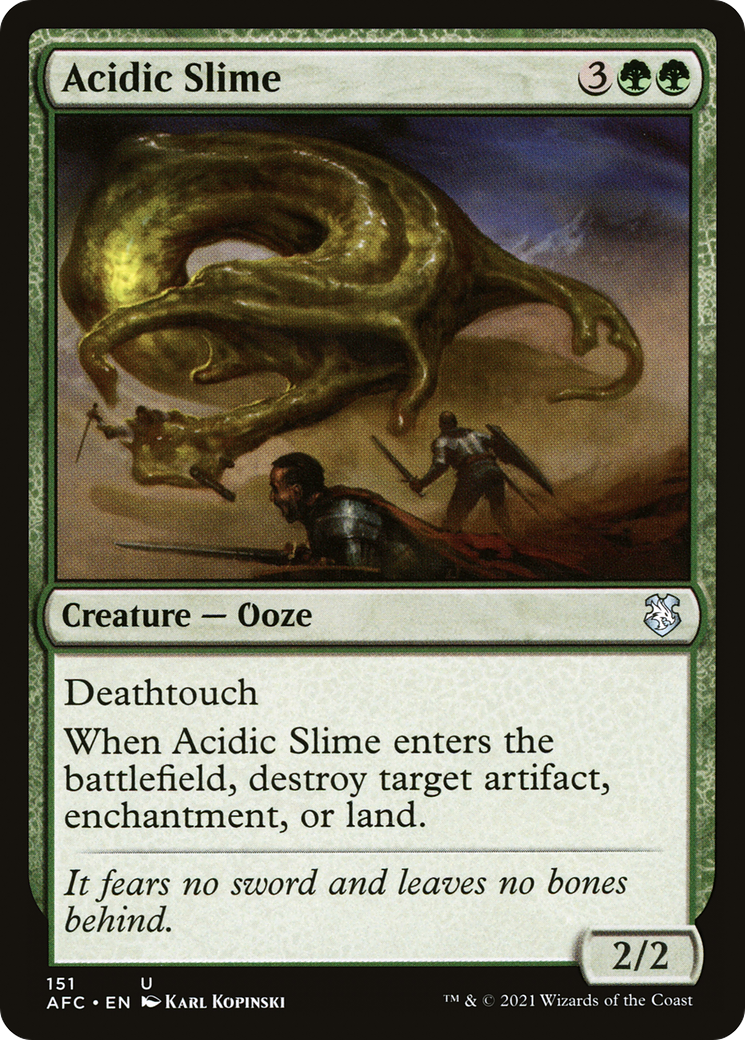
Acidic Slime
Acidic Slime
Creature — Ooze
2/2
Deathtouch (Any amount of damage this deals to a creature is enough to destroy it.)
When this creature enters, destroy target artifact, enchantment, or land.
-
1
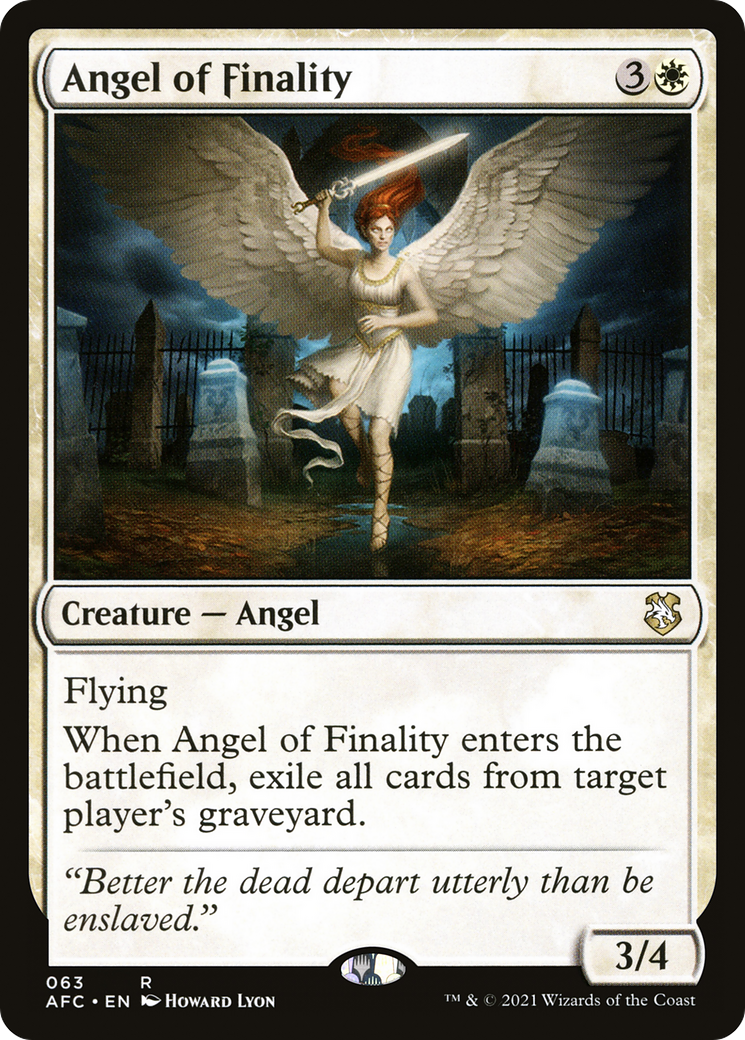
Angel of Finality
Angel of Finality
Creature — Angel
3/4
Flying
When this creature enters, exile target player's graveyard.
-
1
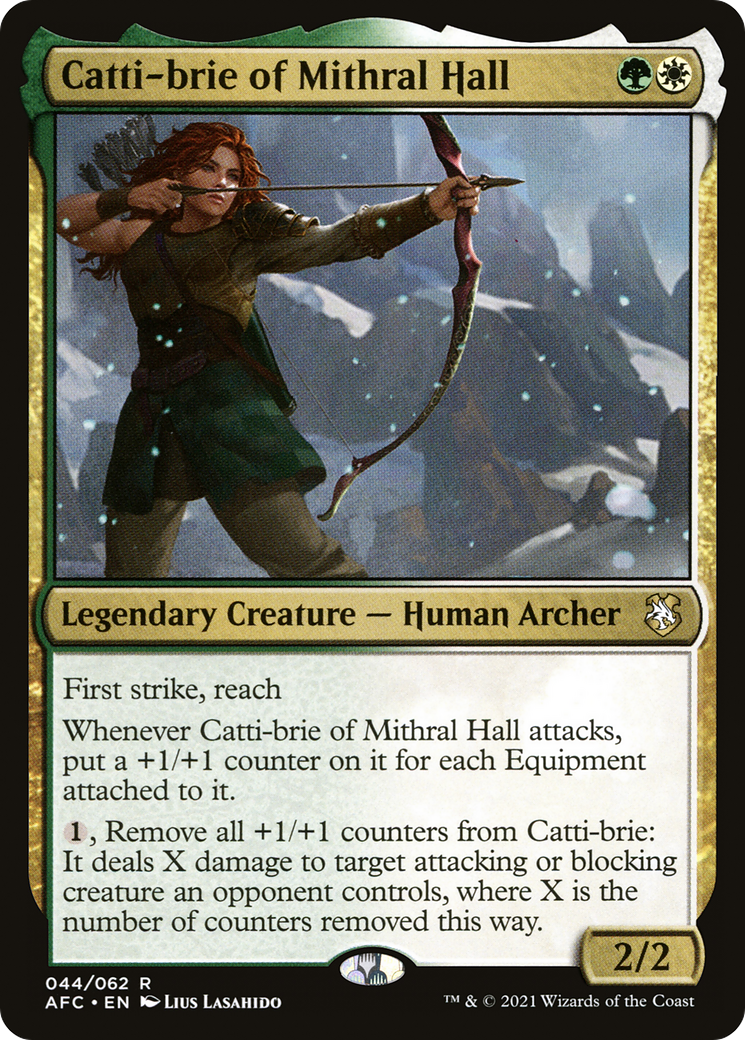
Catti-brie of Mithral Hall
Catti-brie of Mithral Hall
Legendary Creature — Human Archer
2/2
First strike, reach
Whenever Catti-brie attacks, put a +1/+1 counter on it for each Equipment attached to it.
, Remove all +1/+1 counters from Catti-brie: It deals X damage to target attacking or blocking creature an opponent controls, where X is the number of counters removed this way.
- If a blocking creature is destroyed due to damage dealt this way, the creature it was blocking is still considered blocked. Unless the attacking creature has trample, it won't deal any damage to the player or planeswalker it is attacking.
- If Catti-brie of Mithral Hall has no counters, you can still activate the last ability. This won't deal any damage, but it will count as targeting something for abilities like that of Fey Steed.
-
1
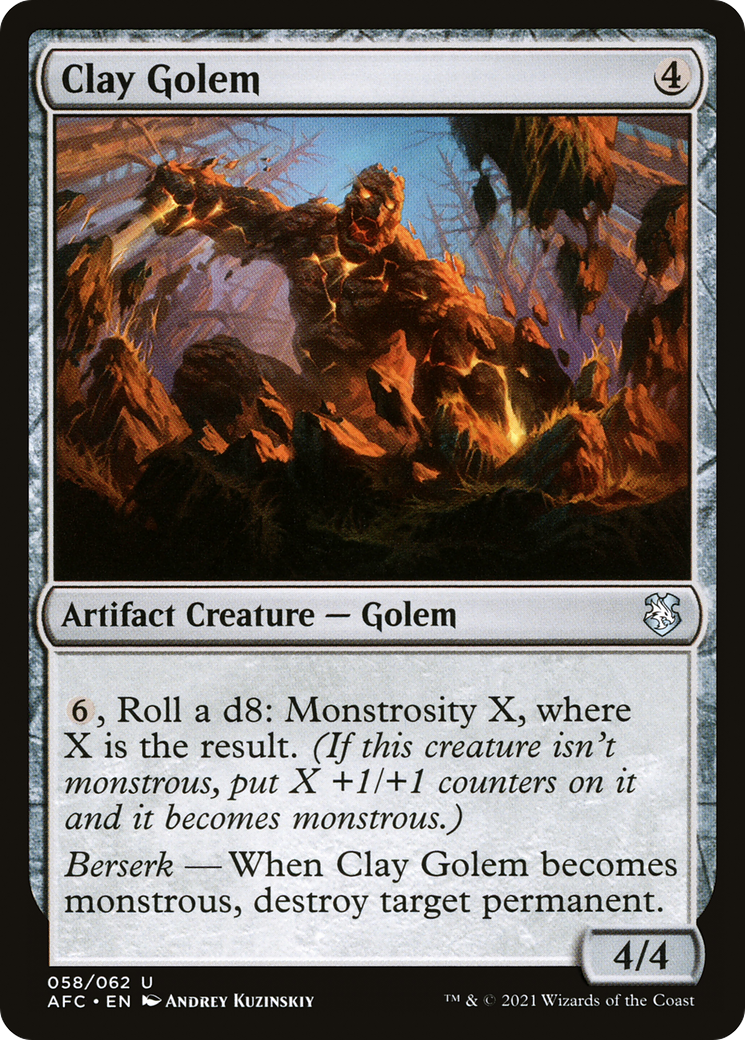
Clay Golem
Clay Golem
Artifact Creature — Golem
4/4
, Roll a d8: Monstrosity X, where X is the result. (If this creature isn't monstrous, put X +1/+1 counters on it and it becomes monstrous.)
Berserk — When this creature becomes monstrous, destroy target permanent.
- Once a creature becomes monstrous, it can't become monstrous again. If the creature is already monstrous when the monstrosity ability resolves, nothing happens. However, because rolling the d8 is part of the cost of activating the ability, if you don't like what you rolled and have another handy, you can respond to the ability by activating the ability again. Good luck!
- Monstrous isn't an ability that a creature has. It's just something true about that creature. If the creature stops being a creature or loses its abilities, it will continue to be monstrous.
- An ability that triggers when a creature becomes monstrous won't trigger if that creature isn't on the battlefield when its monstrosity ability resolves.
- You can activate Clay Golem's first ability even after it has become monstrous. It won't become monstrous again and you won't put any counters on it, but you will roll a die to activate the ability, which may cause abilities of other permanents to trigger.
- Dice are identified by the number of faces each one has. For example, a d20 is a twenty-sided die.
- Dice used must have equally likely outcomes and the roll must be fair. Although physical dice are recommended, digital substitutes are allowed, provided they have the same number of equally likely outcomes as specified in the original roll instruction.
- An ability that tells you to roll a die will also specify what to do with the result of that roll. Most often, this is in the form of a “results table” in the card text.
- The instruction to roll a die and the effect that occurs because of the result are all part of the same ability. Players do not get the chance to respond to the ability after knowing the result of the roll.
- An effect that says “choose a target, then roll a d20” or similar still uses the normal process of putting an ability on the stack and resolving it. Choosing targets is part of putting the ability on the stack and rolling the d20 happens later, as the ability resolves.
- Some effects may modify the result of a die roll. This may be part of the instruction to roll a die or it may come from other cards. Anything that references the “result” of a die roll is looking for the result after these modifications. Anything that is looking for the “natural result” is looking for the number shown on the face of the die before these modifications.
- Some abilities, like that of Pixie Guide and Barbarian Class, replace rolling a die with rolling extra dice and ignoring the lowest roll. The ignored rolls are not considered for the effect that instructed you to roll a die, and do not cause abilities to trigger. For all intents and purposes, once you determine which dice count, any extra dice were never rolled.
- Some effects instruct you to roll again. This uses the same number and type of dice as the original roll, and that roll will use the same set of possible outcomes.
- While playing Planechase, rolling the planar die will cause any ability that triggers whenever a player rolls one or more dice to trigger. However, any effect that refers to a numerical result will ignore the rolling of the planar die.
- Tournament events have more specific rules regarding dice and die-rolling. For more information, please see the most recent version of the Magic Tournament Rules at https://wpn.wizards.com/en/document/magic-gathering-tournament-rules.
-
1
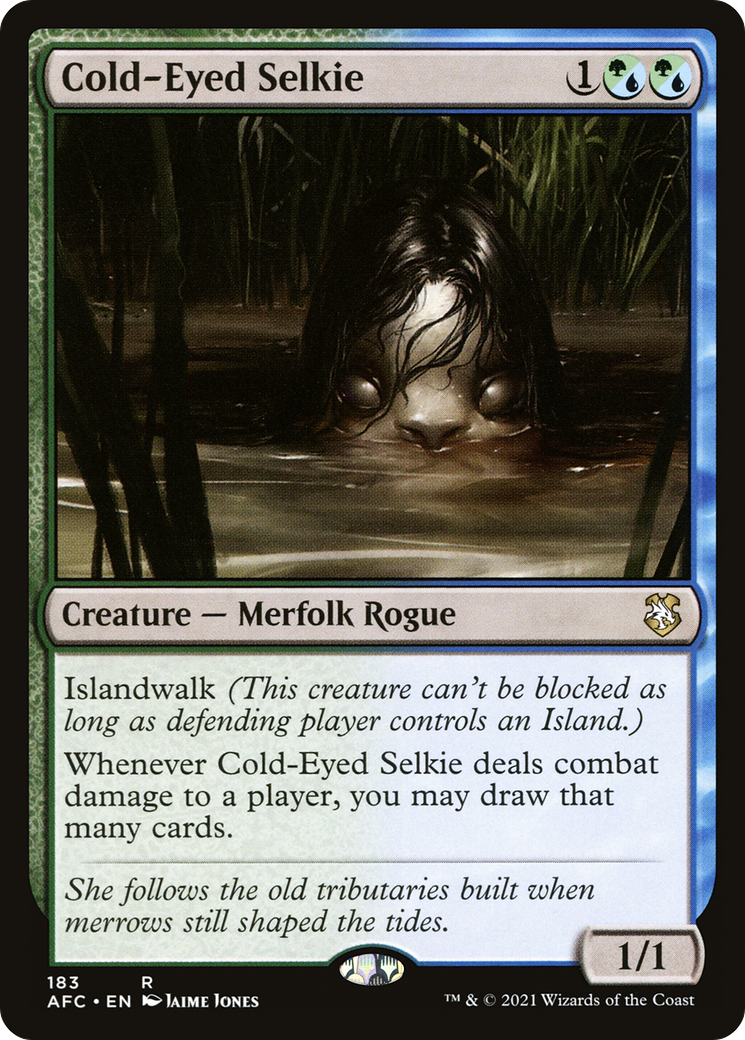
Cold-Eyed Selkie
Cold-Eyed Selkie
Creature — Merfolk Rogue
1/1
Islandwalk (This creature can't be blocked as long as defending player controls an Island.)
Whenever this creature deals combat damage to a player, you may draw that many cards.
-
1
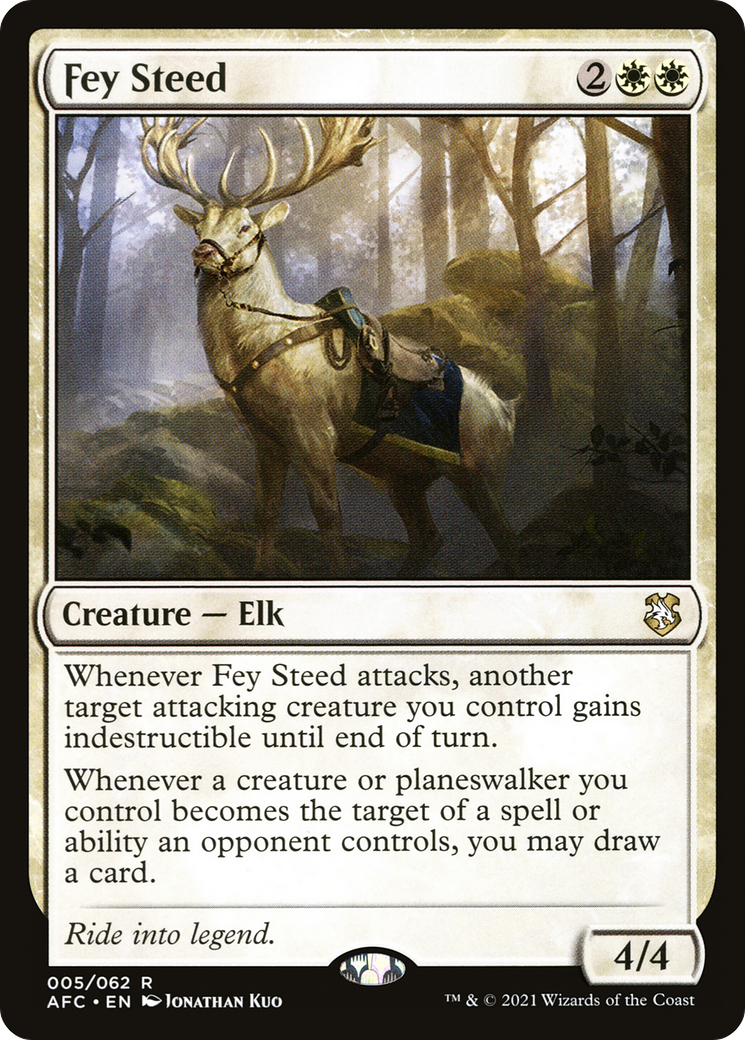
Fey Steed
Fey Steed
Creature — Elk
4/4
Whenever this creature attacks, another target attacking creature you control gains indestructible until end of turn.
Whenever a creature or planeswalker you control becomes the target of a spell or ability an opponent controls, you may draw a card.
-
1
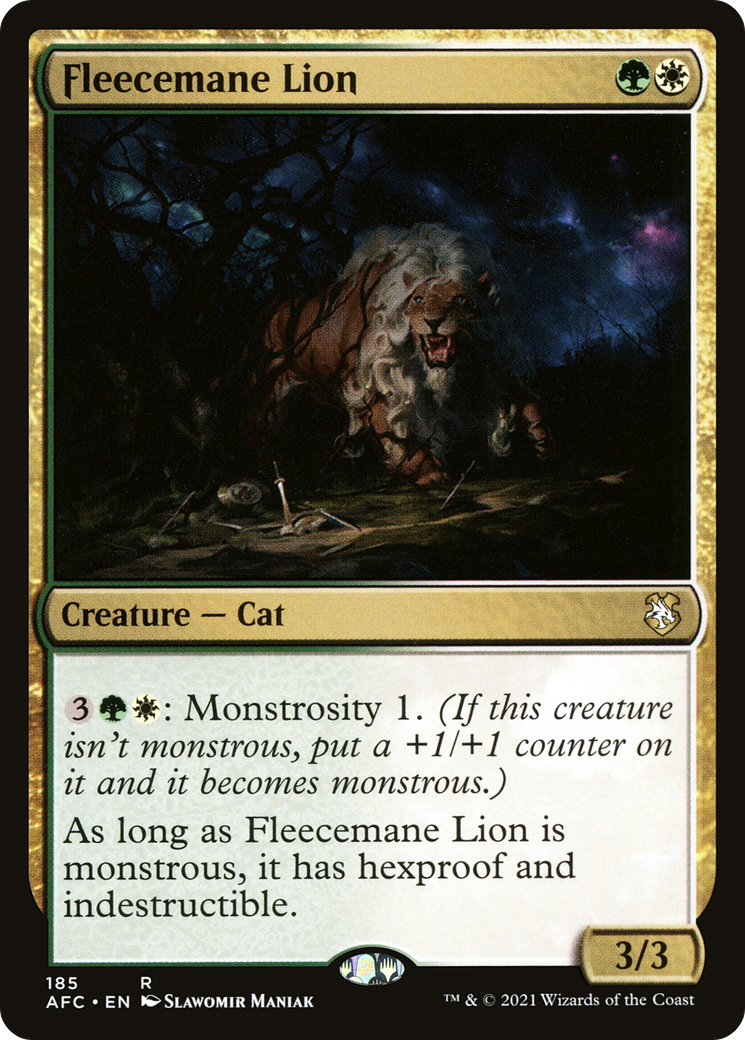
Fleecemane Lion
Fleecemane Lion
Creature — Cat
3/3
: Monstrosity 1. (If this creature isn't monstrous, put a +1/+1 counter on it and it becomes monstrous.)
As long as this creature is monstrous, it has hexproof and indestructible.
- Once a creature becomes monstrous, it can't become monstrous again. If the creature is already monstrous when the monstrosity ability resolves, nothing happens.
- Monstrous isn't an ability that a creature has. It's just something true about that creature. If the creature stops being a creature or loses its abilities, it will continue to be monstrous.
- An ability that triggers when a creature becomes monstrous won't trigger if that creature isn't on the battlefield when its monstrosity ability resolves.
-
1
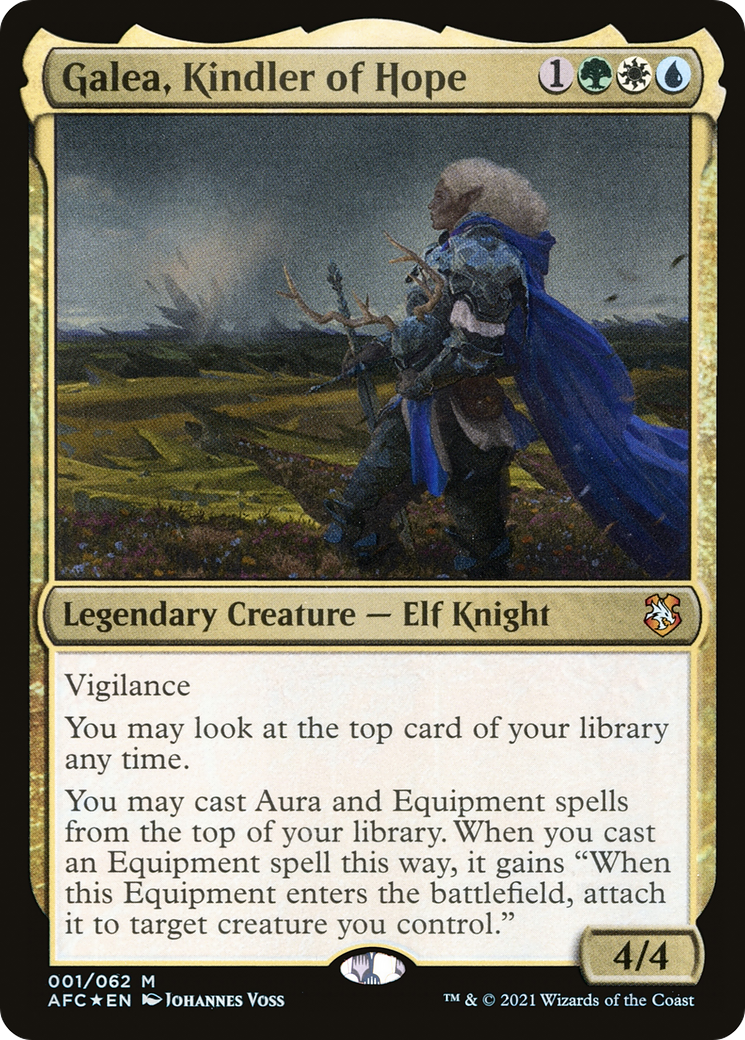
Galea, Kindler of Hope
Galea, Kindler of Hope
Legendary Creature — Elf Knight
4/4
Vigilance
You may look at the top card of your library any time.
You may cast Aura and Equipment spells from the top of your library. When you cast an Equipment spell this way, it gains "When this Equipment enters, attach it to target creature you control."
- You can look at the top card of your library whenever you want (with one restriction; see below), even if you don't have priority. This action doesn't use the stack. Knowing what that card is becomes part of the information you have access to, just like you can look at the cards in your hand.
- If the top card of your library changes while you're casting a spell, playing a land, or activating an ability, you can't look at the new top card until you finish doing so. This means that if you cast a spell from the top of your library, you can't look at the next card until you're done paying for that spell.
- Galea, Kindler of Hope doesn't change when you can cast Aura and Equipment spells. Normally, this means during your main phase when the stack is empty, although flash may change this.
- You'll still pay all costs for the spell, including additional costs. You may also pay alternative costs if any are available.
-
1
Knight of Autumn
Knight of Autumn
Creature — Dryad Knight
2/1
When this creature enters, choose one —
- Put two +1/+1 counters on this creature.
- Destroy target artifact or enchantment.
- You gain 4 life.
-
1
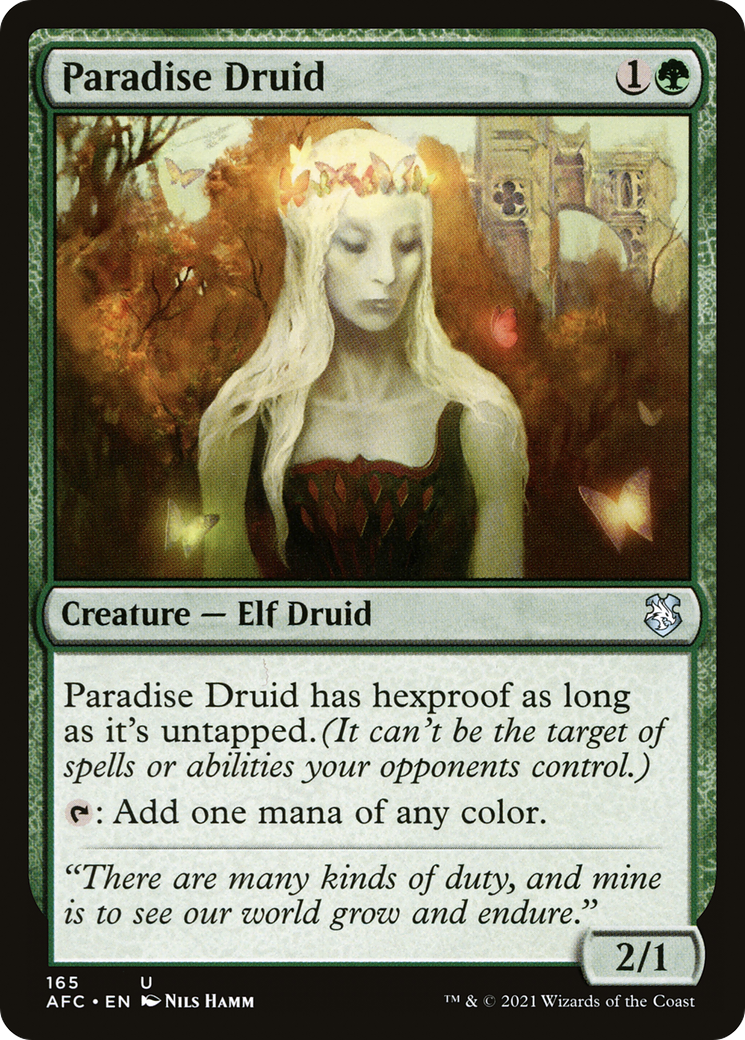
Paradise Druid
Paradise Druid
Creature — Elf Druid
2/1
This creature has hexproof as long as it's untapped. (It can't be the target of spells or abilities your opponents control.)
: Add one mana of any color.
-
1
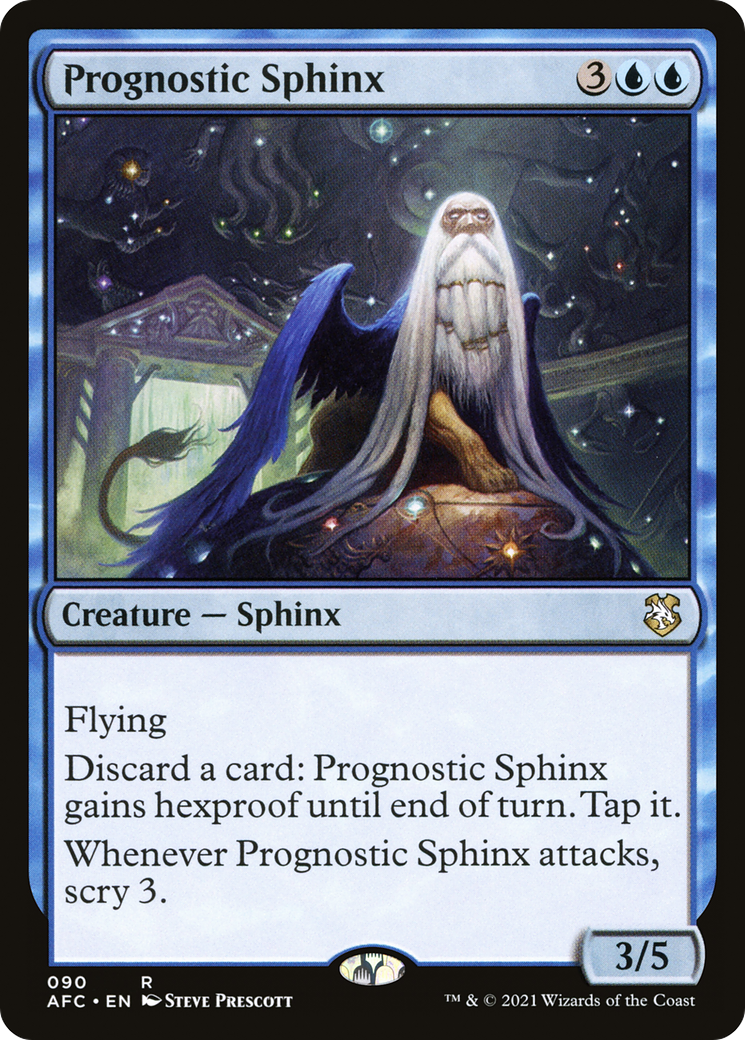
Prognostic Sphinx
Prognostic Sphinx
Creature — Sphinx
3/5
Flying
Discard a card: This creature gains hexproof until end of turn. Tap it.
Whenever this creature attacks, scry 3.
- You can activate Prognostic Sphinx's ability even if it's already tapped.
- When you scry, you may put all the cards you look at back on top of your library, you may put all of those cards on the bottom of your library, or you may put some of those cards on top and the rest of them on the bottom.
- You choose how to order cards returned to your library after scrying no matter where you put them.
- You perform the actions stated on a card in sequence. For some spells and abilities, that means you'll scry last. For others, that means you'll scry and then perform other actions.
- Scry appears on some spells and abilities with one or more targets. If all of the spell or ability's targets are illegal when it tries to resolve, it won't resolve and none of its effects will happen. You won't scry.
-
1
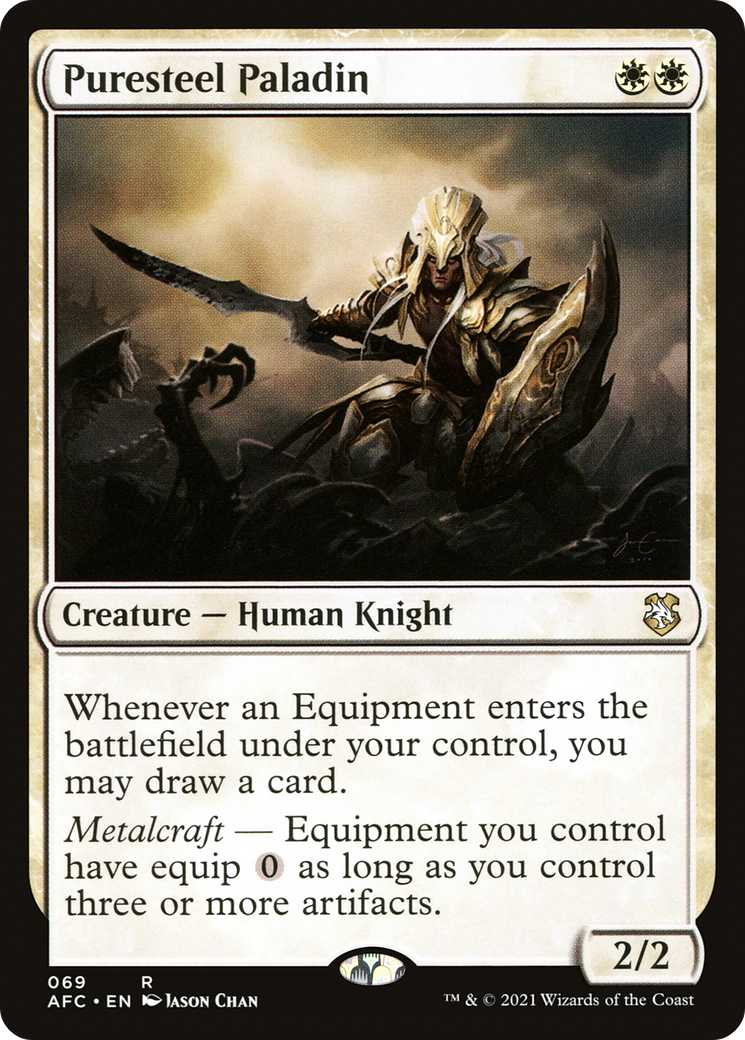
Puresteel Paladin
Puresteel Paladin
Creature — Human Knight
2/2
Whenever an Equipment you control enters, you may draw a card.
Metalcraft — Equipment you control have equip as long as you control three or more artifacts.
- Once the equip ability is activated, causing Puresteel Paladin to leave the battlefield or causing its controller to control fewer than three artifacts won't stop the equip ability from resolving.
- You may still activate the Equipment's other equip abilities if you wish.
-
1
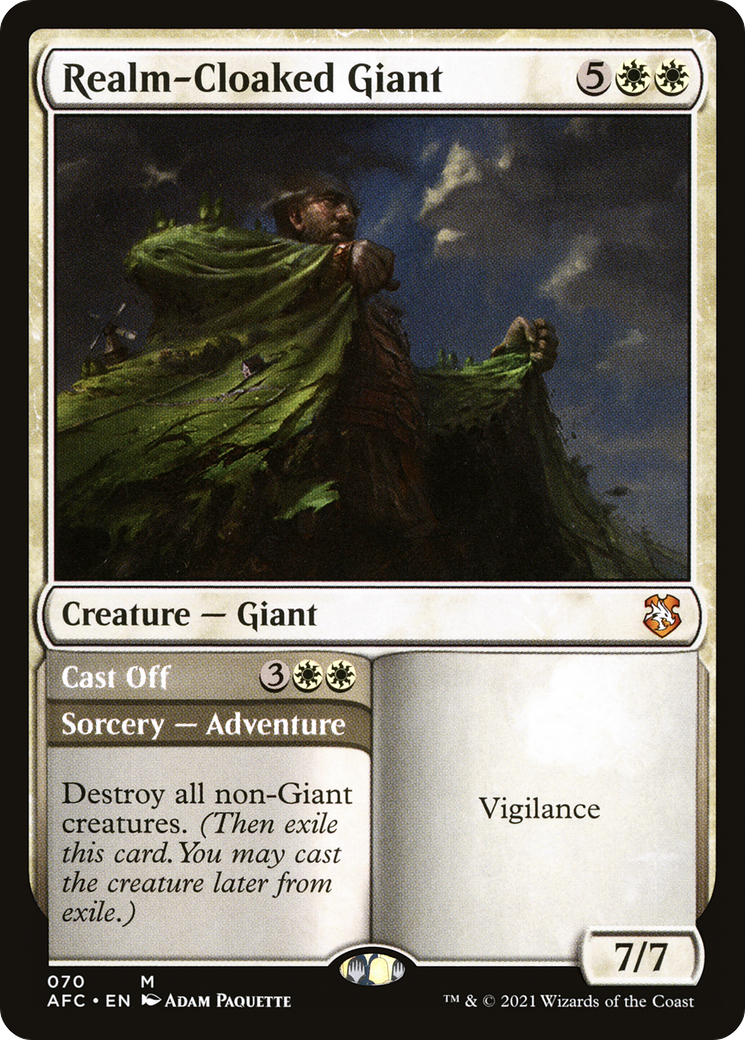
Realm-Cloaked Giant // Cast Off
//
Realm-Cloaked Giant
Creature — Giant
7/7
- An adventurer card is a permanent card in every zone except the stack, as well as while on the stack if not cast as an Adventure. Ignore its alternative characteristics in those cases. For example, while it's in your graveyard, Giant Killer is a white creature card whose mana value is 1. It can't be the target of the triggered ability of Mystic Sanctuary.
- When casting a spell as an Adventure, use the alternative characteristics and ignore all of the card's normal characteristics. The spell's color, mana cost, mana value, and so on are determined by only those alternative characteristics. If the spell leaves the stack, it immediately resumes using its normal characteristics.
- If you cast an adventurer card as an Adventure, use only its alternative characteristics to determine whether it's legal to cast that spell. For example, if Giant Killer is exiled with the last ability of Vivien, Champion of the Wilds, you can't cast it as Chop Down.
- If a spell is cast as an Adventure, its controller exiles it instead of putting it into its owner's graveyard as it resolves. For as long as it remains exiled, that player may cast it as a permanent spell. If an Adventure spell leaves the stack in any way other than resolving (most likely by being countered or by failing to resolve because its targets have all become illegal), that card won't be exiled and the spell's controller won't be able to cast it as a permanent later.
- If an adventurer card ends up in exile for any other reason than by exiling itself while resolving, it won't give you permission to cast it as a permanent spell.
- You must still follow any timing restrictions and permissions for the permanent spell you cast from exile. Normally, you'll be able to cast it only during your main phase while the stack is empty.
- If an effect copies an Adventure spell, that copy is exiled as it resolves. It ceases to exist as a state-based action; it's not possible to cast the copy as a permanent.
- If an object becomes a copy of an object that has an Adventure, the copy also has an Adventure. If it changes zones, it will either cease to exist (if it's a token) or cease to be a copy (if it's a nontoken permanent), and so you won't be able to cast it as an Adventure.
- If an effect instructs you to choose a card name, you may choose the alternative Adventure name. Consider only the alternative characteristics to determine whether that is an appropriate name to choose.
- Casting a card as an Adventure isn't casting it for an alternative cost. Effects that allow you to cast a spell for an alternative cost or without paying its mana cost may allow you to apply those to the Adventure.
-
1
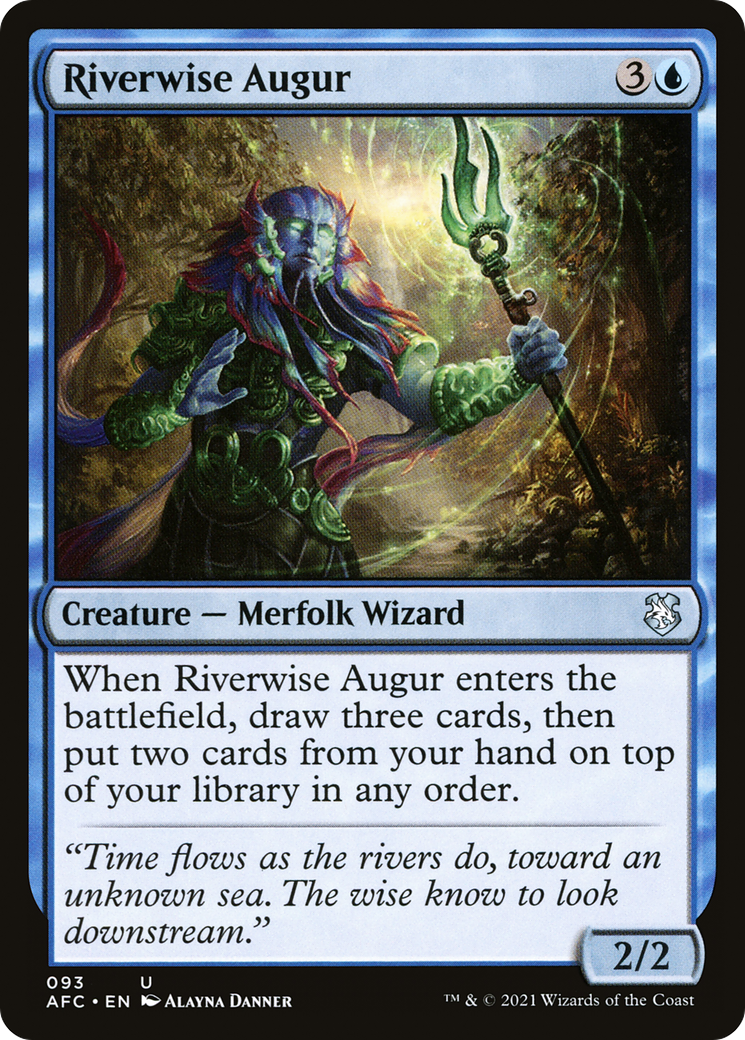
Riverwise Augur
Riverwise Augur
Creature — Merfolk Wizard
2/2
When this creature enters, draw three cards, then put two cards from your hand on top of your library in any order.
- You draw three cards and put two cards back all while Riverwise Augur's ability is resolving. Nothing can happen between the two, and no player may choose to take actions.
-
1
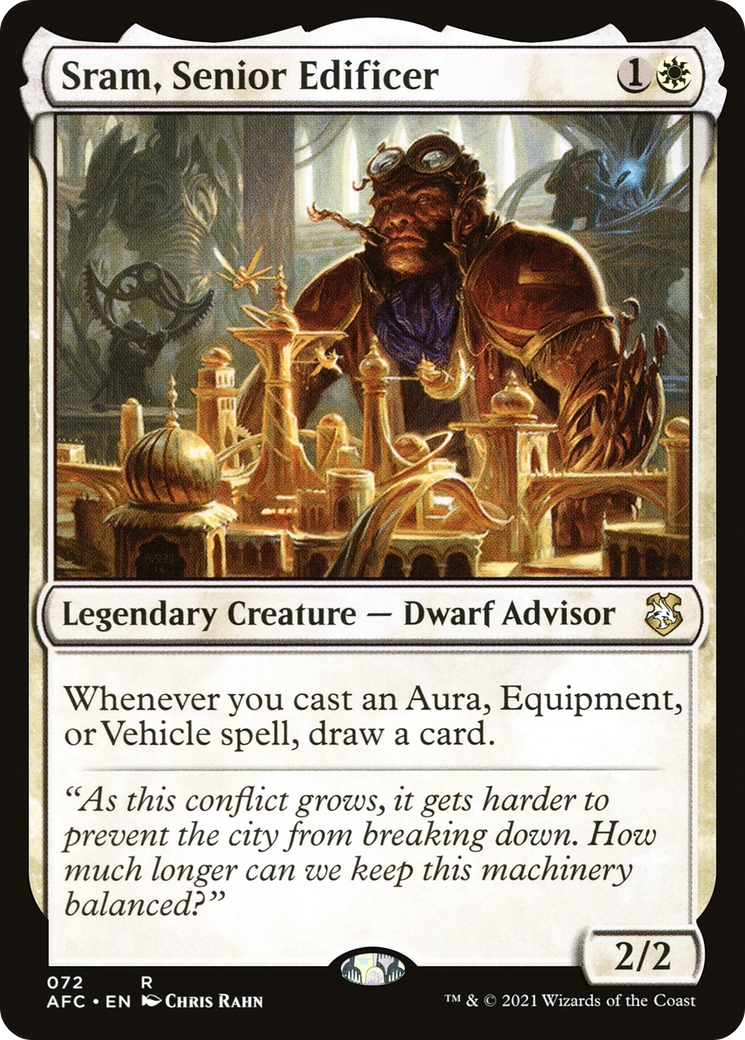
Sram, Senior Edificer
Sram, Senior Edificer
Legendary Creature — Dwarf Advisor
2/2
Whenever you cast an Aura, Equipment, or Vehicle spell, draw a card.
- Sram's ability resolves before the spell that caused it to trigger. It resolves even if that spell is countered or otherwise leaves the stack.
-
1
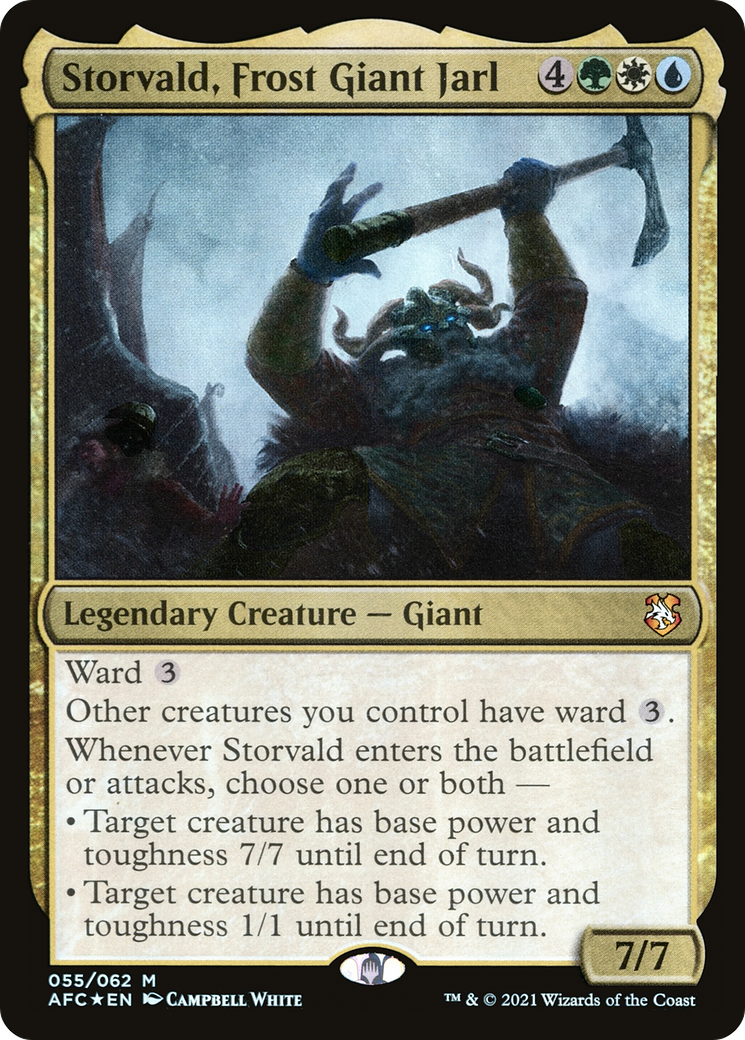
Storvald, Frost Giant Jarl
Storvald, Frost Giant Jarl
Legendary Creature — Giant
7/7
Ward
Other creatures you control have ward .
Whenever Storvald enters or attacks, choose one or both —
- Target creature has base power and toughness 7/7 until end of turn.
- Target creature has base power and toughness 1/1 until end of turn.
- Storvald's triggered ability will overwrite any previous effects that set the creature's power and toughness to specific numbers. Effects that otherwise modify that creature's power and toughness will still apply no matter when they took effect. The same is true for +1/+1 counters.
- If you choose both modes, the effects will happen in the listed order.
- You can choose the same creature as the target for both modes if you wanted to—I don't know . . . give it a small taste of phenomenal cosmic power before shrinking it so it could live in an itty-bitty living space?
- If a player casts a spell that targets multiple permanents their opponent controls with ward, each of those ward abilities will trigger. If that player doesn't pay for all of them, the spell will be countered.
Instants 7
-
1
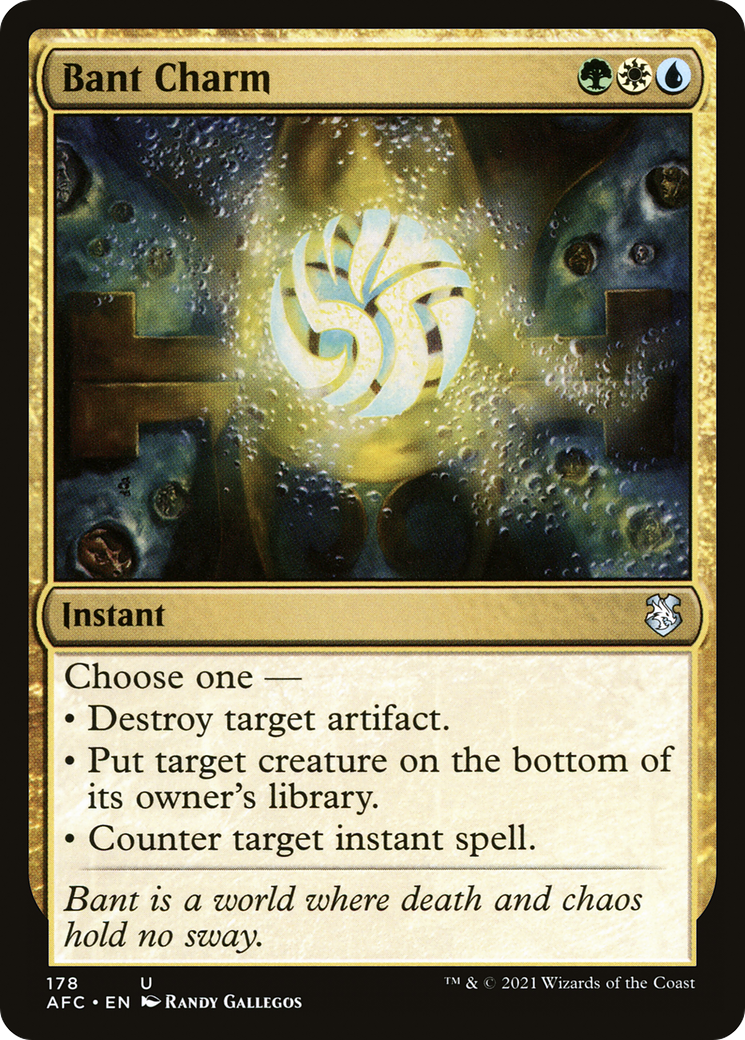
Bant Charm
Bant Charm
Instant
Choose one —
- Destroy target artifact.
- Put target creature on the bottom of its owner's library.
- Counter target instant spell.
- You can choose a mode only if you can choose legal targets for that mode. If you can't choose legal targets for any of the modes, you can't cast the spell.
- While the spell is on the stack, treat it as though its only text is the chosen mode. The other two modes are treated as though they don't exist. You don't choose targets for those modes.
- If this spell is copied, the copy will have the same mode as the original.
-
1
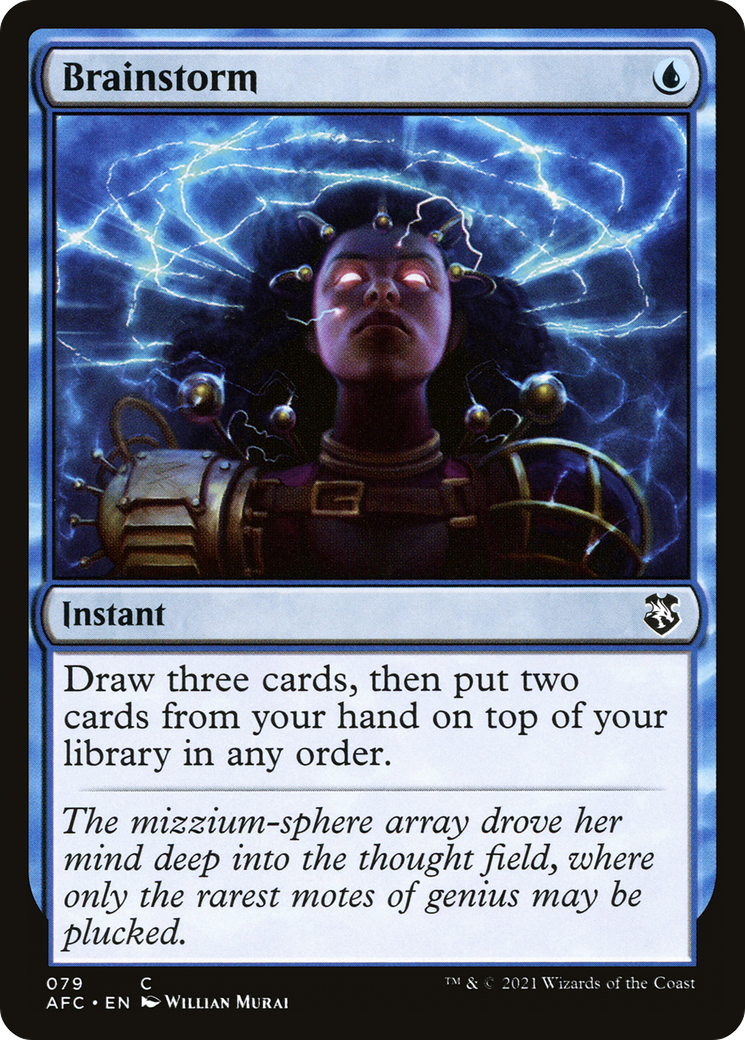
Brainstorm
Brainstorm
Instant
Draw three cards, then put two cards from your hand on top of your library in any order.
- You draw three cards and put two cards back all while Brainstorm is resolving. Nothing can happen between the two, and no player may choose to take actions.
-
1
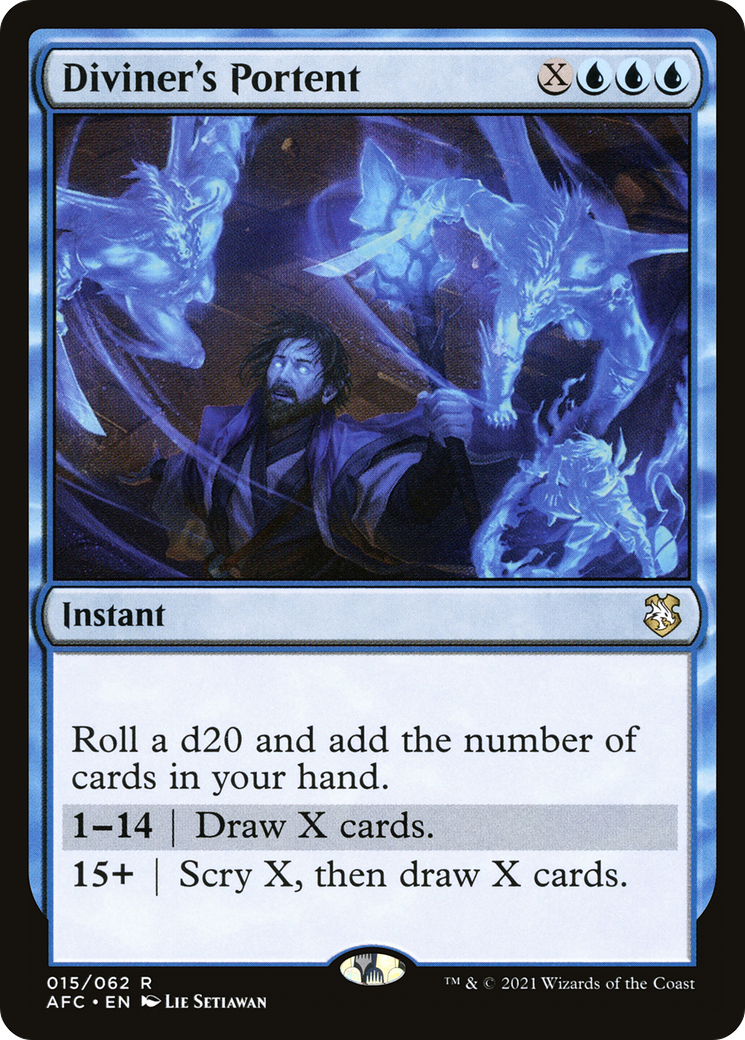
Diviner's Portent
Diviner's Portent
Instant
Roll a d20 and add the number of cards in your hand.
1—14 | Draw X cards.
15+ | Scry X, then draw X cards.
- Dice are identified by the number of faces each one has. For example, a d20 is a twenty-sided die.
- Dice used must have equally likely outcomes and the roll must be fair. Although physical dice are recommended, digital substitutes are allowed, provided they have the same number of equally likely outcomes as specified in the original roll instruction.
- An ability that tells you to roll a die will also specify what to do with the result of that roll. Most often, this is in the form of a “results table” in the card text.
- The instruction to roll a die and the effect that occurs because of the result are all part of the same ability. Players do not get the chance to respond to the ability after knowing the result of the roll.
- An effect that says “choose a target, then roll a d20” or similar still uses the normal process of putting an ability on the stack and resolving it. Choosing targets is part of putting the ability on the stack and rolling the d20 happens later, as the ability resolves.
- Some effects may modify the result of a die roll. This may be part of the instruction to roll a die or it may come from other cards. Anything that references the “result” of a die roll is looking for the result after these modifications. Anything that is looking for the “natural result” is looking for the number shown on the face of the die before these modifications.
- Some abilities, like that of Pixie Guide and Barbarian Class, replace rolling a die with rolling extra dice and ignoring the lowest roll. The ignored rolls are not considered for the effect that instructed you to roll a die, and do not cause abilities to trigger. For all intents and purposes, once you determine which dice count, any extra dice were never rolled.
- Some effects instruct you to roll again. This uses the same number and type of dice as the original roll, and that roll will use the same set of possible outcomes.
- While playing Planechase, rolling the planar die will cause any ability that triggers whenever a player rolls one or more dice to trigger. However, any effect that refers to a numerical result will ignore the rolling of the planar die.
- Tournament events have more specific rules regarding dice and die-rolling. For more information, please see the most recent version of the Magic Tournament Rules at https://wpn.wizards.com/en/document/magic-gathering-tournament-rules.
-
1
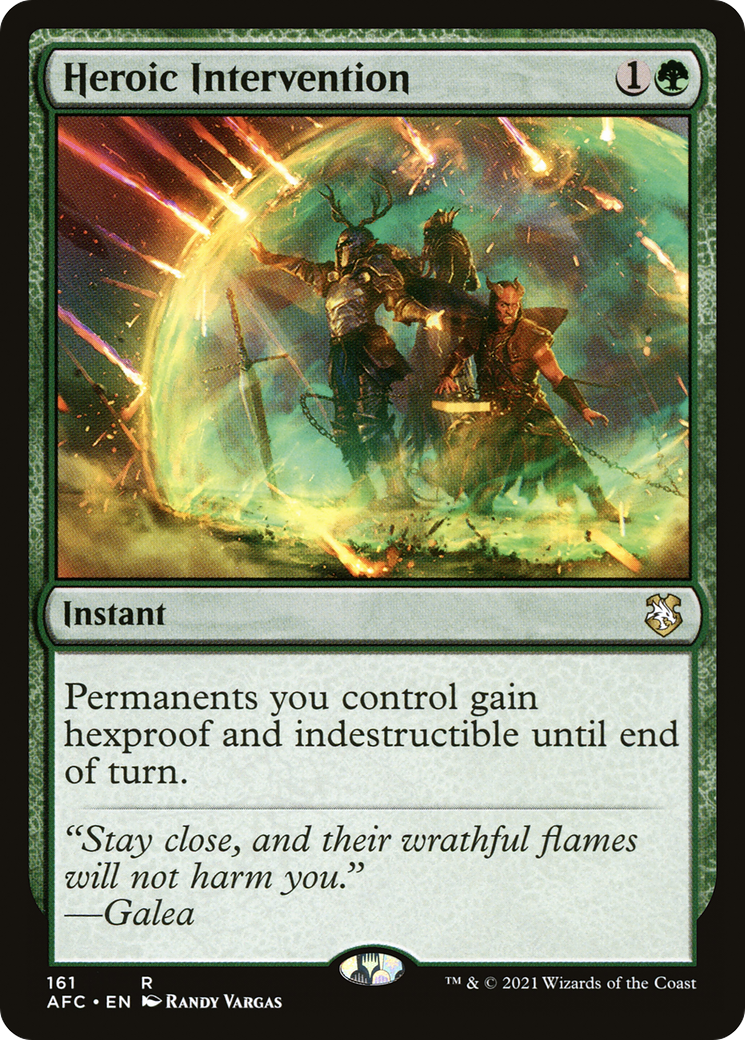
Heroic Intervention
Heroic Intervention
Instant
Permanents you control gain hexproof and indestructible until end of turn.
- A battle with indestructible still loses defense counters as it's dealt damage. If it's a Siege, it will still be exiled when the last defense counter is removed from it, and its controller may still cast it transformed without paying its mana cost.
- A planeswalker with indestructible still loses loyalty counters as it's dealt damage and will still be put into its owner's graveyard if its loyalty reaches 0.
- The set of permanents affected by Heroic Intervention is determined as the spell resolves. Permanents you begin to control later in the turn won't gain hexproof and indestructible.
-
1
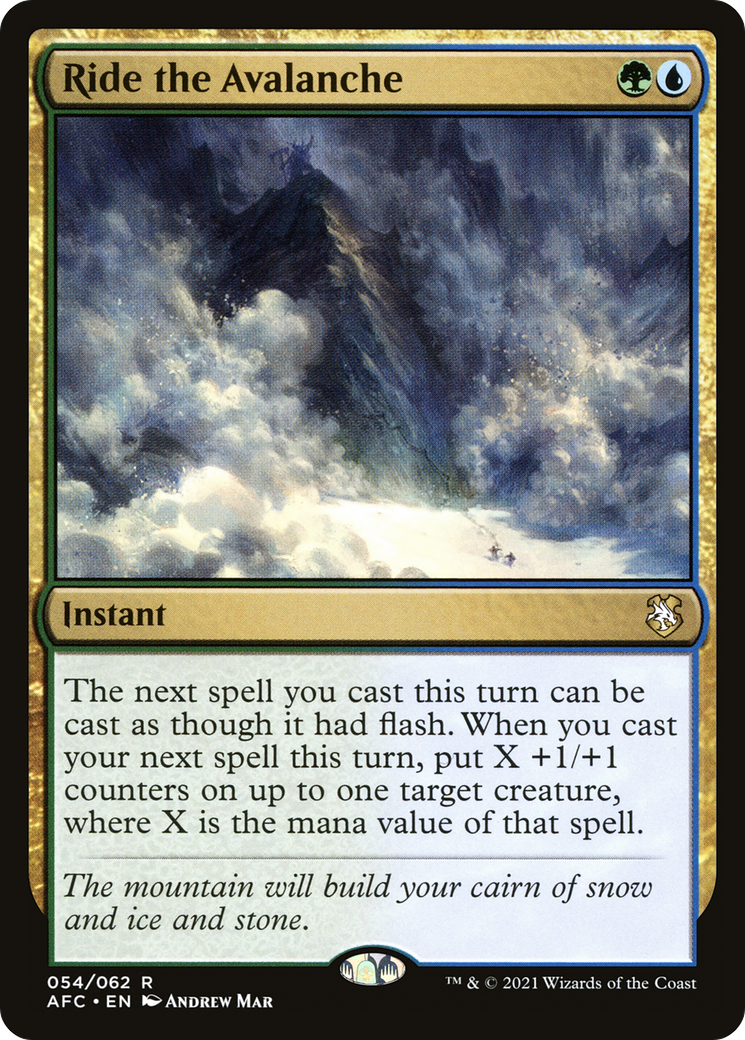
Ride the Avalanche
Ride the Avalanche
Instant
The next spell you cast this turn can be cast as though it had flash. When you next cast a spell this turn, put X +1/+1 counters on up to one target creature, where X is the mana value of that spell.
- Casting Ride the Avalanche doesn't require a target. As you put the delayed triggered ability on the stack after casting your next spell, you choose the target creature, if any.
-
1
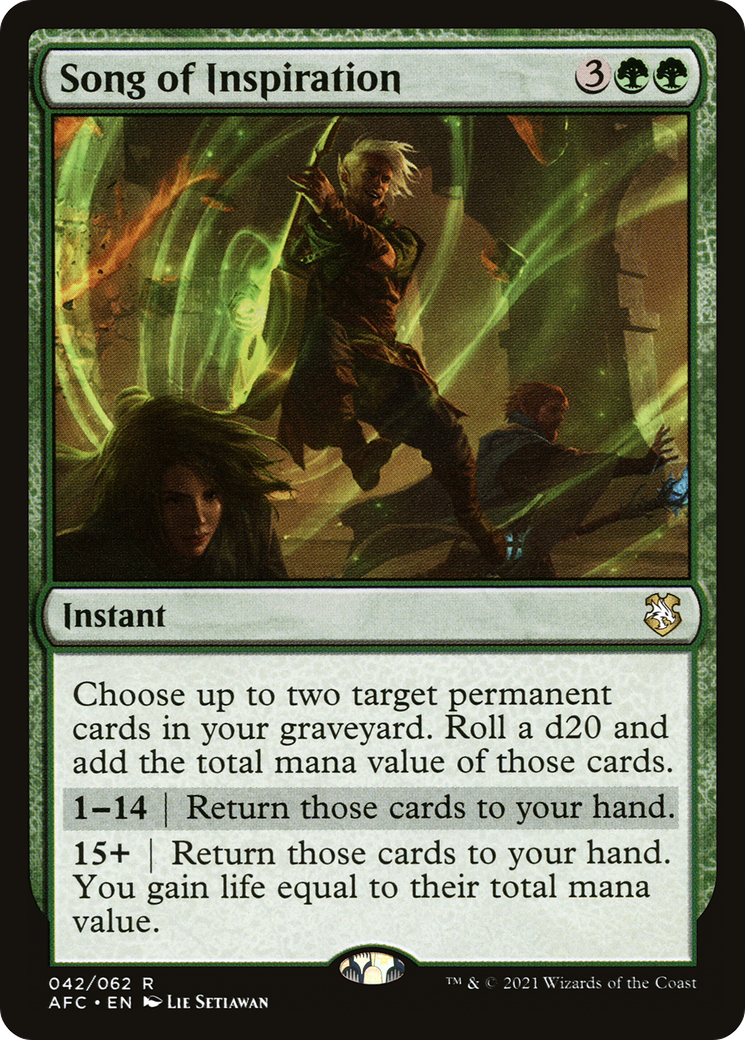
Song of Inspiration
Song of Inspiration
Instant
Choose up to two target permanent cards in your graveyard. Roll a d20 and add the total mana value of those cards.
1—14 | Return those cards to your hand.
15+ | Return those cards to your hand. You gain life equal to their total mana value.
- The instruction to roll a die and the effect that occurs because of the result are all part of the same ability. Players do not get the chance to respond to the ability after knowing the result of the roll.
- Dice are identified by the number of faces each one has. For example, a d20 is a twenty-sided die.
- Dice used must have equally likely outcomes and the roll must be fair. Although physical dice are recommended, digital substitutes are allowed, provided they have the same number of equally likely outcomes as specified in the original roll instruction.
- An ability that tells you to roll a die will also specify what to do with the result of that roll. Most often, this is in the form of a “results table” in the card text.
- An effect that says “choose a target, then roll a d20” or similar still uses the normal process of putting an ability on the stack and resolving it. Choosing targets is part of putting the ability on the stack and rolling the d20 happens later, as the ability resolves.
- Some effects may modify the result of a die roll. This may be part of the instruction to roll a die or it may come from other cards. Anything that references the “result” of a die roll is looking for the result after these modifications. Anything that is looking for the “natural result” is looking for the number shown on the face of the die before these modifications.
- Some abilities, like that of Pixie Guide and Barbarian Class, replace rolling a die with rolling extra dice and ignoring the lowest roll. The ignored rolls are not considered for the effect that instructed you to roll a die, and do not cause abilities to trigger. For all intents and purposes, once you determine which dice count, any extra dice were never rolled.
- Some effects instruct you to roll again. This uses the same number and type of dice as the original roll, and that roll will use the same set of possible outcomes.
- While playing Planechase, rolling the planar die will cause any ability that triggers whenever a player rolls one or more dice to trigger. However, any effect that refers to a numerical result will ignore the rolling of the planar die.
- Tournament events have more specific rules regarding dice and die-rolling. For more information, please see the most recent version of the Magic Tournament Rules at https://wpn.wizards.com/en/document/magic-gathering-tournament-rules.
-
1
Valorous Stance
Valorous Stance
Instant
Choose one —
- Target creature gains indestructible until end of turn. (Damage and effects that say "destroy" don't destroy it.)
- Destroy target creature with toughness 4 or greater.
Sorceries 4
-
1
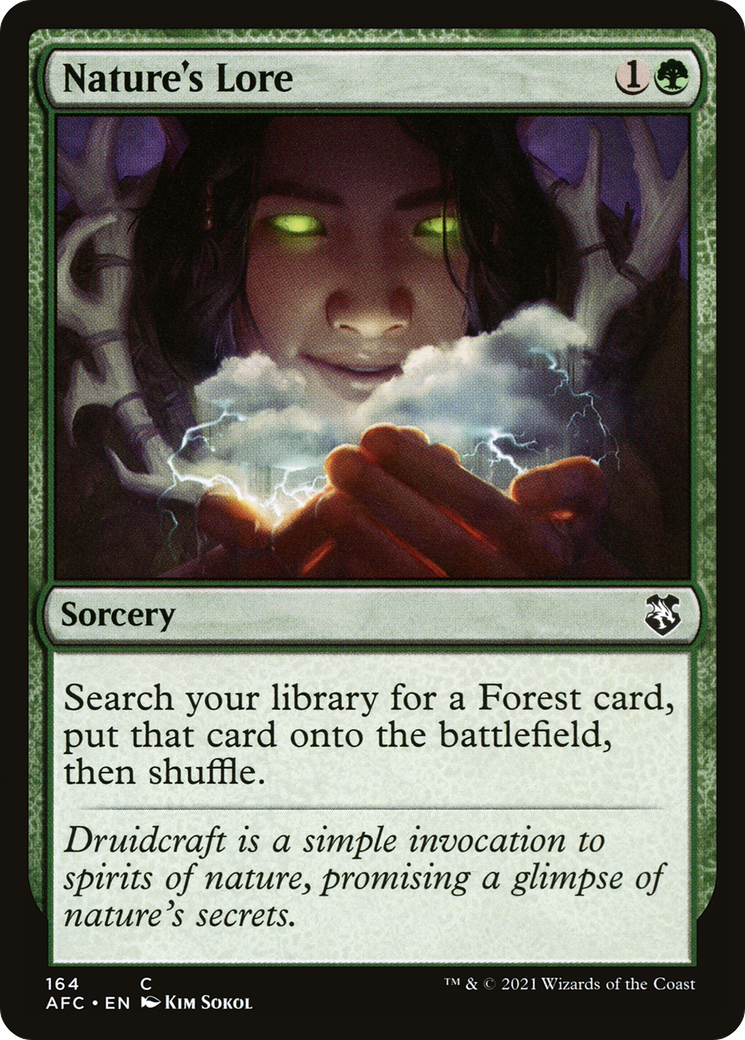
Nature's Lore
Nature's Lore
Sorcery
Search your library for a Forest card, put that card onto the battlefield, then shuffle.
- You may find a basic Forest or any land card with the land type Forest.
-
1
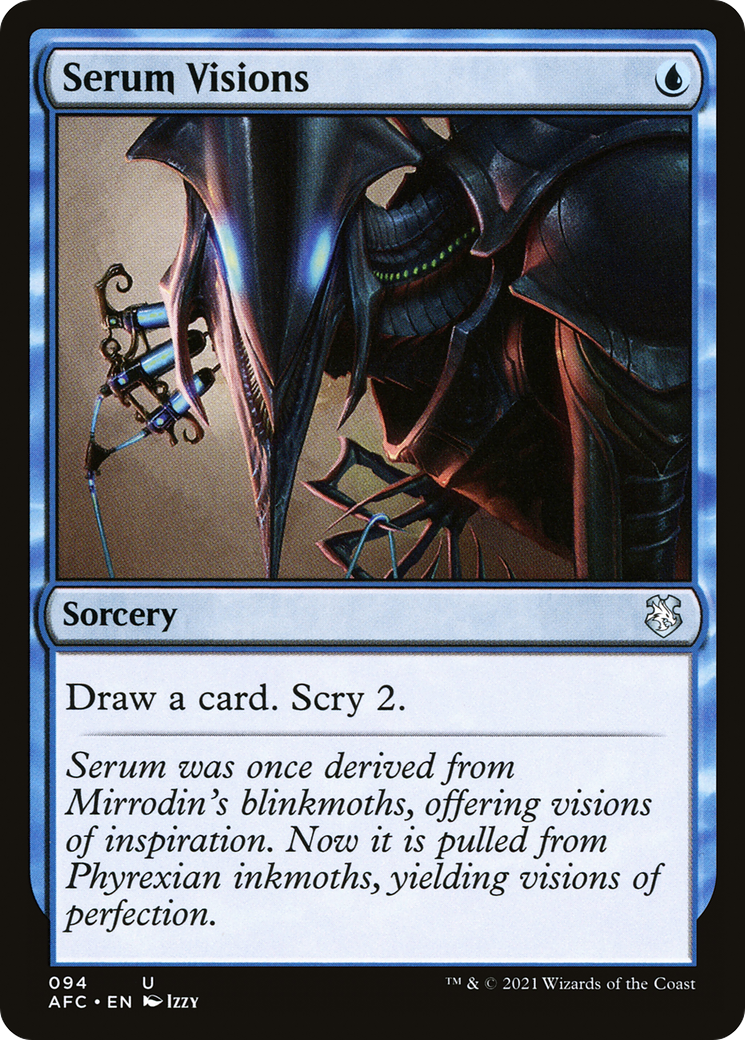
Serum Visions
Serum Visions
Sorcery
Draw a card. Scry 2.
-
1
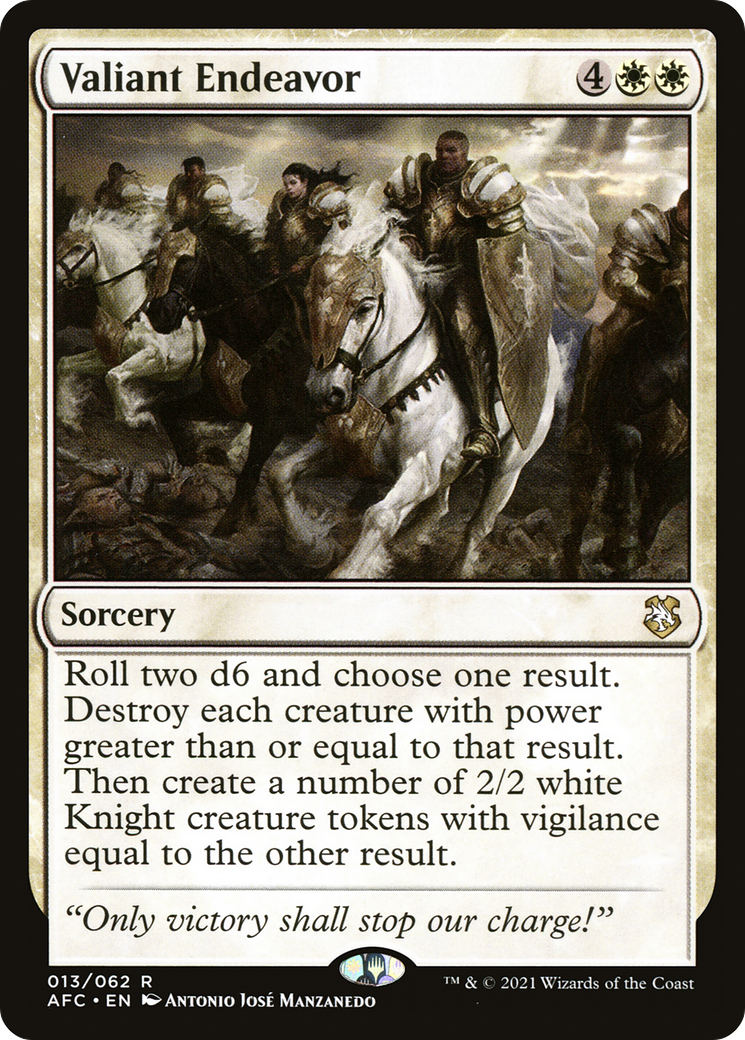
Valiant Endeavor
Valiant Endeavor
Sorcery
Roll two d6 and choose one result. Destroy each creature with power greater than or equal to that result. Then create a number of 2/2 white Knight creature tokens with vigilance equal to the other result.
- Dice are identified by the number of faces each one has. For example, a d20 is a twenty-sided die.
- Dice used must have equally likely outcomes and the roll must be fair. Although physical dice are recommended, digital substitutes are allowed, provided they have the same number of equally likely outcomes as specified in the original roll instruction.
- An ability that tells you to roll a die will also specify what to do with the result of that roll. Most often, this is in the form of a “results table” in the card text.
- The instruction to roll a die and the effect that occurs because of the result are all part of the same ability. Players do not get the chance to respond to the ability after knowing the result of the roll.
- An effect that says “choose a target, then roll a d20” or similar still uses the normal process of putting an ability on the stack and resolving it. Choosing targets is part of putting the ability on the stack and rolling the d20 happens later, as the ability resolves.
- Some effects may modify the result of a die roll. This may be part of the instruction to roll a die or it may come from other cards. Anything that references the “result” of a die roll is looking for the result after these modifications. Anything that is looking for the “natural result” is looking for the number shown on the face of the die before these modifications.
- Some abilities, like that of Pixie Guide and Barbarian Class, replace rolling a die with rolling extra dice and ignoring the lowest roll. The ignored rolls are not considered for the effect that instructed you to roll a die, and do not cause abilities to trigger. For all intents and purposes, once you determine which dice count, any extra dice were never rolled.
- Some effects instruct you to roll again. This uses the same number and type of dice as the original roll, and that roll will use the same set of possible outcomes.
- While playing Planechase, rolling the planar die will cause any ability that triggers whenever a player rolls one or more dice to trigger. However, any effect that refers to a numerical result will ignore the rolling of the planar die.
- Tournament events have more specific rules regarding dice and die-rolling. For more information, please see the most recent version of the Magic Tournament Rules at https://wpn.wizards.com/en/document/magic-gathering-tournament-rules.
-
1
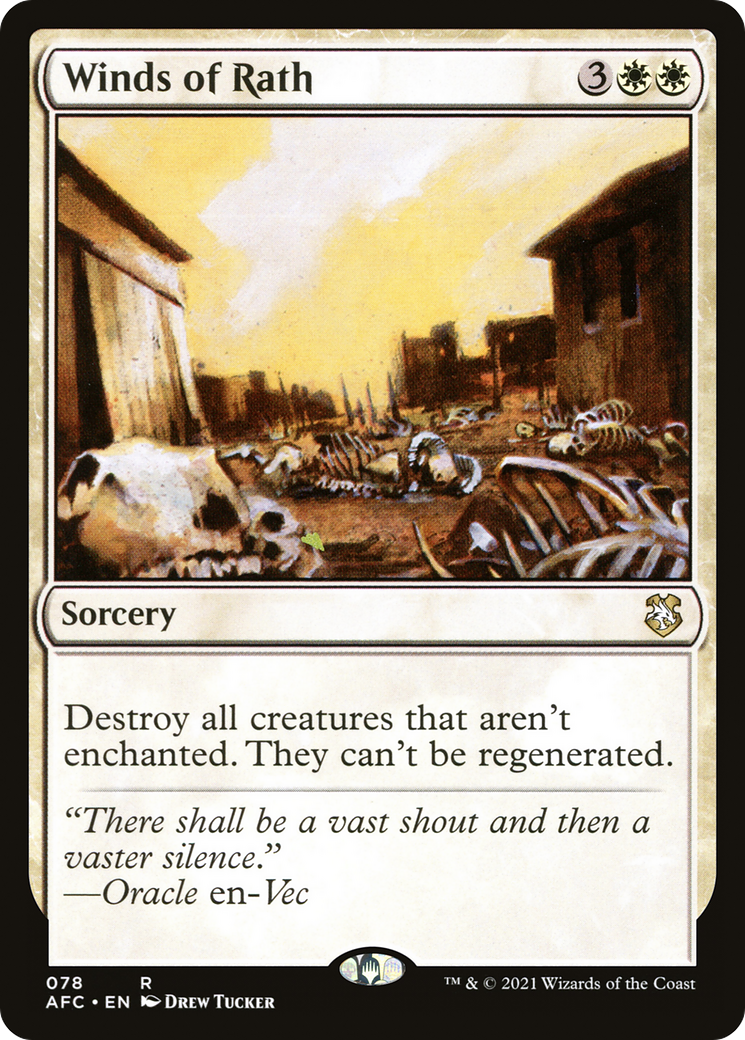
Winds of Rath
Winds of Rath
Sorcery
Destroy all creatures that aren't enchanted. They can't be regenerated.
- A creature is "enchanted" if it has any Auras attached to it.
Artifacts 18
-
1
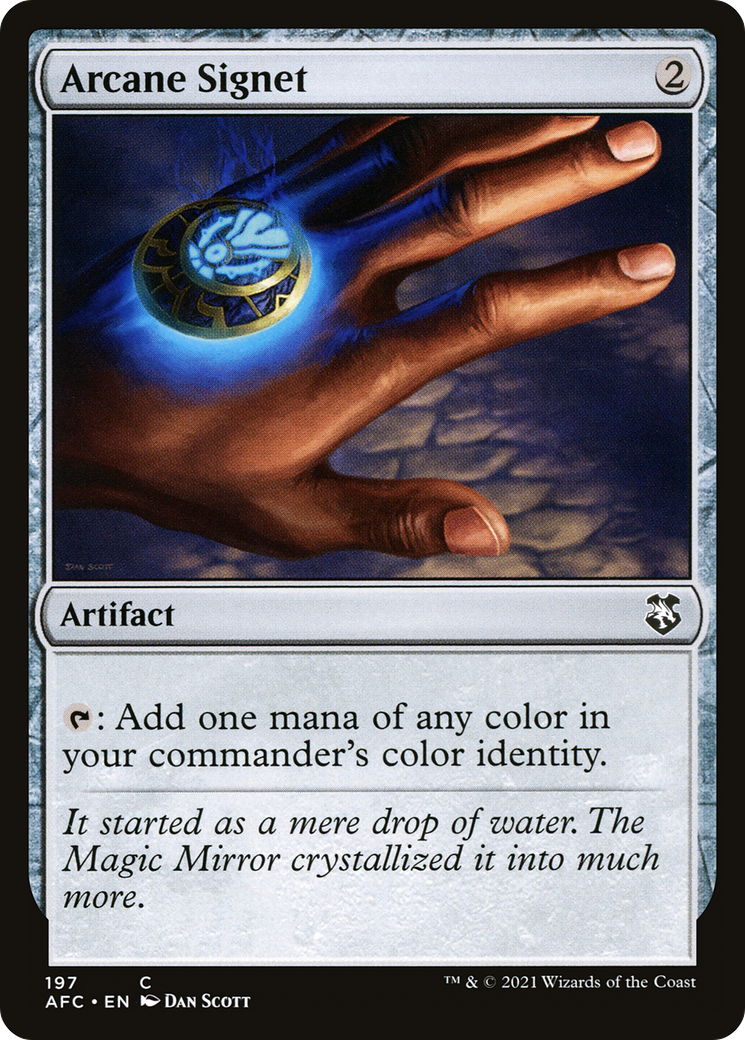
Arcane Signet
Arcane Signet
Artifact
: Add one mana of any color in your commander's color identity.
- If your commander is a card that has no colors in its color identity, Arcane Signet's ability produces no mana. It doesn't produce .
- If you have two commanders, the ability adds one mana of any color in their combined color identities.
- If you don't have a commander, Arcane Signet's ability produces no mana.
-
1
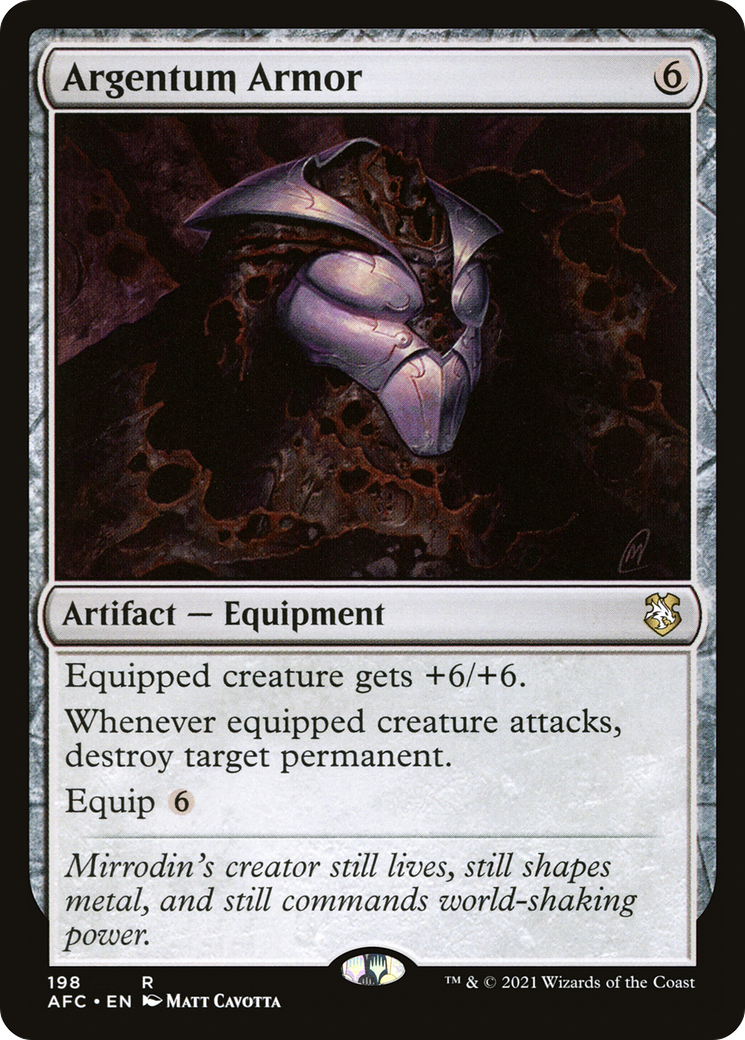
Argentum Armor
Argentum Armor
Artifact — Equipment
Equipped creature gets +6/+6.
Whenever equipped creature attacks, destroy target permanent.
Equip
- The second ability triggers and resolves during the declare attackers step. The target permanent will be destroyed before blockers are declared.
- You may target any permanent with the triggered ability, not just one controlled by the defending player. If no other player controls a permanent, you must target one of your own.
-
1
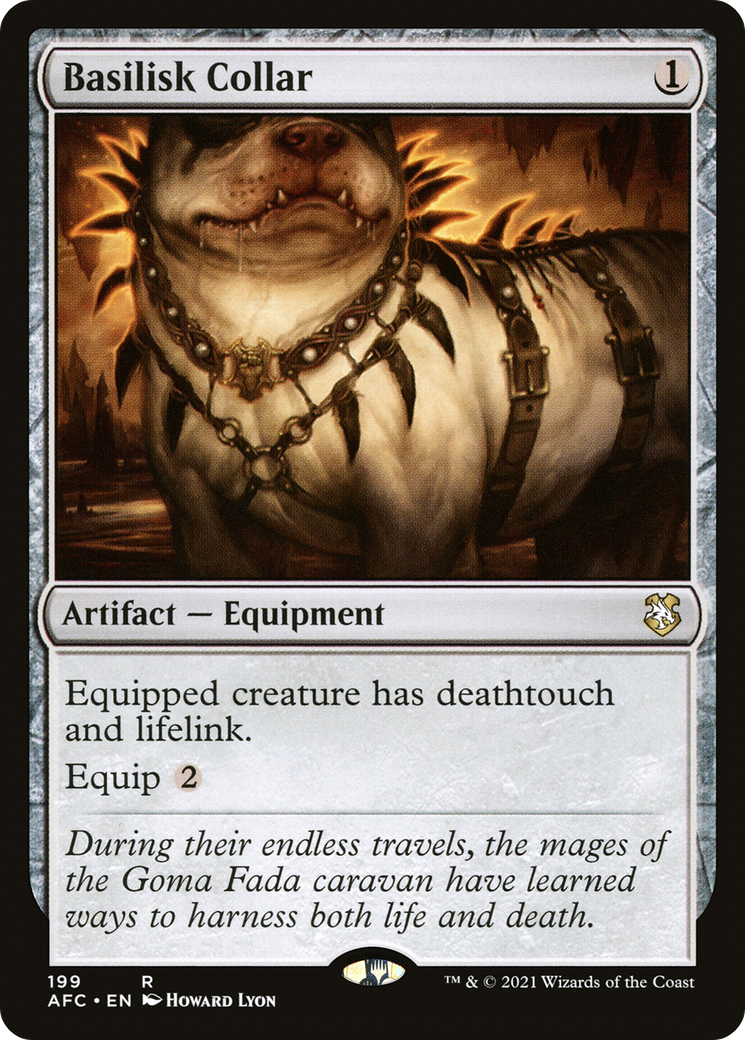
Basilisk Collar
Basilisk Collar
Artifact — Equipment
Equipped creature has deathtouch and lifelink. (Any amount of damage it deals to a creature is enough to destroy it. Damage dealt by this creature also causes you to gain that much life.)
Equip ( : Attach to target creature you control. Equip only as a sorcery.)
-
1
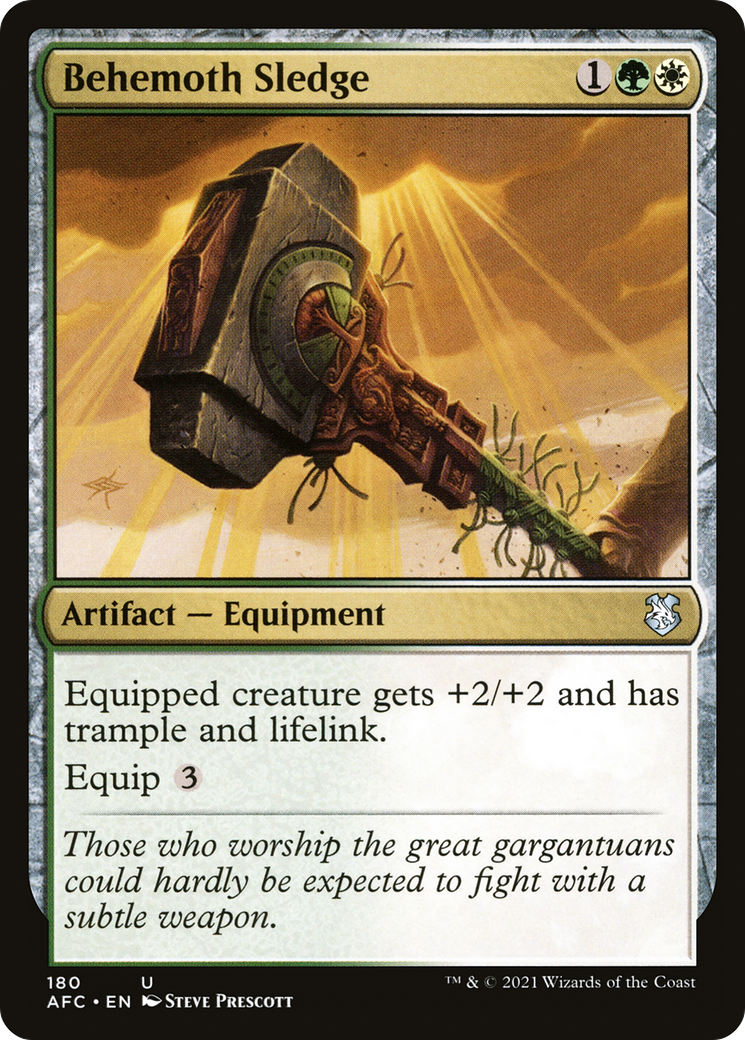
Behemoth Sledge
Behemoth Sledge
Artifact — Equipment
Equipped creature gets +2/+2 and has trample and lifelink.
Equip
- Multiple instances of lifelink on the same creature are redundant. If a creature with multiple instances of lifelink deals damage, its controller still only gains life equal to the damage dealt.
-
1
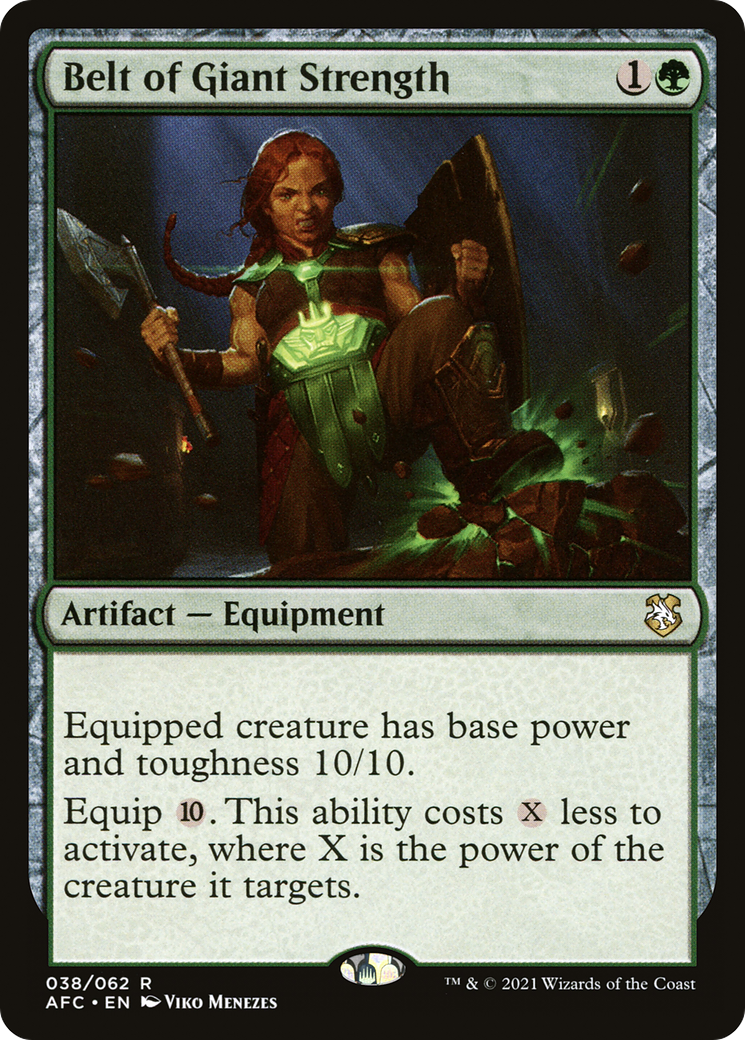
Belt of Giant Strength
Belt of Giant Strength
Artifact — Equipment
Equipped creature has base power and toughness 10/10.
Equip . This ability costs less to activate, where X is the power of the creature it targets.
- Belt of Giant Strength will overwrite any previous effects that set the creature's power and toughness to specific numbers. Effects that otherwise modify the equipped creature's power and toughness will still apply no matter when they took effect. The same is true for +1/+1 counters.
-
1
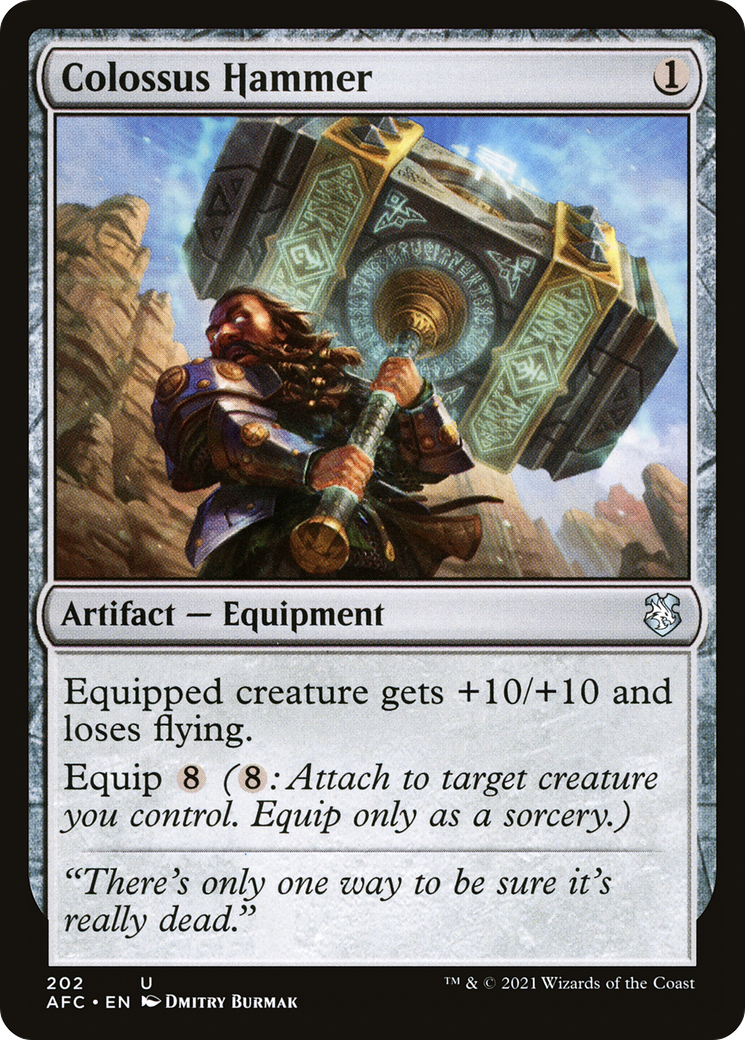
Colossus Hammer
Colossus Hammer
Artifact — Equipment
Equipped creature gets +10/+10 and loses flying.
Equip ( : Attach to target creature you control. Equip only as a sorcery.)
- If the equipped creature gains flying after Colossus Hammer became attached to it, it will keep flying.
- Colossus Hammer can be attached to a creature that didn't have flying to begin with. It just won't lose flying.
- If an ability of the equipped creature states that it has flying "as long as" a particular condition is true, that condition becoming true will not cause that creature to gain flying. For example, if the equipped creature "has flying as long as it's attacking," it will not gain flying, even if it attacks after Colossus Hammer becomes attached to it.
-
1
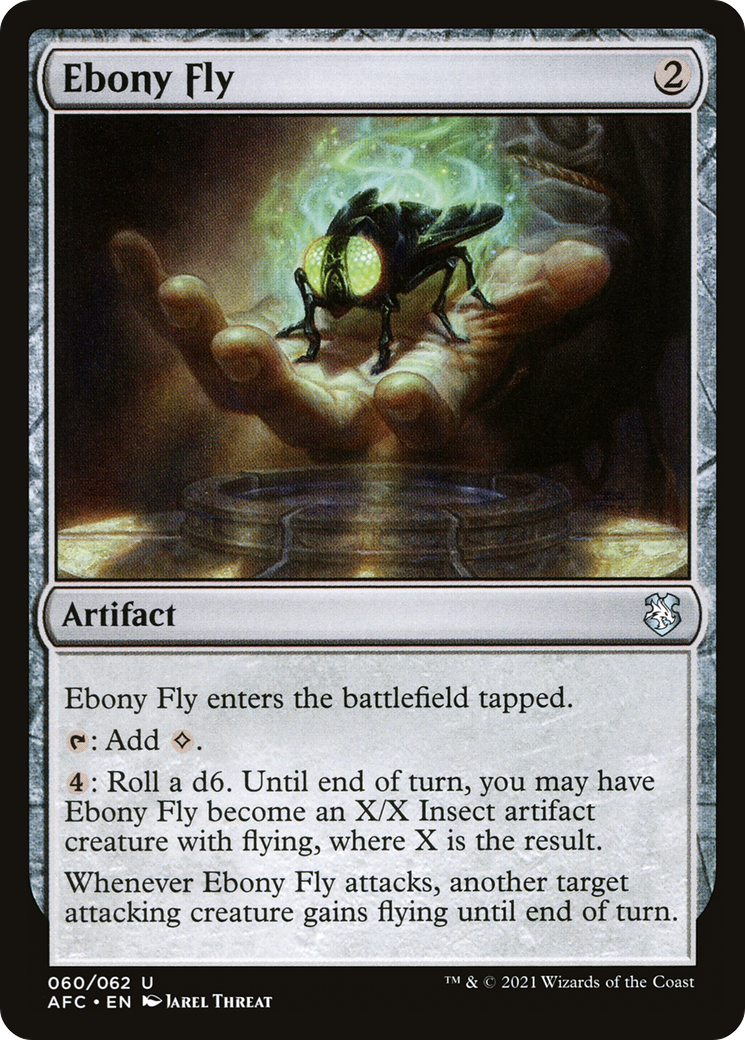
Ebony Fly
Ebony Fly
Artifact
This artifact enters tapped.
: Add .
: Roll a d6. Until end of turn, you may have this artifact become an X/X Insect artifact creature with flying, where X is the result.
Whenever this artifact attacks, another target attacking creature gains flying until end of turn.
- Dice are identified by the number of faces each one has. For example, a d20 is a twenty-sided die.
- Dice used must have equally likely outcomes and the roll must be fair. Although physical dice are recommended, digital substitutes are allowed, provided they have the same number of equally likely outcomes as specified in the original roll instruction.
- An ability that tells you to roll a die will also specify what to do with the result of that roll. Most often, this is in the form of a “results table” in the card text.
- The instruction to roll a die and the effect that occurs because of the result are all part of the same ability. Players do not get the chance to respond to the ability after knowing the result of the roll.
- An effect that says “choose a target, then roll a d20” or similar still uses the normal process of putting an ability on the stack and resolving it. Choosing targets is part of putting the ability on the stack and rolling the d20 happens later, as the ability resolves.
- Some effects may modify the result of a die roll. This may be part of the instruction to roll a die or it may come from other cards. Anything that references the “result” of a die roll is looking for the result after these modifications. Anything that is looking for the “natural result” is looking for the number shown on the face of the die before these modifications.
- Some abilities, like that of Pixie Guide and Barbarian Class, replace rolling a die with rolling extra dice and ignoring the lowest roll. The ignored rolls are not considered for the effect that instructed you to roll a die, and do not cause abilities to trigger. For all intents and purposes, once you determine which dice count, any extra dice were never rolled.
- Some effects instruct you to roll again. This uses the same number and type of dice as the original roll, and that roll will use the same set of possible outcomes.
- While playing Planechase, rolling the planar die will cause any ability that triggers whenever a player rolls one or more dice to trigger. However, any effect that refers to a numerical result will ignore the rolling of the planar die.
- Tournament events have more specific rules regarding dice and die-rolling. For more information, please see the most recent version of the Magic Tournament Rules at https://wpn.wizards.com/en/document/magic-gathering-tournament-rules.
- You choose whether Ebony Fly becomes a creature as the second ability resolves, after you see the result of the die roll. If you don't choose to make it a creature at that time, you can't choose to make it a creature later in the turn unless you activate the ability again.
-
1
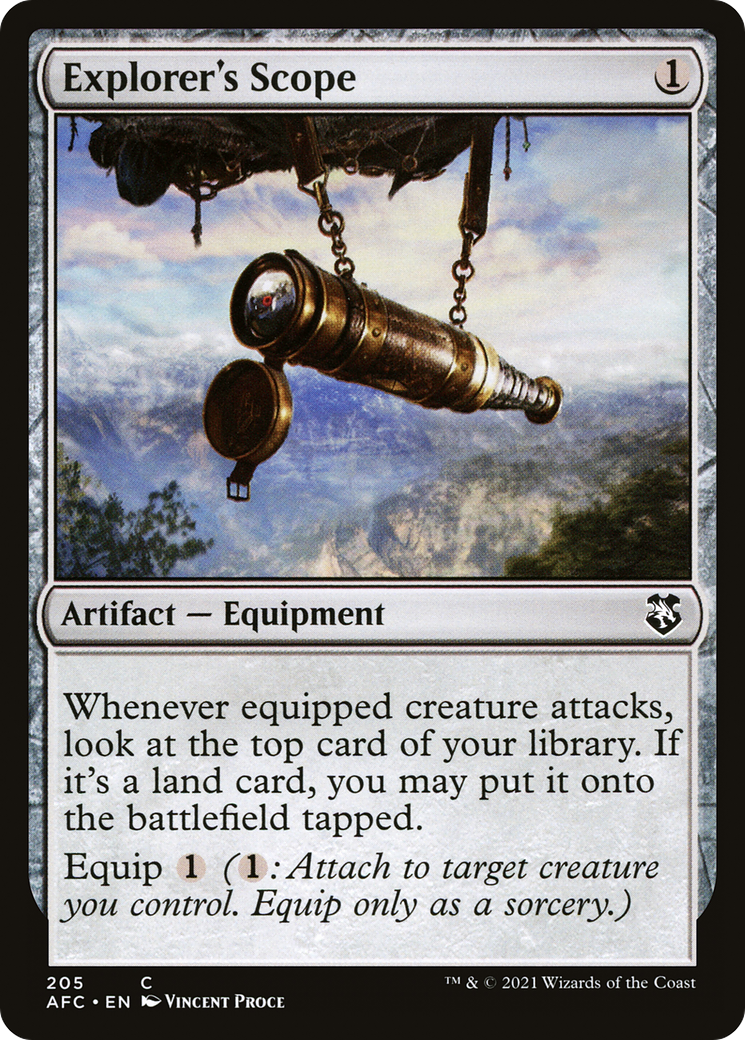
Explorer's Scope
Explorer's Scope
Artifact — Equipment
Whenever equipped creature attacks, look at the top card of your library. If it's a land card, you may put it onto the battlefield tapped.
Equip ( : Attach to target creature you control. Equip only as a sorcery.)
-
1
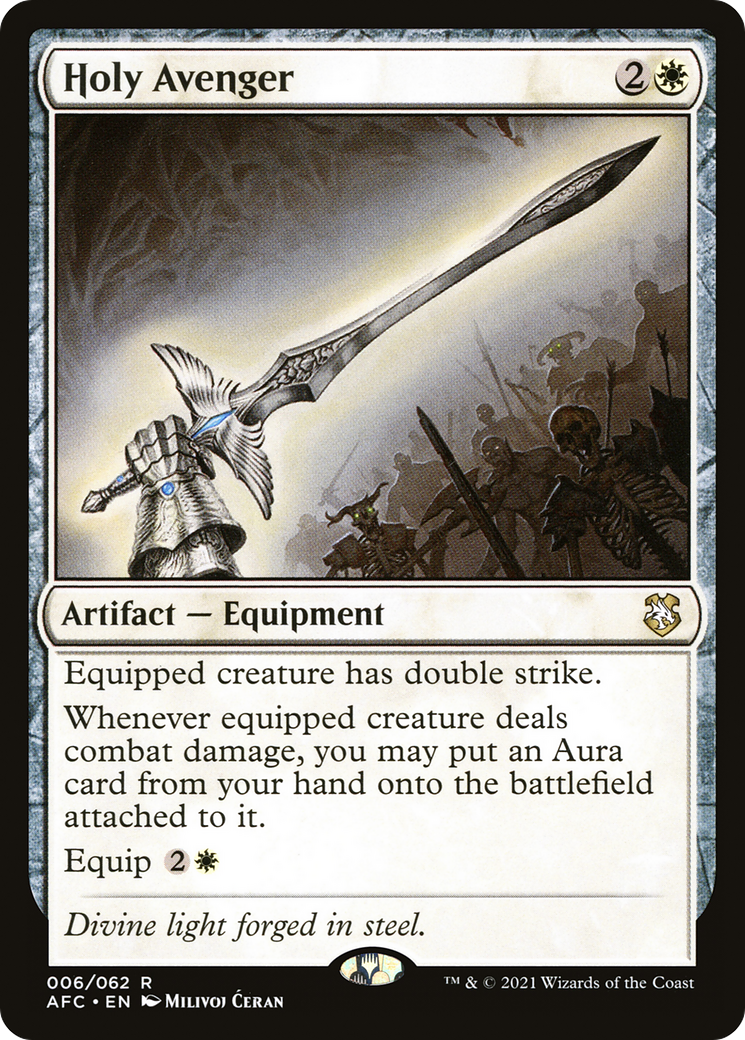
Holy Avenger
Holy Avenger
Artifact — Equipment
Equipped creature has double strike.
Whenever equipped creature deals combat damage, you may put an Aura card from your hand onto the battlefield attached to it.
Equip
- You may put an Aura card onto the battlefield attached to the equipped creature if it could legally be attached to that creature.
-
1
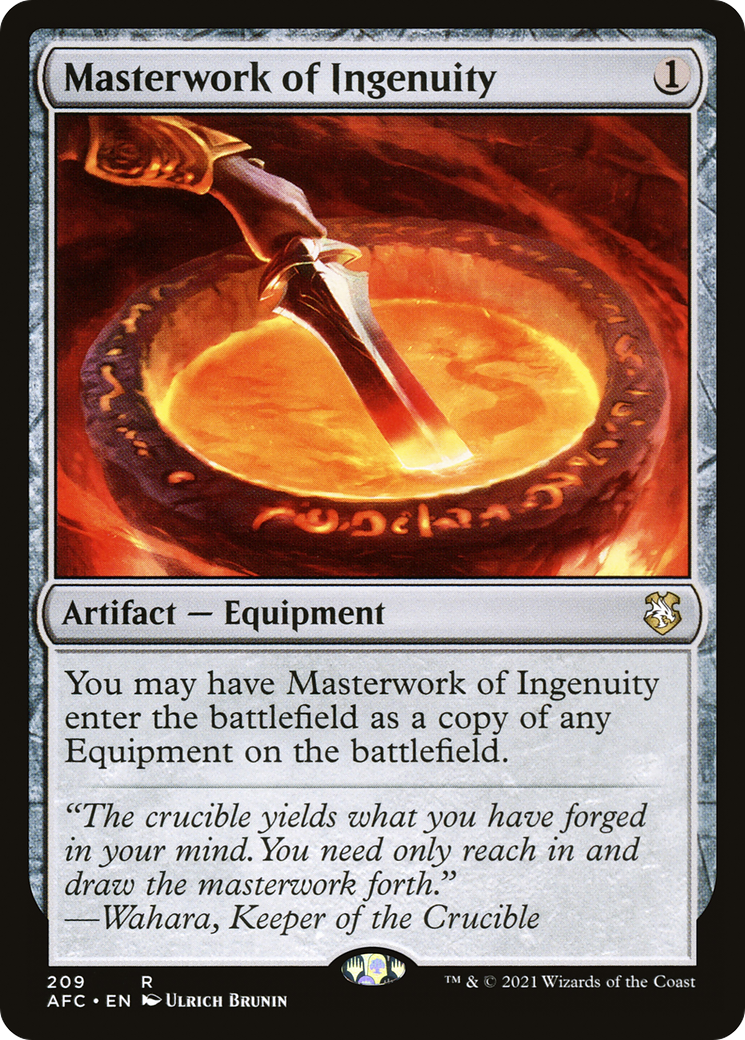
Masterwork of Ingenuity
Masterwork of Ingenuity
Artifact — Equipment
You may have this Equipment enter as a copy of any Equipment on the battlefield.
- Masterwork of Ingenuity enters the battlefield unattached. It doesn't enter attached to the same creature as the Equipment it copies.
-
1
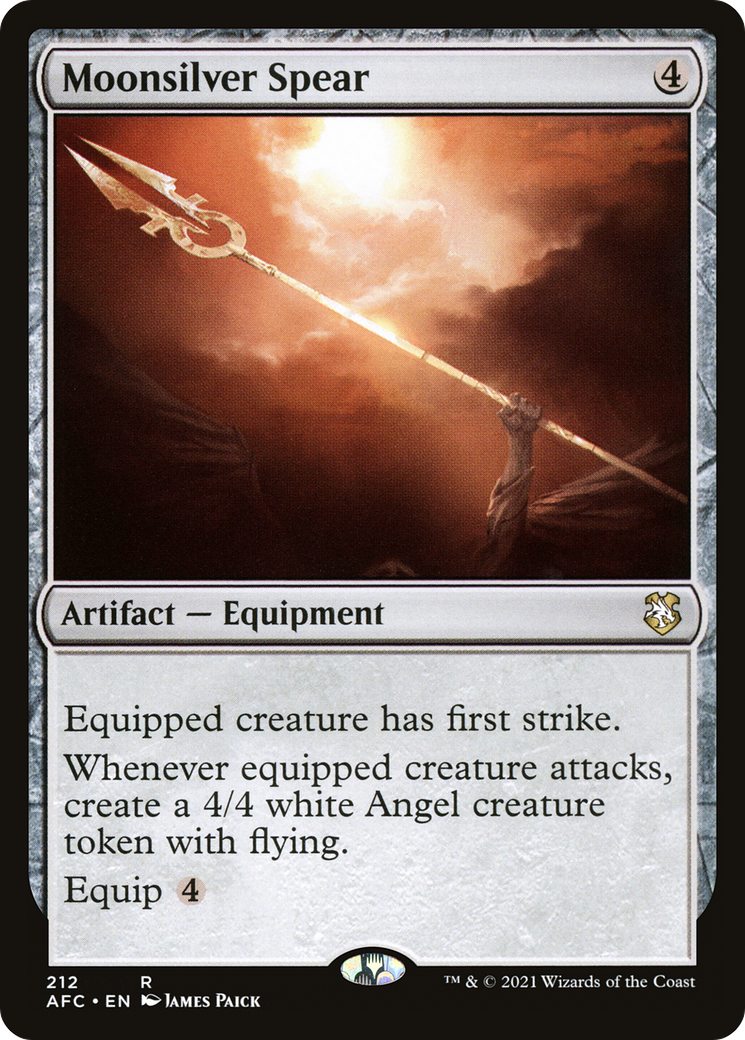
Moonsilver Spear
Moonsilver Spear
Artifact — Equipment
Equipped creature has first strike.
Whenever equipped creature attacks, create a 4/4 white Angel creature token with flying.
Equip
-
1
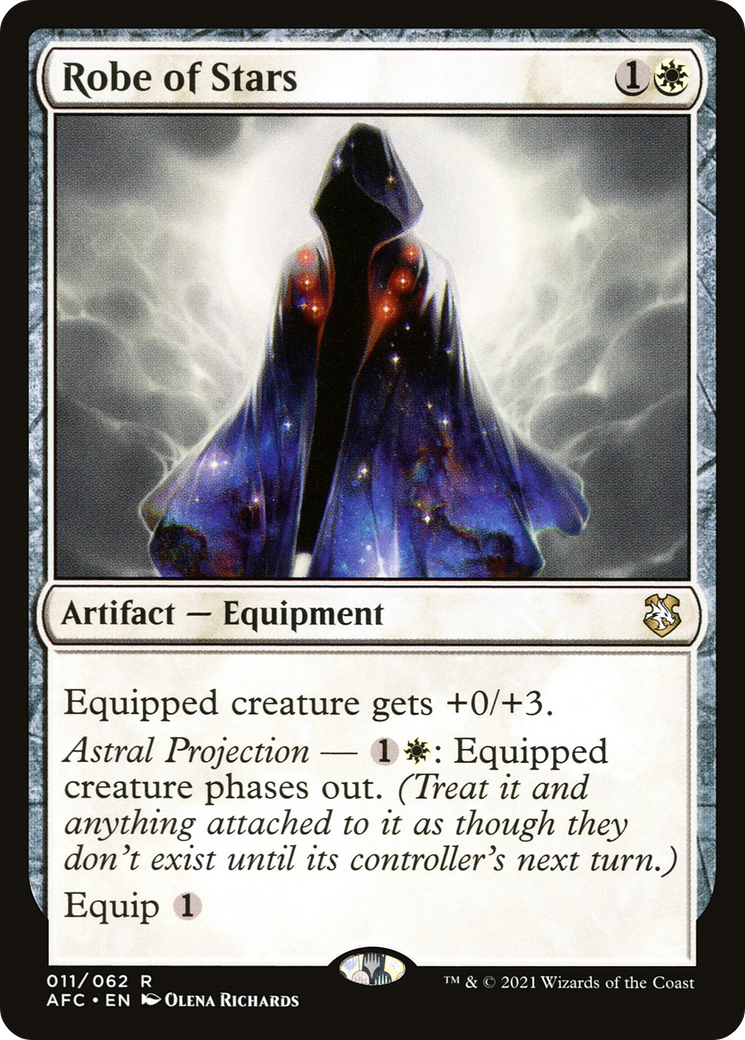
Robe of Stars
Robe of Stars
Artifact — Equipment
Equipped creature gets +0/+3.
Astral Projection — : Equipped creature phases out. (Treat it and anything attached to it as though they don't exist until its controller's next turn.)
Equip
- Phased out permanents are treated as though they don't exist. They can't be the target of spells or abilities, their static abilities have no effect on the game, their triggered abilities can't trigger, they can't attack or block, and so on.
- Notably, this means you cannot equip Robe of Stars to another creature while it is phased out. If you activate the Astral Projection ability of an attached Robe of Stars in response to the equip ability, Robe of Stars will be phased out before the equip ability resolves and will not be moved.
- As a creature is phased out, Auras and Equipment attached to it (including Robe of Stars) also phase out at the same time. Those Auras and Equipment will phase in attached to the creature they were attached to when they phased out.
- Permanents phase back in during their controller's untap step, immediately before that player untaps their permanents. Creatures that phase in this way are able to attack and pay a cost of during that turn. If a permanent had counters on it when it phased out, it will have those counters when it phases back in.
- An attacking or blocking creature that phases out is removed from combat.
- Phasing out doesn't cause any “leaves the battlefield” abilities to trigger. Similarly, phasing in won't cause any “enters the battlefield” abilities to trigger.
- Any continuous effects with a “for as long as” duration, such as that of Mind Flayer, ignore phased-out objects. If ignoring those objects causes the effect's conditions to no longer be met, the duration will expire.
- Choices made for permanents as they entered the battlefield are remembered when they phase in.
- If an opponent gains control of one of your creatures, that creature phases out, and the duration of the control-change effect expires before it phases back in, that creature phases in under your control as that opponent's next untap step begins. If they leave the game before their next untap step, it phases in as the next untap step begins after their turn would have begun.
-
1
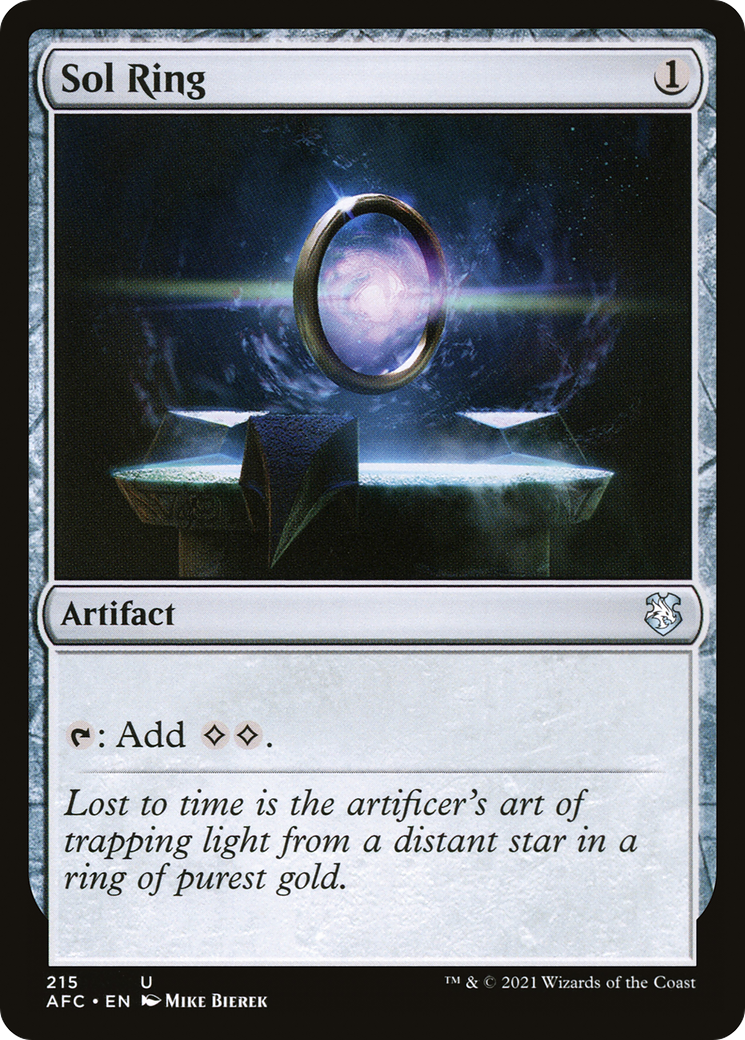
Sol Ring
Sol Ring
Artifact
: Add .
-
1
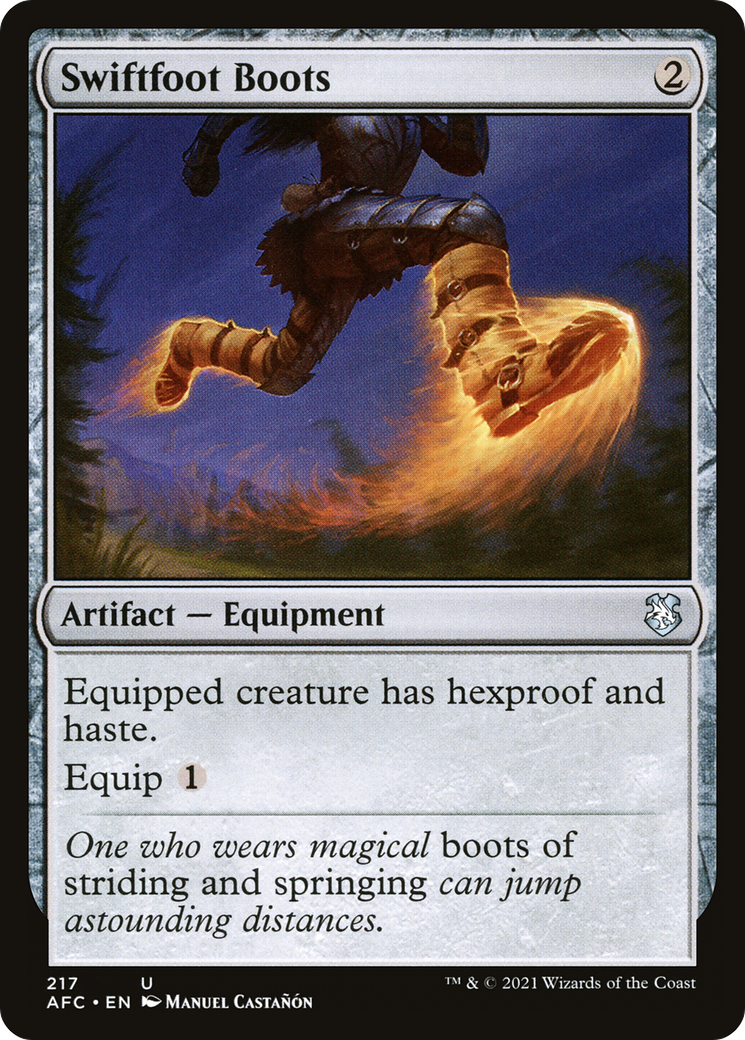
Swiftfoot Boots
Swiftfoot Boots
Artifact — Equipment
Equipped creature has hexproof and haste. (It can't be the target of spells or abilities your opponents control. It can attack and no matter when it came under your control.)
Equip ( : Attach to target creature you control. Equip only as a sorcery.)
- If a creature enters the battlefield under your control and gains haste, but then loses it before attacking, it won't be able to attack that turn. This means that you can't use one Swiftfoot Boots to allow two new creatures to attack in the same turn.
-
1
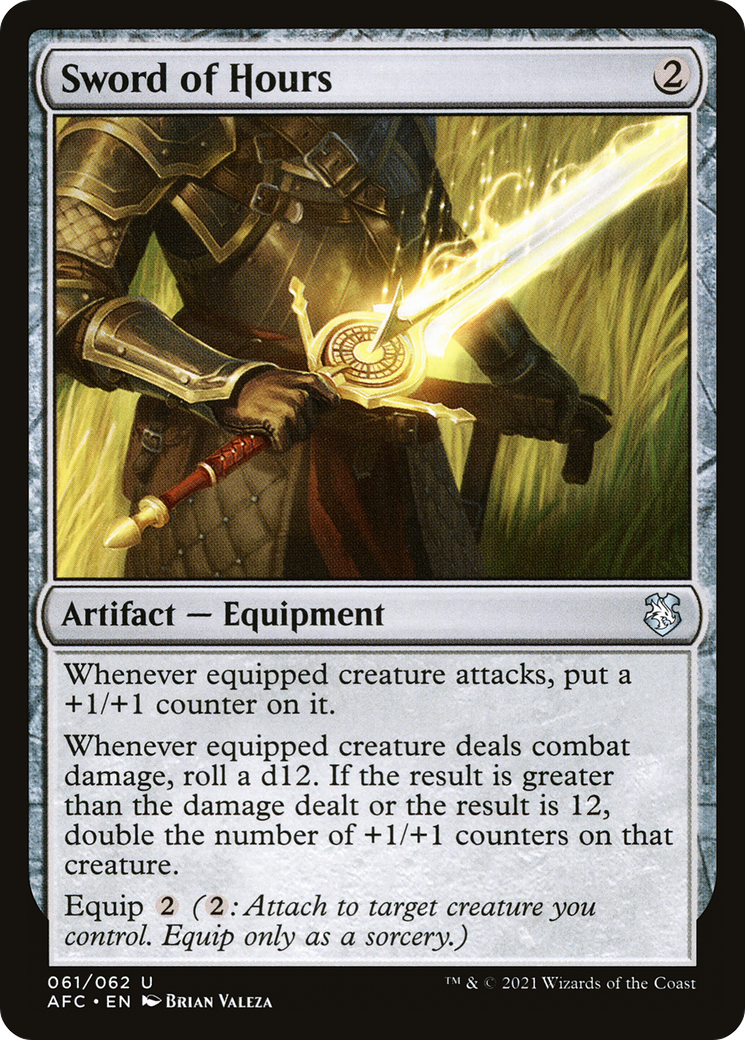
Sword of Hours
Sword of Hours
Artifact — Equipment
Whenever equipped creature attacks, put a +1/+1 counter on it.
Whenever equipped creature deals combat damage, roll a d12. If the result is greater than the damage dealt or the result is 12, double the number of +1/+1 counters on that creature.
Equip ( : Attach to target creature you control. Equip only as a sorcery.)
- To double the number of +1/+1 counters on a permanent, count the number of +1/+1 counters that are currently on that permanent and put that many more on it. Any replacement effects that change this number will apply accordingly.
- If the equipped creature takes lethal damage at the same time that it deals combat damage, it will die before the counters on it can be doubled. However, you will still roll a d12, which may cause abilities of other permanents to trigger.
- Dice are identified by the number of faces each one has. For example, a d20 is a twenty-sided die.
- Dice used must have equally likely outcomes and the roll must be fair. Although physical dice are recommended, digital substitutes are allowed, provided they have the same number of equally likely outcomes as specified in the original roll instruction.
- An ability that tells you to roll a die will also specify what to do with the result of that roll. Most often, this is in the form of a “results table” in the card text.
- The instruction to roll a die and the effect that occurs because of the result are all part of the same ability. Players do not get the chance to respond to the ability after knowing the result of the roll.
- An effect that says “choose a target, then roll a d20” or similar still uses the normal process of putting an ability on the stack and resolving it. Choosing targets is part of putting the ability on the stack and rolling the d20 happens later, as the ability resolves.
- Some effects may modify the result of a die roll. This may be part of the instruction to roll a die or it may come from other cards. Anything that references the “result” of a die roll is looking for the result after these modifications. Anything that is looking for the “natural result” is looking for the number shown on the face of the die before these modifications.
- Some abilities, like that of Pixie Guide and Barbarian Class, replace rolling a die with rolling extra dice and ignoring the lowest roll. The ignored rolls are not considered for the effect that instructed you to roll a die, and do not cause abilities to trigger. For all intents and purposes, once you determine which dice count, any extra dice were never rolled.
- Some effects instruct you to roll again. This uses the same number and type of dice as the original roll, and that roll will use the same set of possible outcomes.
- While playing Planechase, rolling the planar die will cause any ability that triggers whenever a player rolls one or more dice to trigger. However, any effect that refers to a numerical result will ignore the rolling of the planar die.
- Tournament events have more specific rules regarding dice and die-rolling. For more information, please see the most recent version of the Magic Tournament Rules at https://wpn.wizards.com/en/document/magic-gathering-tournament-rules.
-
1
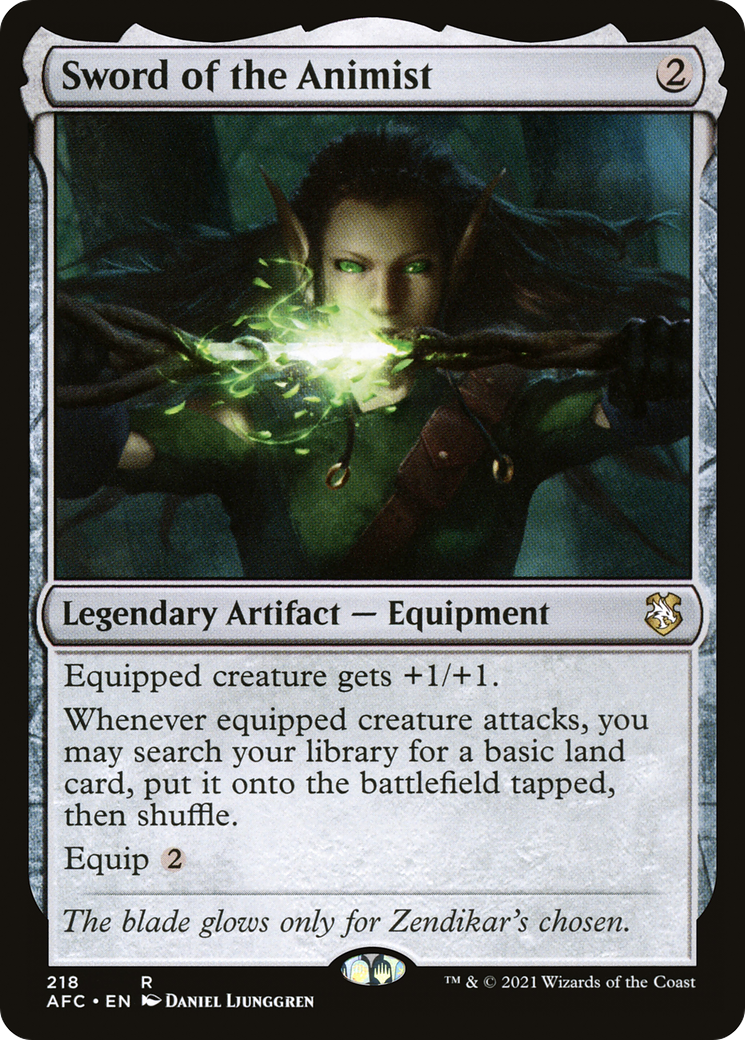
Sword of the Animist
Sword of the Animist
Legendary Artifact — Equipment
Equipped creature gets +1/+1.
Whenever equipped creature attacks, you may search your library for a basic land card, put it onto the battlefield tapped, then shuffle.
Equip
-
1
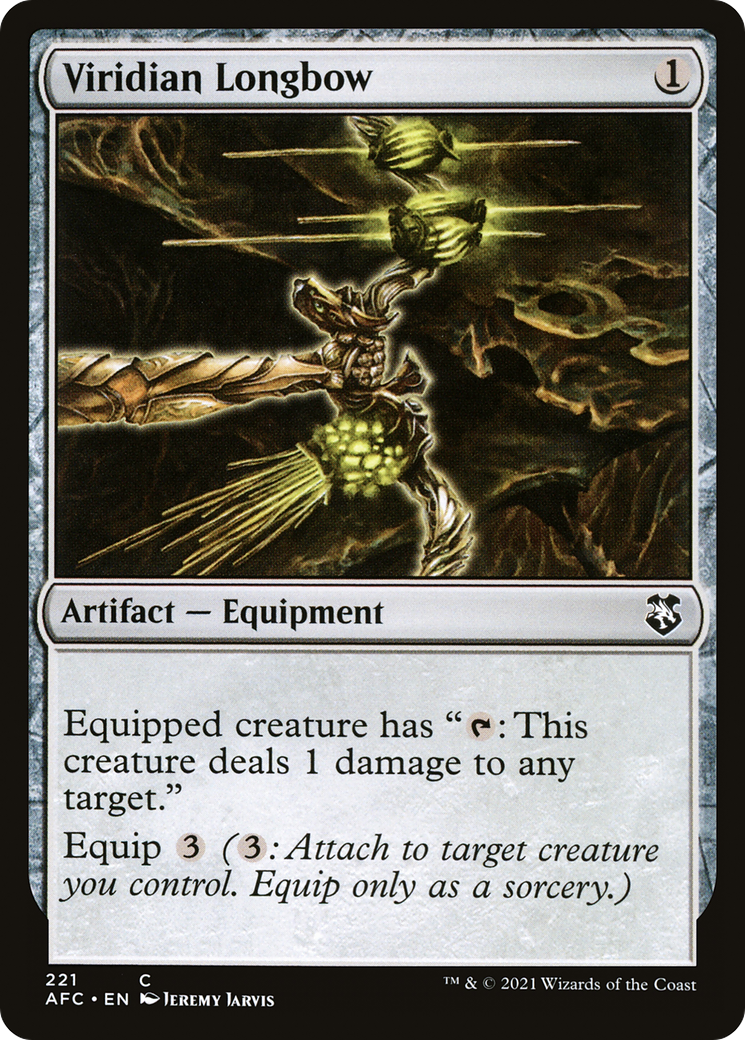
Viridian Longbow
Viridian Longbow
Artifact — Equipment
Equipped creature has " : This creature deals 1 damage to any target."
Equip ( : Attach to target creature you control. Equip only as a sorcery. This card enters unattached and stays on the battlefield if the creature leaves.)
-
1
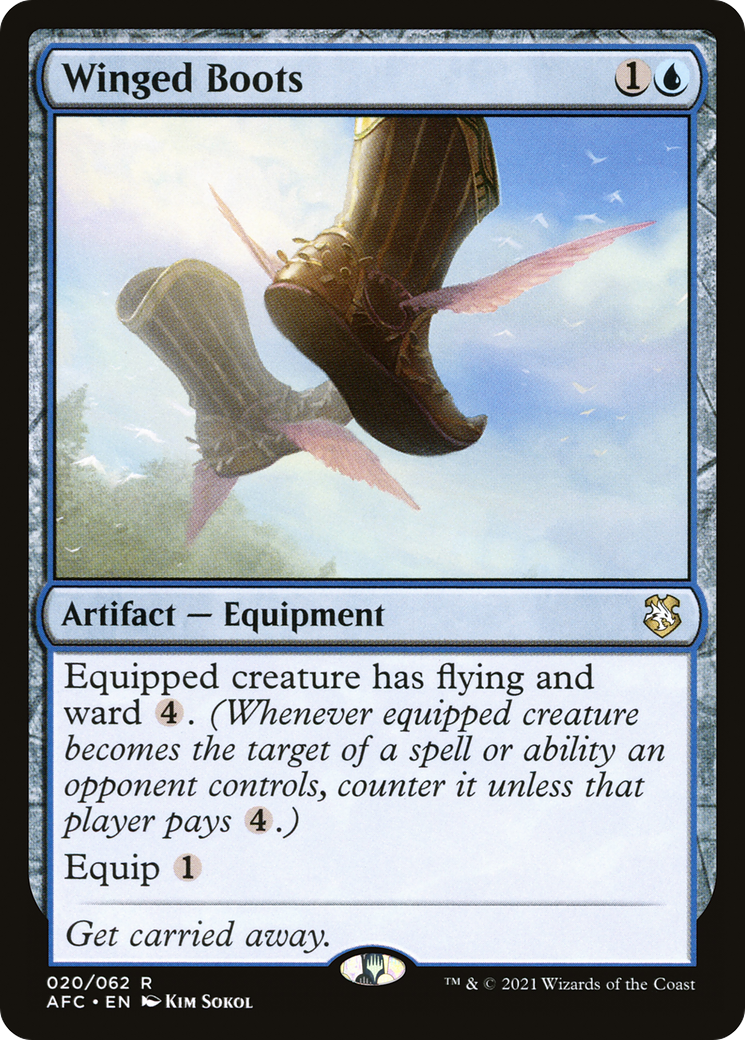
Winged Boots
Winged Boots
Artifact — Equipment
Equipped creature has flying and ward . (Whenever equipped creature becomes the target of a spell or ability an opponent controls, counter it unless that player pays .)
Equip
- If a player casts a spell that targets multiple permanents their opponent controls with ward, each of those ward abilities will trigger. If that player doesn't pay for all of them, the spell will be countered.
Enchantments 17
-
1
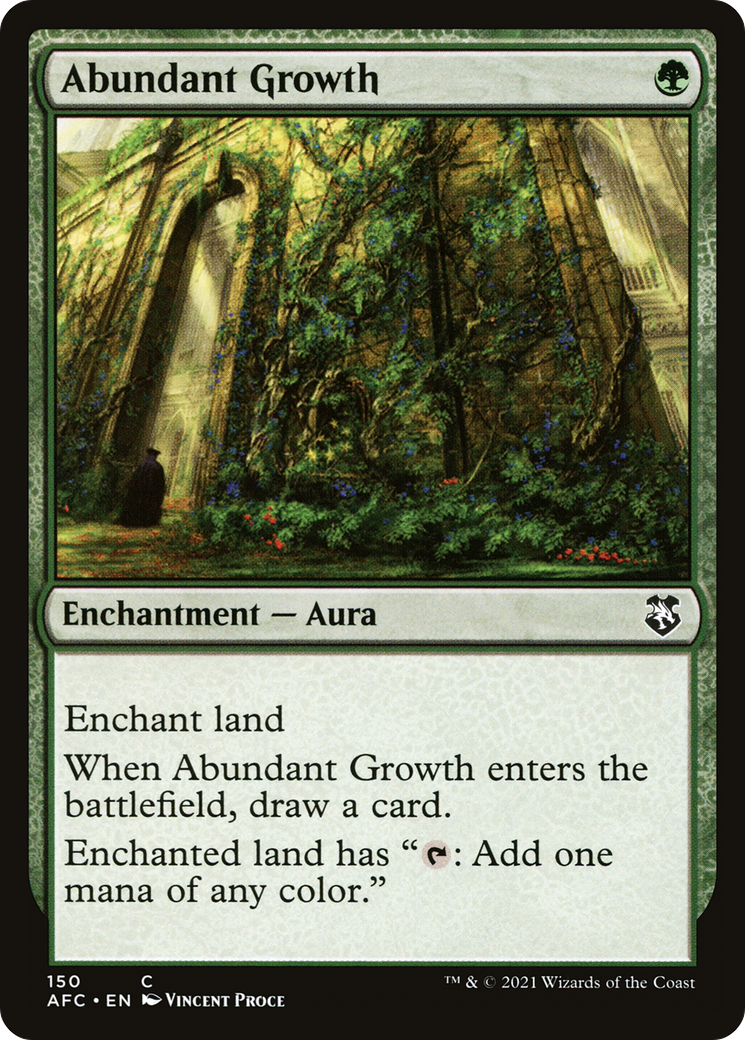
Abundant Growth
Abundant Growth
Enchantment — Aura
Enchant land
When this Aura enters, draw a card.
Enchanted land has " : Add one mana of any color."
- The enchanted land retains any other abilities it has. Activating one of the land's activated abilities won't cause the other(s) to be activated.
-
1
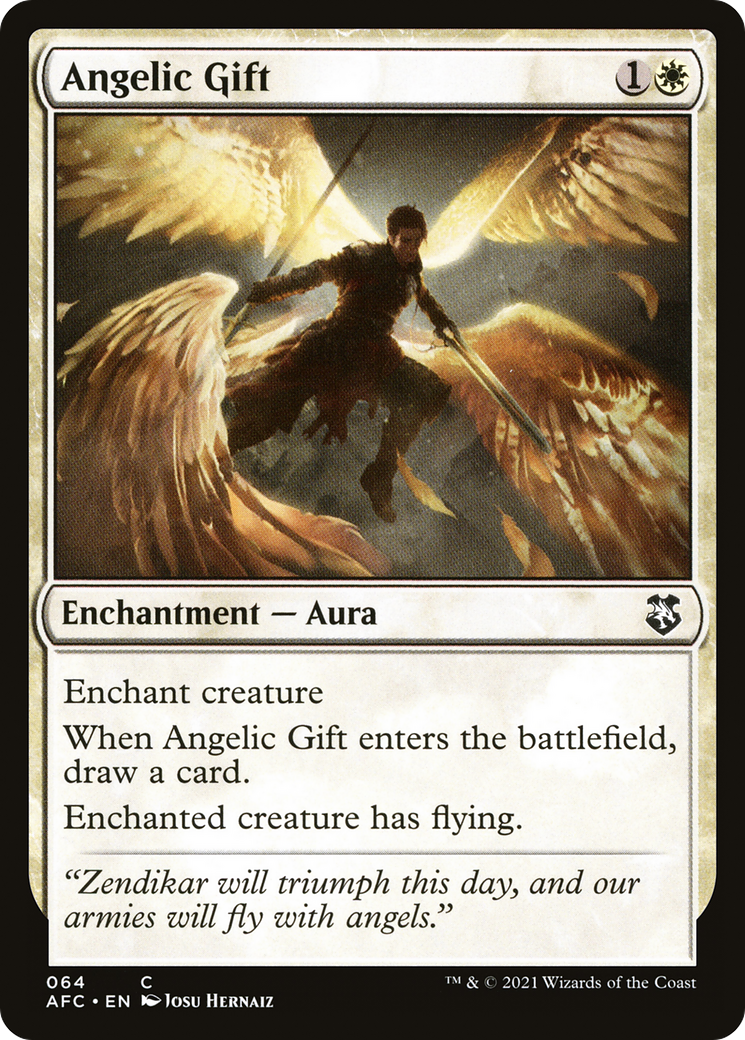
Angelic Gift
Angelic Gift
Enchantment — Aura
Enchant creature
When this Aura enters, draw a card.
Enchanted creature has flying.
- If the target creature is an illegal target by the time Angelic Gift tries to resolve, it doesn't resolve. It won't enter the battlefield, so its enters-the-battlefield ability won't trigger.
-
1
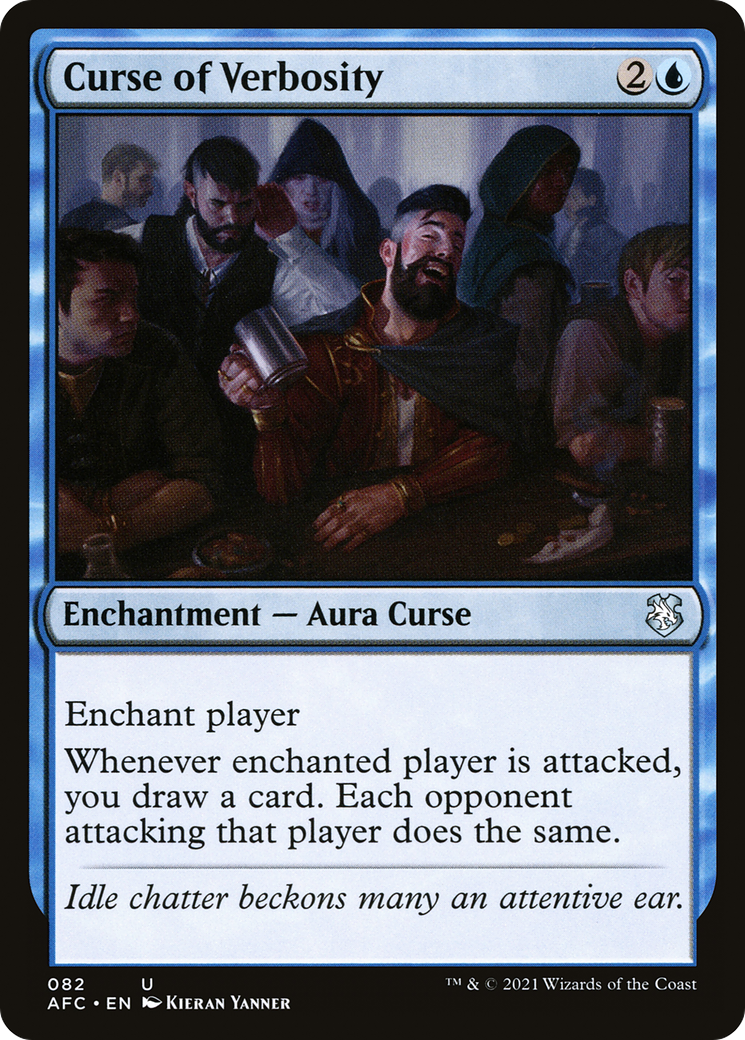
Curse of Verbosity
Curse of Verbosity
Enchantment — Aura Curse
Enchant player
Whenever enchanted player is attacked, you draw a card. Each opponent attacking that player does the same.
- Each Curse's ability triggers only once, no matter how many creatures are attacking the enchanted player.
- A player is attacking another player if they control a creature that's attacking that player. If no creatures are attacking the enchanted player as a Curse's ability resolves (most likely because they've left the battlefield), only the Curse's controller performs its actions.
- The triggered ability of these Curses won't trigger if only a planeswalker controlled by the enchanted player is attacked.
- If you enchant yourself with one of these Curses, you'll get its effects whenever another player attacks you.
-
1
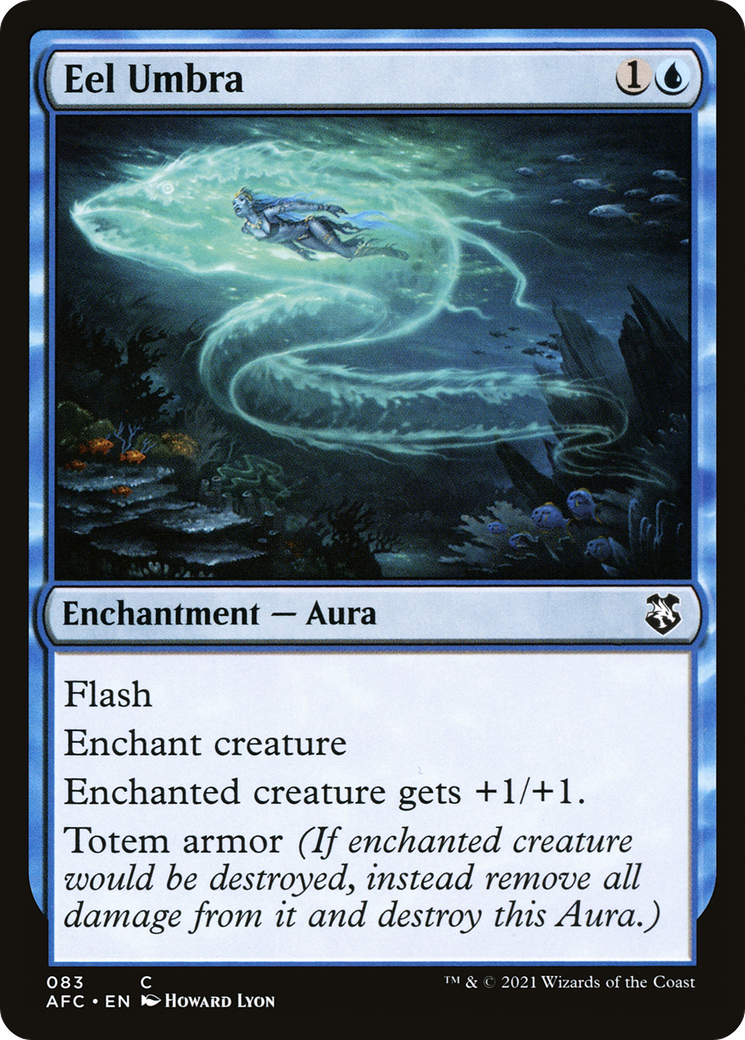
Eel Umbra
Eel Umbra
Enchantment — Aura
Flash (You may cast this spell any time you could cast an instant.)
Enchant creature
Enchanted creature gets +1/+1.
Umbra armor (If enchanted creature would be destroyed, instead remove all damage from it and destroy this Aura.)
- Umbra armor's effect is mandatory. If the enchanted creature would be destroyed, you must remove all damage from it (if it has any) and destroy the Aura that has umbra armor instead.
- Umbra armor's effect is applied no matter why the enchanted creature would be destroyed: because it's been dealt lethal damage, or because it's being affected by an effect that says to "destroy" it (such as Breathe Your Last). In either case, all damage is removed from the creature and the Aura is destroyed instead.
- If a creature you control is enchanted with multiple Auras that have umbra armor, and the enchanted creature would be destroyed, one of those Auras is destroyed instead—but only one of them. You choose which one because you control the enchanted creature.
- If a creature enchanted with an Aura that has umbra armor would be destroyed by multiple state-based actions at the same time (most likely because a creature with deathtouch has dealt damage to that creature greater than or equal to its toughness), umbra armor's effect will replace all of them and save the creature.
- If a spell or ability would destroy both an Aura with umbra armor and the creature it's enchanting at the same time, umbra armor's effect will save the enchanted creature from being destroyed. Instead, the spell or ability will destroy the Aura in two different ways at the same time, but the result is the same as destroying it once.
- Umbra armor's effect is not regeneration. Specifically, if umbra armor's effect is applied, the enchanted creature does not become tapped and is not removed from combat as a result. Effects that say the enchanted creature can't be regenerated won't prevent umbra armor's effect from being applied.
- If a spell or ability says that it would "destroy" a creature enchanted with an Aura that has umbra armor, that spell or ability is what causes the Aura to be destroyed instead. Umbra armor doesn't destroy the Aura; rather, it changes the effects of the spell or ability. On the other hand, if a spell or ability deals lethal damage to a creature enchanted with an Aura that has umbra armor, the game rules regarding lethal damage cause the Aura to be destroyed, not that spell or ability.
- Umbra armor has no effect if the enchanted creature is put into a graveyard for any other reason, such as if it's sacrificed, if the "legend rule" applies to it, or if its toughness is 0 or less.
- If a creature enchanted with an Aura that has umbra armor has indestructible, lethal damage and effects that try to destroy it simply have no effect. Umbra armor won't do anything because it won't have to.
- Some printings of this card refer to the ability "totem armor". This ability's name has been replaced with "umbra armor". This change does not affect the gameplay function of this card.
-
1
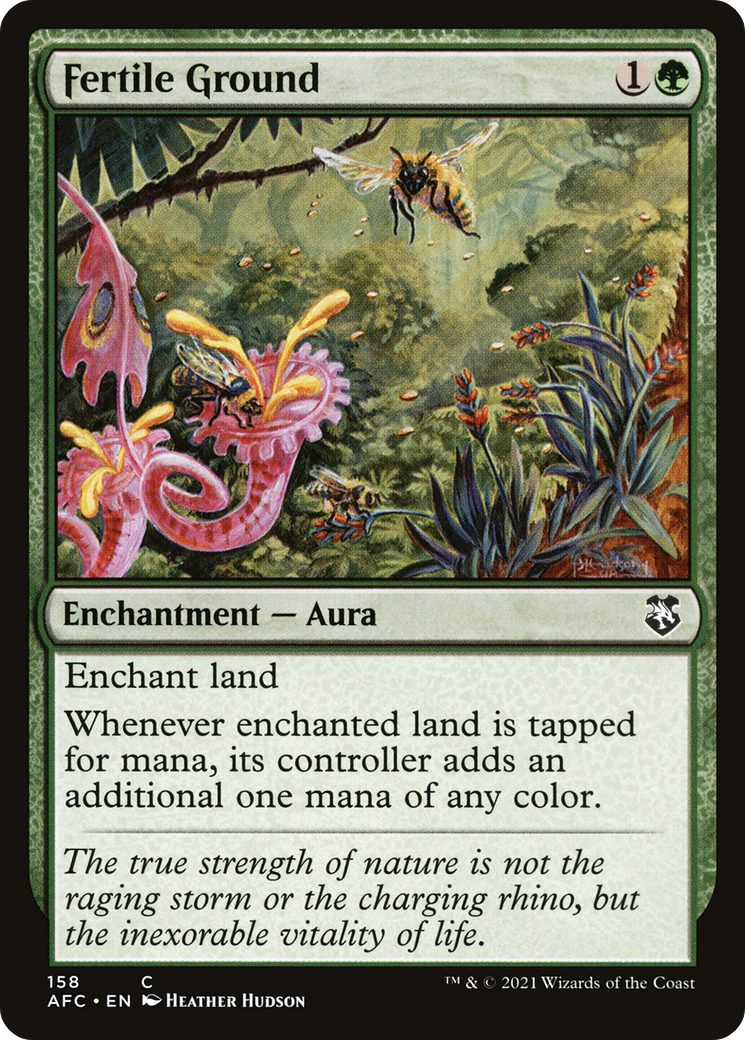
Fertile Ground
Fertile Ground
Enchantment — Aura
Enchant land
Whenever enchanted land is tapped for mana, its controller adds an additional one mana of any color.
-
1
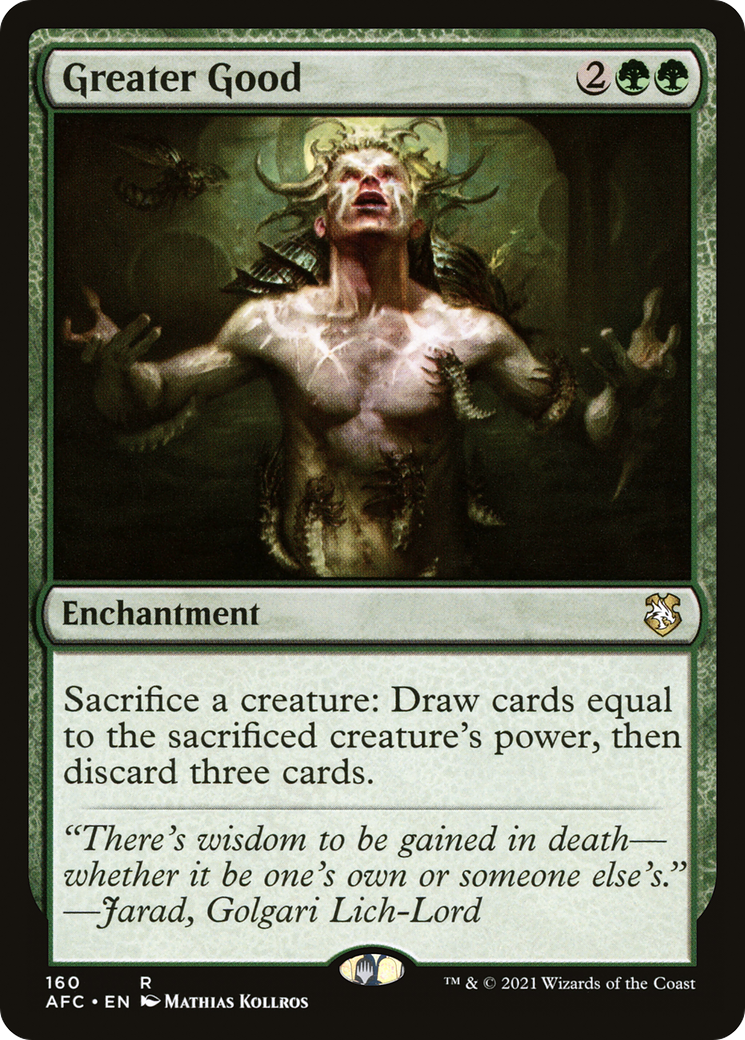
Greater Good
Greater Good
Enchantment
Sacrifice a creature: Draw cards equal to the sacrificed creature's power, then discard three cards.
- Use the sacrificed creature's power as it last existed on the battlefield to determine how many cards you draw.
- If you don't have three cards in hand when instructed to discard three cards, you discard your hand.
- You draw and discard cards all while Greater Good's ability is resolving. Nothing can happen between the two, and no player may choose to take actions.
-
1
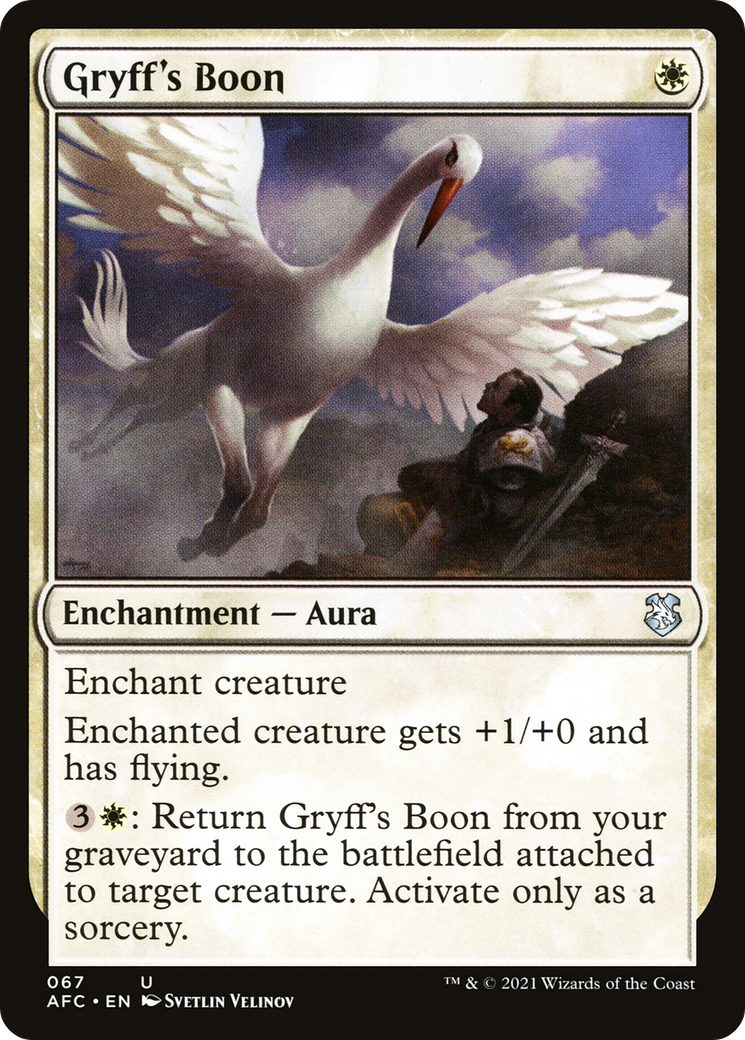
Gryff's Boon
Gryff's Boon
Enchantment — Aura
Enchant creature
Enchanted creature gets +1/+0 and has flying.
: Return this card from your graveyard to the battlefield attached to target creature. Activate only as a sorcery.
- If you activate Gryff's Boon's last ability and the target creature becomes an illegal target in response, the ability doesn't resolve and Gryff's Boon remains in your graveyard.
-
1
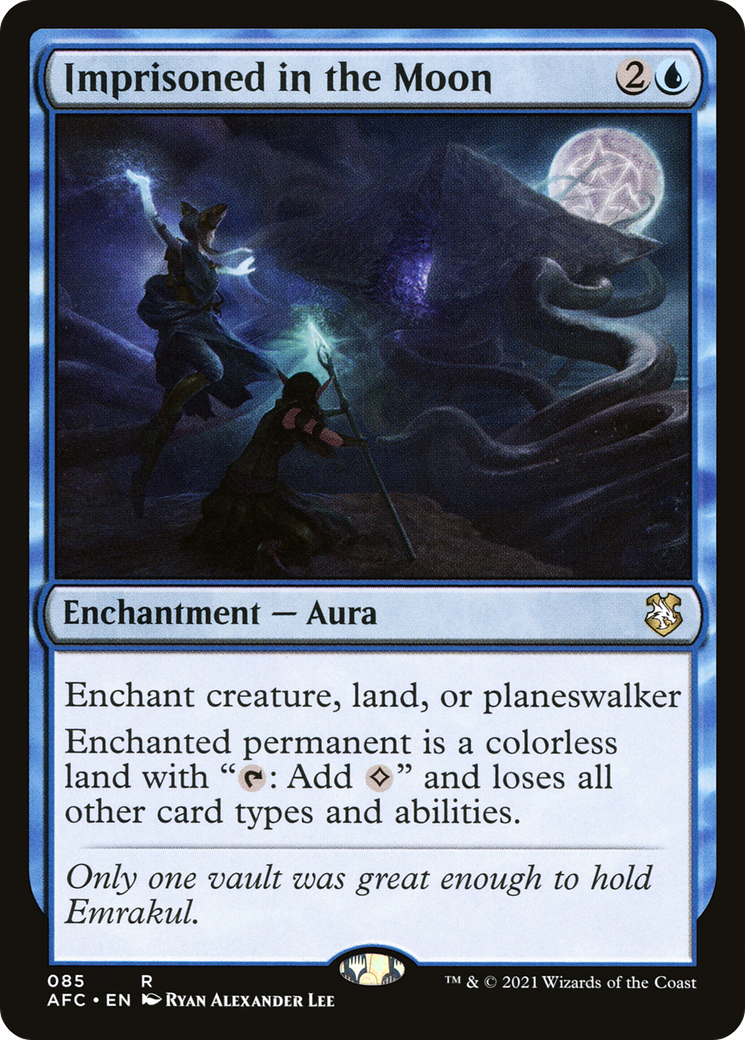
Imprisoned in the Moon
Imprisoned in the Moon
Enchantment — Aura
Enchant creature, land, or planeswalker
Enchanted permanent is a colorless land with " : Add " and loses all other card types and abilities.
- If you remove Imprisoned in the Moon from a planeswalker after tapping it for mana, you can still activate a loyalty ability of that planeswalker even though it's tapped.
- If the enchanted permanent is a land and has land types, it retains those types even though it loses any intrinsic mana abilities associated with them. For example, a Plains enchanted by Imprisoned in the Moon is still a Plains, but it can't tap for , only for .
- Becoming a land may cause other Auras to become illegally attached. These are put into their owner's graveyard, and any Equipment attached to the land become unattached and remain on the battlefield. Counters on the land remain on it even if they don't do anything.
- At the time the permanent becomes enchanted, Imprisoned in the Moon causes it to lose all abilities except the noted mana ability. Any abilities the permanent gains after that point will work normally.
- The permanent will keep any supertypes it previously had. Notably, if Imprisoned in the Moon is enchanting a legendary permanent, that permanent will continue to be legendary.
-
1
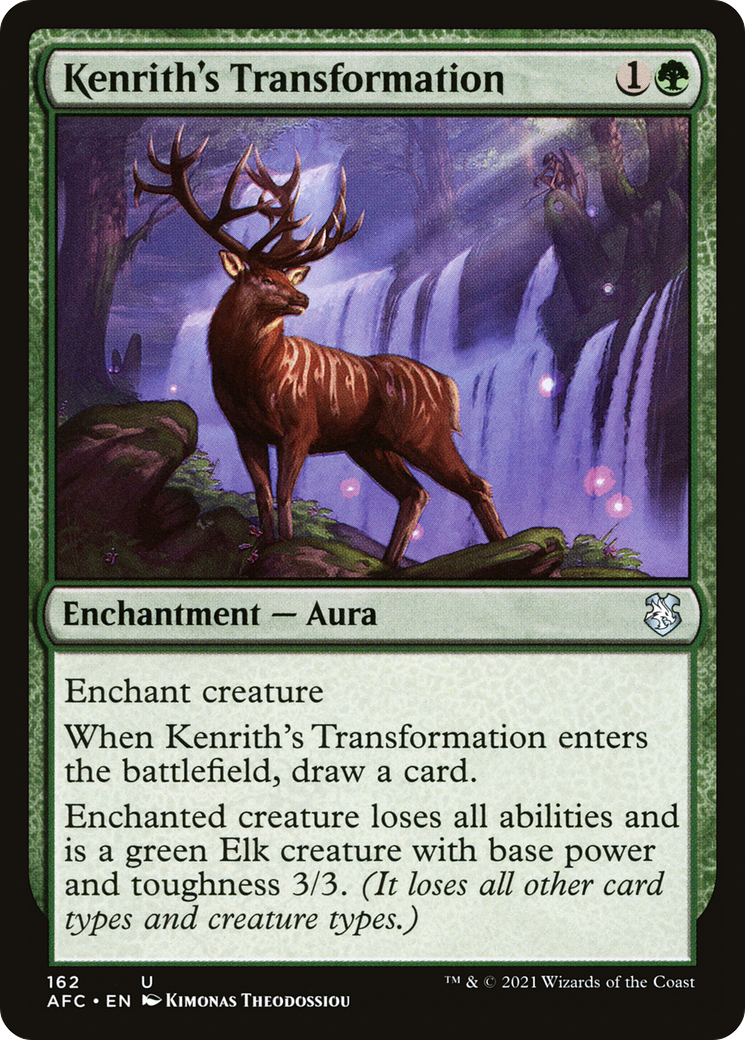
Kenrith's Transformation
Kenrith's Transformation
Enchantment — Aura
Enchant creature
When this Aura enters, draw a card.
Enchanted creature loses all abilities and is a green Elk creature with base power and toughness 3/3. (It loses all other card types and creature types.)
- If the creature Kenrith's Transformation would enchant is an illegal target by the time the Aura spell resolves, the entire spell doesn't resolve. It won't enter the battlefield, so its ability won't trigger.
- If the affected creature gains an ability after Kenrith's Transformation becomes attached to it, it will keep that ability.
- Kenrith's Transformation overwrites all previous effects that set the creature's base power and toughness to specific values. Any power- or toughness-setting effects that start to apply after Kenrith's Transformation becomes attached to a creature will overwrite this effect.
- Effects that modify a creature's power and/or toughness, such as the effect of Festive Funeral, will apply to the creature no matter when they started to take effect. The same is true for any counters that change its power and/or toughness.
- Kenrith's Transformation overwrites all colors and creature types the enchanted creature has. It's just a green Elk. The creature keeps any supertypes (such as legendary) it has, but loses any other card types it has (such as artifact).
- Kenrith's Transformation may enchant a permanent that is only temporarily a creature, such as Enchanted Carriage. If this happens, the Aura's effect causes the enchanted permanent to remain a green Elk creature even after the temporary effect expires.
- Because damage remains marked on a creature until the damage is removed as the turn ends, nonlethal damage dealt to a creature may become lethal if Kenrith's Transformation becomes attached to it during that turn.
-
1
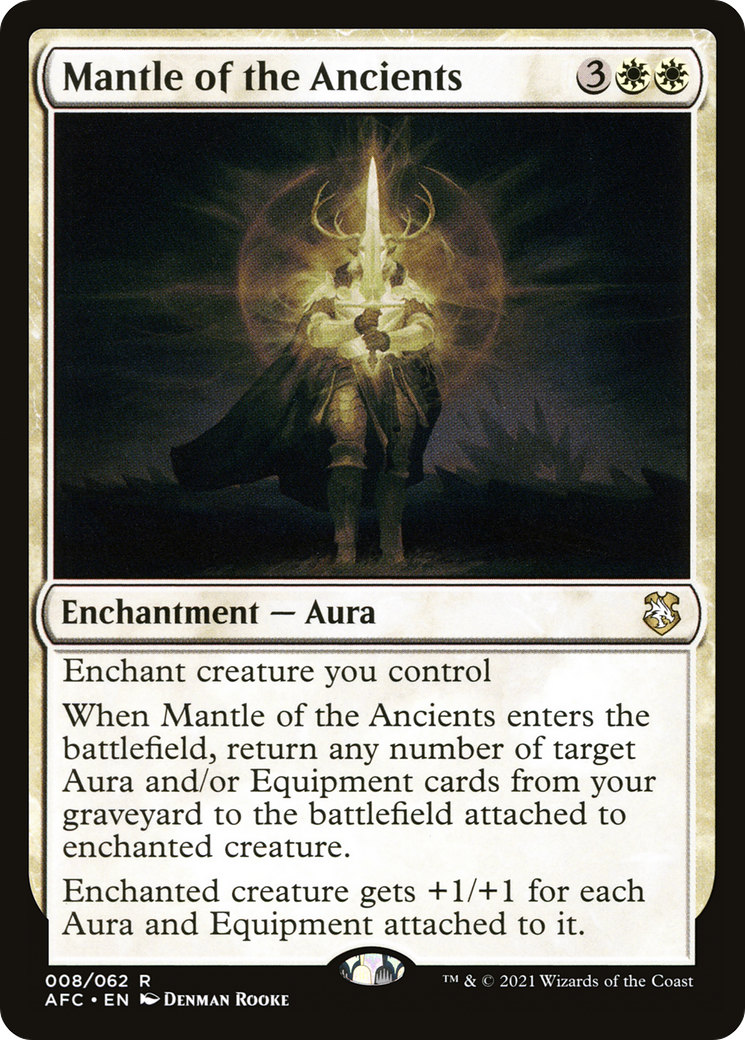
Mantle of the Ancients
Mantle of the Ancients
Enchantment — Aura
Enchant creature you control
When this Aura enters, return any number of target Aura and/or Equipment cards from your graveyard to the battlefield attached to enchanted creature.
Enchanted creature gets +1/+1 for each Aura and Equipment attached to it.
- As the enters-the-battlefield ability is resolving, any targets that couldn't be legally attached to the creature enchanted by Mantle of the Ancients stay in your graveyard.
- If Mantle of the Ancients becomes attached to a different creature in response to its enters-the-battlefield ability, the creature it's attached to as that ability is resolving is the "enchanted creature," even though you used the original enchanted creature to choose targets. This means some of those targets may become illegal.
- If Mantle of the Ancients leaves the battlefield before its enters-the-battlefield ability resolves, the last permanent it was attached to before leaving the battlefield is the "enchanted creature" (even if that permanent is no longer a creature).
-
1
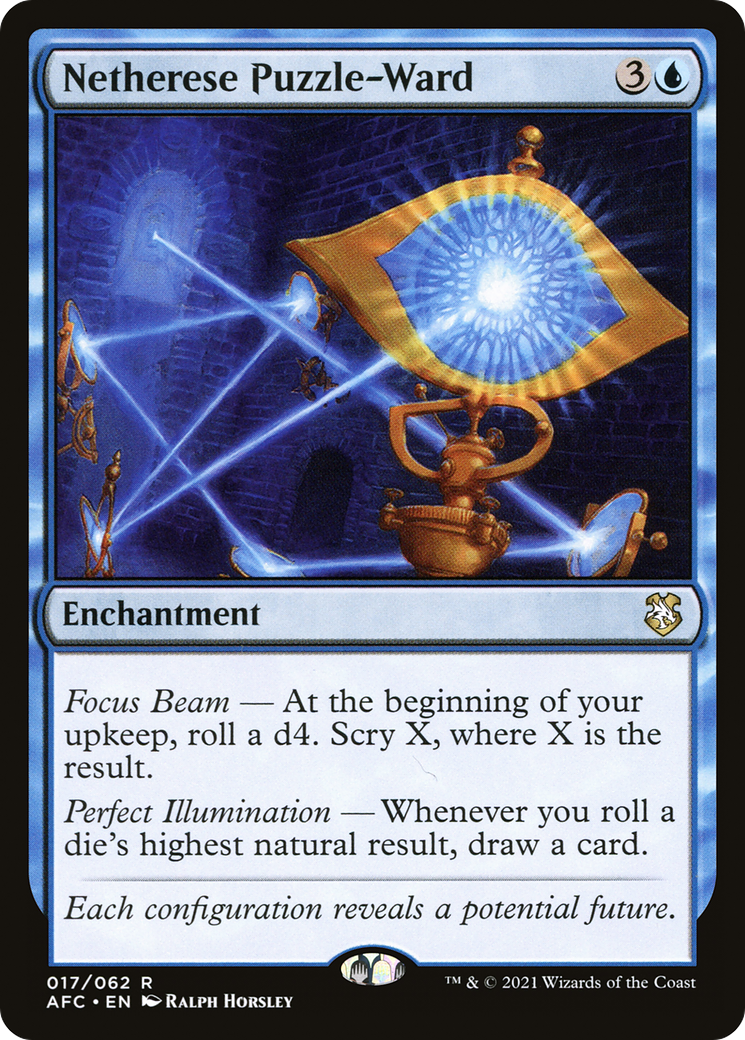
Netherese Puzzle-Ward
Netherese Puzzle-Ward
Enchantment
Focus Beam — At the beginning of your upkeep, roll a d4. Scry X, where X is the result.
Perfect Illumination — Whenever you roll a die's highest natural result, draw a card.
- If you roll a natural 4 while resolving the Focus Beam ability, you will scry before you draw a card for the Perfect Illumination ability.
- If you're instructed to roll multiple dice (with one exception, see below) and more than one shows the highest natural result, the Perfect Illumination ability will trigger that many times.
- Any die roll that is ignored, such as from Pixie Guide's effect, will not cause the Perfect Illumination ability to trigger.
- Dice are identified by the number of faces each one has. For example, a d20 is a twenty-sided die.
- Dice used must have equally likely outcomes and the roll must be fair. Although physical dice are recommended, digital substitutes are allowed, provided they have the same number of equally likely outcomes as specified in the original roll instruction.
- An ability that tells you to roll a die will also specify what to do with the result of that roll. Most often, this is in the form of a "results table" in the card text.
- The instruction to roll a die and the effect that occurs because of the result are all part of the same ability. Players do not get the chance to respond to the ability after knowing the result of the roll.
- An effect that says "choose a target, then roll a d20" or similar still uses the normal process of putting an ability on the stack and resolving it. Choosing targets is part of putting the ability on the stack and rolling the d20 happens later, as the ability resolves.
- Some effects may modify the result of a die roll. This may be part of the instruction to roll a die or it may come from other cards. Anything that references the "result" of a die roll is looking for the result after these modifications. Anything that is looking for the "natural result" is looking for the number shown on the face of the die before these modifications.
- Some abilities, like that of Pixie Guide and Barbarian Class, replace rolling a die with rolling extra dice and ignoring the lowest roll. The ignored rolls are not considered for the effect that instructed you to roll a die, and do not cause abilities to trigger. For all intents and purposes, once you determine which dice count, any extra dice were never rolled.
- Some effects instruct you to roll again. This uses the same number and type of dice as the original roll, and that roll will use the same set of possible outcomes.
- While playing Planechase, rolling the planar die will cause any ability that triggers whenever a player rolls one or more dice to trigger. However, any effect that refers to a numerical result will ignore the rolling of the planar die.
- Tournament events have more specific rules regarding dice and die-rolling. For more information, please see the most recent version of the Magic Tournament Rules at https://wpn.wizards.com/en/document/magic-gathering-tournament-rules.
-
1
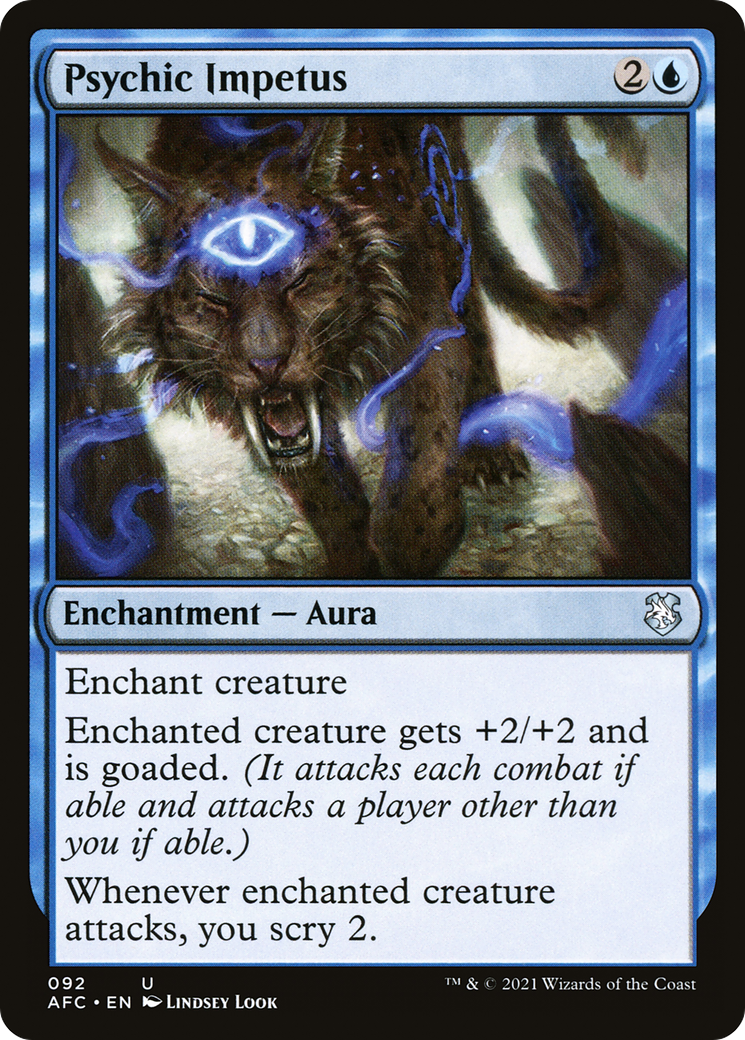
Psychic Impetus
Psychic Impetus
Enchantment — Aura
Enchant creature
Enchanted creature gets +2/+2 and is goaded. (It attacks each combat if able and attacks a player other than you if able.)
Whenever enchanted creature attacks, you scry 2.
- If, during a player's declare attackers step, a creature that player controls that's been goaded is tapped, is affected by a spell or ability that says it can't attack, or hasn't been under that player's control continuously since the turn began (and doesn't have haste), then it doesn't attack. If there's a cost associated with having a creature attack a player, its controller isn't forced to pay that cost, so it doesn't have to attack that player.
- If the creature doesn't meet any of the above exceptions and can attack, it must attack a player other than the controller of the spell or ability that goaded it if able. If the creature can't attack any of those players but could otherwise attack, it must attack a planeswalker an opponent controls, a battle an opponent controls, or a player who goaded it.
- Being goaded isn't an ability the creature has. Once it's been goaded, it must attack as detailed above even if it loses all abilities.
- Attacking with a goaded creature doesn't cause it to stop being goaded. If there is an additional combat phase that turn, or if another player gains control of it before it stops being goaded, it must attack again if able.
- If a creature you control has been goaded by multiple opponents, it must attack one of your opponents that hasn't goaded it, as that fulfills the maximum number of goad requirements. If a creature you control has been goaded by each of your opponents, the creature must attack an opponent (rather than a planeswalker or battle), but you choose which opponent it attacks.
- Psychic Impetus causes you to scry 2, not the attacking creature's controller.
-
1
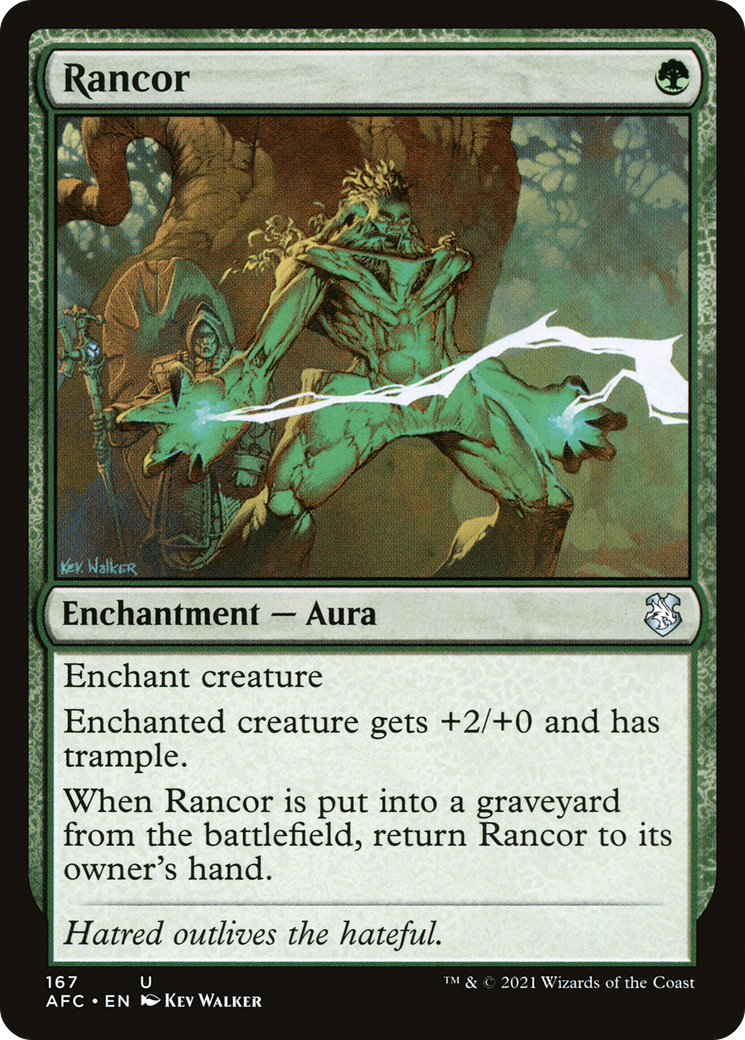
Rancor
Rancor
Enchantment — Aura
Enchant creature
Enchanted creature gets +2/+0 and has trample.
When this Aura is put into a graveyard from the battlefield, return it to its owner's hand.
- If the creature this Aura would enchant is an illegal target by the time Rancor tries to resolve, the Aura spell doesn't resolve. It won't enter the battlefield, so it won't be put into a graveyard from the battlefield and its ability won't trigger.
-
1
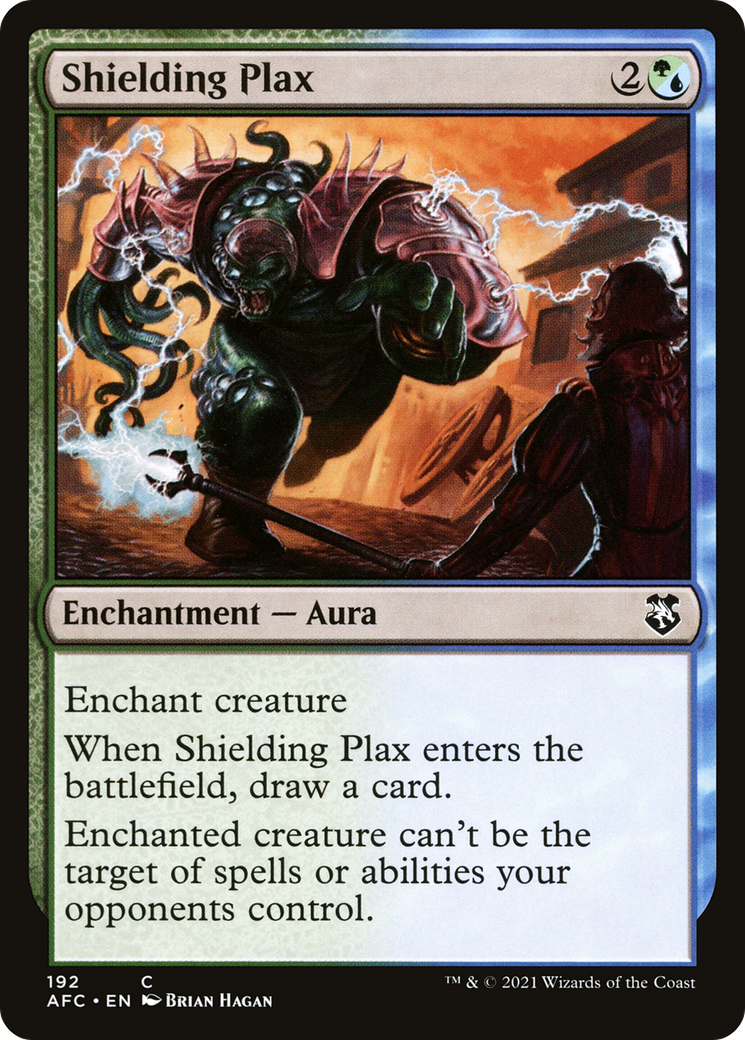
Shielding Plax
Shielding Plax
Enchantment — Aura
( can be paid with either or .)
Enchant creature
When this Aura enters, draw a card.
Enchanted creature can't be the target of spells or abilities your opponents control.
- If the target creature is an illegal target by the time Shielding Plax tries to resolve, the Aura spell doesn't resolve. It won't enter the battlefield, so its enters-the-battlefield ability won't trigger.
- This is not the same as hexproof. If, for example, you target one of your opponent's creatures, your opponents won't be able to target their own creature with spells or abilities.
-
1
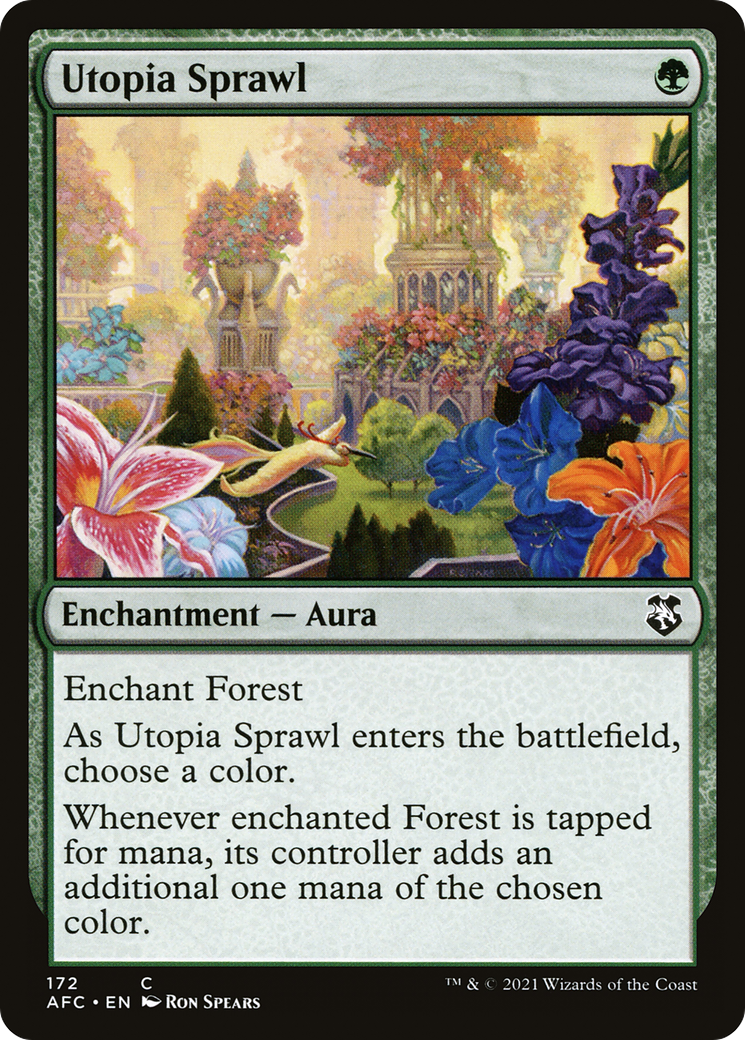
Utopia Sprawl
Utopia Sprawl
Enchantment — Aura
Enchant Forest
As this Aura enters, choose a color.
Whenever enchanted Forest is tapped for mana, its controller adds an additional one mana of the chosen color.
-
1
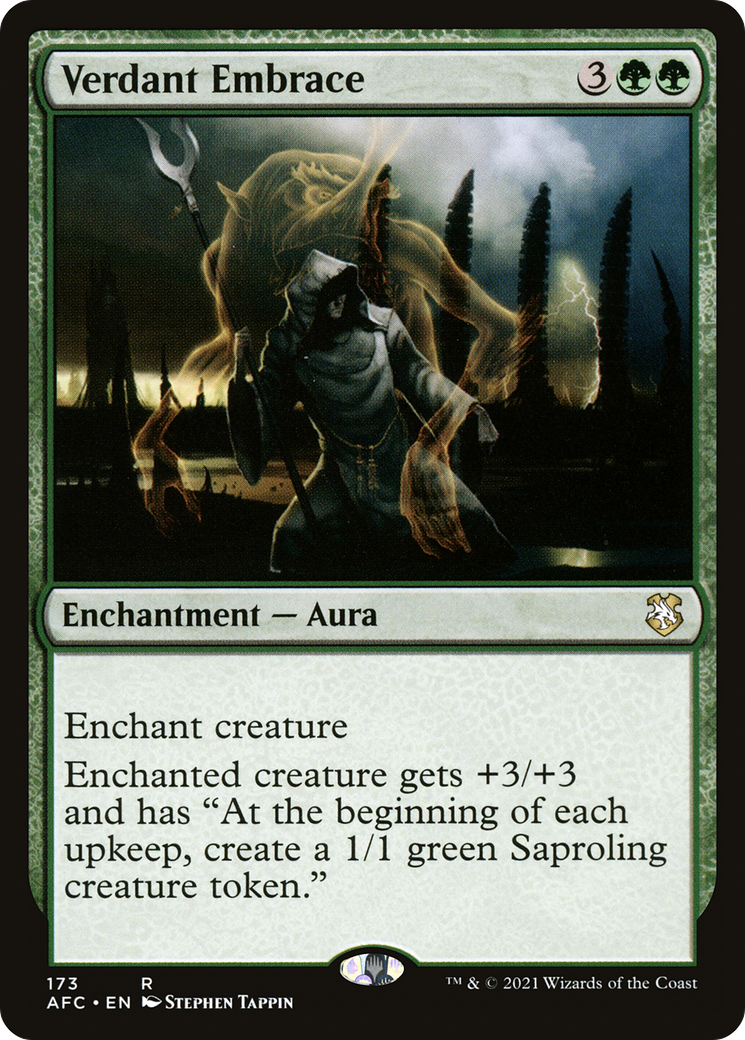
Verdant Embrace
Verdant Embrace
Enchantment — Aura
Enchant creature
Enchanted creature gets +3/+3 and has "At the beginning of each upkeep, create a 1/1 green Saproling creature token."
- The token is put onto the battlefield under the control of the player who controls the enchanted creature, not the player who controls Verdant Embrace.
-
1
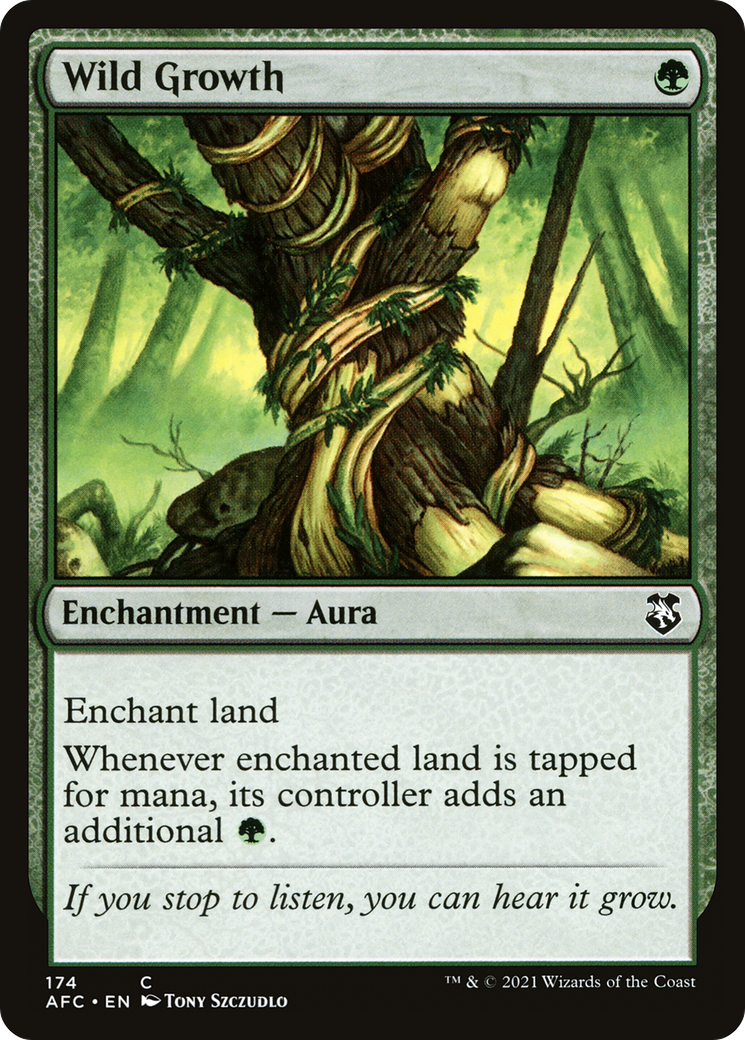
Wild Growth
Wild Growth
Enchantment — Aura
Enchant land
Whenever enchanted land is tapped for mana, its controller adds an additional .
- The additional mana is not an ability of the land and is not something the land can produce.
Lands 38
-
1
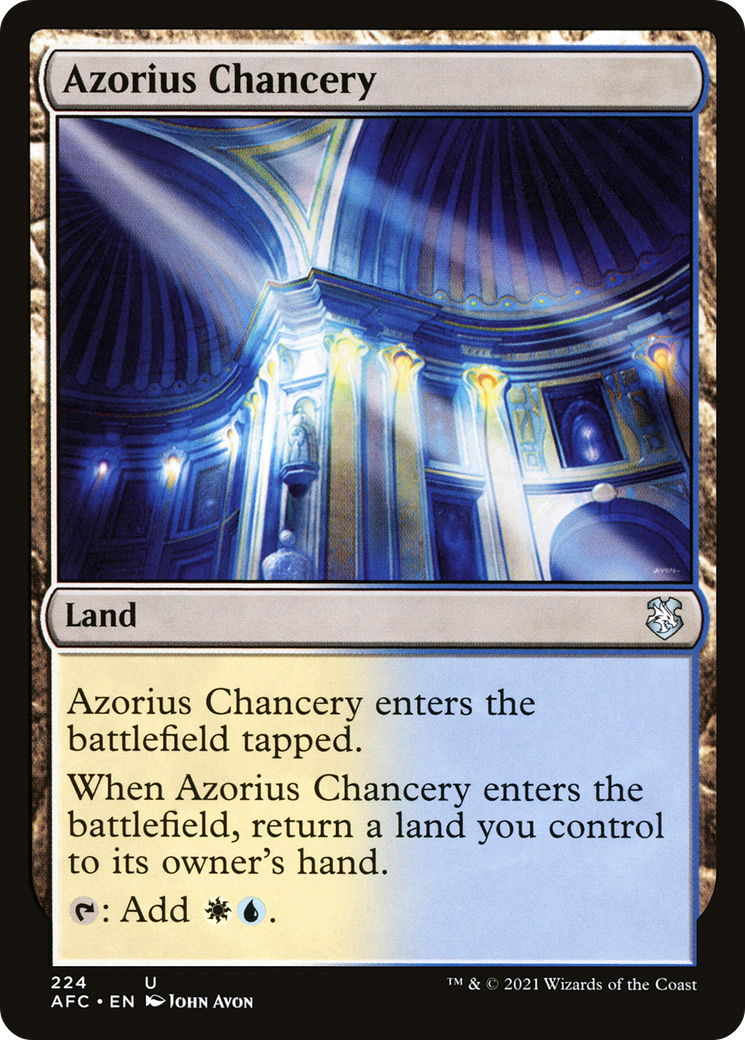
Azorius Chancery
Azorius Chancery
Land
This land enters tapped.
When this land enters, return a land you control to its owner's hand.
: Add .
- If this land enters the battlefield and you control no other lands, its ability will force you to return it to your hand.
-
1
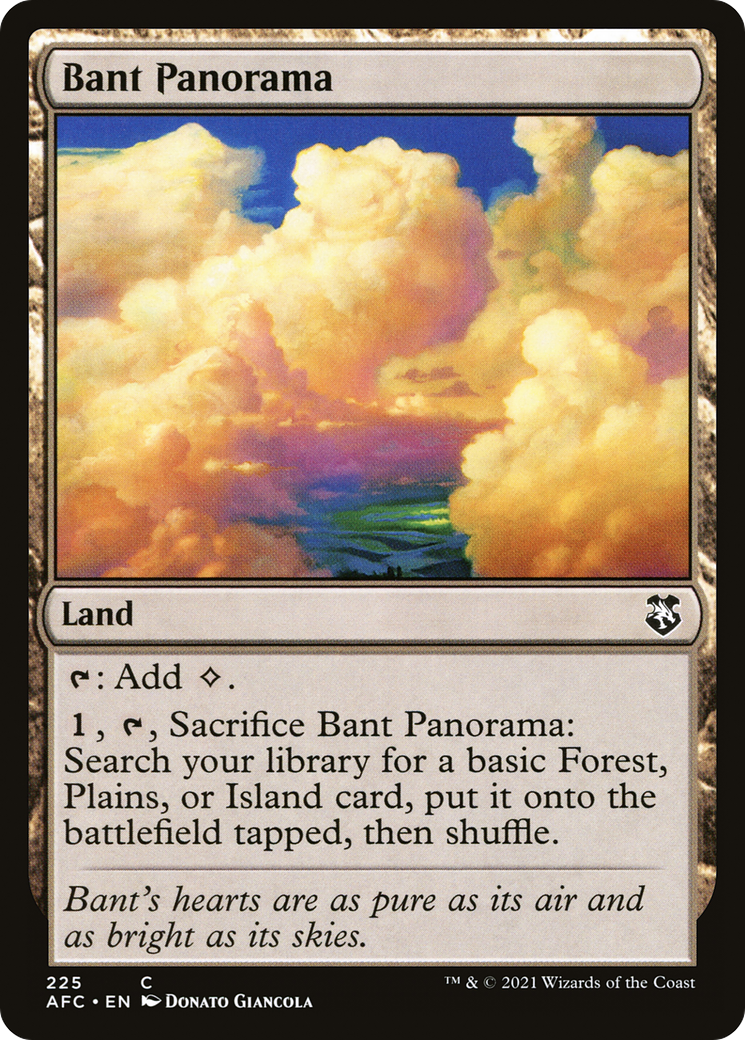
Bant Panorama
Bant Panorama
Land
: Add .
, , Sacrifice this land: Search your library for a basic Forest, Plains, or Island card, put it onto the battlefield tapped, then shuffle.
-
1
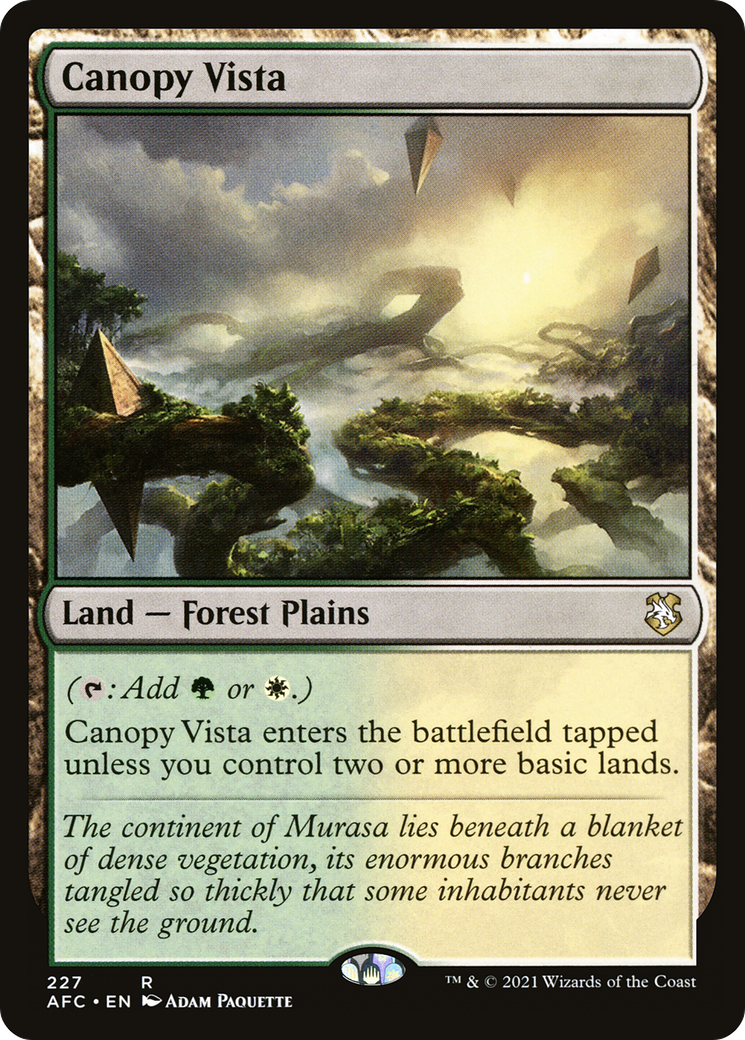
Canopy Vista
Canopy Vista
Land — Forest Plains
( : Add or .)
This land enters tapped unless you control two or more basic lands.
- Even though these lands have basic land types, they are not basic lands because "basic" doesn't appear on their type line. Notably, controlling two or more of them won't allow others to enter the battlefield untapped.
- If one of these lands enters the battlefield at the same time as any number of basic lands, those other lands are not counted when determining if this land enters the battlefield tapped or untapped.
- However, because these cards have basic land types, effects that specify a basic land type without also specifying that the land be basic can affect them. For example, a spell or ability that reads "Destroy target Forest" can target Canopy Vista, while one that reads "Destroy target basic Forest" cannot.
-
1
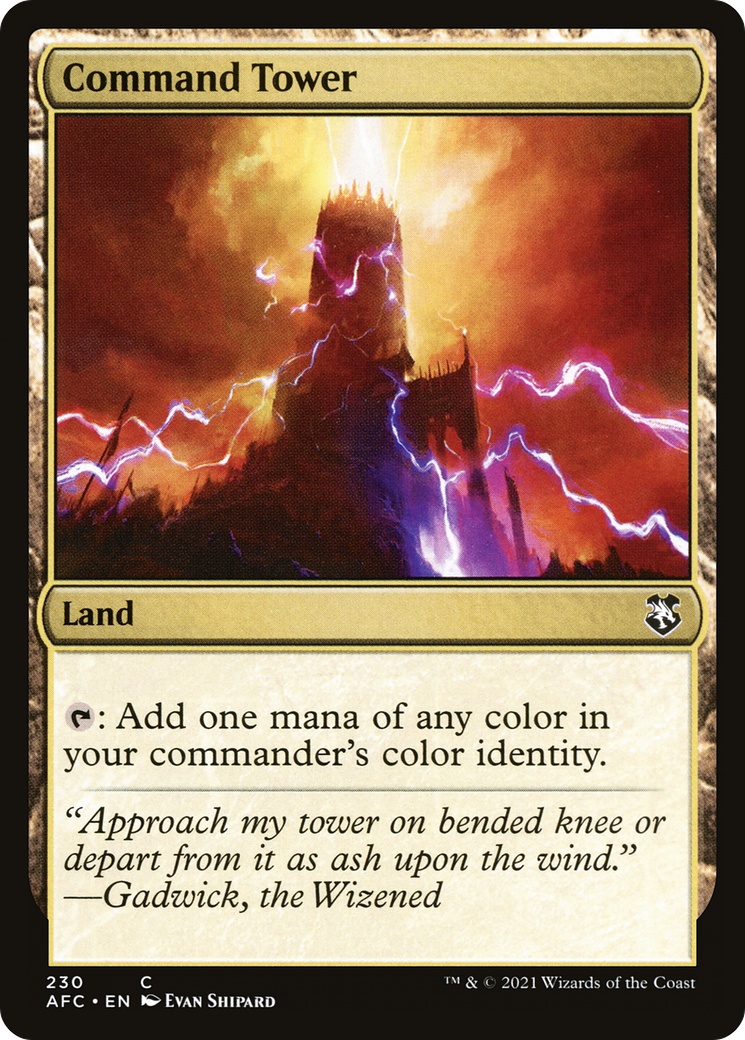
Command Tower
Command Tower
Land
: Add one mana of any color in your commander's color identity.
- If you don't have a commander, Command Tower's ability produces no mana.
- If your commander is a card that has no colors in its color identity, Command Tower's ability produces no mana. It doesn't produce .
- If you have two commanders, the ability adds one mana of any color in their combined color identities.
-
1
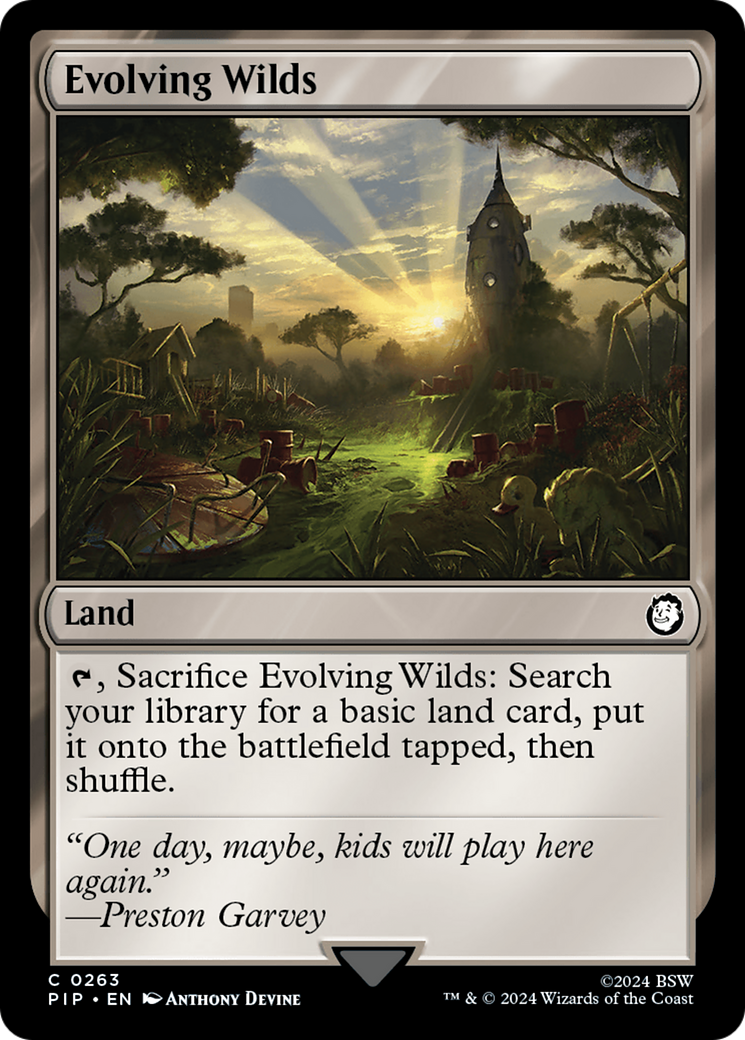
Evolving Wilds
Evolving Wilds
Land
, Sacrifice this land: Search your library for a basic land card, put it onto the battlefield tapped, then shuffle.
-
1
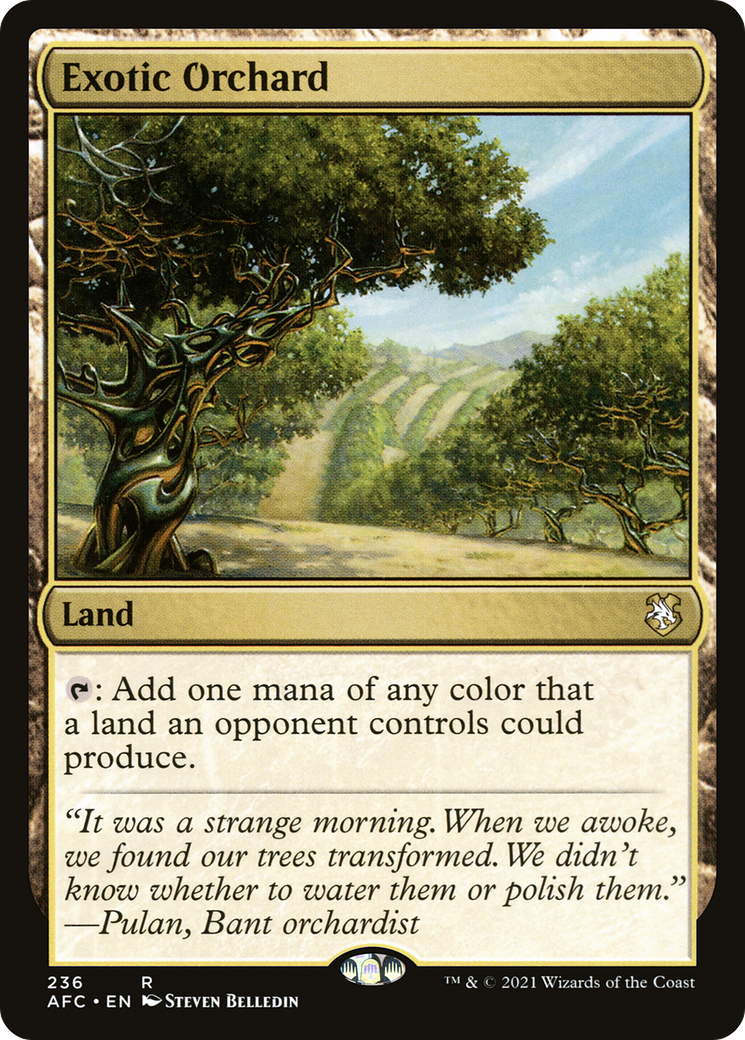
Exotic Orchard
Exotic Orchard
Land
: Add one mana of any color that a land an opponent controls could produce.
- Lands that produce mana based only on what other lands "could produce" won't help each other unless some other land allows one of them to actually produce some type of mana. For example, if you control an Exotic Orchard and your opponent controls an Exotic Orchard and a Reflecting Pool, none of those lands would produce mana if their mana abilities were activated. On the other hand, if you control a Forest and an Exotic Orchard, and your opponent controls an Exotic Orchard and a Reflecting Pool, then each of those lands can be tapped to produce . Your opponent's Exotic Orchard can produce because you control a Forest. Your Exotic Orchard and your opponent's Reflecting Pool can each produce because your opponent's Exotic Orchard can produce .
- When determining what colors of mana your opponents' lands could produce, Exotic Orchard takes into account any applicable replacement effects that would apply to those lands' mana abilities (such as Contamination's effect, for example). If there are more than one, consider them in any possible order.
- The colors of mana are white, blue, black, red, and green. Exotic Orchard can't be tapped for colorless mana, even if a land an opponent controls could produce colorless mana.
- Exotic Orchard doesn't care about any restrictions or riders your opponents' lands (such as Ancient Ziggurat or Hall of the Bandit Lord) put on the mana they produce. It just cares about colors of mana.
- Exotic Orchard checks the effects of all mana-producing abilities of lands your opponents control, but it doesn't check their costs. For example, Vivid Crag has the ability " , Remove a charge counter from Vivid Crag: Add one mana of any color." If an opponent controls Vivid Crag and you control Exotic Orchard, you can tap Exotic Orchard for any color of mana. It doesn't matter whether Vivid Crag has a charge counter on it, and it doesn't matter whether it's untapped.
-
1
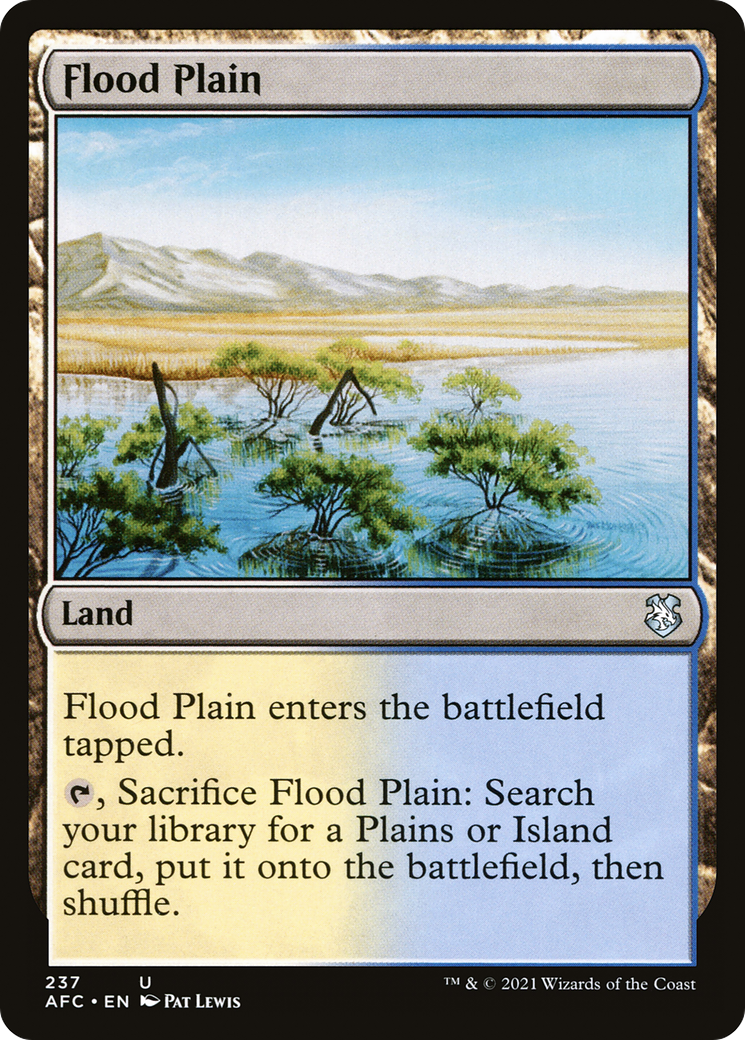
Flood Plain
Flood Plain
Land
This land enters tapped.
, Sacrifice this land: Search your library for a Plains or Island card, put it onto the battlefield, then shuffle.
- Because the “search” requires you to find a card with certain characteristics, you don't have to find the card if you don't want to.
-
8
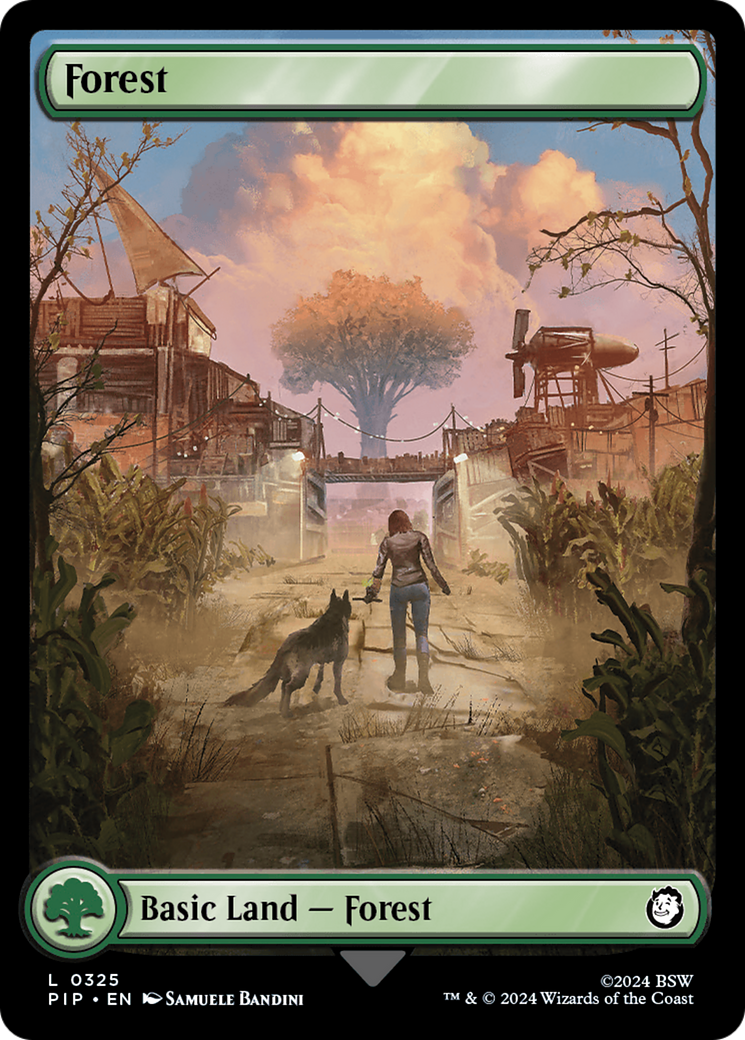
Forest
Forest
Basic Land — Forest
( : Add .)
-
1
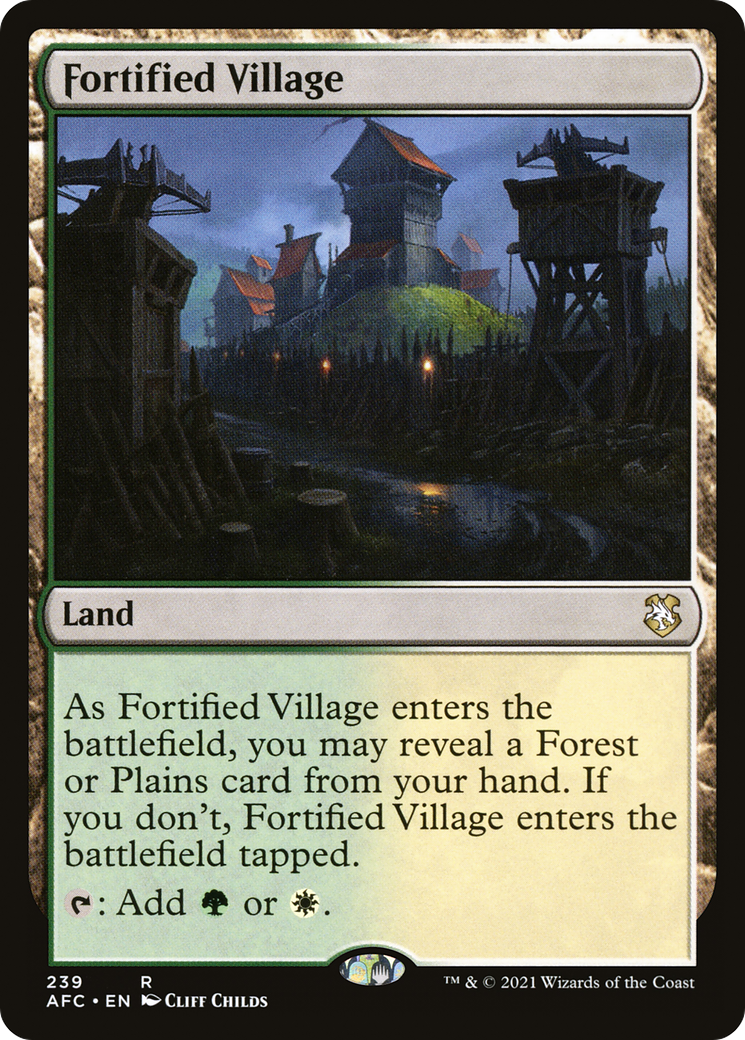
Fortified Village
Fortified Village
Land
As this land enters, you may reveal a Forest or Plains card from your hand. If you don't, this land enters tapped.
: Add or .
- If a Forest or Plains is entering the battlefield from your hand at the same time as Fortified Village, you may reveal the other land to have Fortified Village enter untapped.
- You may reveal any land card with either or both of the appropriate subtypes. It doesn't have to be a basic land. For example, you could reveal Prairie Stream from the Battle for Zendikar set to satisfy the ability of Fortified Village.
- Lands don't have a subtype just because they can produce mana of the corresponding color. Fortified Village itself is neither a Forest nor a Plains, even though it produces green and white mana, so you can't reveal one to satisfy the ability of another.
- If an effect instructs you to put Fortified Village onto the battlefield tapped, it will still enter the battlefield tapped even if you reveal a land card from your hand.
-
1
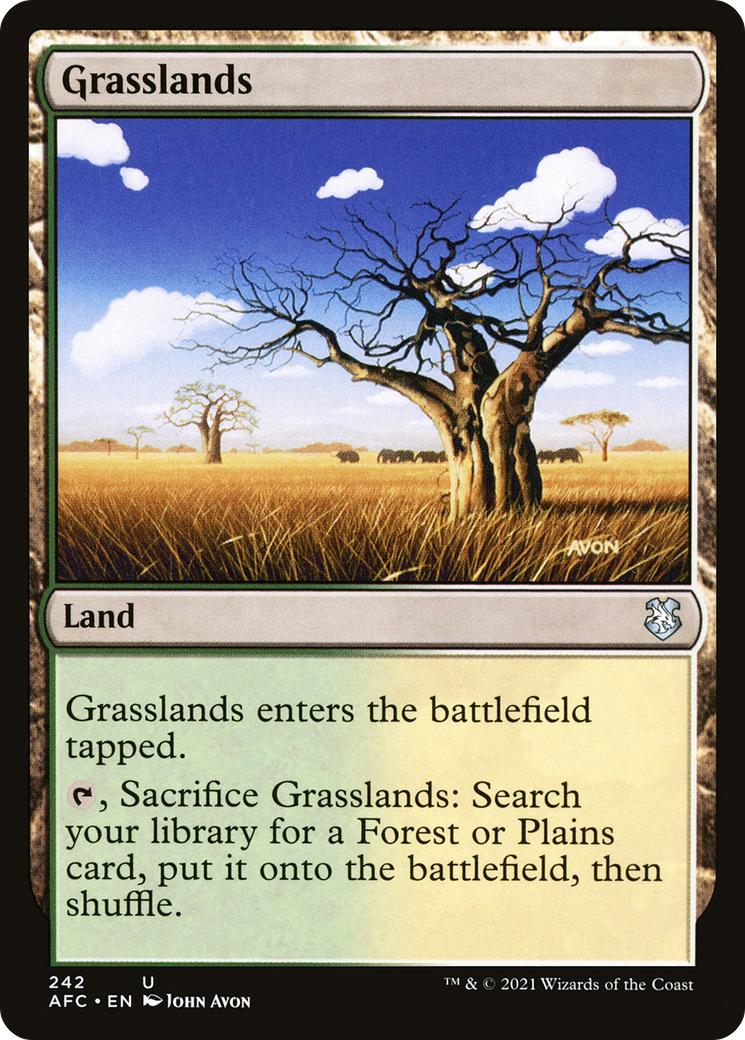
Grasslands
Grasslands
Land
This land enters tapped.
, Sacrifice this land: Search your library for a Forest or Plains card, put it onto the battlefield, then shuffle.
- You do not have to find a plains or forest card if you do not want to.
-
1
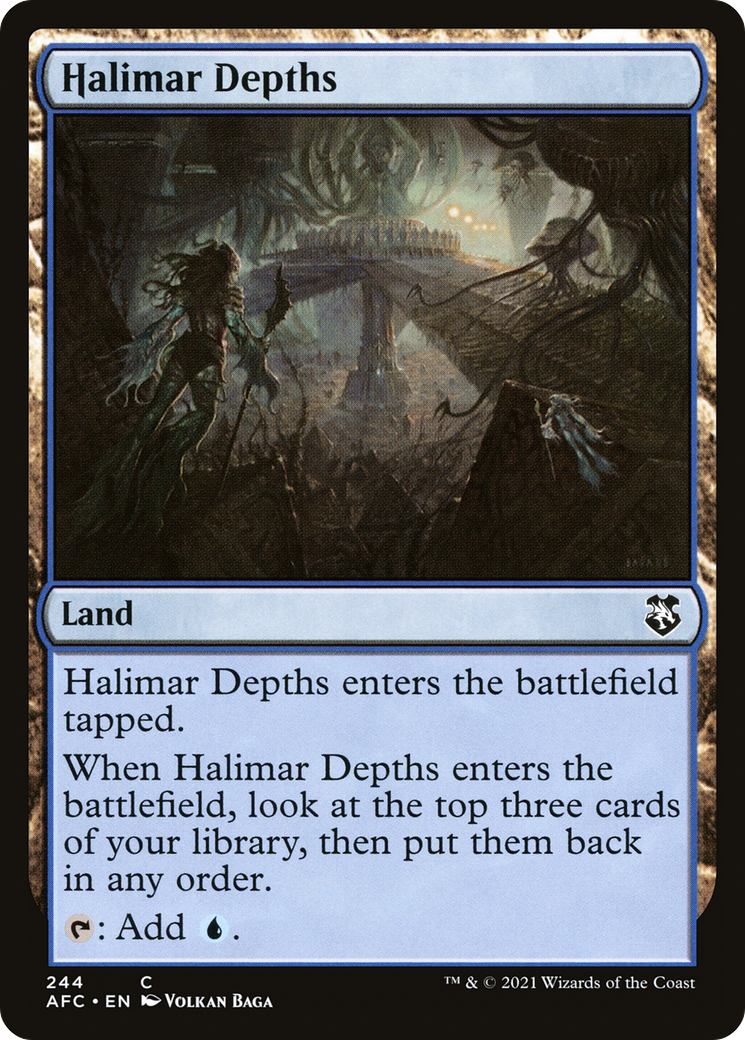
Halimar Depths
Halimar Depths
Land
This land enters tapped.
When this land enters, look at the top three cards of your library, then put them back in any order.
: Add .
-
4
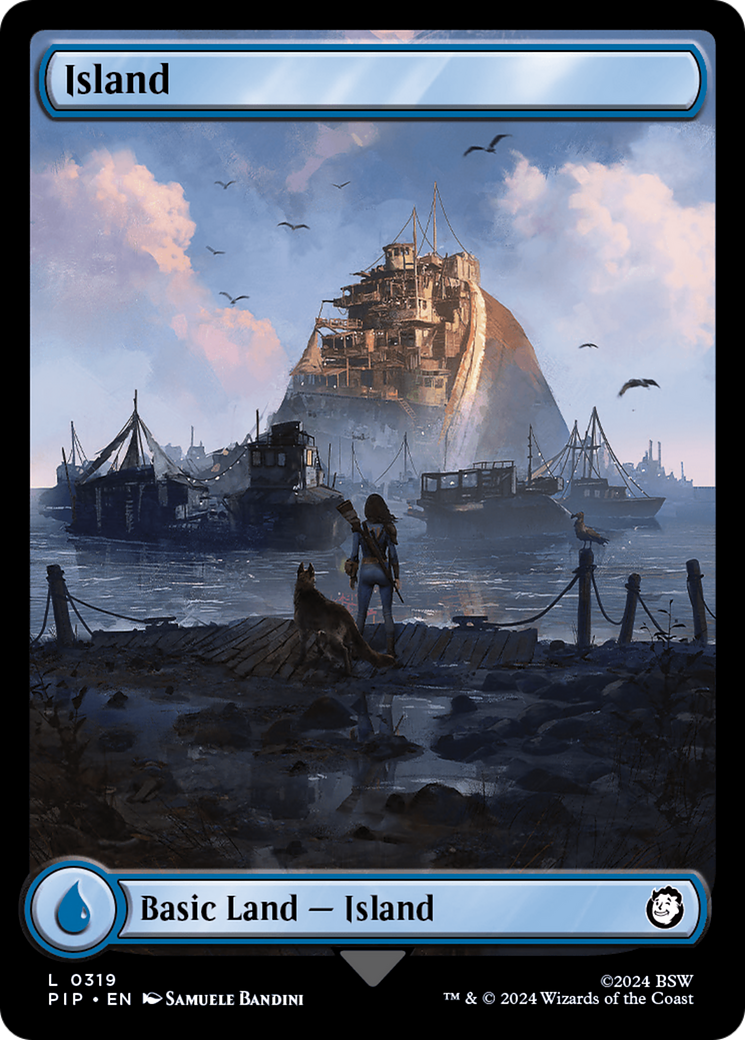
Island
Island
Basic Land — Island
( : Add .)
-
1
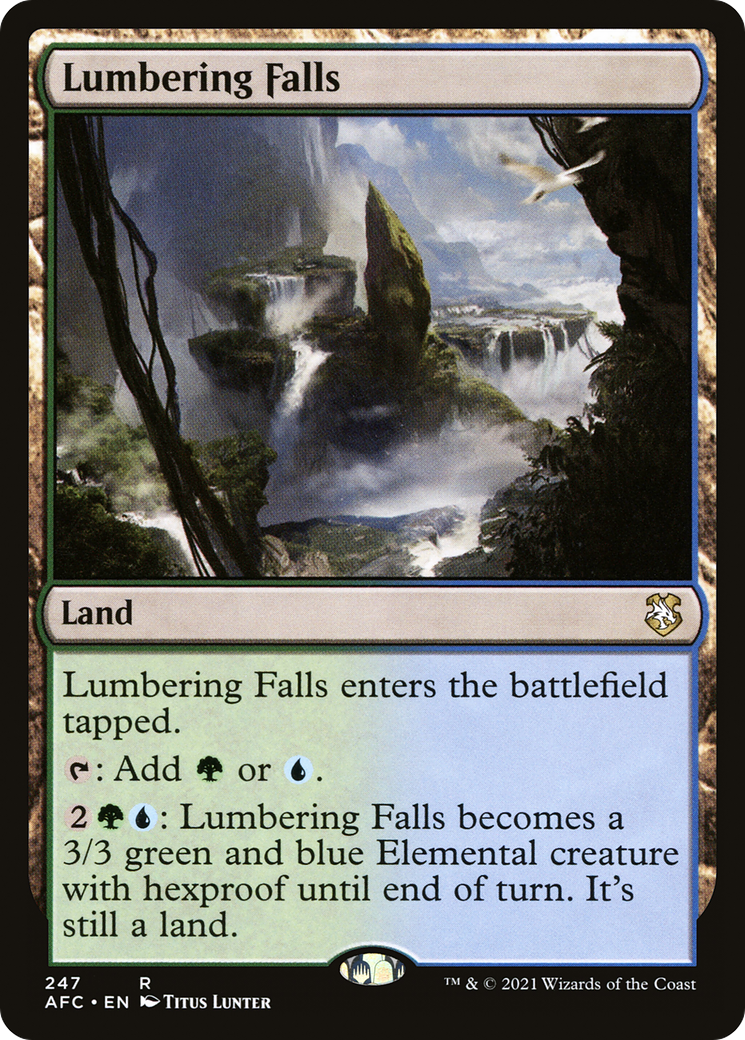
Lumbering Falls
Lumbering Falls
Land
This land enters tapped.
: Add or .
: This land becomes a 3/3 green and blue Elemental creature with hexproof until end of turn. It's still a land.
- A land that becomes a creature may be affected by "summoning sickness." You can't attack with it or use any of its abilities (including its mana abilities) unless it began your most recent turn on the battlefield under your control. Note that summoning sickness cares about when that permanent came under your control, not when it became a creature nor when it entered the battlefield.
- This land is colorless until the last ability gives it colors.
- When a land becomes a creature, that doesn't count as having a creature enter the battlefield. The permanent was already on the battlefield; it only changed its types. Abilities that trigger whenever a creature enters the battlefield won't trigger.
- An ability that turns a land into a creature also sets that creature's power and toughness. If the land was already a creature (for example, if it was the target of a spell with awaken), this will overwrite the previous effect that set its power and toughness. Effects that modify its power or toughness will continue to apply no matter when they started to take effect. The same is true for counters that change its power or toughness (such as +1/+1 counters) and effects that switch its power and toughness. For example, if Lumbering Falls has been made a 0/0 creature with three +1/+1 counters on it, activating its last ability will turn it into a 6/6 creature that's still a land.
-
1
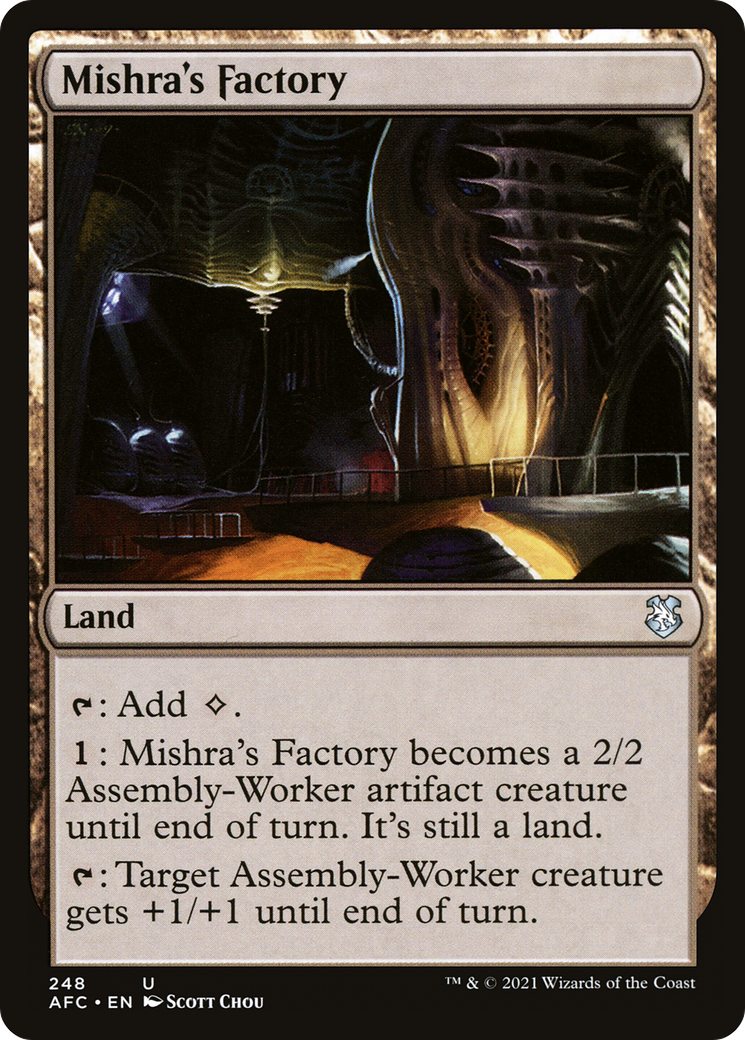
Mishra's Factory
Mishra's Factory
Land
: Add .
: This land becomes a 2/2 Assembly-Worker artifact creature until end of turn. It's still a land.
: Target Assembly-Worker creature gets +1/+1 until end of turn.
- After it becomes a creature, Mishra's Factory will still have all its abilities.
- A noncreature permanent that becomes a creature can attack, and its abilities can be activated, only if its controller has continuously controlled that permanent since the beginning of their most recent turn. It doesn't matter how long the permanent has been a creature. Notably, if you turn Mishra's Factory into a creature on the turn it entered the battlefield, you won't be able to then activate its first or last abilities.
-
1
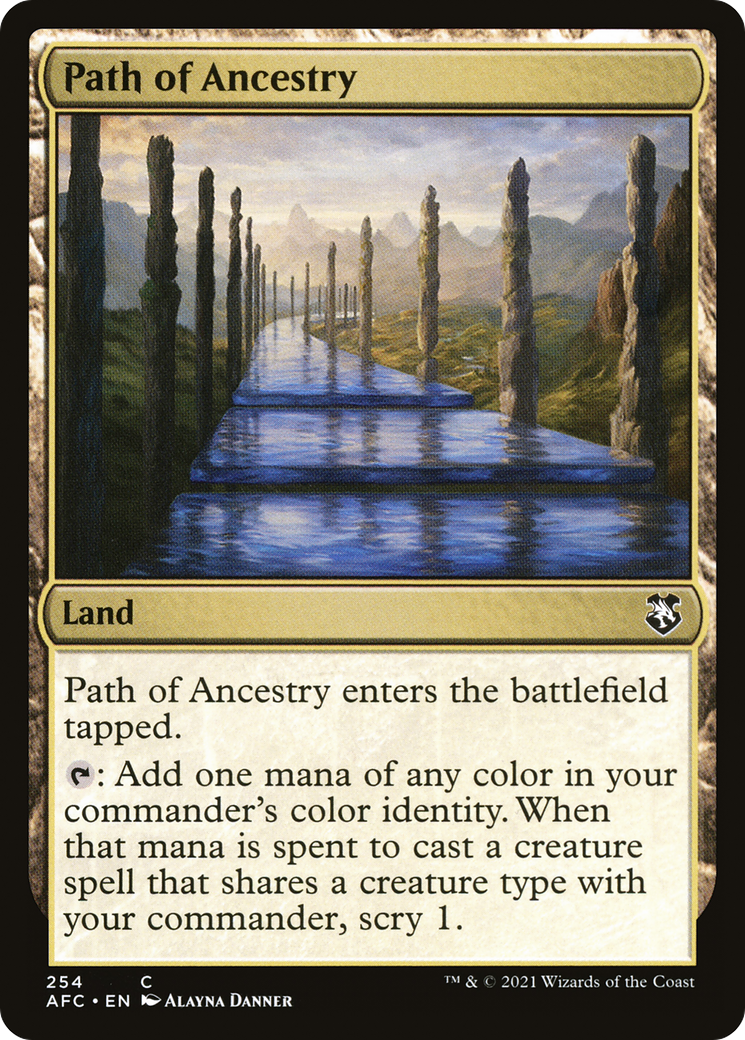
Path of Ancestry
Path of Ancestry
Land
This land enters tapped.
: Add one mana of any color in your commander's color identity. When that mana is spent to cast a creature spell that shares a creature type with your commander, scry 1. (Look at the top card of your library. You may put that card on the bottom.)
- Your commander's creature types are checked immediately after you cast a creature spell spending mana from Path of Ancestry's last ability. They aren't set before the game begins, and they may not be the same types your commander had when you activated that ability.
- If you have two commanders, the last ability adds one mana of any color in their combined color identities. When you spend that mana on a creature spell that shares a creature type with either of your commanders, you'll scry 1.
- If Path of Ancestry's last ability produces two mana (most likely due to Mana Reflection), spending those two mana to cast creature spells that share a creature type with your commander will cause two abilities to trigger. Each of those abilities will cause you to scry 1. You won't scry 2. This is true whether you spend the mana on one creature spell or two.
- If your commander has no creature types, it can't share a creature type with any spell that you cast.
- If you cast your commander with mana from Path of Ancestry, and your commander hasn't somehow lost all of its creature types while on the stack, you'll scry 1.
- If you don't have a commander, Path of Ancestry's ability produces no mana.
- If your commander is a card that has no colors in its color identity, Path of Ancestry's ability produces no mana. It doesn't produce .
-
2
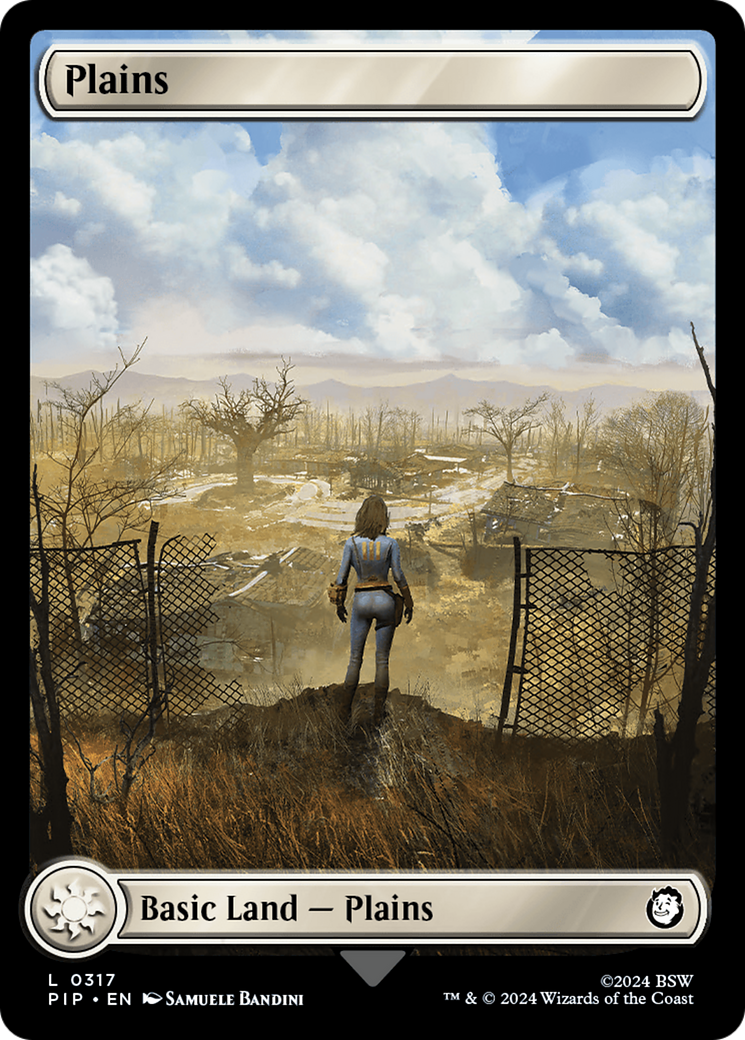
Plains
Plains
Basic Land — Plains
( : Add .)
-
1
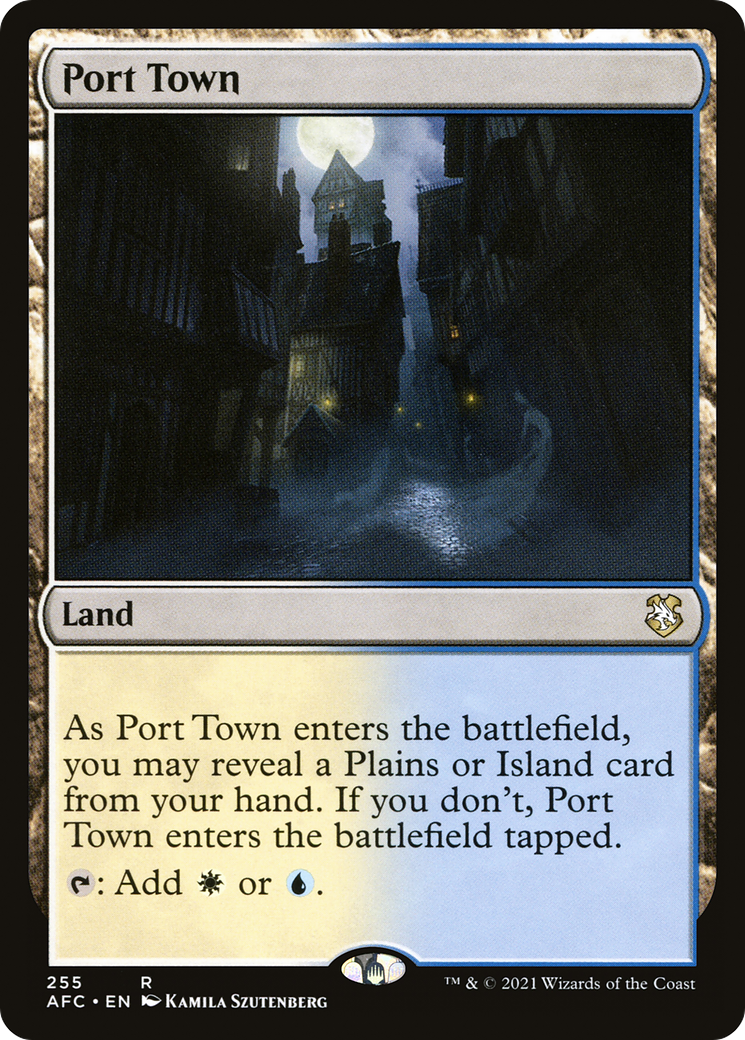
Port Town
Port Town
Land
As this land enters, you may reveal a Plains or Island card from your hand. If you don't, this land enters tapped.
: Add or .
- You may reveal any land card with either or both of the appropriate subtypes. It doesn't have to be a basic land. For example, you could reveal Canopy Vista from the Battle for Zendikar set to satisfy the ability of Port Town.
- Lands don't have a subtype just because they can produce mana of the corresponding color. Port Town itself is neither a Plains nor an Island, even though it produces white and blue mana, so you can't reveal one to satisfy the ability of another.
- If a Plains or Island is entering the battlefield from your hand at the same time as Port Town, you may reveal the other land to have Port Town enter untapped.
- If an effect instructs you to put Port Town onto the battlefield tapped, it will still enter the battlefield tapped even if you reveal a land card from your hand.
-
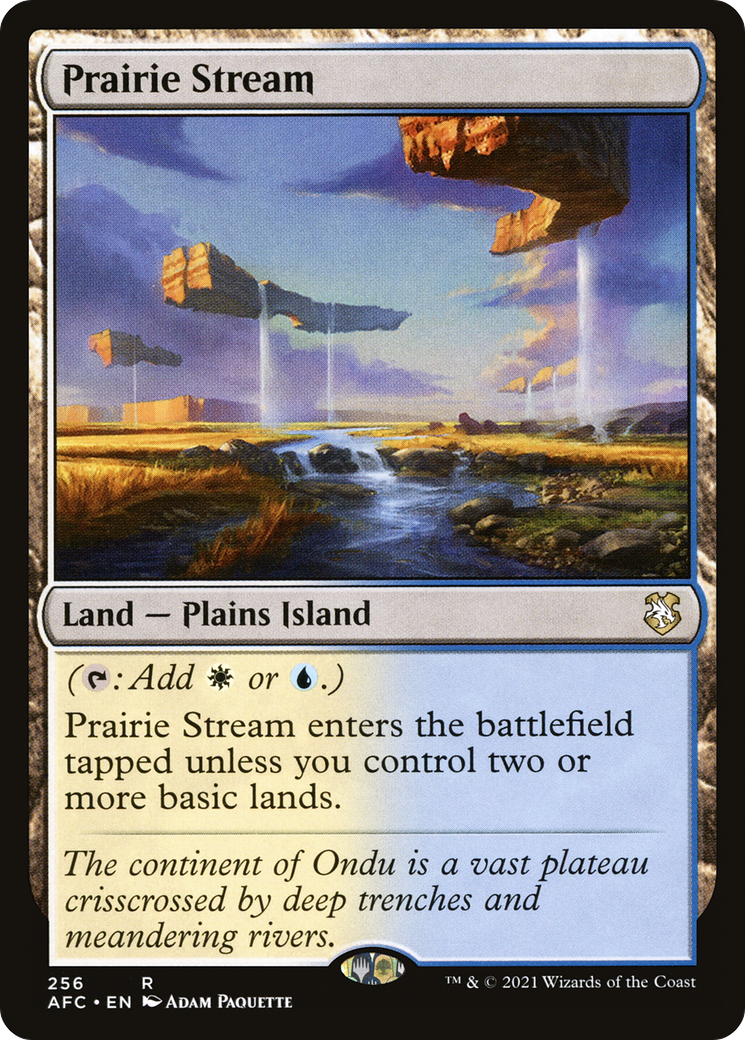
1
Prairie Stream
Prairie Stream
Land — Plains Island
( : Add or .)
This land enters tapped unless you control two or more basic lands.
- Even though these lands have basic land types, they are not basic lands because "basic" doesn't appear on their type line. Notably, controlling two or more of them won't allow others to enter the battlefield untapped.
- However, because these cards have basic land types, effects that specify a basic land type without also specifying that the land be basic can affect them. For example, a spell or ability that reads "Destroy target Forest" can target Canopy Vista, while one that reads "Destroy target basic Forest" cannot.
- If one of these lands enters the battlefield at the same time as any number of basic lands, those other lands are not counted when determining if this land enters the battlefield tapped or untapped.
-
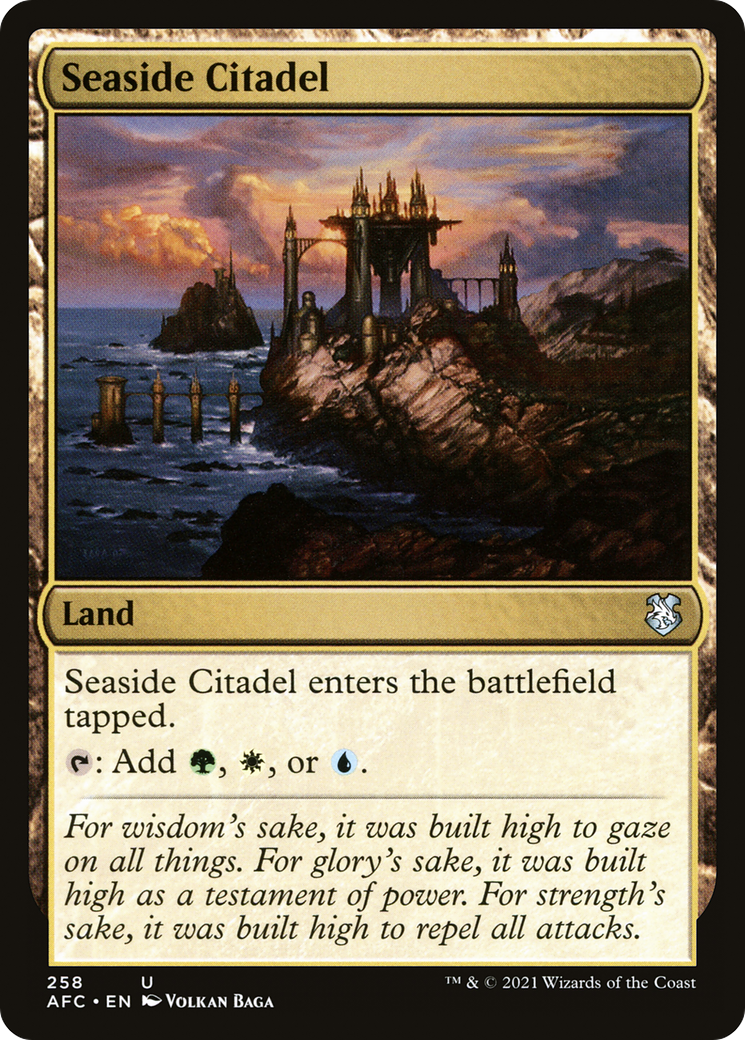
1
Seaside Citadel
Seaside Citadel
Land
This land enters tapped.
: Add , , or .
-
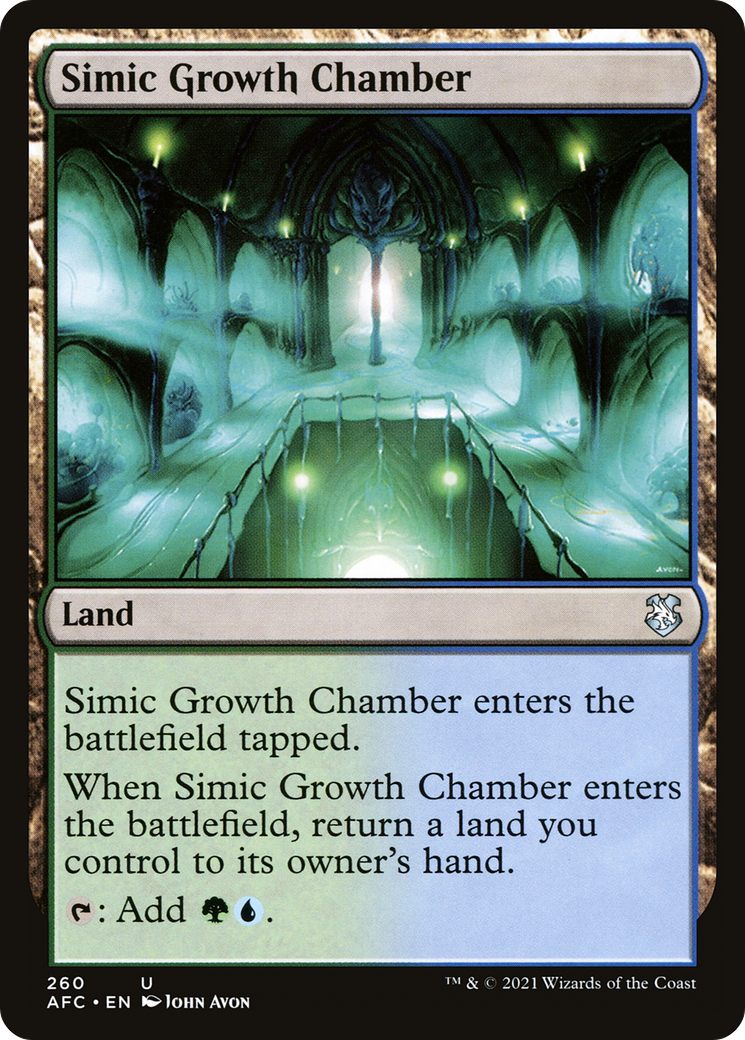
1
Simic Growth Chamber
Simic Growth Chamber
Land
This land enters tapped.
When this land enters, return a land you control to its owner's hand.
: Add .
- If this land enters the battlefield and you control no other lands, its ability will force you to return it to your hand.
-
1
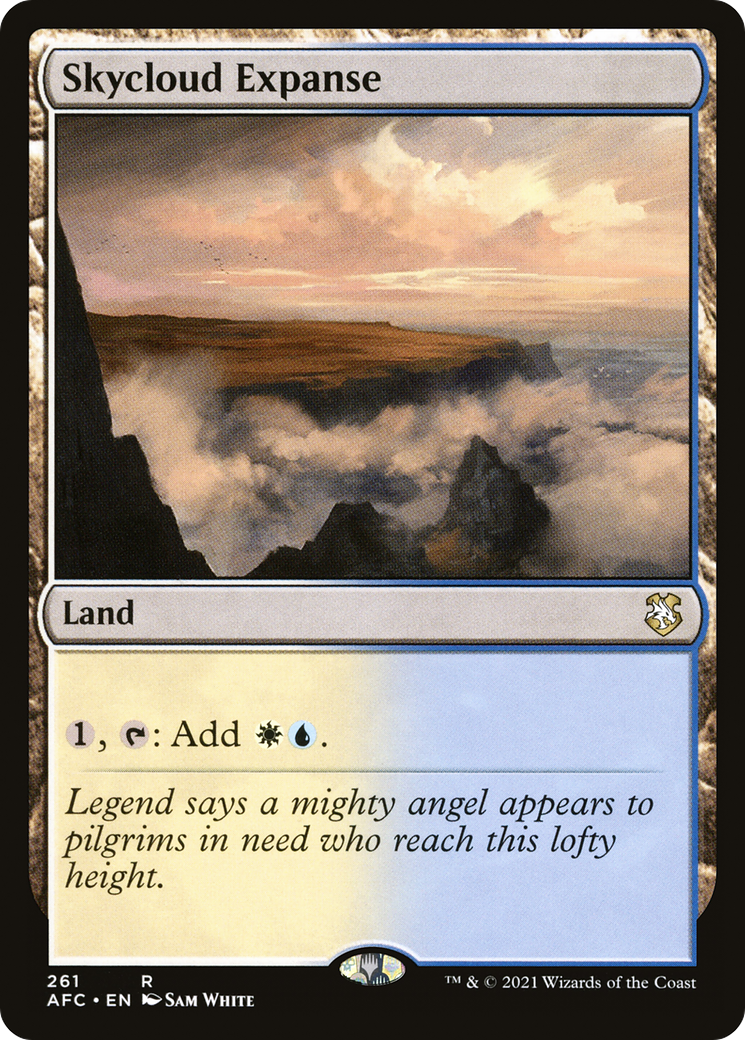
Skycloud Expanse
Skycloud Expanse
Land
, : Add .
-
1
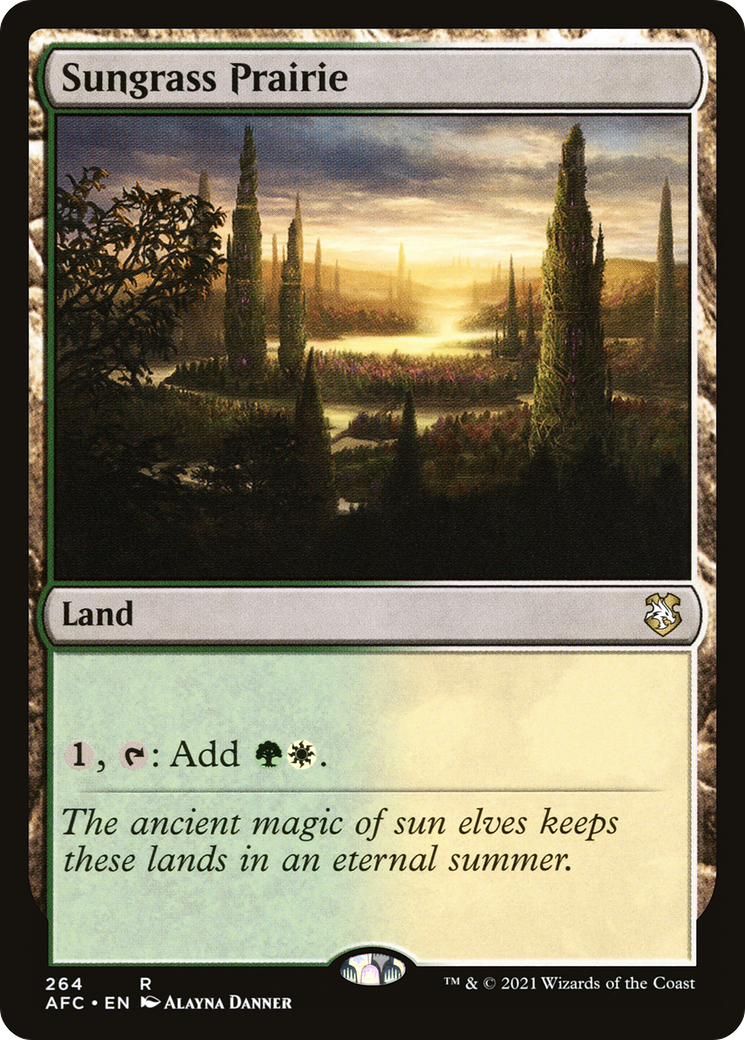
Sungrass Prairie
Sungrass Prairie
Land
, : Add .
-
1
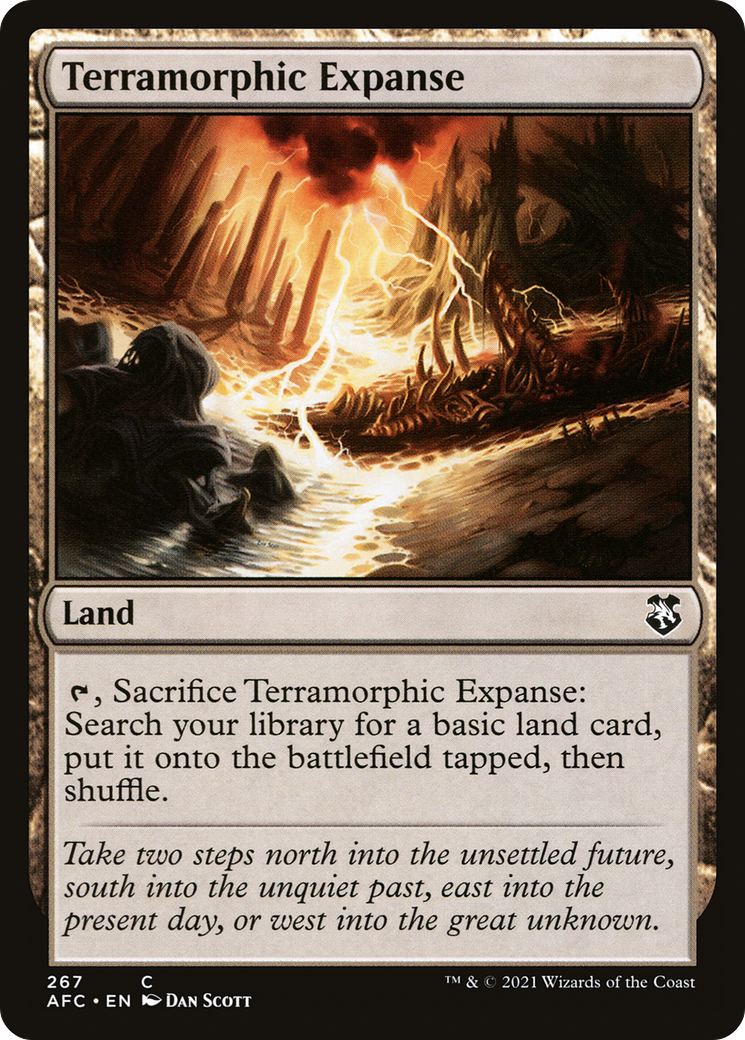
Terramorphic Expanse
Terramorphic Expanse
Land
, Sacrifice this land: Search your library for a basic land card, put it onto the battlefield tapped, then shuffle.
-
1
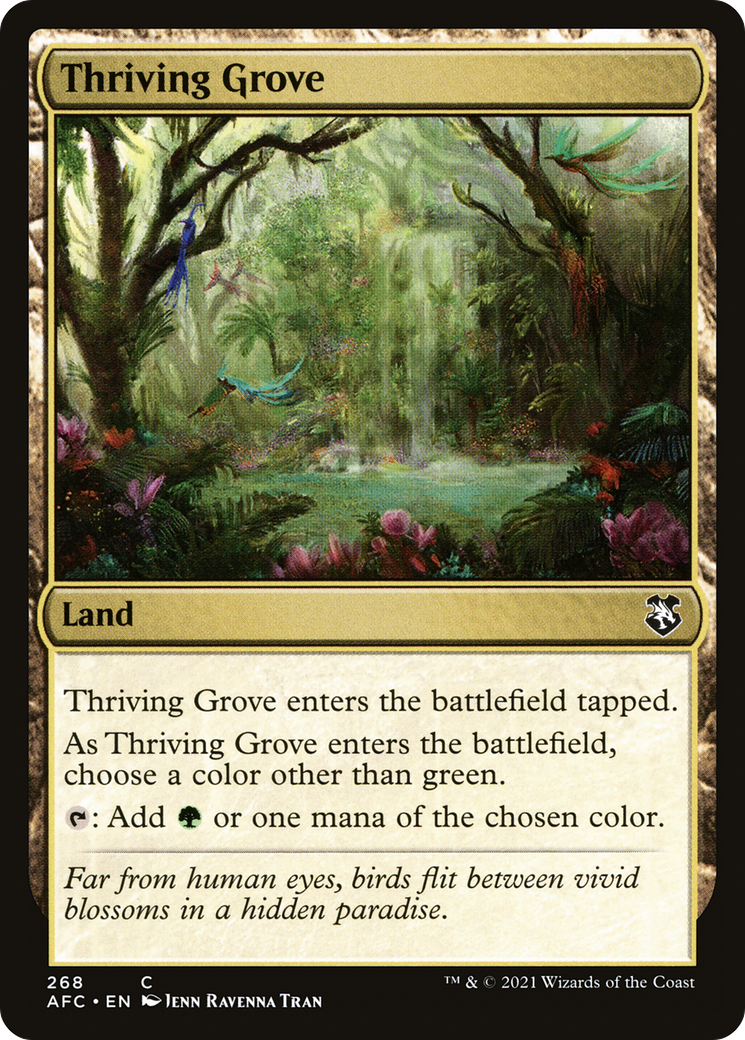
Thriving Grove
Thriving Grove
Land
This land enters tapped. As it enters, choose a color other than green.
: Add or one mana of the chosen color.
-
1
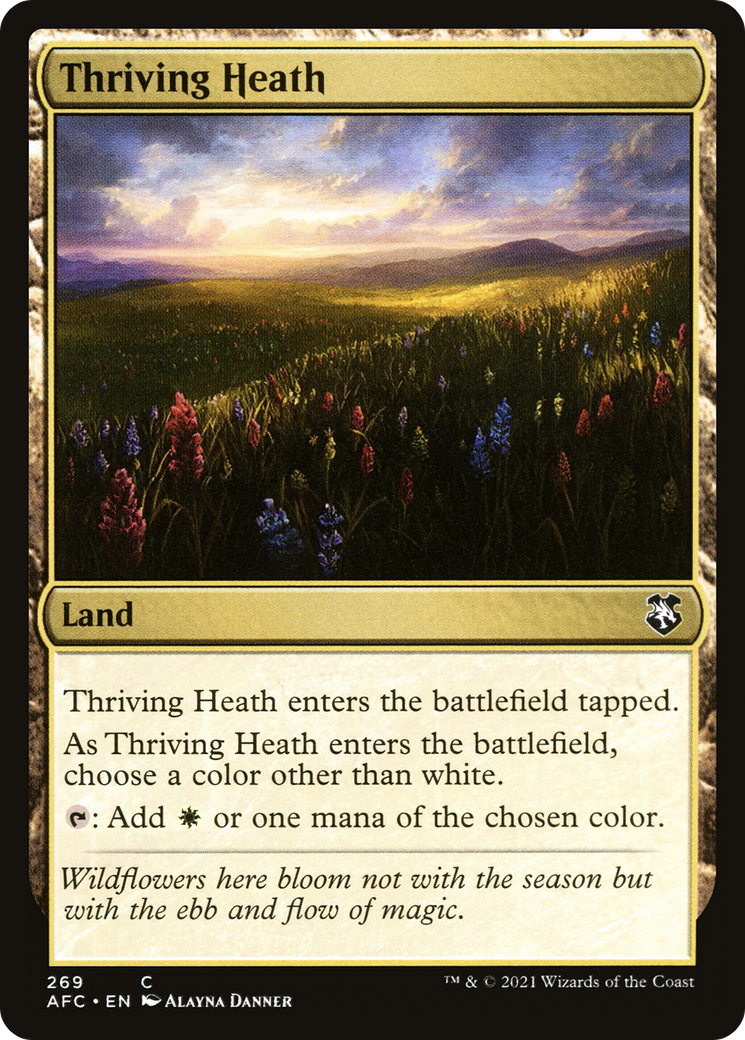
Thriving Heath
Thriving Heath
Land
This land enters tapped. As it enters, choose a color other than white.
: Add or one mana of the chosen color.
-
1
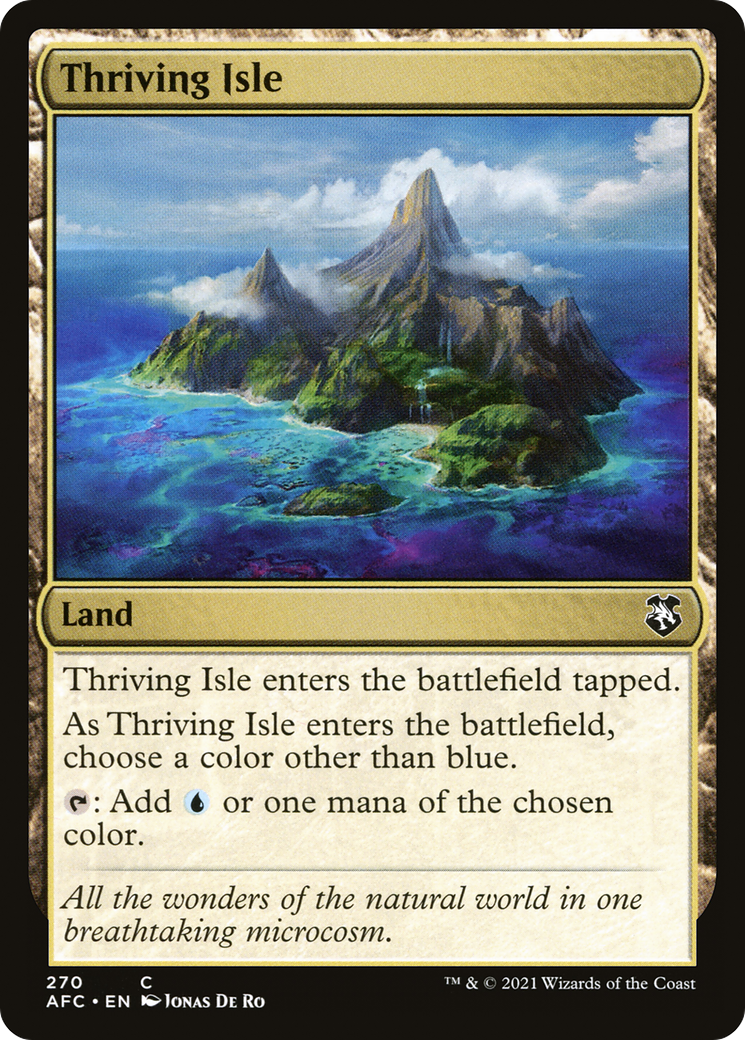
Thriving Isle
Thriving Isle
Land
This land enters tapped. As it enters, choose a color other than blue.
: Add or one mana of the chosen color.
-
1
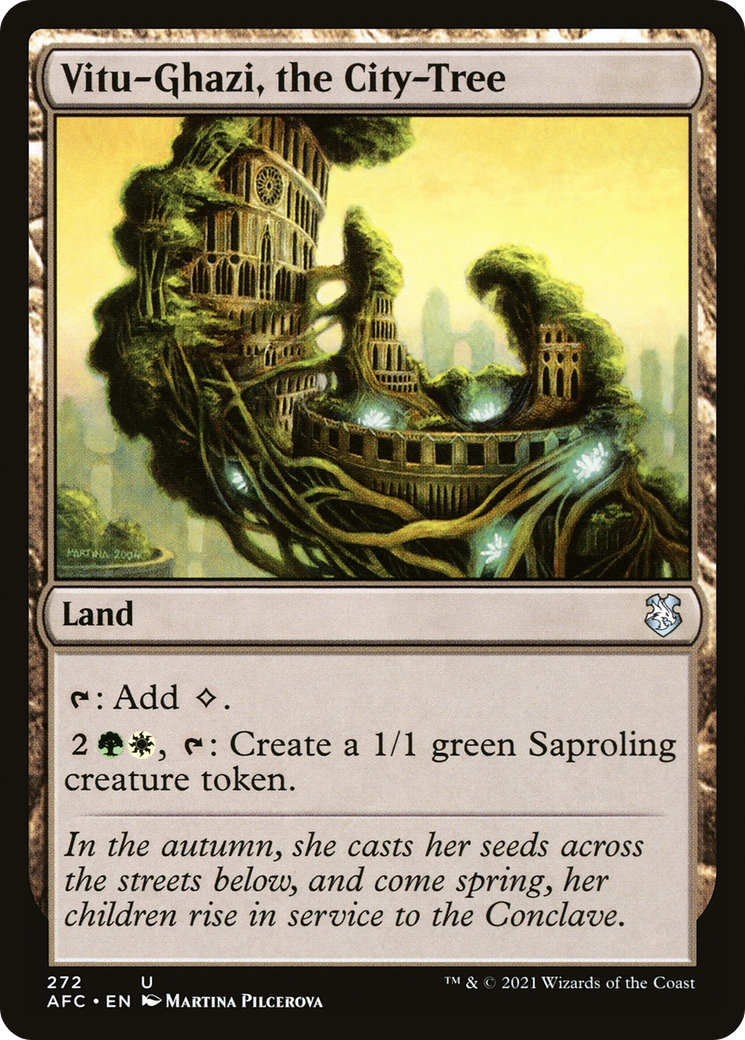
Vitu-Ghazi, the City-Tree
Vitu-Ghazi, the City-Tree
Land
: Add .
, : Create a 1/1 green Saproling creature token.
White 13
-
1
Angel of Finality
Angel of Finality
Creature — Angel
3/4
Flying
When this creature enters, exile target player's graveyard.
-
1
Angelic Gift
Angelic Gift
Enchantment — Aura
Enchant creature
When this Aura enters, draw a card.
Enchanted creature has flying.
- If the target creature is an illegal target by the time Angelic Gift tries to resolve, it doesn't resolve. It won't enter the battlefield, so its enters-the-battlefield ability won't trigger.
-
1
Fey Steed
Fey Steed
Creature — Elk
4/4
Whenever this creature attacks, another target attacking creature you control gains indestructible until end of turn.
Whenever a creature or planeswalker you control becomes the target of a spell or ability an opponent controls, you may draw a card.
-
1
Gryff's Boon
Gryff's Boon
Enchantment — Aura
Enchant creature
Enchanted creature gets +1/+0 and has flying.
: Return this card from your graveyard to the battlefield attached to target creature. Activate only as a sorcery.
- If you activate Gryff's Boon's last ability and the target creature becomes an illegal target in response, the ability doesn't resolve and Gryff's Boon remains in your graveyard.
-
1
Holy Avenger
Holy Avenger
Artifact — Equipment
Equipped creature has double strike.
Whenever equipped creature deals combat damage, you may put an Aura card from your hand onto the battlefield attached to it.
Equip
- You may put an Aura card onto the battlefield attached to the equipped creature if it could legally be attached to that creature.
-
1
Mantle of the Ancients
Mantle of the Ancients
Enchantment — Aura
Enchant creature you control
When this Aura enters, return any number of target Aura and/or Equipment cards from your graveyard to the battlefield attached to enchanted creature.
Enchanted creature gets +1/+1 for each Aura and Equipment attached to it.
- As the enters-the-battlefield ability is resolving, any targets that couldn't be legally attached to the creature enchanted by Mantle of the Ancients stay in your graveyard.
- If Mantle of the Ancients becomes attached to a different creature in response to its enters-the-battlefield ability, the creature it's attached to as that ability is resolving is the "enchanted creature," even though you used the original enchanted creature to choose targets. This means some of those targets may become illegal.
- If Mantle of the Ancients leaves the battlefield before its enters-the-battlefield ability resolves, the last permanent it was attached to before leaving the battlefield is the "enchanted creature" (even if that permanent is no longer a creature).
-
1
Puresteel Paladin
Puresteel Paladin
Creature — Human Knight
2/2
Whenever an Equipment you control enters, you may draw a card.
Metalcraft — Equipment you control have equip as long as you control three or more artifacts.
- Once the equip ability is activated, causing Puresteel Paladin to leave the battlefield or causing its controller to control fewer than three artifacts won't stop the equip ability from resolving.
- You may still activate the Equipment's other equip abilities if you wish.
-
1
Realm-Cloaked Giant // Cast Off
//
Realm-Cloaked Giant
Creature — Giant
7/7
- An adventurer card is a permanent card in every zone except the stack, as well as while on the stack if not cast as an Adventure. Ignore its alternative characteristics in those cases. For example, while it's in your graveyard, Giant Killer is a white creature card whose mana value is 1. It can't be the target of the triggered ability of Mystic Sanctuary.
- When casting a spell as an Adventure, use the alternative characteristics and ignore all of the card's normal characteristics. The spell's color, mana cost, mana value, and so on are determined by only those alternative characteristics. If the spell leaves the stack, it immediately resumes using its normal characteristics.
- If you cast an adventurer card as an Adventure, use only its alternative characteristics to determine whether it's legal to cast that spell. For example, if Giant Killer is exiled with the last ability of Vivien, Champion of the Wilds, you can't cast it as Chop Down.
- If a spell is cast as an Adventure, its controller exiles it instead of putting it into its owner's graveyard as it resolves. For as long as it remains exiled, that player may cast it as a permanent spell. If an Adventure spell leaves the stack in any way other than resolving (most likely by being countered or by failing to resolve because its targets have all become illegal), that card won't be exiled and the spell's controller won't be able to cast it as a permanent later.
- If an adventurer card ends up in exile for any other reason than by exiling itself while resolving, it won't give you permission to cast it as a permanent spell.
- You must still follow any timing restrictions and permissions for the permanent spell you cast from exile. Normally, you'll be able to cast it only during your main phase while the stack is empty.
- If an effect copies an Adventure spell, that copy is exiled as it resolves. It ceases to exist as a state-based action; it's not possible to cast the copy as a permanent.
- If an object becomes a copy of an object that has an Adventure, the copy also has an Adventure. If it changes zones, it will either cease to exist (if it's a token) or cease to be a copy (if it's a nontoken permanent), and so you won't be able to cast it as an Adventure.
- If an effect instructs you to choose a card name, you may choose the alternative Adventure name. Consider only the alternative characteristics to determine whether that is an appropriate name to choose.
- Casting a card as an Adventure isn't casting it for an alternative cost. Effects that allow you to cast a spell for an alternative cost or without paying its mana cost may allow you to apply those to the Adventure.
-
1
Robe of Stars
Robe of Stars
Artifact — Equipment
Equipped creature gets +0/+3.
Astral Projection — : Equipped creature phases out. (Treat it and anything attached to it as though they don't exist until its controller's next turn.)
Equip
- Phased out permanents are treated as though they don't exist. They can't be the target of spells or abilities, their static abilities have no effect on the game, their triggered abilities can't trigger, they can't attack or block, and so on.
- Notably, this means you cannot equip Robe of Stars to another creature while it is phased out. If you activate the Astral Projection ability of an attached Robe of Stars in response to the equip ability, Robe of Stars will be phased out before the equip ability resolves and will not be moved.
- As a creature is phased out, Auras and Equipment attached to it (including Robe of Stars) also phase out at the same time. Those Auras and Equipment will phase in attached to the creature they were attached to when they phased out.
- Permanents phase back in during their controller's untap step, immediately before that player untaps their permanents. Creatures that phase in this way are able to attack and pay a cost of during that turn. If a permanent had counters on it when it phased out, it will have those counters when it phases back in.
- An attacking or blocking creature that phases out is removed from combat.
- Phasing out doesn't cause any “leaves the battlefield” abilities to trigger. Similarly, phasing in won't cause any “enters the battlefield” abilities to trigger.
- Any continuous effects with a “for as long as” duration, such as that of Mind Flayer, ignore phased-out objects. If ignoring those objects causes the effect's conditions to no longer be met, the duration will expire.
- Choices made for permanents as they entered the battlefield are remembered when they phase in.
- If an opponent gains control of one of your creatures, that creature phases out, and the duration of the control-change effect expires before it phases back in, that creature phases in under your control as that opponent's next untap step begins. If they leave the game before their next untap step, it phases in as the next untap step begins after their turn would have begun.
-
1
Sram, Senior Edificer
Sram, Senior Edificer
Legendary Creature — Dwarf Advisor
2/2
Whenever you cast an Aura, Equipment, or Vehicle spell, draw a card.
- Sram's ability resolves before the spell that caused it to trigger. It resolves even if that spell is countered or otherwise leaves the stack.
-
1
Valiant Endeavor
Valiant Endeavor
Sorcery
Roll two d6 and choose one result. Destroy each creature with power greater than or equal to that result. Then create a number of 2/2 white Knight creature tokens with vigilance equal to the other result.
- Dice are identified by the number of faces each one has. For example, a d20 is a twenty-sided die.
- Dice used must have equally likely outcomes and the roll must be fair. Although physical dice are recommended, digital substitutes are allowed, provided they have the same number of equally likely outcomes as specified in the original roll instruction.
- An ability that tells you to roll a die will also specify what to do with the result of that roll. Most often, this is in the form of a “results table” in the card text.
- The instruction to roll a die and the effect that occurs because of the result are all part of the same ability. Players do not get the chance to respond to the ability after knowing the result of the roll.
- An effect that says “choose a target, then roll a d20” or similar still uses the normal process of putting an ability on the stack and resolving it. Choosing targets is part of putting the ability on the stack and rolling the d20 happens later, as the ability resolves.
- Some effects may modify the result of a die roll. This may be part of the instruction to roll a die or it may come from other cards. Anything that references the “result” of a die roll is looking for the result after these modifications. Anything that is looking for the “natural result” is looking for the number shown on the face of the die before these modifications.
- Some abilities, like that of Pixie Guide and Barbarian Class, replace rolling a die with rolling extra dice and ignoring the lowest roll. The ignored rolls are not considered for the effect that instructed you to roll a die, and do not cause abilities to trigger. For all intents and purposes, once you determine which dice count, any extra dice were never rolled.
- Some effects instruct you to roll again. This uses the same number and type of dice as the original roll, and that roll will use the same set of possible outcomes.
- While playing Planechase, rolling the planar die will cause any ability that triggers whenever a player rolls one or more dice to trigger. However, any effect that refers to a numerical result will ignore the rolling of the planar die.
- Tournament events have more specific rules regarding dice and die-rolling. For more information, please see the most recent version of the Magic Tournament Rules at https://wpn.wizards.com/en/document/magic-gathering-tournament-rules.
-
1
Valorous Stance
Valorous Stance
Instant
Choose one —
- Target creature gains indestructible until end of turn. (Damage and effects that say "destroy" don't destroy it.)
- Destroy target creature with toughness 4 or greater.
-
1
Winds of Rath
Winds of Rath
Sorcery
Destroy all creatures that aren't enchanted. They can't be regenerated.
- A creature is "enchanted" if it has any Auras attached to it.
Blue 11
-
1
Brainstorm
Brainstorm
Instant
Draw three cards, then put two cards from your hand on top of your library in any order.
- You draw three cards and put two cards back all while Brainstorm is resolving. Nothing can happen between the two, and no player may choose to take actions.
-
1
Curse of Verbosity
Curse of Verbosity
Enchantment — Aura Curse
Enchant player
Whenever enchanted player is attacked, you draw a card. Each opponent attacking that player does the same.
- Each Curse's ability triggers only once, no matter how many creatures are attacking the enchanted player.
- A player is attacking another player if they control a creature that's attacking that player. If no creatures are attacking the enchanted player as a Curse's ability resolves (most likely because they've left the battlefield), only the Curse's controller performs its actions.
- The triggered ability of these Curses won't trigger if only a planeswalker controlled by the enchanted player is attacked.
- If you enchant yourself with one of these Curses, you'll get its effects whenever another player attacks you.
-
1
Diviner's Portent
Diviner's Portent
Instant
Roll a d20 and add the number of cards in your hand.
1—14 | Draw X cards.
15+ | Scry X, then draw X cards.
- Dice are identified by the number of faces each one has. For example, a d20 is a twenty-sided die.
- Dice used must have equally likely outcomes and the roll must be fair. Although physical dice are recommended, digital substitutes are allowed, provided they have the same number of equally likely outcomes as specified in the original roll instruction.
- An ability that tells you to roll a die will also specify what to do with the result of that roll. Most often, this is in the form of a “results table” in the card text.
- The instruction to roll a die and the effect that occurs because of the result are all part of the same ability. Players do not get the chance to respond to the ability after knowing the result of the roll.
- An effect that says “choose a target, then roll a d20” or similar still uses the normal process of putting an ability on the stack and resolving it. Choosing targets is part of putting the ability on the stack and rolling the d20 happens later, as the ability resolves.
- Some effects may modify the result of a die roll. This may be part of the instruction to roll a die or it may come from other cards. Anything that references the “result” of a die roll is looking for the result after these modifications. Anything that is looking for the “natural result” is looking for the number shown on the face of the die before these modifications.
- Some abilities, like that of Pixie Guide and Barbarian Class, replace rolling a die with rolling extra dice and ignoring the lowest roll. The ignored rolls are not considered for the effect that instructed you to roll a die, and do not cause abilities to trigger. For all intents and purposes, once you determine which dice count, any extra dice were never rolled.
- Some effects instruct you to roll again. This uses the same number and type of dice as the original roll, and that roll will use the same set of possible outcomes.
- While playing Planechase, rolling the planar die will cause any ability that triggers whenever a player rolls one or more dice to trigger. However, any effect that refers to a numerical result will ignore the rolling of the planar die.
- Tournament events have more specific rules regarding dice and die-rolling. For more information, please see the most recent version of the Magic Tournament Rules at https://wpn.wizards.com/en/document/magic-gathering-tournament-rules.
-
1
Eel Umbra
Eel Umbra
Enchantment — Aura
Flash (You may cast this spell any time you could cast an instant.)
Enchant creature
Enchanted creature gets +1/+1.
Umbra armor (If enchanted creature would be destroyed, instead remove all damage from it and destroy this Aura.)
- Umbra armor's effect is mandatory. If the enchanted creature would be destroyed, you must remove all damage from it (if it has any) and destroy the Aura that has umbra armor instead.
- Umbra armor's effect is applied no matter why the enchanted creature would be destroyed: because it's been dealt lethal damage, or because it's being affected by an effect that says to "destroy" it (such as Breathe Your Last). In either case, all damage is removed from the creature and the Aura is destroyed instead.
- If a creature you control is enchanted with multiple Auras that have umbra armor, and the enchanted creature would be destroyed, one of those Auras is destroyed instead—but only one of them. You choose which one because you control the enchanted creature.
- If a creature enchanted with an Aura that has umbra armor would be destroyed by multiple state-based actions at the same time (most likely because a creature with deathtouch has dealt damage to that creature greater than or equal to its toughness), umbra armor's effect will replace all of them and save the creature.
- If a spell or ability would destroy both an Aura with umbra armor and the creature it's enchanting at the same time, umbra armor's effect will save the enchanted creature from being destroyed. Instead, the spell or ability will destroy the Aura in two different ways at the same time, but the result is the same as destroying it once.
- Umbra armor's effect is not regeneration. Specifically, if umbra armor's effect is applied, the enchanted creature does not become tapped and is not removed from combat as a result. Effects that say the enchanted creature can't be regenerated won't prevent umbra armor's effect from being applied.
- If a spell or ability says that it would "destroy" a creature enchanted with an Aura that has umbra armor, that spell or ability is what causes the Aura to be destroyed instead. Umbra armor doesn't destroy the Aura; rather, it changes the effects of the spell or ability. On the other hand, if a spell or ability deals lethal damage to a creature enchanted with an Aura that has umbra armor, the game rules regarding lethal damage cause the Aura to be destroyed, not that spell or ability.
- Umbra armor has no effect if the enchanted creature is put into a graveyard for any other reason, such as if it's sacrificed, if the "legend rule" applies to it, or if its toughness is 0 or less.
- If a creature enchanted with an Aura that has umbra armor has indestructible, lethal damage and effects that try to destroy it simply have no effect. Umbra armor won't do anything because it won't have to.
- Some printings of this card refer to the ability "totem armor". This ability's name has been replaced with "umbra armor". This change does not affect the gameplay function of this card.
-
1
Imprisoned in the Moon
Imprisoned in the Moon
Enchantment — Aura
Enchant creature, land, or planeswalker
Enchanted permanent is a colorless land with " : Add " and loses all other card types and abilities.
- If you remove Imprisoned in the Moon from a planeswalker after tapping it for mana, you can still activate a loyalty ability of that planeswalker even though it's tapped.
- If the enchanted permanent is a land and has land types, it retains those types even though it loses any intrinsic mana abilities associated with them. For example, a Plains enchanted by Imprisoned in the Moon is still a Plains, but it can't tap for , only for .
- Becoming a land may cause other Auras to become illegally attached. These are put into their owner's graveyard, and any Equipment attached to the land become unattached and remain on the battlefield. Counters on the land remain on it even if they don't do anything.
- At the time the permanent becomes enchanted, Imprisoned in the Moon causes it to lose all abilities except the noted mana ability. Any abilities the permanent gains after that point will work normally.
- The permanent will keep any supertypes it previously had. Notably, if Imprisoned in the Moon is enchanting a legendary permanent, that permanent will continue to be legendary.
-
1
Netherese Puzzle-Ward
Netherese Puzzle-Ward
Enchantment
Focus Beam — At the beginning of your upkeep, roll a d4. Scry X, where X is the result.
Perfect Illumination — Whenever you roll a die's highest natural result, draw a card.
- If you roll a natural 4 while resolving the Focus Beam ability, you will scry before you draw a card for the Perfect Illumination ability.
- If you're instructed to roll multiple dice (with one exception, see below) and more than one shows the highest natural result, the Perfect Illumination ability will trigger that many times.
- Any die roll that is ignored, such as from Pixie Guide's effect, will not cause the Perfect Illumination ability to trigger.
- Dice are identified by the number of faces each one has. For example, a d20 is a twenty-sided die.
- Dice used must have equally likely outcomes and the roll must be fair. Although physical dice are recommended, digital substitutes are allowed, provided they have the same number of equally likely outcomes as specified in the original roll instruction.
- An ability that tells you to roll a die will also specify what to do with the result of that roll. Most often, this is in the form of a "results table" in the card text.
- The instruction to roll a die and the effect that occurs because of the result are all part of the same ability. Players do not get the chance to respond to the ability after knowing the result of the roll.
- An effect that says "choose a target, then roll a d20" or similar still uses the normal process of putting an ability on the stack and resolving it. Choosing targets is part of putting the ability on the stack and rolling the d20 happens later, as the ability resolves.
- Some effects may modify the result of a die roll. This may be part of the instruction to roll a die or it may come from other cards. Anything that references the "result" of a die roll is looking for the result after these modifications. Anything that is looking for the "natural result" is looking for the number shown on the face of the die before these modifications.
- Some abilities, like that of Pixie Guide and Barbarian Class, replace rolling a die with rolling extra dice and ignoring the lowest roll. The ignored rolls are not considered for the effect that instructed you to roll a die, and do not cause abilities to trigger. For all intents and purposes, once you determine which dice count, any extra dice were never rolled.
- Some effects instruct you to roll again. This uses the same number and type of dice as the original roll, and that roll will use the same set of possible outcomes.
- While playing Planechase, rolling the planar die will cause any ability that triggers whenever a player rolls one or more dice to trigger. However, any effect that refers to a numerical result will ignore the rolling of the planar die.
- Tournament events have more specific rules regarding dice and die-rolling. For more information, please see the most recent version of the Magic Tournament Rules at https://wpn.wizards.com/en/document/magic-gathering-tournament-rules.
-
1
Prognostic Sphinx
Prognostic Sphinx
Creature — Sphinx
3/5
Flying
Discard a card: This creature gains hexproof until end of turn. Tap it.
Whenever this creature attacks, scry 3.
- You can activate Prognostic Sphinx's ability even if it's already tapped.
- When you scry, you may put all the cards you look at back on top of your library, you may put all of those cards on the bottom of your library, or you may put some of those cards on top and the rest of them on the bottom.
- You choose how to order cards returned to your library after scrying no matter where you put them.
- You perform the actions stated on a card in sequence. For some spells and abilities, that means you'll scry last. For others, that means you'll scry and then perform other actions.
- Scry appears on some spells and abilities with one or more targets. If all of the spell or ability's targets are illegal when it tries to resolve, it won't resolve and none of its effects will happen. You won't scry.
-
1
Psychic Impetus
Psychic Impetus
Enchantment — Aura
Enchant creature
Enchanted creature gets +2/+2 and is goaded. (It attacks each combat if able and attacks a player other than you if able.)
Whenever enchanted creature attacks, you scry 2.
- If, during a player's declare attackers step, a creature that player controls that's been goaded is tapped, is affected by a spell or ability that says it can't attack, or hasn't been under that player's control continuously since the turn began (and doesn't have haste), then it doesn't attack. If there's a cost associated with having a creature attack a player, its controller isn't forced to pay that cost, so it doesn't have to attack that player.
- If the creature doesn't meet any of the above exceptions and can attack, it must attack a player other than the controller of the spell or ability that goaded it if able. If the creature can't attack any of those players but could otherwise attack, it must attack a planeswalker an opponent controls, a battle an opponent controls, or a player who goaded it.
- Being goaded isn't an ability the creature has. Once it's been goaded, it must attack as detailed above even if it loses all abilities.
- Attacking with a goaded creature doesn't cause it to stop being goaded. If there is an additional combat phase that turn, or if another player gains control of it before it stops being goaded, it must attack again if able.
- If a creature you control has been goaded by multiple opponents, it must attack one of your opponents that hasn't goaded it, as that fulfills the maximum number of goad requirements. If a creature you control has been goaded by each of your opponents, the creature must attack an opponent (rather than a planeswalker or battle), but you choose which opponent it attacks.
- Psychic Impetus causes you to scry 2, not the attacking creature's controller.
-
1
Riverwise Augur
Riverwise Augur
Creature — Merfolk Wizard
2/2
When this creature enters, draw three cards, then put two cards from your hand on top of your library in any order.
- You draw three cards and put two cards back all while Riverwise Augur's ability is resolving. Nothing can happen between the two, and no player may choose to take actions.
-
1
Serum Visions
Serum Visions
Sorcery
Draw a card. Scry 2.
-
1
Winged Boots
Winged Boots
Artifact — Equipment
Equipped creature has flying and ward . (Whenever equipped creature becomes the target of a spell or ability an opponent controls, counter it unless that player pays .)
Equip
- If a player casts a spell that targets multiple permanents their opponent controls with ward, each of those ward abilities will trigger. If that player doesn't pay for all of them, the spell will be countered.
Green 14
-
1
Abundant Growth
Abundant Growth
Enchantment — Aura
Enchant land
When this Aura enters, draw a card.
Enchanted land has " : Add one mana of any color."
- The enchanted land retains any other abilities it has. Activating one of the land's activated abilities won't cause the other(s) to be activated.
-
1
Acidic Slime
Acidic Slime
Creature — Ooze
2/2
Deathtouch (Any amount of damage this deals to a creature is enough to destroy it.)
When this creature enters, destroy target artifact, enchantment, or land.
-
1
Belt of Giant Strength
Belt of Giant Strength
Artifact — Equipment
Equipped creature has base power and toughness 10/10.
Equip . This ability costs less to activate, where X is the power of the creature it targets.
- Belt of Giant Strength will overwrite any previous effects that set the creature's power and toughness to specific numbers. Effects that otherwise modify the equipped creature's power and toughness will still apply no matter when they took effect. The same is true for +1/+1 counters.
-
1
Fertile Ground
Fertile Ground
Enchantment — Aura
Enchant land
Whenever enchanted land is tapped for mana, its controller adds an additional one mana of any color.
-
1
Greater Good
Greater Good
Enchantment
Sacrifice a creature: Draw cards equal to the sacrificed creature's power, then discard three cards.
- Use the sacrificed creature's power as it last existed on the battlefield to determine how many cards you draw.
- If you don't have three cards in hand when instructed to discard three cards, you discard your hand.
- You draw and discard cards all while Greater Good's ability is resolving. Nothing can happen between the two, and no player may choose to take actions.
-
1
Heroic Intervention
Heroic Intervention
Instant
Permanents you control gain hexproof and indestructible until end of turn.
- A battle with indestructible still loses defense counters as it's dealt damage. If it's a Siege, it will still be exiled when the last defense counter is removed from it, and its controller may still cast it transformed without paying its mana cost.
- A planeswalker with indestructible still loses loyalty counters as it's dealt damage and will still be put into its owner's graveyard if its loyalty reaches 0.
- The set of permanents affected by Heroic Intervention is determined as the spell resolves. Permanents you begin to control later in the turn won't gain hexproof and indestructible.
-
1
Kenrith's Transformation
Kenrith's Transformation
Enchantment — Aura
Enchant creature
When this Aura enters, draw a card.
Enchanted creature loses all abilities and is a green Elk creature with base power and toughness 3/3. (It loses all other card types and creature types.)
- If the creature Kenrith's Transformation would enchant is an illegal target by the time the Aura spell resolves, the entire spell doesn't resolve. It won't enter the battlefield, so its ability won't trigger.
- If the affected creature gains an ability after Kenrith's Transformation becomes attached to it, it will keep that ability.
- Kenrith's Transformation overwrites all previous effects that set the creature's base power and toughness to specific values. Any power- or toughness-setting effects that start to apply after Kenrith's Transformation becomes attached to a creature will overwrite this effect.
- Effects that modify a creature's power and/or toughness, such as the effect of Festive Funeral, will apply to the creature no matter when they started to take effect. The same is true for any counters that change its power and/or toughness.
- Kenrith's Transformation overwrites all colors and creature types the enchanted creature has. It's just a green Elk. The creature keeps any supertypes (such as legendary) it has, but loses any other card types it has (such as artifact).
- Kenrith's Transformation may enchant a permanent that is only temporarily a creature, such as Enchanted Carriage. If this happens, the Aura's effect causes the enchanted permanent to remain a green Elk creature even after the temporary effect expires.
- Because damage remains marked on a creature until the damage is removed as the turn ends, nonlethal damage dealt to a creature may become lethal if Kenrith's Transformation becomes attached to it during that turn.
-
1
Nature's Lore
Nature's Lore
Sorcery
Search your library for a Forest card, put that card onto the battlefield, then shuffle.
- You may find a basic Forest or any land card with the land type Forest.
-
1
Paradise Druid
Paradise Druid
Creature — Elf Druid
2/1
This creature has hexproof as long as it's untapped. (It can't be the target of spells or abilities your opponents control.)
: Add one mana of any color.
-
1
Rancor
Rancor
Enchantment — Aura
Enchant creature
Enchanted creature gets +2/+0 and has trample.
When this Aura is put into a graveyard from the battlefield, return it to its owner's hand.
- If the creature this Aura would enchant is an illegal target by the time Rancor tries to resolve, the Aura spell doesn't resolve. It won't enter the battlefield, so it won't be put into a graveyard from the battlefield and its ability won't trigger.
-
1
Song of Inspiration
Song of Inspiration
Instant
Choose up to two target permanent cards in your graveyard. Roll a d20 and add the total mana value of those cards.
1—14 | Return those cards to your hand.
15+ | Return those cards to your hand. You gain life equal to their total mana value.
- The instruction to roll a die and the effect that occurs because of the result are all part of the same ability. Players do not get the chance to respond to the ability after knowing the result of the roll.
- Dice are identified by the number of faces each one has. For example, a d20 is a twenty-sided die.
- Dice used must have equally likely outcomes and the roll must be fair. Although physical dice are recommended, digital substitutes are allowed, provided they have the same number of equally likely outcomes as specified in the original roll instruction.
- An ability that tells you to roll a die will also specify what to do with the result of that roll. Most often, this is in the form of a “results table” in the card text.
- An effect that says “choose a target, then roll a d20” or similar still uses the normal process of putting an ability on the stack and resolving it. Choosing targets is part of putting the ability on the stack and rolling the d20 happens later, as the ability resolves.
- Some effects may modify the result of a die roll. This may be part of the instruction to roll a die or it may come from other cards. Anything that references the “result” of a die roll is looking for the result after these modifications. Anything that is looking for the “natural result” is looking for the number shown on the face of the die before these modifications.
- Some abilities, like that of Pixie Guide and Barbarian Class, replace rolling a die with rolling extra dice and ignoring the lowest roll. The ignored rolls are not considered for the effect that instructed you to roll a die, and do not cause abilities to trigger. For all intents and purposes, once you determine which dice count, any extra dice were never rolled.
- Some effects instruct you to roll again. This uses the same number and type of dice as the original roll, and that roll will use the same set of possible outcomes.
- While playing Planechase, rolling the planar die will cause any ability that triggers whenever a player rolls one or more dice to trigger. However, any effect that refers to a numerical result will ignore the rolling of the planar die.
- Tournament events have more specific rules regarding dice and die-rolling. For more information, please see the most recent version of the Magic Tournament Rules at https://wpn.wizards.com/en/document/magic-gathering-tournament-rules.
-
1
Utopia Sprawl
Utopia Sprawl
Enchantment — Aura
Enchant Forest
As this Aura enters, choose a color.
Whenever enchanted Forest is tapped for mana, its controller adds an additional one mana of the chosen color.
-
1
Verdant Embrace
Verdant Embrace
Enchantment — Aura
Enchant creature
Enchanted creature gets +3/+3 and has "At the beginning of each upkeep, create a 1/1 green Saproling creature token."
- The token is put onto the battlefield under the control of the player who controls the enchanted creature, not the player who controls Verdant Embrace.
-
1
Wild Growth
Wild Growth
Enchantment — Aura
Enchant land
Whenever enchanted land is tapped for mana, its controller adds an additional .
- The additional mana is not an ability of the land and is not something the land can produce.
Multicolor 8
-
1
Bant Charm
Bant Charm
Instant
Choose one —
- Destroy target artifact.
- Put target creature on the bottom of its owner's library.
- Counter target instant spell.
- You can choose a mode only if you can choose legal targets for that mode. If you can't choose legal targets for any of the modes, you can't cast the spell.
- While the spell is on the stack, treat it as though its only text is the chosen mode. The other two modes are treated as though they don't exist. You don't choose targets for those modes.
- If this spell is copied, the copy will have the same mode as the original.
-
1
Behemoth Sledge
Behemoth Sledge
Artifact — Equipment
Equipped creature gets +2/+2 and has trample and lifelink.
Equip
- Multiple instances of lifelink on the same creature are redundant. If a creature with multiple instances of lifelink deals damage, its controller still only gains life equal to the damage dealt.
-
1
Catti-brie of Mithral Hall
Catti-brie of Mithral Hall
Legendary Creature — Human Archer
2/2
First strike, reach
Whenever Catti-brie attacks, put a +1/+1 counter on it for each Equipment attached to it.
, Remove all +1/+1 counters from Catti-brie: It deals X damage to target attacking or blocking creature an opponent controls, where X is the number of counters removed this way.
- If a blocking creature is destroyed due to damage dealt this way, the creature it was blocking is still considered blocked. Unless the attacking creature has trample, it won't deal any damage to the player or planeswalker it is attacking.
- If Catti-brie of Mithral Hall has no counters, you can still activate the last ability. This won't deal any damage, but it will count as targeting something for abilities like that of Fey Steed.
-
1
Fleecemane Lion
Fleecemane Lion
Creature — Cat
3/3
: Monstrosity 1. (If this creature isn't monstrous, put a +1/+1 counter on it and it becomes monstrous.)
As long as this creature is monstrous, it has hexproof and indestructible.
- Once a creature becomes monstrous, it can't become monstrous again. If the creature is already monstrous when the monstrosity ability resolves, nothing happens.
- Monstrous isn't an ability that a creature has. It's just something true about that creature. If the creature stops being a creature or loses its abilities, it will continue to be monstrous.
- An ability that triggers when a creature becomes monstrous won't trigger if that creature isn't on the battlefield when its monstrosity ability resolves.
-
1
Galea, Kindler of Hope
Galea, Kindler of Hope
Legendary Creature — Elf Knight
4/4
Vigilance
You may look at the top card of your library any time.
You may cast Aura and Equipment spells from the top of your library. When you cast an Equipment spell this way, it gains "When this Equipment enters, attach it to target creature you control."
- You can look at the top card of your library whenever you want (with one restriction; see below), even if you don't have priority. This action doesn't use the stack. Knowing what that card is becomes part of the information you have access to, just like you can look at the cards in your hand.
- If the top card of your library changes while you're casting a spell, playing a land, or activating an ability, you can't look at the new top card until you finish doing so. This means that if you cast a spell from the top of your library, you can't look at the next card until you're done paying for that spell.
- Galea, Kindler of Hope doesn't change when you can cast Aura and Equipment spells. Normally, this means during your main phase when the stack is empty, although flash may change this.
- You'll still pay all costs for the spell, including additional costs. You may also pay alternative costs if any are available.
-
1
Knight of Autumn
Knight of Autumn
Creature — Dryad Knight
2/1
When this creature enters, choose one —
- Put two +1/+1 counters on this creature.
- Destroy target artifact or enchantment.
- You gain 4 life.
-
1
Ride the Avalanche
Ride the Avalanche
Instant
The next spell you cast this turn can be cast as though it had flash. When you next cast a spell this turn, put X +1/+1 counters on up to one target creature, where X is the mana value of that spell.
- Casting Ride the Avalanche doesn't require a target. As you put the delayed triggered ability on the stack after casting your next spell, you choose the target creature, if any.
-
1
Storvald, Frost Giant Jarl
Storvald, Frost Giant Jarl
Legendary Creature — Giant
7/7
Ward
Other creatures you control have ward .
Whenever Storvald enters or attacks, choose one or both —
- Target creature has base power and toughness 7/7 until end of turn.
- Target creature has base power and toughness 1/1 until end of turn.
- Storvald's triggered ability will overwrite any previous effects that set the creature's power and toughness to specific numbers. Effects that otherwise modify that creature's power and toughness will still apply no matter when they took effect. The same is true for +1/+1 counters.
- If you choose both modes, the effects will happen in the listed order.
- You can choose the same creature as the target for both modes if you wanted to—I don't know . . . give it a small taste of phenomenal cosmic power before shrinking it so it could live in an itty-bitty living space?
- If a player casts a spell that targets multiple permanents their opponent controls with ward, each of those ward abilities will trigger. If that player doesn't pay for all of them, the spell will be countered.
Colorless 16
-
1
Arcane Signet
Arcane Signet
Artifact
: Add one mana of any color in your commander's color identity.
- If your commander is a card that has no colors in its color identity, Arcane Signet's ability produces no mana. It doesn't produce .
- If you have two commanders, the ability adds one mana of any color in their combined color identities.
- If you don't have a commander, Arcane Signet's ability produces no mana.
-
1
Argentum Armor
Argentum Armor
Artifact — Equipment
Equipped creature gets +6/+6.
Whenever equipped creature attacks, destroy target permanent.
Equip
- The second ability triggers and resolves during the declare attackers step. The target permanent will be destroyed before blockers are declared.
- You may target any permanent with the triggered ability, not just one controlled by the defending player. If no other player controls a permanent, you must target one of your own.
-
1
Basilisk Collar
Basilisk Collar
Artifact — Equipment
Equipped creature has deathtouch and lifelink. (Any amount of damage it deals to a creature is enough to destroy it. Damage dealt by this creature also causes you to gain that much life.)
Equip ( : Attach to target creature you control. Equip only as a sorcery.)
-
1
Clay Golem
Clay Golem
Artifact Creature — Golem
4/4
, Roll a d8: Monstrosity X, where X is the result. (If this creature isn't monstrous, put X +1/+1 counters on it and it becomes monstrous.)
Berserk — When this creature becomes monstrous, destroy target permanent.
- Once a creature becomes monstrous, it can't become monstrous again. If the creature is already monstrous when the monstrosity ability resolves, nothing happens. However, because rolling the d8 is part of the cost of activating the ability, if you don't like what you rolled and have another handy, you can respond to the ability by activating the ability again. Good luck!
- Monstrous isn't an ability that a creature has. It's just something true about that creature. If the creature stops being a creature or loses its abilities, it will continue to be monstrous.
- An ability that triggers when a creature becomes monstrous won't trigger if that creature isn't on the battlefield when its monstrosity ability resolves.
- You can activate Clay Golem's first ability even after it has become monstrous. It won't become monstrous again and you won't put any counters on it, but you will roll a die to activate the ability, which may cause abilities of other permanents to trigger.
- Dice are identified by the number of faces each one has. For example, a d20 is a twenty-sided die.
- Dice used must have equally likely outcomes and the roll must be fair. Although physical dice are recommended, digital substitutes are allowed, provided they have the same number of equally likely outcomes as specified in the original roll instruction.
- An ability that tells you to roll a die will also specify what to do with the result of that roll. Most often, this is in the form of a “results table” in the card text.
- The instruction to roll a die and the effect that occurs because of the result are all part of the same ability. Players do not get the chance to respond to the ability after knowing the result of the roll.
- An effect that says “choose a target, then roll a d20” or similar still uses the normal process of putting an ability on the stack and resolving it. Choosing targets is part of putting the ability on the stack and rolling the d20 happens later, as the ability resolves.
- Some effects may modify the result of a die roll. This may be part of the instruction to roll a die or it may come from other cards. Anything that references the “result” of a die roll is looking for the result after these modifications. Anything that is looking for the “natural result” is looking for the number shown on the face of the die before these modifications.
- Some abilities, like that of Pixie Guide and Barbarian Class, replace rolling a die with rolling extra dice and ignoring the lowest roll. The ignored rolls are not considered for the effect that instructed you to roll a die, and do not cause abilities to trigger. For all intents and purposes, once you determine which dice count, any extra dice were never rolled.
- Some effects instruct you to roll again. This uses the same number and type of dice as the original roll, and that roll will use the same set of possible outcomes.
- While playing Planechase, rolling the planar die will cause any ability that triggers whenever a player rolls one or more dice to trigger. However, any effect that refers to a numerical result will ignore the rolling of the planar die.
- Tournament events have more specific rules regarding dice and die-rolling. For more information, please see the most recent version of the Magic Tournament Rules at https://wpn.wizards.com/en/document/magic-gathering-tournament-rules.
-
1
Cold-Eyed Selkie
Cold-Eyed Selkie
Creature — Merfolk Rogue
1/1
Islandwalk (This creature can't be blocked as long as defending player controls an Island.)
Whenever this creature deals combat damage to a player, you may draw that many cards.
-
1
Colossus Hammer
Colossus Hammer
Artifact — Equipment
Equipped creature gets +10/+10 and loses flying.
Equip ( : Attach to target creature you control. Equip only as a sorcery.)
- If the equipped creature gains flying after Colossus Hammer became attached to it, it will keep flying.
- Colossus Hammer can be attached to a creature that didn't have flying to begin with. It just won't lose flying.
- If an ability of the equipped creature states that it has flying "as long as" a particular condition is true, that condition becoming true will not cause that creature to gain flying. For example, if the equipped creature "has flying as long as it's attacking," it will not gain flying, even if it attacks after Colossus Hammer becomes attached to it.
-
1
Ebony Fly
Ebony Fly
Artifact
This artifact enters tapped.
: Add .
: Roll a d6. Until end of turn, you may have this artifact become an X/X Insect artifact creature with flying, where X is the result.
Whenever this artifact attacks, another target attacking creature gains flying until end of turn.
- Dice are identified by the number of faces each one has. For example, a d20 is a twenty-sided die.
- Dice used must have equally likely outcomes and the roll must be fair. Although physical dice are recommended, digital substitutes are allowed, provided they have the same number of equally likely outcomes as specified in the original roll instruction.
- An ability that tells you to roll a die will also specify what to do with the result of that roll. Most often, this is in the form of a “results table” in the card text.
- The instruction to roll a die and the effect that occurs because of the result are all part of the same ability. Players do not get the chance to respond to the ability after knowing the result of the roll.
- An effect that says “choose a target, then roll a d20” or similar still uses the normal process of putting an ability on the stack and resolving it. Choosing targets is part of putting the ability on the stack and rolling the d20 happens later, as the ability resolves.
- Some effects may modify the result of a die roll. This may be part of the instruction to roll a die or it may come from other cards. Anything that references the “result” of a die roll is looking for the result after these modifications. Anything that is looking for the “natural result” is looking for the number shown on the face of the die before these modifications.
- Some abilities, like that of Pixie Guide and Barbarian Class, replace rolling a die with rolling extra dice and ignoring the lowest roll. The ignored rolls are not considered for the effect that instructed you to roll a die, and do not cause abilities to trigger. For all intents and purposes, once you determine which dice count, any extra dice were never rolled.
- Some effects instruct you to roll again. This uses the same number and type of dice as the original roll, and that roll will use the same set of possible outcomes.
- While playing Planechase, rolling the planar die will cause any ability that triggers whenever a player rolls one or more dice to trigger. However, any effect that refers to a numerical result will ignore the rolling of the planar die.
- Tournament events have more specific rules regarding dice and die-rolling. For more information, please see the most recent version of the Magic Tournament Rules at https://wpn.wizards.com/en/document/magic-gathering-tournament-rules.
- You choose whether Ebony Fly becomes a creature as the second ability resolves, after you see the result of the die roll. If you don't choose to make it a creature at that time, you can't choose to make it a creature later in the turn unless you activate the ability again.
-
1
Explorer's Scope
Explorer's Scope
Artifact — Equipment
Whenever equipped creature attacks, look at the top card of your library. If it's a land card, you may put it onto the battlefield tapped.
Equip ( : Attach to target creature you control. Equip only as a sorcery.)
-
1
Masterwork of Ingenuity
Masterwork of Ingenuity
Artifact — Equipment
You may have this Equipment enter as a copy of any Equipment on the battlefield.
- Masterwork of Ingenuity enters the battlefield unattached. It doesn't enter attached to the same creature as the Equipment it copies.
-
1
Moonsilver Spear
Moonsilver Spear
Artifact — Equipment
Equipped creature has first strike.
Whenever equipped creature attacks, create a 4/4 white Angel creature token with flying.
Equip
-
1
Shielding Plax
Shielding Plax
Enchantment — Aura
( can be paid with either or .)
Enchant creature
When this Aura enters, draw a card.
Enchanted creature can't be the target of spells or abilities your opponents control.
- If the target creature is an illegal target by the time Shielding Plax tries to resolve, the Aura spell doesn't resolve. It won't enter the battlefield, so its enters-the-battlefield ability won't trigger.
- This is not the same as hexproof. If, for example, you target one of your opponent's creatures, your opponents won't be able to target their own creature with spells or abilities.
-
1
Sol Ring
Sol Ring
Artifact
: Add .
-
1
Swiftfoot Boots
Swiftfoot Boots
Artifact — Equipment
Equipped creature has hexproof and haste. (It can't be the target of spells or abilities your opponents control. It can attack and no matter when it came under your control.)
Equip ( : Attach to target creature you control. Equip only as a sorcery.)
- If a creature enters the battlefield under your control and gains haste, but then loses it before attacking, it won't be able to attack that turn. This means that you can't use one Swiftfoot Boots to allow two new creatures to attack in the same turn.
-
1
Sword of Hours
Sword of Hours
Artifact — Equipment
Whenever equipped creature attacks, put a +1/+1 counter on it.
Whenever equipped creature deals combat damage, roll a d12. If the result is greater than the damage dealt or the result is 12, double the number of +1/+1 counters on that creature.
Equip ( : Attach to target creature you control. Equip only as a sorcery.)
- To double the number of +1/+1 counters on a permanent, count the number of +1/+1 counters that are currently on that permanent and put that many more on it. Any replacement effects that change this number will apply accordingly.
- If the equipped creature takes lethal damage at the same time that it deals combat damage, it will die before the counters on it can be doubled. However, you will still roll a d12, which may cause abilities of other permanents to trigger.
- Dice are identified by the number of faces each one has. For example, a d20 is a twenty-sided die.
- Dice used must have equally likely outcomes and the roll must be fair. Although physical dice are recommended, digital substitutes are allowed, provided they have the same number of equally likely outcomes as specified in the original roll instruction.
- An ability that tells you to roll a die will also specify what to do with the result of that roll. Most often, this is in the form of a “results table” in the card text.
- The instruction to roll a die and the effect that occurs because of the result are all part of the same ability. Players do not get the chance to respond to the ability after knowing the result of the roll.
- An effect that says “choose a target, then roll a d20” or similar still uses the normal process of putting an ability on the stack and resolving it. Choosing targets is part of putting the ability on the stack and rolling the d20 happens later, as the ability resolves.
- Some effects may modify the result of a die roll. This may be part of the instruction to roll a die or it may come from other cards. Anything that references the “result” of a die roll is looking for the result after these modifications. Anything that is looking for the “natural result” is looking for the number shown on the face of the die before these modifications.
- Some abilities, like that of Pixie Guide and Barbarian Class, replace rolling a die with rolling extra dice and ignoring the lowest roll. The ignored rolls are not considered for the effect that instructed you to roll a die, and do not cause abilities to trigger. For all intents and purposes, once you determine which dice count, any extra dice were never rolled.
- Some effects instruct you to roll again. This uses the same number and type of dice as the original roll, and that roll will use the same set of possible outcomes.
- While playing Planechase, rolling the planar die will cause any ability that triggers whenever a player rolls one or more dice to trigger. However, any effect that refers to a numerical result will ignore the rolling of the planar die.
- Tournament events have more specific rules regarding dice and die-rolling. For more information, please see the most recent version of the Magic Tournament Rules at https://wpn.wizards.com/en/document/magic-gathering-tournament-rules.
-
1
Sword of the Animist
Sword of the Animist
Legendary Artifact — Equipment
Equipped creature gets +1/+1.
Whenever equipped creature attacks, you may search your library for a basic land card, put it onto the battlefield tapped, then shuffle.
Equip
-
1
Viridian Longbow
Viridian Longbow
Artifact — Equipment
Equipped creature has " : This creature deals 1 damage to any target."
Equip ( : Attach to target creature you control. Equip only as a sorcery. This card enters unattached and stays on the battlefield if the creature leaves.)
Lands 38
-
1
Azorius Chancery
Azorius Chancery
Land
This land enters tapped.
When this land enters, return a land you control to its owner's hand.
: Add .
- If this land enters the battlefield and you control no other lands, its ability will force you to return it to your hand.
-
1
Bant Panorama
Bant Panorama
Land
: Add .
, , Sacrifice this land: Search your library for a basic Forest, Plains, or Island card, put it onto the battlefield tapped, then shuffle.
-
1
Canopy Vista
Canopy Vista
Land — Forest Plains
( : Add or .)
This land enters tapped unless you control two or more basic lands.
- Even though these lands have basic land types, they are not basic lands because "basic" doesn't appear on their type line. Notably, controlling two or more of them won't allow others to enter the battlefield untapped.
- If one of these lands enters the battlefield at the same time as any number of basic lands, those other lands are not counted when determining if this land enters the battlefield tapped or untapped.
- However, because these cards have basic land types, effects that specify a basic land type without also specifying that the land be basic can affect them. For example, a spell or ability that reads "Destroy target Forest" can target Canopy Vista, while one that reads "Destroy target basic Forest" cannot.
-
1
Command Tower
Command Tower
Land
: Add one mana of any color in your commander's color identity.
- If you don't have a commander, Command Tower's ability produces no mana.
- If your commander is a card that has no colors in its color identity, Command Tower's ability produces no mana. It doesn't produce .
- If you have two commanders, the ability adds one mana of any color in their combined color identities.
-
1
Evolving Wilds
Evolving Wilds
Land
, Sacrifice this land: Search your library for a basic land card, put it onto the battlefield tapped, then shuffle.
-
1
Exotic Orchard
Exotic Orchard
Land
: Add one mana of any color that a land an opponent controls could produce.
- Lands that produce mana based only on what other lands "could produce" won't help each other unless some other land allows one of them to actually produce some type of mana. For example, if you control an Exotic Orchard and your opponent controls an Exotic Orchard and a Reflecting Pool, none of those lands would produce mana if their mana abilities were activated. On the other hand, if you control a Forest and an Exotic Orchard, and your opponent controls an Exotic Orchard and a Reflecting Pool, then each of those lands can be tapped to produce . Your opponent's Exotic Orchard can produce because you control a Forest. Your Exotic Orchard and your opponent's Reflecting Pool can each produce because your opponent's Exotic Orchard can produce .
- When determining what colors of mana your opponents' lands could produce, Exotic Orchard takes into account any applicable replacement effects that would apply to those lands' mana abilities (such as Contamination's effect, for example). If there are more than one, consider them in any possible order.
- The colors of mana are white, blue, black, red, and green. Exotic Orchard can't be tapped for colorless mana, even if a land an opponent controls could produce colorless mana.
- Exotic Orchard doesn't care about any restrictions or riders your opponents' lands (such as Ancient Ziggurat or Hall of the Bandit Lord) put on the mana they produce. It just cares about colors of mana.
- Exotic Orchard checks the effects of all mana-producing abilities of lands your opponents control, but it doesn't check their costs. For example, Vivid Crag has the ability " , Remove a charge counter from Vivid Crag: Add one mana of any color." If an opponent controls Vivid Crag and you control Exotic Orchard, you can tap Exotic Orchard for any color of mana. It doesn't matter whether Vivid Crag has a charge counter on it, and it doesn't matter whether it's untapped.
-
1
Flood Plain
Flood Plain
Land
This land enters tapped.
, Sacrifice this land: Search your library for a Plains or Island card, put it onto the battlefield, then shuffle.
- Because the “search” requires you to find a card with certain characteristics, you don't have to find the card if you don't want to.
-
8
Forest
Forest
Basic Land — Forest
( : Add .)
-
1
Fortified Village
Fortified Village
Land
As this land enters, you may reveal a Forest or Plains card from your hand. If you don't, this land enters tapped.
: Add or .
- If a Forest or Plains is entering the battlefield from your hand at the same time as Fortified Village, you may reveal the other land to have Fortified Village enter untapped.
- You may reveal any land card with either or both of the appropriate subtypes. It doesn't have to be a basic land. For example, you could reveal Prairie Stream from the Battle for Zendikar set to satisfy the ability of Fortified Village.
- Lands don't have a subtype just because they can produce mana of the corresponding color. Fortified Village itself is neither a Forest nor a Plains, even though it produces green and white mana, so you can't reveal one to satisfy the ability of another.
- If an effect instructs you to put Fortified Village onto the battlefield tapped, it will still enter the battlefield tapped even if you reveal a land card from your hand.
-
1
Grasslands
Grasslands
Land
This land enters tapped.
, Sacrifice this land: Search your library for a Forest or Plains card, put it onto the battlefield, then shuffle.
- You do not have to find a plains or forest card if you do not want to.
-
1
Halimar Depths
Halimar Depths
Land
This land enters tapped.
When this land enters, look at the top three cards of your library, then put them back in any order.
: Add .
-
4
Island
Island
Basic Land — Island
( : Add .)
-
1
Lumbering Falls
Lumbering Falls
Land
This land enters tapped.
: Add or .
: This land becomes a 3/3 green and blue Elemental creature with hexproof until end of turn. It's still a land.
- A land that becomes a creature may be affected by "summoning sickness." You can't attack with it or use any of its abilities (including its mana abilities) unless it began your most recent turn on the battlefield under your control. Note that summoning sickness cares about when that permanent came under your control, not when it became a creature nor when it entered the battlefield.
- This land is colorless until the last ability gives it colors.
- When a land becomes a creature, that doesn't count as having a creature enter the battlefield. The permanent was already on the battlefield; it only changed its types. Abilities that trigger whenever a creature enters the battlefield won't trigger.
- An ability that turns a land into a creature also sets that creature's power and toughness. If the land was already a creature (for example, if it was the target of a spell with awaken), this will overwrite the previous effect that set its power and toughness. Effects that modify its power or toughness will continue to apply no matter when they started to take effect. The same is true for counters that change its power or toughness (such as +1/+1 counters) and effects that switch its power and toughness. For example, if Lumbering Falls has been made a 0/0 creature with three +1/+1 counters on it, activating its last ability will turn it into a 6/6 creature that's still a land.
-
1
Mishra's Factory
Mishra's Factory
Land
: Add .
: This land becomes a 2/2 Assembly-Worker artifact creature until end of turn. It's still a land.
: Target Assembly-Worker creature gets +1/+1 until end of turn.
- After it becomes a creature, Mishra's Factory will still have all its abilities.
- A noncreature permanent that becomes a creature can attack, and its abilities can be activated, only if its controller has continuously controlled that permanent since the beginning of their most recent turn. It doesn't matter how long the permanent has been a creature. Notably, if you turn Mishra's Factory into a creature on the turn it entered the battlefield, you won't be able to then activate its first or last abilities.
-
1
Path of Ancestry
Path of Ancestry
Land
This land enters tapped.
: Add one mana of any color in your commander's color identity. When that mana is spent to cast a creature spell that shares a creature type with your commander, scry 1. (Look at the top card of your library. You may put that card on the bottom.)
- Your commander's creature types are checked immediately after you cast a creature spell spending mana from Path of Ancestry's last ability. They aren't set before the game begins, and they may not be the same types your commander had when you activated that ability.
- If you have two commanders, the last ability adds one mana of any color in their combined color identities. When you spend that mana on a creature spell that shares a creature type with either of your commanders, you'll scry 1.
- If Path of Ancestry's last ability produces two mana (most likely due to Mana Reflection), spending those two mana to cast creature spells that share a creature type with your commander will cause two abilities to trigger. Each of those abilities will cause you to scry 1. You won't scry 2. This is true whether you spend the mana on one creature spell or two.
- If your commander has no creature types, it can't share a creature type with any spell that you cast.
- If you cast your commander with mana from Path of Ancestry, and your commander hasn't somehow lost all of its creature types while on the stack, you'll scry 1.
- If you don't have a commander, Path of Ancestry's ability produces no mana.
- If your commander is a card that has no colors in its color identity, Path of Ancestry's ability produces no mana. It doesn't produce .
-
2
Plains
Plains
Basic Land — Plains
( : Add .)
-
1
Port Town
Port Town
Land
As this land enters, you may reveal a Plains or Island card from your hand. If you don't, this land enters tapped.
: Add or .
- You may reveal any land card with either or both of the appropriate subtypes. It doesn't have to be a basic land. For example, you could reveal Canopy Vista from the Battle for Zendikar set to satisfy the ability of Port Town.
- Lands don't have a subtype just because they can produce mana of the corresponding color. Port Town itself is neither a Plains nor an Island, even though it produces white and blue mana, so you can't reveal one to satisfy the ability of another.
- If a Plains or Island is entering the battlefield from your hand at the same time as Port Town, you may reveal the other land to have Port Town enter untapped.
- If an effect instructs you to put Port Town onto the battlefield tapped, it will still enter the battlefield tapped even if you reveal a land card from your hand.
-
1
Prairie Stream
Prairie Stream
Land — Plains Island
( : Add or .)
This land enters tapped unless you control two or more basic lands.
- Even though these lands have basic land types, they are not basic lands because "basic" doesn't appear on their type line. Notably, controlling two or more of them won't allow others to enter the battlefield untapped.
- However, because these cards have basic land types, effects that specify a basic land type without also specifying that the land be basic can affect them. For example, a spell or ability that reads "Destroy target Forest" can target Canopy Vista, while one that reads "Destroy target basic Forest" cannot.
- If one of these lands enters the battlefield at the same time as any number of basic lands, those other lands are not counted when determining if this land enters the battlefield tapped or untapped.
-
1
Seaside Citadel
Seaside Citadel
Land
This land enters tapped.
: Add , , or .
-
1
Simic Growth Chamber
Simic Growth Chamber
Land
This land enters tapped.
When this land enters, return a land you control to its owner's hand.
: Add .
- If this land enters the battlefield and you control no other lands, its ability will force you to return it to your hand.
-
1
Skycloud Expanse
Skycloud Expanse
Land
, : Add .
-
1
Sungrass Prairie
Sungrass Prairie
Land
, : Add .
-
1
Terramorphic Expanse
Terramorphic Expanse
Land
, Sacrifice this land: Search your library for a basic land card, put it onto the battlefield tapped, then shuffle.
-
1
Thriving Grove
Thriving Grove
Land
This land enters tapped. As it enters, choose a color other than green.
: Add or one mana of the chosen color.
-
1
Thriving Heath
Thriving Heath
Land
This land enters tapped. As it enters, choose a color other than white.
: Add or one mana of the chosen color.
-
1
Thriving Isle
Thriving Isle
Land
This land enters tapped. As it enters, choose a color other than blue.
: Add or one mana of the chosen color.
-
1
Vitu-Ghazi, the City-Tree
Vitu-Ghazi, the City-Tree
Land
: Add .
, : Create a 1/1 green Saproling creature token.
1 13
-
1
Abundant Growth
Abundant Growth
Enchantment — Aura
Enchant land
When this Aura enters, draw a card.
Enchanted land has " : Add one mana of any color."
- The enchanted land retains any other abilities it has. Activating one of the land's activated abilities won't cause the other(s) to be activated.
-
1
Basilisk Collar
Basilisk Collar
Artifact — Equipment
Equipped creature has deathtouch and lifelink. (Any amount of damage it deals to a creature is enough to destroy it. Damage dealt by this creature also causes you to gain that much life.)
Equip ( : Attach to target creature you control. Equip only as a sorcery.)
-
1
Brainstorm
Brainstorm
Instant
Draw three cards, then put two cards from your hand on top of your library in any order.
- You draw three cards and put two cards back all while Brainstorm is resolving. Nothing can happen between the two, and no player may choose to take actions.
-
1
Colossus Hammer
Colossus Hammer
Artifact — Equipment
Equipped creature gets +10/+10 and loses flying.
Equip ( : Attach to target creature you control. Equip only as a sorcery.)
- If the equipped creature gains flying after Colossus Hammer became attached to it, it will keep flying.
- Colossus Hammer can be attached to a creature that didn't have flying to begin with. It just won't lose flying.
- If an ability of the equipped creature states that it has flying "as long as" a particular condition is true, that condition becoming true will not cause that creature to gain flying. For example, if the equipped creature "has flying as long as it's attacking," it will not gain flying, even if it attacks after Colossus Hammer becomes attached to it.
-
1
Explorer's Scope
Explorer's Scope
Artifact — Equipment
Whenever equipped creature attacks, look at the top card of your library. If it's a land card, you may put it onto the battlefield tapped.
Equip ( : Attach to target creature you control. Equip only as a sorcery.)
-
1
Gryff's Boon
Gryff's Boon
Enchantment — Aura
Enchant creature
Enchanted creature gets +1/+0 and has flying.
: Return this card from your graveyard to the battlefield attached to target creature. Activate only as a sorcery.
- If you activate Gryff's Boon's last ability and the target creature becomes an illegal target in response, the ability doesn't resolve and Gryff's Boon remains in your graveyard.
-
1
Masterwork of Ingenuity
Masterwork of Ingenuity
Artifact — Equipment
You may have this Equipment enter as a copy of any Equipment on the battlefield.
- Masterwork of Ingenuity enters the battlefield unattached. It doesn't enter attached to the same creature as the Equipment it copies.
-
1
Rancor
Rancor
Enchantment — Aura
Enchant creature
Enchanted creature gets +2/+0 and has trample.
When this Aura is put into a graveyard from the battlefield, return it to its owner's hand.
- If the creature this Aura would enchant is an illegal target by the time Rancor tries to resolve, the Aura spell doesn't resolve. It won't enter the battlefield, so it won't be put into a graveyard from the battlefield and its ability won't trigger.
-
1
Serum Visions
Serum Visions
Sorcery
Draw a card. Scry 2.
-
1
Sol Ring
Sol Ring
Artifact
: Add .
-
1
Utopia Sprawl
Utopia Sprawl
Enchantment — Aura
Enchant Forest
As this Aura enters, choose a color.
Whenever enchanted Forest is tapped for mana, its controller adds an additional one mana of the chosen color.
-
1
Viridian Longbow
Viridian Longbow
Artifact — Equipment
Equipped creature has " : This creature deals 1 damage to any target."
Equip ( : Attach to target creature you control. Equip only as a sorcery. This card enters unattached and stays on the battlefield if the creature leaves.)
-
1
Wild Growth
Wild Growth
Enchantment — Aura
Enchant land
Whenever enchanted land is tapped for mana, its controller adds an additional .
- The additional mana is not an ability of the land and is not something the land can produce.
2 21
-
1
Angelic Gift
Angelic Gift
Enchantment — Aura
Enchant creature
When this Aura enters, draw a card.
Enchanted creature has flying.
- If the target creature is an illegal target by the time Angelic Gift tries to resolve, it doesn't resolve. It won't enter the battlefield, so its enters-the-battlefield ability won't trigger.
-
1
Arcane Signet
Arcane Signet
Artifact
: Add one mana of any color in your commander's color identity.
- If your commander is a card that has no colors in its color identity, Arcane Signet's ability produces no mana. It doesn't produce .
- If you have two commanders, the ability adds one mana of any color in their combined color identities.
- If you don't have a commander, Arcane Signet's ability produces no mana.
-
1
Belt of Giant Strength
Belt of Giant Strength
Artifact — Equipment
Equipped creature has base power and toughness 10/10.
Equip . This ability costs less to activate, where X is the power of the creature it targets.
- Belt of Giant Strength will overwrite any previous effects that set the creature's power and toughness to specific numbers. Effects that otherwise modify the equipped creature's power and toughness will still apply no matter when they took effect. The same is true for +1/+1 counters.
-
1
Catti-brie of Mithral Hall
Catti-brie of Mithral Hall
Legendary Creature — Human Archer
2/2
First strike, reach
Whenever Catti-brie attacks, put a +1/+1 counter on it for each Equipment attached to it.
, Remove all +1/+1 counters from Catti-brie: It deals X damage to target attacking or blocking creature an opponent controls, where X is the number of counters removed this way.
- If a blocking creature is destroyed due to damage dealt this way, the creature it was blocking is still considered blocked. Unless the attacking creature has trample, it won't deal any damage to the player or planeswalker it is attacking.
- If Catti-brie of Mithral Hall has no counters, you can still activate the last ability. This won't deal any damage, but it will count as targeting something for abilities like that of Fey Steed.
-
1
Ebony Fly
Ebony Fly
Artifact
This artifact enters tapped.
: Add .
: Roll a d6. Until end of turn, you may have this artifact become an X/X Insect artifact creature with flying, where X is the result.
Whenever this artifact attacks, another target attacking creature gains flying until end of turn.
- Dice are identified by the number of faces each one has. For example, a d20 is a twenty-sided die.
- Dice used must have equally likely outcomes and the roll must be fair. Although physical dice are recommended, digital substitutes are allowed, provided they have the same number of equally likely outcomes as specified in the original roll instruction.
- An ability that tells you to roll a die will also specify what to do with the result of that roll. Most often, this is in the form of a “results table” in the card text.
- The instruction to roll a die and the effect that occurs because of the result are all part of the same ability. Players do not get the chance to respond to the ability after knowing the result of the roll.
- An effect that says “choose a target, then roll a d20” or similar still uses the normal process of putting an ability on the stack and resolving it. Choosing targets is part of putting the ability on the stack and rolling the d20 happens later, as the ability resolves.
- Some effects may modify the result of a die roll. This may be part of the instruction to roll a die or it may come from other cards. Anything that references the “result” of a die roll is looking for the result after these modifications. Anything that is looking for the “natural result” is looking for the number shown on the face of the die before these modifications.
- Some abilities, like that of Pixie Guide and Barbarian Class, replace rolling a die with rolling extra dice and ignoring the lowest roll. The ignored rolls are not considered for the effect that instructed you to roll a die, and do not cause abilities to trigger. For all intents and purposes, once you determine which dice count, any extra dice were never rolled.
- Some effects instruct you to roll again. This uses the same number and type of dice as the original roll, and that roll will use the same set of possible outcomes.
- While playing Planechase, rolling the planar die will cause any ability that triggers whenever a player rolls one or more dice to trigger. However, any effect that refers to a numerical result will ignore the rolling of the planar die.
- Tournament events have more specific rules regarding dice and die-rolling. For more information, please see the most recent version of the Magic Tournament Rules at https://wpn.wizards.com/en/document/magic-gathering-tournament-rules.
- You choose whether Ebony Fly becomes a creature as the second ability resolves, after you see the result of the die roll. If you don't choose to make it a creature at that time, you can't choose to make it a creature later in the turn unless you activate the ability again.
-
1
Eel Umbra
Eel Umbra
Enchantment — Aura
Flash (You may cast this spell any time you could cast an instant.)
Enchant creature
Enchanted creature gets +1/+1.
Umbra armor (If enchanted creature would be destroyed, instead remove all damage from it and destroy this Aura.)
- Umbra armor's effect is mandatory. If the enchanted creature would be destroyed, you must remove all damage from it (if it has any) and destroy the Aura that has umbra armor instead.
- Umbra armor's effect is applied no matter why the enchanted creature would be destroyed: because it's been dealt lethal damage, or because it's being affected by an effect that says to "destroy" it (such as Breathe Your Last). In either case, all damage is removed from the creature and the Aura is destroyed instead.
- If a creature you control is enchanted with multiple Auras that have umbra armor, and the enchanted creature would be destroyed, one of those Auras is destroyed instead—but only one of them. You choose which one because you control the enchanted creature.
- If a creature enchanted with an Aura that has umbra armor would be destroyed by multiple state-based actions at the same time (most likely because a creature with deathtouch has dealt damage to that creature greater than or equal to its toughness), umbra armor's effect will replace all of them and save the creature.
- If a spell or ability would destroy both an Aura with umbra armor and the creature it's enchanting at the same time, umbra armor's effect will save the enchanted creature from being destroyed. Instead, the spell or ability will destroy the Aura in two different ways at the same time, but the result is the same as destroying it once.
- Umbra armor's effect is not regeneration. Specifically, if umbra armor's effect is applied, the enchanted creature does not become tapped and is not removed from combat as a result. Effects that say the enchanted creature can't be regenerated won't prevent umbra armor's effect from being applied.
- If a spell or ability says that it would "destroy" a creature enchanted with an Aura that has umbra armor, that spell or ability is what causes the Aura to be destroyed instead. Umbra armor doesn't destroy the Aura; rather, it changes the effects of the spell or ability. On the other hand, if a spell or ability deals lethal damage to a creature enchanted with an Aura that has umbra armor, the game rules regarding lethal damage cause the Aura to be destroyed, not that spell or ability.
- Umbra armor has no effect if the enchanted creature is put into a graveyard for any other reason, such as if it's sacrificed, if the "legend rule" applies to it, or if its toughness is 0 or less.
- If a creature enchanted with an Aura that has umbra armor has indestructible, lethal damage and effects that try to destroy it simply have no effect. Umbra armor won't do anything because it won't have to.
- Some printings of this card refer to the ability "totem armor". This ability's name has been replaced with "umbra armor". This change does not affect the gameplay function of this card.
-
1
Fertile Ground
Fertile Ground
Enchantment — Aura
Enchant land
Whenever enchanted land is tapped for mana, its controller adds an additional one mana of any color.
-
1
Fleecemane Lion
Fleecemane Lion
Creature — Cat
3/3
: Monstrosity 1. (If this creature isn't monstrous, put a +1/+1 counter on it and it becomes monstrous.)
As long as this creature is monstrous, it has hexproof and indestructible.
- Once a creature becomes monstrous, it can't become monstrous again. If the creature is already monstrous when the monstrosity ability resolves, nothing happens.
- Monstrous isn't an ability that a creature has. It's just something true about that creature. If the creature stops being a creature or loses its abilities, it will continue to be monstrous.
- An ability that triggers when a creature becomes monstrous won't trigger if that creature isn't on the battlefield when its monstrosity ability resolves.
-
1
Heroic Intervention
Heroic Intervention
Instant
Permanents you control gain hexproof and indestructible until end of turn.
- A battle with indestructible still loses defense counters as it's dealt damage. If it's a Siege, it will still be exiled when the last defense counter is removed from it, and its controller may still cast it transformed without paying its mana cost.
- A planeswalker with indestructible still loses loyalty counters as it's dealt damage and will still be put into its owner's graveyard if its loyalty reaches 0.
- The set of permanents affected by Heroic Intervention is determined as the spell resolves. Permanents you begin to control later in the turn won't gain hexproof and indestructible.
-
1
Kenrith's Transformation
Kenrith's Transformation
Enchantment — Aura
Enchant creature
When this Aura enters, draw a card.
Enchanted creature loses all abilities and is a green Elk creature with base power and toughness 3/3. (It loses all other card types and creature types.)
- If the creature Kenrith's Transformation would enchant is an illegal target by the time the Aura spell resolves, the entire spell doesn't resolve. It won't enter the battlefield, so its ability won't trigger.
- If the affected creature gains an ability after Kenrith's Transformation becomes attached to it, it will keep that ability.
- Kenrith's Transformation overwrites all previous effects that set the creature's base power and toughness to specific values. Any power- or toughness-setting effects that start to apply after Kenrith's Transformation becomes attached to a creature will overwrite this effect.
- Effects that modify a creature's power and/or toughness, such as the effect of Festive Funeral, will apply to the creature no matter when they started to take effect. The same is true for any counters that change its power and/or toughness.
- Kenrith's Transformation overwrites all colors and creature types the enchanted creature has. It's just a green Elk. The creature keeps any supertypes (such as legendary) it has, but loses any other card types it has (such as artifact).
- Kenrith's Transformation may enchant a permanent that is only temporarily a creature, such as Enchanted Carriage. If this happens, the Aura's effect causes the enchanted permanent to remain a green Elk creature even after the temporary effect expires.
- Because damage remains marked on a creature until the damage is removed as the turn ends, nonlethal damage dealt to a creature may become lethal if Kenrith's Transformation becomes attached to it during that turn.
-
1
Nature's Lore
Nature's Lore
Sorcery
Search your library for a Forest card, put that card onto the battlefield, then shuffle.
- You may find a basic Forest or any land card with the land type Forest.
-
1
Paradise Druid
Paradise Druid
Creature — Elf Druid
2/1
This creature has hexproof as long as it's untapped. (It can't be the target of spells or abilities your opponents control.)
: Add one mana of any color.
-
1
Puresteel Paladin
Puresteel Paladin
Creature — Human Knight
2/2
Whenever an Equipment you control enters, you may draw a card.
Metalcraft — Equipment you control have equip as long as you control three or more artifacts.
- Once the equip ability is activated, causing Puresteel Paladin to leave the battlefield or causing its controller to control fewer than three artifacts won't stop the equip ability from resolving.
- You may still activate the Equipment's other equip abilities if you wish.
-
1
Ride the Avalanche
Ride the Avalanche
Instant
The next spell you cast this turn can be cast as though it had flash. When you next cast a spell this turn, put X +1/+1 counters on up to one target creature, where X is the mana value of that spell.
- Casting Ride the Avalanche doesn't require a target. As you put the delayed triggered ability on the stack after casting your next spell, you choose the target creature, if any.
-
1
Robe of Stars
Robe of Stars
Artifact — Equipment
Equipped creature gets +0/+3.
Astral Projection — : Equipped creature phases out. (Treat it and anything attached to it as though they don't exist until its controller's next turn.)
Equip
- Phased out permanents are treated as though they don't exist. They can't be the target of spells or abilities, their static abilities have no effect on the game, their triggered abilities can't trigger, they can't attack or block, and so on.
- Notably, this means you cannot equip Robe of Stars to another creature while it is phased out. If you activate the Astral Projection ability of an attached Robe of Stars in response to the equip ability, Robe of Stars will be phased out before the equip ability resolves and will not be moved.
- As a creature is phased out, Auras and Equipment attached to it (including Robe of Stars) also phase out at the same time. Those Auras and Equipment will phase in attached to the creature they were attached to when they phased out.
- Permanents phase back in during their controller's untap step, immediately before that player untaps their permanents. Creatures that phase in this way are able to attack and pay a cost of during that turn. If a permanent had counters on it when it phased out, it will have those counters when it phases back in.
- An attacking or blocking creature that phases out is removed from combat.
- Phasing out doesn't cause any “leaves the battlefield” abilities to trigger. Similarly, phasing in won't cause any “enters the battlefield” abilities to trigger.
- Any continuous effects with a “for as long as” duration, such as that of Mind Flayer, ignore phased-out objects. If ignoring those objects causes the effect's conditions to no longer be met, the duration will expire.
- Choices made for permanents as they entered the battlefield are remembered when they phase in.
- If an opponent gains control of one of your creatures, that creature phases out, and the duration of the control-change effect expires before it phases back in, that creature phases in under your control as that opponent's next untap step begins. If they leave the game before their next untap step, it phases in as the next untap step begins after their turn would have begun.
-
1
Sram, Senior Edificer
Sram, Senior Edificer
Legendary Creature — Dwarf Advisor
2/2
Whenever you cast an Aura, Equipment, or Vehicle spell, draw a card.
- Sram's ability resolves before the spell that caused it to trigger. It resolves even if that spell is countered or otherwise leaves the stack.
-
1
Swiftfoot Boots
Swiftfoot Boots
Artifact — Equipment
Equipped creature has hexproof and haste. (It can't be the target of spells or abilities your opponents control. It can attack and no matter when it came under your control.)
Equip ( : Attach to target creature you control. Equip only as a sorcery.)
- If a creature enters the battlefield under your control and gains haste, but then loses it before attacking, it won't be able to attack that turn. This means that you can't use one Swiftfoot Boots to allow two new creatures to attack in the same turn.
-
1
Sword of Hours
Sword of Hours
Artifact — Equipment
Whenever equipped creature attacks, put a +1/+1 counter on it.
Whenever equipped creature deals combat damage, roll a d12. If the result is greater than the damage dealt or the result is 12, double the number of +1/+1 counters on that creature.
Equip ( : Attach to target creature you control. Equip only as a sorcery.)
- To double the number of +1/+1 counters on a permanent, count the number of +1/+1 counters that are currently on that permanent and put that many more on it. Any replacement effects that change this number will apply accordingly.
- If the equipped creature takes lethal damage at the same time that it deals combat damage, it will die before the counters on it can be doubled. However, you will still roll a d12, which may cause abilities of other permanents to trigger.
- Dice are identified by the number of faces each one has. For example, a d20 is a twenty-sided die.
- Dice used must have equally likely outcomes and the roll must be fair. Although physical dice are recommended, digital substitutes are allowed, provided they have the same number of equally likely outcomes as specified in the original roll instruction.
- An ability that tells you to roll a die will also specify what to do with the result of that roll. Most often, this is in the form of a “results table” in the card text.
- The instruction to roll a die and the effect that occurs because of the result are all part of the same ability. Players do not get the chance to respond to the ability after knowing the result of the roll.
- An effect that says “choose a target, then roll a d20” or similar still uses the normal process of putting an ability on the stack and resolving it. Choosing targets is part of putting the ability on the stack and rolling the d20 happens later, as the ability resolves.
- Some effects may modify the result of a die roll. This may be part of the instruction to roll a die or it may come from other cards. Anything that references the “result” of a die roll is looking for the result after these modifications. Anything that is looking for the “natural result” is looking for the number shown on the face of the die before these modifications.
- Some abilities, like that of Pixie Guide and Barbarian Class, replace rolling a die with rolling extra dice and ignoring the lowest roll. The ignored rolls are not considered for the effect that instructed you to roll a die, and do not cause abilities to trigger. For all intents and purposes, once you determine which dice count, any extra dice were never rolled.
- Some effects instruct you to roll again. This uses the same number and type of dice as the original roll, and that roll will use the same set of possible outcomes.
- While playing Planechase, rolling the planar die will cause any ability that triggers whenever a player rolls one or more dice to trigger. However, any effect that refers to a numerical result will ignore the rolling of the planar die.
- Tournament events have more specific rules regarding dice and die-rolling. For more information, please see the most recent version of the Magic Tournament Rules at https://wpn.wizards.com/en/document/magic-gathering-tournament-rules.
-
1
Sword of the Animist
Sword of the Animist
Legendary Artifact — Equipment
Equipped creature gets +1/+1.
Whenever equipped creature attacks, you may search your library for a basic land card, put it onto the battlefield tapped, then shuffle.
Equip
-
1
Valorous Stance
Valorous Stance
Instant
Choose one —
- Target creature gains indestructible until end of turn. (Damage and effects that say "destroy" don't destroy it.)
- Destroy target creature with toughness 4 or greater.
-
1
Winged Boots
Winged Boots
Artifact — Equipment
Equipped creature has flying and ward . (Whenever equipped creature becomes the target of a spell or ability an opponent controls, counter it unless that player pays .)
Equip
- If a player casts a spell that targets multiple permanents their opponent controls with ward, each of those ward abilities will trigger. If that player doesn't pay for all of them, the spell will be countered.
3 10
-
1
Bant Charm
Bant Charm
Instant
Choose one —
- Destroy target artifact.
- Put target creature on the bottom of its owner's library.
- Counter target instant spell.
- You can choose a mode only if you can choose legal targets for that mode. If you can't choose legal targets for any of the modes, you can't cast the spell.
- While the spell is on the stack, treat it as though its only text is the chosen mode. The other two modes are treated as though they don't exist. You don't choose targets for those modes.
- If this spell is copied, the copy will have the same mode as the original.
-
1
Behemoth Sledge
Behemoth Sledge
Artifact — Equipment
Equipped creature gets +2/+2 and has trample and lifelink.
Equip
- Multiple instances of lifelink on the same creature are redundant. If a creature with multiple instances of lifelink deals damage, its controller still only gains life equal to the damage dealt.
-
1
Cold-Eyed Selkie
Cold-Eyed Selkie
Creature — Merfolk Rogue
1/1
Islandwalk (This creature can't be blocked as long as defending player controls an Island.)
Whenever this creature deals combat damage to a player, you may draw that many cards.
-
1
Curse of Verbosity
Curse of Verbosity
Enchantment — Aura Curse
Enchant player
Whenever enchanted player is attacked, you draw a card. Each opponent attacking that player does the same.
- Each Curse's ability triggers only once, no matter how many creatures are attacking the enchanted player.
- A player is attacking another player if they control a creature that's attacking that player. If no creatures are attacking the enchanted player as a Curse's ability resolves (most likely because they've left the battlefield), only the Curse's controller performs its actions.
- The triggered ability of these Curses won't trigger if only a planeswalker controlled by the enchanted player is attacked.
- If you enchant yourself with one of these Curses, you'll get its effects whenever another player attacks you.
-
1
Diviner's Portent
Diviner's Portent
Instant
Roll a d20 and add the number of cards in your hand.
1—14 | Draw X cards.
15+ | Scry X, then draw X cards.
- Dice are identified by the number of faces each one has. For example, a d20 is a twenty-sided die.
- Dice used must have equally likely outcomes and the roll must be fair. Although physical dice are recommended, digital substitutes are allowed, provided they have the same number of equally likely outcomes as specified in the original roll instruction.
- An ability that tells you to roll a die will also specify what to do with the result of that roll. Most often, this is in the form of a “results table” in the card text.
- The instruction to roll a die and the effect that occurs because of the result are all part of the same ability. Players do not get the chance to respond to the ability after knowing the result of the roll.
- An effect that says “choose a target, then roll a d20” or similar still uses the normal process of putting an ability on the stack and resolving it. Choosing targets is part of putting the ability on the stack and rolling the d20 happens later, as the ability resolves.
- Some effects may modify the result of a die roll. This may be part of the instruction to roll a die or it may come from other cards. Anything that references the “result” of a die roll is looking for the result after these modifications. Anything that is looking for the “natural result” is looking for the number shown on the face of the die before these modifications.
- Some abilities, like that of Pixie Guide and Barbarian Class, replace rolling a die with rolling extra dice and ignoring the lowest roll. The ignored rolls are not considered for the effect that instructed you to roll a die, and do not cause abilities to trigger. For all intents and purposes, once you determine which dice count, any extra dice were never rolled.
- Some effects instruct you to roll again. This uses the same number and type of dice as the original roll, and that roll will use the same set of possible outcomes.
- While playing Planechase, rolling the planar die will cause any ability that triggers whenever a player rolls one or more dice to trigger. However, any effect that refers to a numerical result will ignore the rolling of the planar die.
- Tournament events have more specific rules regarding dice and die-rolling. For more information, please see the most recent version of the Magic Tournament Rules at https://wpn.wizards.com/en/document/magic-gathering-tournament-rules.
-
1
Holy Avenger
Holy Avenger
Artifact — Equipment
Equipped creature has double strike.
Whenever equipped creature deals combat damage, you may put an Aura card from your hand onto the battlefield attached to it.
Equip
- You may put an Aura card onto the battlefield attached to the equipped creature if it could legally be attached to that creature.
-
1
Imprisoned in the Moon
Imprisoned in the Moon
Enchantment — Aura
Enchant creature, land, or planeswalker
Enchanted permanent is a colorless land with " : Add " and loses all other card types and abilities.
- If you remove Imprisoned in the Moon from a planeswalker after tapping it for mana, you can still activate a loyalty ability of that planeswalker even though it's tapped.
- If the enchanted permanent is a land and has land types, it retains those types even though it loses any intrinsic mana abilities associated with them. For example, a Plains enchanted by Imprisoned in the Moon is still a Plains, but it can't tap for , only for .
- Becoming a land may cause other Auras to become illegally attached. These are put into their owner's graveyard, and any Equipment attached to the land become unattached and remain on the battlefield. Counters on the land remain on it even if they don't do anything.
- At the time the permanent becomes enchanted, Imprisoned in the Moon causes it to lose all abilities except the noted mana ability. Any abilities the permanent gains after that point will work normally.
- The permanent will keep any supertypes it previously had. Notably, if Imprisoned in the Moon is enchanting a legendary permanent, that permanent will continue to be legendary.
-
1
Knight of Autumn
Knight of Autumn
Creature — Dryad Knight
2/1
When this creature enters, choose one —
- Put two +1/+1 counters on this creature.
- Destroy target artifact or enchantment.
- You gain 4 life.
-
1
Psychic Impetus
Psychic Impetus
Enchantment — Aura
Enchant creature
Enchanted creature gets +2/+2 and is goaded. (It attacks each combat if able and attacks a player other than you if able.)
Whenever enchanted creature attacks, you scry 2.
- If, during a player's declare attackers step, a creature that player controls that's been goaded is tapped, is affected by a spell or ability that says it can't attack, or hasn't been under that player's control continuously since the turn began (and doesn't have haste), then it doesn't attack. If there's a cost associated with having a creature attack a player, its controller isn't forced to pay that cost, so it doesn't have to attack that player.
- If the creature doesn't meet any of the above exceptions and can attack, it must attack a player other than the controller of the spell or ability that goaded it if able. If the creature can't attack any of those players but could otherwise attack, it must attack a planeswalker an opponent controls, a battle an opponent controls, or a player who goaded it.
- Being goaded isn't an ability the creature has. Once it's been goaded, it must attack as detailed above even if it loses all abilities.
- Attacking with a goaded creature doesn't cause it to stop being goaded. If there is an additional combat phase that turn, or if another player gains control of it before it stops being goaded, it must attack again if able.
- If a creature you control has been goaded by multiple opponents, it must attack one of your opponents that hasn't goaded it, as that fulfills the maximum number of goad requirements. If a creature you control has been goaded by each of your opponents, the creature must attack an opponent (rather than a planeswalker or battle), but you choose which opponent it attacks.
- Psychic Impetus causes you to scry 2, not the attacking creature's controller.
-
1
Shielding Plax
Shielding Plax
Enchantment — Aura
( can be paid with either or .)
Enchant creature
When this Aura enters, draw a card.
Enchanted creature can't be the target of spells or abilities your opponents control.
- If the target creature is an illegal target by the time Shielding Plax tries to resolve, the Aura spell doesn't resolve. It won't enter the battlefield, so its enters-the-battlefield ability won't trigger.
- This is not the same as hexproof. If, for example, you target one of your opponent's creatures, your opponents won't be able to target their own creature with spells or abilities.
4 8
-
1
Angel of Finality
Angel of Finality
Creature — Angel
3/4
Flying
When this creature enters, exile target player's graveyard.
-
1
Clay Golem
Clay Golem
Artifact Creature — Golem
4/4
, Roll a d8: Monstrosity X, where X is the result. (If this creature isn't monstrous, put X +1/+1 counters on it and it becomes monstrous.)
Berserk — When this creature becomes monstrous, destroy target permanent.
- Once a creature becomes monstrous, it can't become monstrous again. If the creature is already monstrous when the monstrosity ability resolves, nothing happens. However, because rolling the d8 is part of the cost of activating the ability, if you don't like what you rolled and have another handy, you can respond to the ability by activating the ability again. Good luck!
- Monstrous isn't an ability that a creature has. It's just something true about that creature. If the creature stops being a creature or loses its abilities, it will continue to be monstrous.
- An ability that triggers when a creature becomes monstrous won't trigger if that creature isn't on the battlefield when its monstrosity ability resolves.
- You can activate Clay Golem's first ability even after it has become monstrous. It won't become monstrous again and you won't put any counters on it, but you will roll a die to activate the ability, which may cause abilities of other permanents to trigger.
- Dice are identified by the number of faces each one has. For example, a d20 is a twenty-sided die.
- Dice used must have equally likely outcomes and the roll must be fair. Although physical dice are recommended, digital substitutes are allowed, provided they have the same number of equally likely outcomes as specified in the original roll instruction.
- An ability that tells you to roll a die will also specify what to do with the result of that roll. Most often, this is in the form of a “results table” in the card text.
- The instruction to roll a die and the effect that occurs because of the result are all part of the same ability. Players do not get the chance to respond to the ability after knowing the result of the roll.
- An effect that says “choose a target, then roll a d20” or similar still uses the normal process of putting an ability on the stack and resolving it. Choosing targets is part of putting the ability on the stack and rolling the d20 happens later, as the ability resolves.
- Some effects may modify the result of a die roll. This may be part of the instruction to roll a die or it may come from other cards. Anything that references the “result” of a die roll is looking for the result after these modifications. Anything that is looking for the “natural result” is looking for the number shown on the face of the die before these modifications.
- Some abilities, like that of Pixie Guide and Barbarian Class, replace rolling a die with rolling extra dice and ignoring the lowest roll. The ignored rolls are not considered for the effect that instructed you to roll a die, and do not cause abilities to trigger. For all intents and purposes, once you determine which dice count, any extra dice were never rolled.
- Some effects instruct you to roll again. This uses the same number and type of dice as the original roll, and that roll will use the same set of possible outcomes.
- While playing Planechase, rolling the planar die will cause any ability that triggers whenever a player rolls one or more dice to trigger. However, any effect that refers to a numerical result will ignore the rolling of the planar die.
- Tournament events have more specific rules regarding dice and die-rolling. For more information, please see the most recent version of the Magic Tournament Rules at https://wpn.wizards.com/en/document/magic-gathering-tournament-rules.
-
1
Fey Steed
Fey Steed
Creature — Elk
4/4
Whenever this creature attacks, another target attacking creature you control gains indestructible until end of turn.
Whenever a creature or planeswalker you control becomes the target of a spell or ability an opponent controls, you may draw a card.
-
1
Galea, Kindler of Hope
Galea, Kindler of Hope
Legendary Creature — Elf Knight
4/4
Vigilance
You may look at the top card of your library any time.
You may cast Aura and Equipment spells from the top of your library. When you cast an Equipment spell this way, it gains "When this Equipment enters, attach it to target creature you control."
- You can look at the top card of your library whenever you want (with one restriction; see below), even if you don't have priority. This action doesn't use the stack. Knowing what that card is becomes part of the information you have access to, just like you can look at the cards in your hand.
- If the top card of your library changes while you're casting a spell, playing a land, or activating an ability, you can't look at the new top card until you finish doing so. This means that if you cast a spell from the top of your library, you can't look at the next card until you're done paying for that spell.
- Galea, Kindler of Hope doesn't change when you can cast Aura and Equipment spells. Normally, this means during your main phase when the stack is empty, although flash may change this.
- You'll still pay all costs for the spell, including additional costs. You may also pay alternative costs if any are available.
-
1
Greater Good
Greater Good
Enchantment
Sacrifice a creature: Draw cards equal to the sacrificed creature's power, then discard three cards.
- Use the sacrificed creature's power as it last existed on the battlefield to determine how many cards you draw.
- If you don't have three cards in hand when instructed to discard three cards, you discard your hand.
- You draw and discard cards all while Greater Good's ability is resolving. Nothing can happen between the two, and no player may choose to take actions.
-
1
Moonsilver Spear
Moonsilver Spear
Artifact — Equipment
Equipped creature has first strike.
Whenever equipped creature attacks, create a 4/4 white Angel creature token with flying.
Equip
-
1
Netherese Puzzle-Ward
Netherese Puzzle-Ward
Enchantment
Focus Beam — At the beginning of your upkeep, roll a d4. Scry X, where X is the result.
Perfect Illumination — Whenever you roll a die's highest natural result, draw a card.
- If you roll a natural 4 while resolving the Focus Beam ability, you will scry before you draw a card for the Perfect Illumination ability.
- If you're instructed to roll multiple dice (with one exception, see below) and more than one shows the highest natural result, the Perfect Illumination ability will trigger that many times.
- Any die roll that is ignored, such as from Pixie Guide's effect, will not cause the Perfect Illumination ability to trigger.
- Dice are identified by the number of faces each one has. For example, a d20 is a twenty-sided die.
- Dice used must have equally likely outcomes and the roll must be fair. Although physical dice are recommended, digital substitutes are allowed, provided they have the same number of equally likely outcomes as specified in the original roll instruction.
- An ability that tells you to roll a die will also specify what to do with the result of that roll. Most often, this is in the form of a "results table" in the card text.
- The instruction to roll a die and the effect that occurs because of the result are all part of the same ability. Players do not get the chance to respond to the ability after knowing the result of the roll.
- An effect that says "choose a target, then roll a d20" or similar still uses the normal process of putting an ability on the stack and resolving it. Choosing targets is part of putting the ability on the stack and rolling the d20 happens later, as the ability resolves.
- Some effects may modify the result of a die roll. This may be part of the instruction to roll a die or it may come from other cards. Anything that references the "result" of a die roll is looking for the result after these modifications. Anything that is looking for the "natural result" is looking for the number shown on the face of the die before these modifications.
- Some abilities, like that of Pixie Guide and Barbarian Class, replace rolling a die with rolling extra dice and ignoring the lowest roll. The ignored rolls are not considered for the effect that instructed you to roll a die, and do not cause abilities to trigger. For all intents and purposes, once you determine which dice count, any extra dice were never rolled.
- Some effects instruct you to roll again. This uses the same number and type of dice as the original roll, and that roll will use the same set of possible outcomes.
- While playing Planechase, rolling the planar die will cause any ability that triggers whenever a player rolls one or more dice to trigger. However, any effect that refers to a numerical result will ignore the rolling of the planar die.
- Tournament events have more specific rules regarding dice and die-rolling. For more information, please see the most recent version of the Magic Tournament Rules at https://wpn.wizards.com/en/document/magic-gathering-tournament-rules.
-
1
Riverwise Augur
Riverwise Augur
Creature — Merfolk Wizard
2/2
When this creature enters, draw three cards, then put two cards from your hand on top of your library in any order.
- You draw three cards and put two cards back all while Riverwise Augur's ability is resolving. Nothing can happen between the two, and no player may choose to take actions.
5 6
-
1
Acidic Slime
Acidic Slime
Creature — Ooze
2/2
Deathtouch (Any amount of damage this deals to a creature is enough to destroy it.)
When this creature enters, destroy target artifact, enchantment, or land.
-
1
Mantle of the Ancients
Mantle of the Ancients
Enchantment — Aura
Enchant creature you control
When this Aura enters, return any number of target Aura and/or Equipment cards from your graveyard to the battlefield attached to enchanted creature.
Enchanted creature gets +1/+1 for each Aura and Equipment attached to it.
- As the enters-the-battlefield ability is resolving, any targets that couldn't be legally attached to the creature enchanted by Mantle of the Ancients stay in your graveyard.
- If Mantle of the Ancients becomes attached to a different creature in response to its enters-the-battlefield ability, the creature it's attached to as that ability is resolving is the "enchanted creature," even though you used the original enchanted creature to choose targets. This means some of those targets may become illegal.
- If Mantle of the Ancients leaves the battlefield before its enters-the-battlefield ability resolves, the last permanent it was attached to before leaving the battlefield is the "enchanted creature" (even if that permanent is no longer a creature).
-
1
Prognostic Sphinx
Prognostic Sphinx
Creature — Sphinx
3/5
Flying
Discard a card: This creature gains hexproof until end of turn. Tap it.
Whenever this creature attacks, scry 3.
- You can activate Prognostic Sphinx's ability even if it's already tapped.
- When you scry, you may put all the cards you look at back on top of your library, you may put all of those cards on the bottom of your library, or you may put some of those cards on top and the rest of them on the bottom.
- You choose how to order cards returned to your library after scrying no matter where you put them.
- You perform the actions stated on a card in sequence. For some spells and abilities, that means you'll scry last. For others, that means you'll scry and then perform other actions.
- Scry appears on some spells and abilities with one or more targets. If all of the spell or ability's targets are illegal when it tries to resolve, it won't resolve and none of its effects will happen. You won't scry.
-
1
Song of Inspiration
Song of Inspiration
Instant
Choose up to two target permanent cards in your graveyard. Roll a d20 and add the total mana value of those cards.
1—14 | Return those cards to your hand.
15+ | Return those cards to your hand. You gain life equal to their total mana value.
- The instruction to roll a die and the effect that occurs because of the result are all part of the same ability. Players do not get the chance to respond to the ability after knowing the result of the roll.
- Dice are identified by the number of faces each one has. For example, a d20 is a twenty-sided die.
- Dice used must have equally likely outcomes and the roll must be fair. Although physical dice are recommended, digital substitutes are allowed, provided they have the same number of equally likely outcomes as specified in the original roll instruction.
- An ability that tells you to roll a die will also specify what to do with the result of that roll. Most often, this is in the form of a “results table” in the card text.
- An effect that says “choose a target, then roll a d20” or similar still uses the normal process of putting an ability on the stack and resolving it. Choosing targets is part of putting the ability on the stack and rolling the d20 happens later, as the ability resolves.
- Some effects may modify the result of a die roll. This may be part of the instruction to roll a die or it may come from other cards. Anything that references the “result” of a die roll is looking for the result after these modifications. Anything that is looking for the “natural result” is looking for the number shown on the face of the die before these modifications.
- Some abilities, like that of Pixie Guide and Barbarian Class, replace rolling a die with rolling extra dice and ignoring the lowest roll. The ignored rolls are not considered for the effect that instructed you to roll a die, and do not cause abilities to trigger. For all intents and purposes, once you determine which dice count, any extra dice were never rolled.
- Some effects instruct you to roll again. This uses the same number and type of dice as the original roll, and that roll will use the same set of possible outcomes.
- While playing Planechase, rolling the planar die will cause any ability that triggers whenever a player rolls one or more dice to trigger. However, any effect that refers to a numerical result will ignore the rolling of the planar die.
- Tournament events have more specific rules regarding dice and die-rolling. For more information, please see the most recent version of the Magic Tournament Rules at https://wpn.wizards.com/en/document/magic-gathering-tournament-rules.
-
1
Verdant Embrace
Verdant Embrace
Enchantment — Aura
Enchant creature
Enchanted creature gets +3/+3 and has "At the beginning of each upkeep, create a 1/1 green Saproling creature token."
- The token is put onto the battlefield under the control of the player who controls the enchanted creature, not the player who controls Verdant Embrace.
-
1
Winds of Rath
Winds of Rath
Sorcery
Destroy all creatures that aren't enchanted. They can't be regenerated.
- A creature is "enchanted" if it has any Auras attached to it.
6 2
-
1
Argentum Armor
Argentum Armor
Artifact — Equipment
Equipped creature gets +6/+6.
Whenever equipped creature attacks, destroy target permanent.
Equip
- The second ability triggers and resolves during the declare attackers step. The target permanent will be destroyed before blockers are declared.
- You may target any permanent with the triggered ability, not just one controlled by the defending player. If no other player controls a permanent, you must target one of your own.
-
1
Valiant Endeavor
Valiant Endeavor
Sorcery
Roll two d6 and choose one result. Destroy each creature with power greater than or equal to that result. Then create a number of 2/2 white Knight creature tokens with vigilance equal to the other result.
- Dice are identified by the number of faces each one has. For example, a d20 is a twenty-sided die.
- Dice used must have equally likely outcomes and the roll must be fair. Although physical dice are recommended, digital substitutes are allowed, provided they have the same number of equally likely outcomes as specified in the original roll instruction.
- An ability that tells you to roll a die will also specify what to do with the result of that roll. Most often, this is in the form of a “results table” in the card text.
- The instruction to roll a die and the effect that occurs because of the result are all part of the same ability. Players do not get the chance to respond to the ability after knowing the result of the roll.
- An effect that says “choose a target, then roll a d20” or similar still uses the normal process of putting an ability on the stack and resolving it. Choosing targets is part of putting the ability on the stack and rolling the d20 happens later, as the ability resolves.
- Some effects may modify the result of a die roll. This may be part of the instruction to roll a die or it may come from other cards. Anything that references the “result” of a die roll is looking for the result after these modifications. Anything that is looking for the “natural result” is looking for the number shown on the face of the die before these modifications.
- Some abilities, like that of Pixie Guide and Barbarian Class, replace rolling a die with rolling extra dice and ignoring the lowest roll. The ignored rolls are not considered for the effect that instructed you to roll a die, and do not cause abilities to trigger. For all intents and purposes, once you determine which dice count, any extra dice were never rolled.
- Some effects instruct you to roll again. This uses the same number and type of dice as the original roll, and that roll will use the same set of possible outcomes.
- While playing Planechase, rolling the planar die will cause any ability that triggers whenever a player rolls one or more dice to trigger. However, any effect that refers to a numerical result will ignore the rolling of the planar die.
- Tournament events have more specific rules regarding dice and die-rolling. For more information, please see the most recent version of the Magic Tournament Rules at https://wpn.wizards.com/en/document/magic-gathering-tournament-rules.
7+ 2
-
1
Realm-Cloaked Giant // Cast Off
//
Realm-Cloaked Giant
Creature — Giant
7/7
- An adventurer card is a permanent card in every zone except the stack, as well as while on the stack if not cast as an Adventure. Ignore its alternative characteristics in those cases. For example, while it's in your graveyard, Giant Killer is a white creature card whose mana value is 1. It can't be the target of the triggered ability of Mystic Sanctuary.
- When casting a spell as an Adventure, use the alternative characteristics and ignore all of the card's normal characteristics. The spell's color, mana cost, mana value, and so on are determined by only those alternative characteristics. If the spell leaves the stack, it immediately resumes using its normal characteristics.
- If you cast an adventurer card as an Adventure, use only its alternative characteristics to determine whether it's legal to cast that spell. For example, if Giant Killer is exiled with the last ability of Vivien, Champion of the Wilds, you can't cast it as Chop Down.
- If a spell is cast as an Adventure, its controller exiles it instead of putting it into its owner's graveyard as it resolves. For as long as it remains exiled, that player may cast it as a permanent spell. If an Adventure spell leaves the stack in any way other than resolving (most likely by being countered or by failing to resolve because its targets have all become illegal), that card won't be exiled and the spell's controller won't be able to cast it as a permanent later.
- If an adventurer card ends up in exile for any other reason than by exiling itself while resolving, it won't give you permission to cast it as a permanent spell.
- You must still follow any timing restrictions and permissions for the permanent spell you cast from exile. Normally, you'll be able to cast it only during your main phase while the stack is empty.
- If an effect copies an Adventure spell, that copy is exiled as it resolves. It ceases to exist as a state-based action; it's not possible to cast the copy as a permanent.
- If an object becomes a copy of an object that has an Adventure, the copy also has an Adventure. If it changes zones, it will either cease to exist (if it's a token) or cease to be a copy (if it's a nontoken permanent), and so you won't be able to cast it as an Adventure.
- If an effect instructs you to choose a card name, you may choose the alternative Adventure name. Consider only the alternative characteristics to determine whether that is an appropriate name to choose.
- Casting a card as an Adventure isn't casting it for an alternative cost. Effects that allow you to cast a spell for an alternative cost or without paying its mana cost may allow you to apply those to the Adventure.
-
1
Storvald, Frost Giant Jarl
Storvald, Frost Giant Jarl
Legendary Creature — Giant
7/7
Ward
Other creatures you control have ward .
Whenever Storvald enters or attacks, choose one or both —
- Target creature has base power and toughness 7/7 until end of turn.
- Target creature has base power and toughness 1/1 until end of turn.
- Storvald's triggered ability will overwrite any previous effects that set the creature's power and toughness to specific numbers. Effects that otherwise modify that creature's power and toughness will still apply no matter when they took effect. The same is true for +1/+1 counters.
- If you choose both modes, the effects will happen in the listed order.
- You can choose the same creature as the target for both modes if you wanted to—I don't know . . . give it a small taste of phenomenal cosmic power before shrinking it so it could live in an itty-bitty living space?
- If a player casts a spell that targets multiple permanents their opponent controls with ward, each of those ward abilities will trigger. If that player doesn't pay for all of them, the spell will be countered.
Lands 38
-
1
Azorius Chancery
Azorius Chancery
Land
This land enters tapped.
When this land enters, return a land you control to its owner's hand.
: Add .
- If this land enters the battlefield and you control no other lands, its ability will force you to return it to your hand.
-
1
Bant Panorama
Bant Panorama
Land
: Add .
, , Sacrifice this land: Search your library for a basic Forest, Plains, or Island card, put it onto the battlefield tapped, then shuffle.
-
1
Canopy Vista
Canopy Vista
Land — Forest Plains
( : Add or .)
This land enters tapped unless you control two or more basic lands.
- Even though these lands have basic land types, they are not basic lands because "basic" doesn't appear on their type line. Notably, controlling two or more of them won't allow others to enter the battlefield untapped.
- If one of these lands enters the battlefield at the same time as any number of basic lands, those other lands are not counted when determining if this land enters the battlefield tapped or untapped.
- However, because these cards have basic land types, effects that specify a basic land type without also specifying that the land be basic can affect them. For example, a spell or ability that reads "Destroy target Forest" can target Canopy Vista, while one that reads "Destroy target basic Forest" cannot.
-
1
Command Tower
Command Tower
Land
: Add one mana of any color in your commander's color identity.
- If you don't have a commander, Command Tower's ability produces no mana.
- If your commander is a card that has no colors in its color identity, Command Tower's ability produces no mana. It doesn't produce .
- If you have two commanders, the ability adds one mana of any color in their combined color identities.
-
1
Evolving Wilds
Evolving Wilds
Land
, Sacrifice this land: Search your library for a basic land card, put it onto the battlefield tapped, then shuffle.
-
1
Exotic Orchard
Exotic Orchard
Land
: Add one mana of any color that a land an opponent controls could produce.
- Lands that produce mana based only on what other lands "could produce" won't help each other unless some other land allows one of them to actually produce some type of mana. For example, if you control an Exotic Orchard and your opponent controls an Exotic Orchard and a Reflecting Pool, none of those lands would produce mana if their mana abilities were activated. On the other hand, if you control a Forest and an Exotic Orchard, and your opponent controls an Exotic Orchard and a Reflecting Pool, then each of those lands can be tapped to produce . Your opponent's Exotic Orchard can produce because you control a Forest. Your Exotic Orchard and your opponent's Reflecting Pool can each produce because your opponent's Exotic Orchard can produce .
- When determining what colors of mana your opponents' lands could produce, Exotic Orchard takes into account any applicable replacement effects that would apply to those lands' mana abilities (such as Contamination's effect, for example). If there are more than one, consider them in any possible order.
- The colors of mana are white, blue, black, red, and green. Exotic Orchard can't be tapped for colorless mana, even if a land an opponent controls could produce colorless mana.
- Exotic Orchard doesn't care about any restrictions or riders your opponents' lands (such as Ancient Ziggurat or Hall of the Bandit Lord) put on the mana they produce. It just cares about colors of mana.
- Exotic Orchard checks the effects of all mana-producing abilities of lands your opponents control, but it doesn't check their costs. For example, Vivid Crag has the ability " , Remove a charge counter from Vivid Crag: Add one mana of any color." If an opponent controls Vivid Crag and you control Exotic Orchard, you can tap Exotic Orchard for any color of mana. It doesn't matter whether Vivid Crag has a charge counter on it, and it doesn't matter whether it's untapped.
-
1
Flood Plain
Flood Plain
Land
This land enters tapped.
, Sacrifice this land: Search your library for a Plains or Island card, put it onto the battlefield, then shuffle.
- Because the “search” requires you to find a card with certain characteristics, you don't have to find the card if you don't want to.
-
8
Forest
Forest
Basic Land — Forest
( : Add .)
-
1
Fortified Village
Fortified Village
Land
As this land enters, you may reveal a Forest or Plains card from your hand. If you don't, this land enters tapped.
: Add or .
- If a Forest or Plains is entering the battlefield from your hand at the same time as Fortified Village, you may reveal the other land to have Fortified Village enter untapped.
- You may reveal any land card with either or both of the appropriate subtypes. It doesn't have to be a basic land. For example, you could reveal Prairie Stream from the Battle for Zendikar set to satisfy the ability of Fortified Village.
- Lands don't have a subtype just because they can produce mana of the corresponding color. Fortified Village itself is neither a Forest nor a Plains, even though it produces green and white mana, so you can't reveal one to satisfy the ability of another.
- If an effect instructs you to put Fortified Village onto the battlefield tapped, it will still enter the battlefield tapped even if you reveal a land card from your hand.
-
1
Grasslands
Grasslands
Land
This land enters tapped.
, Sacrifice this land: Search your library for a Forest or Plains card, put it onto the battlefield, then shuffle.
- You do not have to find a plains or forest card if you do not want to.
-
1
Halimar Depths
Halimar Depths
Land
This land enters tapped.
When this land enters, look at the top three cards of your library, then put them back in any order.
: Add .
-
4
Island
Island
Basic Land — Island
( : Add .)
-
1
Lumbering Falls
Lumbering Falls
Land
This land enters tapped.
: Add or .
: This land becomes a 3/3 green and blue Elemental creature with hexproof until end of turn. It's still a land.
- A land that becomes a creature may be affected by "summoning sickness." You can't attack with it or use any of its abilities (including its mana abilities) unless it began your most recent turn on the battlefield under your control. Note that summoning sickness cares about when that permanent came under your control, not when it became a creature nor when it entered the battlefield.
- This land is colorless until the last ability gives it colors.
- When a land becomes a creature, that doesn't count as having a creature enter the battlefield. The permanent was already on the battlefield; it only changed its types. Abilities that trigger whenever a creature enters the battlefield won't trigger.
- An ability that turns a land into a creature also sets that creature's power and toughness. If the land was already a creature (for example, if it was the target of a spell with awaken), this will overwrite the previous effect that set its power and toughness. Effects that modify its power or toughness will continue to apply no matter when they started to take effect. The same is true for counters that change its power or toughness (such as +1/+1 counters) and effects that switch its power and toughness. For example, if Lumbering Falls has been made a 0/0 creature with three +1/+1 counters on it, activating its last ability will turn it into a 6/6 creature that's still a land.
-
1
Mishra's Factory
Mishra's Factory
Land
: Add .
: This land becomes a 2/2 Assembly-Worker artifact creature until end of turn. It's still a land.
: Target Assembly-Worker creature gets +1/+1 until end of turn.
- After it becomes a creature, Mishra's Factory will still have all its abilities.
- A noncreature permanent that becomes a creature can attack, and its abilities can be activated, only if its controller has continuously controlled that permanent since the beginning of their most recent turn. It doesn't matter how long the permanent has been a creature. Notably, if you turn Mishra's Factory into a creature on the turn it entered the battlefield, you won't be able to then activate its first or last abilities.
-
1
Path of Ancestry
Path of Ancestry
Land
This land enters tapped.
: Add one mana of any color in your commander's color identity. When that mana is spent to cast a creature spell that shares a creature type with your commander, scry 1. (Look at the top card of your library. You may put that card on the bottom.)
- Your commander's creature types are checked immediately after you cast a creature spell spending mana from Path of Ancestry's last ability. They aren't set before the game begins, and they may not be the same types your commander had when you activated that ability.
- If you have two commanders, the last ability adds one mana of any color in their combined color identities. When you spend that mana on a creature spell that shares a creature type with either of your commanders, you'll scry 1.
- If Path of Ancestry's last ability produces two mana (most likely due to Mana Reflection), spending those two mana to cast creature spells that share a creature type with your commander will cause two abilities to trigger. Each of those abilities will cause you to scry 1. You won't scry 2. This is true whether you spend the mana on one creature spell or two.
- If your commander has no creature types, it can't share a creature type with any spell that you cast.
- If you cast your commander with mana from Path of Ancestry, and your commander hasn't somehow lost all of its creature types while on the stack, you'll scry 1.
- If you don't have a commander, Path of Ancestry's ability produces no mana.
- If your commander is a card that has no colors in its color identity, Path of Ancestry's ability produces no mana. It doesn't produce .
-
2
Plains
Plains
Basic Land — Plains
( : Add .)
-
1
Port Town
Port Town
Land
As this land enters, you may reveal a Plains or Island card from your hand. If you don't, this land enters tapped.
: Add or .
- You may reveal any land card with either or both of the appropriate subtypes. It doesn't have to be a basic land. For example, you could reveal Canopy Vista from the Battle for Zendikar set to satisfy the ability of Port Town.
- Lands don't have a subtype just because they can produce mana of the corresponding color. Port Town itself is neither a Plains nor an Island, even though it produces white and blue mana, so you can't reveal one to satisfy the ability of another.
- If a Plains or Island is entering the battlefield from your hand at the same time as Port Town, you may reveal the other land to have Port Town enter untapped.
- If an effect instructs you to put Port Town onto the battlefield tapped, it will still enter the battlefield tapped even if you reveal a land card from your hand.
-
1
Prairie Stream
Prairie Stream
Land — Plains Island
( : Add or .)
This land enters tapped unless you control two or more basic lands.
- Even though these lands have basic land types, they are not basic lands because "basic" doesn't appear on their type line. Notably, controlling two or more of them won't allow others to enter the battlefield untapped.
- However, because these cards have basic land types, effects that specify a basic land type without also specifying that the land be basic can affect them. For example, a spell or ability that reads "Destroy target Forest" can target Canopy Vista, while one that reads "Destroy target basic Forest" cannot.
- If one of these lands enters the battlefield at the same time as any number of basic lands, those other lands are not counted when determining if this land enters the battlefield tapped or untapped.
-
1
Seaside Citadel
Seaside Citadel
Land
This land enters tapped.
: Add , , or .
-
1
Simic Growth Chamber
Simic Growth Chamber
Land
This land enters tapped.
When this land enters, return a land you control to its owner's hand.
: Add .
- If this land enters the battlefield and you control no other lands, its ability will force you to return it to your hand.
-
1
Skycloud Expanse
Skycloud Expanse
Land
, : Add .
-
1
Sungrass Prairie
Sungrass Prairie
Land
, : Add .
-
1
Terramorphic Expanse
Terramorphic Expanse
Land
, Sacrifice this land: Search your library for a basic land card, put it onto the battlefield tapped, then shuffle.
-
1
Thriving Grove
Thriving Grove
Land
This land enters tapped. As it enters, choose a color other than green.
: Add or one mana of the chosen color.
-
1
Thriving Heath
Thriving Heath
Land
This land enters tapped. As it enters, choose a color other than white.
: Add or one mana of the chosen color.
-
1
Thriving Isle
Thriving Isle
Land
This land enters tapped. As it enters, choose a color other than blue.
: Add or one mana of the chosen color.
-
1
Vitu-Ghazi, the City-Tree
Vitu-Ghazi, the City-Tree
Land
: Add .
, : Create a 1/1 green Saproling creature token.